
Anti-Aging Workout Types for Women: 2026 Guide
Nourished · July 19, 2026
Anti-Aging Workout Types for Women: 2026 Guide
Anti-aging workouts for women are defined as exercise programs that combine strength training, aerobic conditioning, and mobility work to preserve muscle, support hormone health, and extend functional independence. The most effective anti-aging workout types for women prioritize these three pillars together, not any single element alone. Strength training links directly to a 4-year lifespan increase when practiced consistently. For women aged 30–60, the stakes are high: muscle loss accelerates after 30, bone density drops with hormonal shifts, and cardiovascular risk rises through perimenopause and menopause.
1. What are the best anti-aging workout types for women?
The most effective anti-aging exercise routines for women combine three distinct workout types: resistance training, Zone 2 aerobic cardio, and mobility or balance work. Each type targets a different biological mechanism of aging. Resistance training preserves muscle and bone. Zone 2 cardio protects the heart and metabolism. Mobility work keeps joints functional and reduces fall risk. No single type delivers all three benefits, which is why combining them is the standard recommendation for fitness for healthy aging.
Longevity training focuses on preserving the ability to perform daily activities independently, not on competitive athletic goals. That shift in focus changes everything about how you structure your week, choose your exercises, and measure progress.

2. Why strength training is the cornerstone of anti-aging fitness
Strength training is the single most important workout type for women aging past 30. Building lean muscle improves metabolic rate, bone density, and cardiac health, and heavier resistance outperforms high-impact toning routines for longevity outcomes. That means compound lifts and progressive loading, not endless light-weight circuits.
Women’s strength training is often misunderstood as purely aesthetic. The real value is biological: muscle tissue burns more calories at rest, supports insulin sensitivity, and protects bones against osteoporosis. Progressive resistance training improves bone density and metabolic health more effectively than steady-state cardio alone.
The most effective functional strength exercises for women include:
- Squats: Build quad, glute, and core strength; directly support sit-to-stand ability
- Deadlifts: Strengthen the posterior chain; protect the lower back and hips
- Lunges: Improve single-leg stability and balance
- Isometric holds (wall sit, plank): Build endurance strength without joint impact
- Overhead press: Maintains shoulder mobility and upper-body strength
- Bent-over rows: Counteract postural decline from prolonged sitting
The recommended frequency is 3 sessions per week, 35–45 minutes each. That volume is enough to drive adaptation without overtaxing recovery, which matters more as hormonal shifts reduce the body’s ability to bounce back quickly.
Pro Tip: Add weight or reps every 2–3 weeks rather than every session. Progressive overload at a gradual pace builds strength without spiking cortisol, which is especially important during perimenopause.
3. How Zone 2 cardio supports heart health and longevity
Zone 2 cardio is moderate-intensity aerobic exercise performed at a pace where you can hold a conversation but feel your breathing deepen. Brisk walking, cycling, and swimming are the most accessible examples. Zone 2 cardio builds an aerobic base with lower recovery demands, making it far more sustainable for long-term health than high-intensity interval training.
High-intensity cardio spikes cortisol. For women navigating hormonal changes, that cortisol spike can disrupt sleep, increase fat storage around the abdomen, and slow recovery. Zone 2 avoids all of that while still delivering cardiovascular and metabolic benefits.
The best cardio exercises for women in this category include:
- Brisk walking: Low impact, accessible, and easy to sustain daily
- Cycling (outdoor or stationary): Protects joints while building aerobic capacity
- Swimming: Full-body conditioning with zero joint compression
- Rowing (moderate pace): Combines upper and lower body aerobic work
- Dancing: Adds coordination and balance benefits alongside cardio
Women should aim for at least 30 minutes of moderate-intensity aerobic activity on most days of the week for cardiovascular health. Two dedicated Zone 2 sessions per week, each lasting 30–45 minutes, form a solid foundation alongside strength training days.
Pro Tip: Use the “talk test” to stay in Zone 2. If you can speak in full sentences but not sing comfortably, you are at the right intensity. A fitness tracker with heart rate monitoring makes this even easier to calibrate.
4. The role of mobility, flexibility, and balance in anti-aging programs
Mobility and flexibility decline steadily after 40 if left untrained. Reduced range of motion leads to compensatory movement patterns, which cause injury. Balance exercises such as Tai Chi, single-leg stands, and dancing reduce fall risk and improve movement quality. These are not optional add-ons. They are a foundational pillar of how to age gracefully with workouts.
Yoga for anti-aging deserves specific mention. A consistent yoga practice builds strength, improves spinal mobility, and trains breath control, all of which decline with age. Tai Chi adds the coordination and proprioception training that directly lowers fall risk in women over 50.
Effective mobility and balance exercises to include each week:
- Single-leg stand: Hold for 30–60 seconds per side; trains balance and ankle stability
- Hip flexor stretch (low lunge): Counteracts tightness from sitting
- Thoracic rotation: Maintains spinal mobility and posture
- Ankle circles: Supports joint health and proprioception
- Yoga flows (sun salutations): Combine flexibility, strength, and breath work
- Tai Chi sequences: Improve coordination and reduce fall risk
- Dynamic leg swings: Warm up hip joints before strength sessions
Active recovery days with mobility and light activity prevent stiffness and maintain joint health essential for long-term independence. Treating these days as purposeful movement, not rest, changes how your body responds to the harder training days.
5. How to design a weekly anti-aging workout plan
A practical weekly structure for women aged 35 and older combines 3 strength training days, 2 Zone 2 cardio sessions, and 2 mobility or recovery days. This balance drives adaptation while protecting recovery. Spacing strength days with at least one rest or mobility day between them reduces injury risk and supports muscle repair.
Here is a sample 7-day structure:
| Day | Workout type | Focus | Recovery demand |
|---|---|---|---|
| Monday | Strength | Lower body: squats, deadlifts, lunges | Moderate |
| Tuesday | Zone 2 cardio | 35-minute brisk walk or cycle | Low |
| Wednesday | Mobility | Yoga flow, hip stretches, balance work | Very low |
| Thursday | Strength | Upper body: rows, press, carries | Moderate |
| Friday | Zone 2 cardio | 40-minute swim or dance class | Low |
| Saturday | Strength | Full body: functional compound movements | Moderate to high |
| Sunday | Active recovery | Light walking, stretching, Tai Chi | Very low |
Hormonal cycles directly affect how hard you can train. Anti-aging training should adjust intensity and recovery around hormonal shifts, especially during perimenopause and menopause. During the follicular phase (days 1–14 of a menstrual cycle), energy and recovery capacity are higher, making it the best window for heavier lifts. During the luteal phase (days 15–28), reducing intensity and adding extra mobility work supports hormonal balance and prevents burnout.
Pro Tip: Track your cycle alongside your workouts using a free cycle tracker. Knowing where you are in your hormonal cycle lets you train harder when your body is primed and recover smarter when it needs it.
6. Additional workout types and tips that support women’s anti-aging fitness
Functional movements are the most underrated category in anti-aging exercise routines. Mastering basic movements like sit-to-stand, hinge, and carry translates directly to long-term independence and reduced frailty risk. These are not beginner exercises. They are the foundation that makes every other workout safer and more effective.
Group fitness classes and low-impact sports add variety and social accountability, both of which improve long-term adherence. Dance classes combine cardio, coordination, and balance in one session. Swimming provides full-body conditioning without joint stress. These formats work especially well on Zone 2 days.
Overlooked exercise types worth adding to your rotation:
- Dead hangs: Build grip strength and decompress the spine; 20–30 seconds per set
- Isometric wall sits: Strengthen quads and glutes without impact
- Farmer’s carries: Train grip, core stability, and posture simultaneously
- Stair climbing: Builds lower-body strength and cardiovascular fitness with minimal equipment
- Resistance band work: Activates stabilizer muscles often missed by free weights
Nutrition plays a direct role in how well your body responds to these workouts. Protein intake supports muscle repair after strength sessions, and protein needs increase during perimenopause to offset accelerated muscle loss. Hormonal awareness in both training and nutrition is what separates a program that works from one that stalls.
Key takeaways
The most effective anti-aging fitness plan for women combines strength training, Zone 2 cardio, and mobility work in a weekly structure that respects hormonal cycles and prioritizes functional independence over aesthetics.
| Point | Details |
|---|---|
| Strength training is non-negotiable | Three sessions per week, 35–45 minutes each, builds muscle and bone density. |
| Zone 2 cardio protects the heart | Two sessions per week at moderate intensity support metabolism without spiking cortisol. |
| Mobility prevents injury and frailty | Yoga, Tai Chi, and balance work on recovery days maintain joint health and reduce fall risk. |
| Hormonal cycles should guide intensity | Train harder in the follicular phase and reduce load during the luteal phase or perimenopause. |
| Functional movements build independence | Sit-to-stand, hinge, and carry patterns directly reduce frailty risk as women age. |
What I’ve learned about sustainable anti-aging training for women
Most fitness advice for women over 40 still centers on weight loss. That framing is wrong, and it leads women to choose the wrong workouts. Chronic cardio and calorie restriction accelerate muscle loss, which is the exact opposite of what aging bodies need.
Strength training is the non-negotiable foundation. I have seen women in their 50s make more meaningful fitness gains in six months of progressive lifting than in years of cardio-focused routines. The difference is not effort. It is the type of stimulus.
The piece most women miss is cycle awareness. Training the same way every week ignores the hormonal reality of being a woman. During high-energy phases, push harder. During lower-energy phases, prioritize mobility and recovery. That rhythm is not weakness. It is precision.
Recovery is also not passive. Active recovery days with intentional mobility work are what keep joints healthy enough to train consistently for decades. The women who age best are not the ones who train the hardest. They are the ones who train consistently and recover well.
The goal is not to look 30 at 55. The goal is to carry your own groceries, hike with your family, and move without pain at 75. Strength, cardio, and mobility, built around your hormonal reality, get you there.
— Brittany
How Nourished supports your anti-aging fitness results
Exercise builds the structure. Nutrition determines whether your body can actually use it.
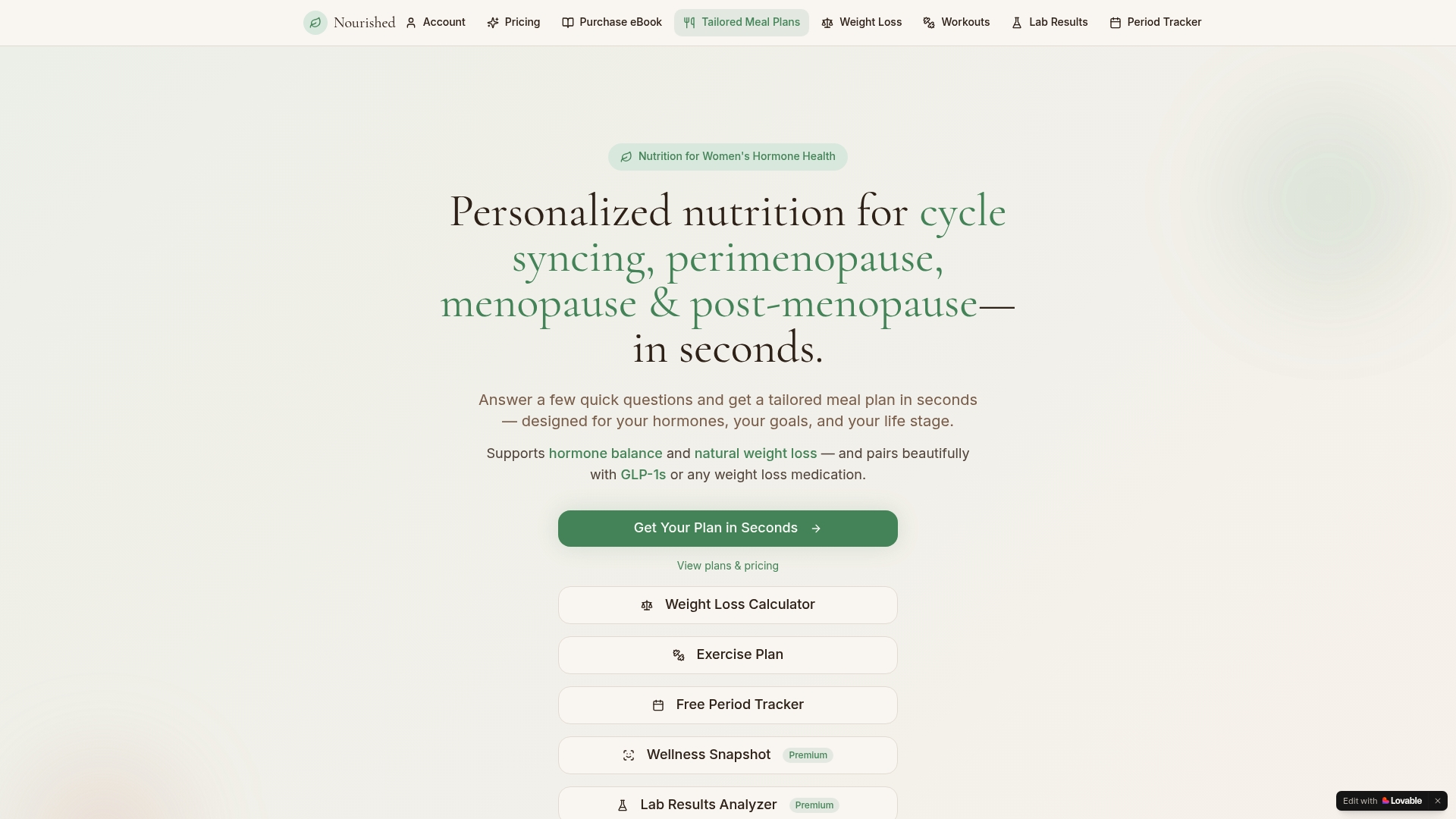
Nourished is a hormone-healthy nutrition platform built specifically for women at every life stage, from cycle syncing in your 30s to perimenopause and post-menopause support. It generates personalized meal plans based on your hormonal phase, without calorie counting or restrictive dieting. When your nutrition aligns with your training cycle, muscle repair improves, energy stabilizes, and hormonal balance supports rather than fights your workouts. Nourished connects the nutrition side of anti-aging directly to the fitness work you are already doing.
FAQ
What workout type is most effective for anti-aging in women?
Strength training is the most effective single workout type for anti-aging in women, linked to a 4-year lifespan increase and improvements in bone density, metabolism, and heart health. Combining it with Zone 2 cardio and mobility work delivers the most complete results.
How often should women over 40 work out for anti-aging benefits?
Three strength sessions, two Zone 2 cardio sessions, and two mobility or active recovery days per week is the research-supported structure for women over 40. Sessions of 35–45 minutes are sufficient to drive adaptation without overtaxing recovery.
Is yoga good for anti-aging in women?
Yoga is an effective anti-aging practice for women because it builds functional strength, improves spinal mobility, and trains balance, all of which decline with age. It works best as a complement to strength training rather than a replacement.
Should women adjust workouts during perimenopause?
Hormonal fluctuations during perimenopause require reducing high-intensity training during vulnerable phases to prevent cortisol spikes and support hormonal balance. Prioritizing strength and mobility over heavy cardio during this stage protects both fitness and hormone health.
What are the best low-impact anti-aging exercises for women?
Swimming, brisk walking, cycling, and Tai Chi are the best low-impact options for women seeking anti-aging exercise routines. They protect joints while delivering cardiovascular, metabolic, and balance benefits that support long-term functional independence.