
Anti-Inflammatory Diet Perimenopause Guide for Women
Nourished · July 13, 2026
Anti-Inflammatory Diet Perimenopause Guide for Women
An anti-inflammatory diet for perimenopause is a Mediterranean-style eating pattern built around whole foods, healthy fats, fiber, and phytoestrogens that work together to lower inflammatory markers and ease hormonal symptoms. This anti-inflammatory diet perimenopause guide covers exactly what to eat, how to structure your meals, and what to realistically expect as your body adjusts. Perimenopause triggers rising levels of inflammatory proteins like CRP and IL-6, which worsen hot flashes, mood swings, and fatigue. The right food choices directly target those markers. You do not need a perfect diet to see results. You need a consistent one.
What is the anti-inflammatory diet for perimenopause?
The anti-inflammatory diet lacks a strict medical definition. It is best understood as a framework for eating whole vegetables, fruits, fish, and healthy fats rather than a rigid protocol. Think of it as the Mediterranean diet applied specifically to the hormonal demands of perimenopause.
During perimenopause, estrogen levels fluctuate and eventually decline. That shift makes the body more sensitive to cortisol, which drives up systemic inflammation. Dietary patterns rich in omega-3s, fiber, and polyphenols reduce inflammatory markers CRP and IL-6 within 4–6 weeks. That is a meaningful, measurable change in a short window.

The goal is not to eliminate every processed food overnight. The goal is to shift the overall balance of your plate toward foods that calm inflammation and support hormonal balance. Small, steady changes produce lasting results. Dramatic overhauls rarely do.
Which foods should you eat on an anti-inflammatory perimenopause diet?
The most effective anti-inflammatory foods for women in perimenopause fall into five categories: omega-3 sources, fiber-rich plants, phytoestrogens, healthy fats, and key minerals.
Omega-3 fatty acids
Omega-3s support hormone production, reduce inflammation, and may ease mood swings and hot flashes. Aim for two to three servings of fatty fish per week. Salmon, sardines, and mackerel are the strongest sources. Plant-based options include flaxseed, chia seeds, and walnuts.
Fiber, phytoestrogens, and healthy fats
Fiber does more than support digestion. Adequate fiber intake improves satiety, blood sugar balance, and heart health, all of which matter during perimenopause. The target is 30–45 grams daily from varied sources like lentils, oats, berries, and broccoli.

Phytoestrogens are plant compounds that weakly mimic estrogen in the body. Soy-based foods containing isoflavones may provide meaningful hot flash relief for roughly 50% of women when eaten consistently for 2–3 months. Edamame, tofu, and tempeh are practical daily sources. Flaxseed also contains lignans, another class of phytoestrogens.
Healthy fats from extra-virgin olive oil, avocado, and nuts reduce inflammation and support brain health. Use olive oil as your primary cooking fat. Add half an avocado to salads or eggs. Snack on a small handful of almonds or walnuts instead of crackers.
Anti-inflammatory foods perimenopause checklist:
- Fatty fish: salmon, sardines, mackerel (2–3 times per week)
- Leafy greens: spinach, kale, Swiss chard (daily)
- Colorful vegetables: bell peppers, broccoli, carrots (daily)
- Berries: blueberries, strawberries, raspberries (daily or most days)
- Legumes: lentils, chickpeas, black beans (3–4 times per week)
- Whole grains: oats, quinoa, brown rice (daily)
- Soy foods: edamame, tofu, tempeh (daily for phytoestrogen benefit)
- Healthy fats: olive oil, avocado, nuts, seeds (daily)
- Calcium and vitamin D sources: fortified plant milks, canned salmon with bones, eggs
Magnesium supports muscle relaxation, bone health, and mood regulation during perimenopause. Women should aim for 310–420 mg per day from nuts, seeds, leafy greens, and whole grains. Most women fall short of this target through food alone, so tracking intake is worth the effort.
Pro Tip: Add one new anti-inflammatory food per week rather than overhauling your entire diet at once. Swapping butter for avocado on toast or stirring flaxseed into yogurt takes 30 seconds and builds the habit without the pressure.
How should you structure meals to reduce inflammation?
Meal structure matters as much as food choice. Erratic eating patterns spike blood sugar, which triggers an inflammatory response. Consistent meal timing keeps blood sugar stable and reduces cortisol load throughout the day.
A practical daily framework looks like this:
- Breakfast: Protein plus fiber. Try Greek yogurt with berries and ground flaxseed, or two eggs with sautéed spinach and whole grain toast.
- Lunch: A large base of vegetables with a quality protein and a healthy fat. A grain bowl with quinoa, roasted vegetables, chickpeas, and olive oil dressing works well.
- Afternoon snack: Pair protein with fiber to prevent the 3 PM blood sugar crash. Walnuts and an apple, or hummus with sliced bell peppers.
- Dinner: Fatty fish or plant protein with two or more vegetable sides and a whole grain. Salmon with roasted broccoli and brown rice is a reliable template.
- Evening: If hunger strikes, choose a small protein-forward option like a handful of almonds or a small bowl of edamame rather than refined carbohydrates.
Protein at every meal supports muscle maintenance, which becomes critical during perimenopause as protein intake directly affects muscle mass and metabolic health. Aim for a palm-sized serving of quality protein at breakfast, lunch, and dinner. Hydration also plays a role. Water supports liver function, which processes excess hormones. Aim for at least eight cups daily and limit sugary drinks entirely.
What are the biggest mistakes women make with this diet?
The most common mistake is treating this as a restrictive diet rather than an additive one. Women who try to eliminate everything at once burn out within weeks. Sustainable anti-inflammatory eating works best when you add anti-inflammatory foods to existing favorites rather than rewriting your entire diet.
The second mistake is over-relying on supplements. Omega-3 capsules and magnesium tablets have their place, but they do not replicate the combined effect of whole foods. Food delivers fiber, polyphenols, and micronutrients together in a way no supplement can match.
The third mistake is ignoring sleep and stress. Combining anti-inflammatory eating with sleep hygiene and stress management significantly enhances symptom relief. Hormonal fluctuations during perimenopause increase cortisol sensitivity, meaning poor sleep and chronic stress actively undo the dietary work you put in. A good diet cannot fully compensate for four hours of sleep a night.
Pro Tip: Use the “one or two upgrades per week” strategy. Pick one specific swap each week, such as replacing white rice with quinoa or adding a handful of spinach to your morning eggs. Small wins compound into lasting change without the burnout.
Pro Tip: Track your mood, energy, and sleep alongside your food choices for the first month. Patterns become visible quickly, and seeing progress keeps motivation high.
How soon will you see results from this diet?
Realistic expectations prevent early abandonment. Anti-inflammatory nutrients reduce CRP and IL-6 markers within 4–6 weeks of consistent dietary changes. Energy and digestion typically improve first, often within the first two weeks.
Hot flash frequency and mood variability take longer. Soy isoflavones, for example, require 2–3 months of consistent intake before meaningful relief appears, and they work for roughly half of women. Results from a Mediterranean-style diet vary strongly by individual, which is why personalizing your approach matters more than following a generic plan.
| Timeframe | Expected changes |
|---|---|
| Weeks 1–2 | Improved digestion, better energy, reduced bloating |
| Weeks 3–6 | Lower inflammatory markers (CRP, IL-6), more stable mood |
| Months 2–3 | Potential hot flash reduction with consistent soy intake |
| Months 3+ | Weight stabilization, improved bone density support, better sleep |
Long-term benefits include weight management, reduced risk of cardiovascular disease, and stronger bone health. These outcomes build slowly and require consistency over months, not days. If symptoms remain severe after three months of dietary changes, hormone therapy remains the most effective option for hot flashes and should be discussed with a healthcare provider.
Key Takeaways
An anti-inflammatory diet for perimenopause reduces inflammatory markers CRP and IL-6 within 4–6 weeks, with broader symptom relief building over 2–3 months of consistent eating.
| Point | Details |
|---|---|
| Start with additions, not restrictions | Add omega-3s, fiber, and phytoestrogens to existing meals before cutting anything out. |
| Fiber target is 30–45 grams daily | Varied sources like lentils, oats, and berries support blood sugar, digestion, and weight. |
| Soy works for about half of women | Consistent soy intake for 2–3 months may meaningfully reduce hot flash frequency. |
| Meal structure matters | Protein, fiber, and healthy fat at every meal stabilizes blood sugar and lowers cortisol. |
| Sleep and stress amplify results | Dietary changes work best when paired with consistent sleep and stress management. |
What I’ve learned about eating for perimenopause
Most nutrition advice for perimenopause focuses on what to cut out. Cut sugar, cut alcohol, cut processed food. That framing sets women up to fail. Restriction creates a scarcity mindset, and scarcity mindset leads to bingeing, guilt, and abandonment.
What actually works is adding. When you focus on getting more salmon, more leafy greens, more flaxseed, and more legumes into your week, the less useful foods naturally get crowded out. You are not depriving yourself. You are upgrading.
The other thing I want to say plainly: this diet is not a cure. Hormone therapy remains the most effective treatment for severe hot flashes, and no amount of olive oil changes that. What food does is create a better internal environment. It lowers the baseline inflammation that makes every symptom feel worse. It supports your mood, your energy, and your sleep in ways that make the whole transition more manageable.
Perimenopause is not a problem to solve. It is a transition to support. Your diet is one of the most powerful tools you have for that support, and you do not need to be perfect to use it well. You just need to be consistent. Track how you feel, adjust what is not working, and give yourself at least six weeks before drawing conclusions. The hormonal weight changes that come with this stage respond to food, but they respond slowly. Patience is part of the protocol.
— Brittany
Nourished: personalized nutrition for perimenopause
Knowing what to eat is one thing. Building a plan that fits your actual life, preferences, and hormonal stage is another.
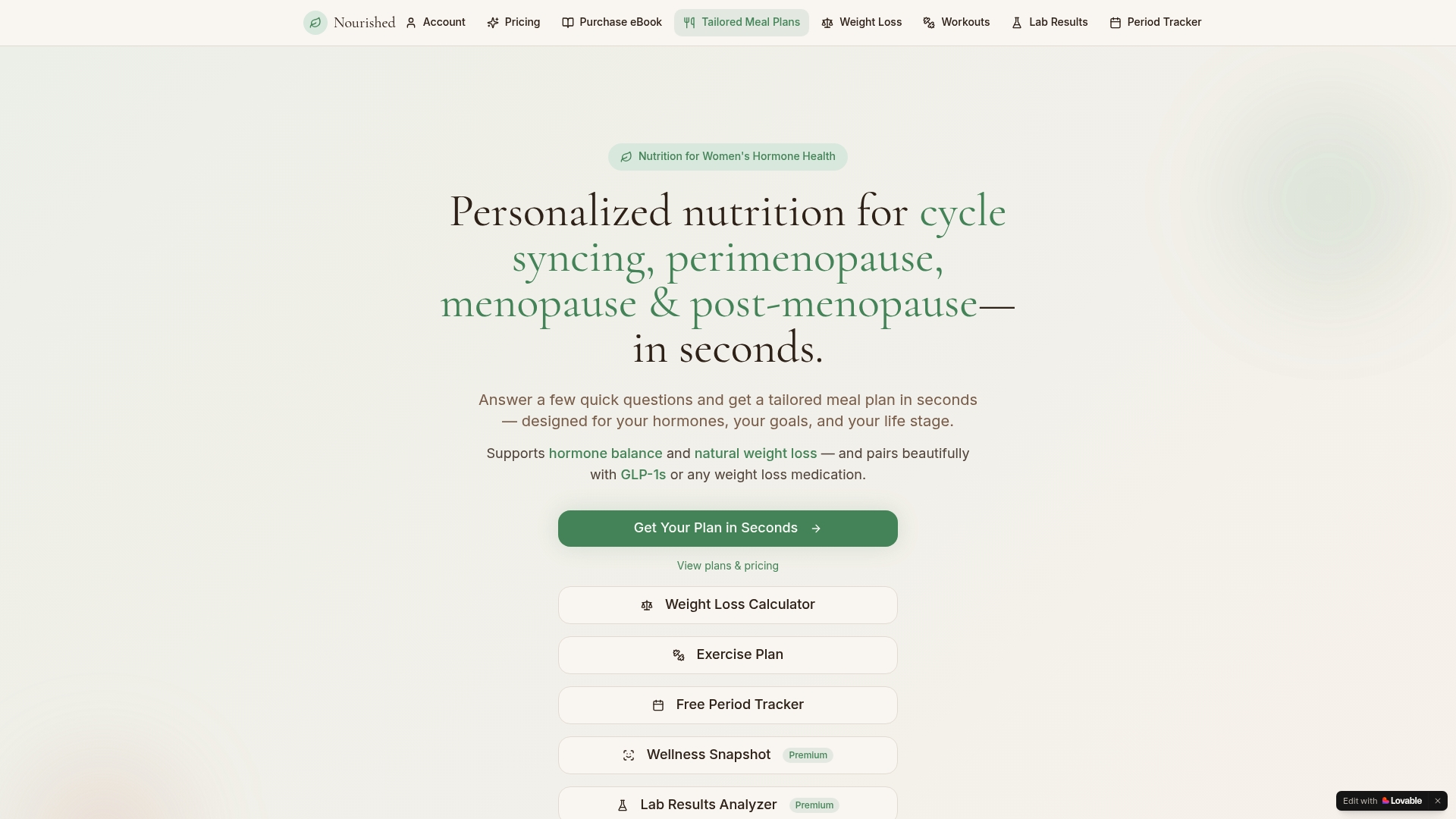
Nourished is a hormone-healthy nutrition platform built specifically for women navigating perimenopause, menopause, and beyond. It generates personalized meal plans based on your hormonal needs without calorie counting or restrictive rules. The AI-powered customization adapts to your preferences, your cycle, and your symptoms, so you get a practical eating framework you can actually follow. See how Nourished works and explore plans designed to support anti-inflammatory eating at every stage. Ready to put this guide into practice? Start with Nourished and get a meal plan built around your hormones, not a generic template.
FAQ
What is an anti-inflammatory diet for perimenopause?
An anti-inflammatory diet for perimenopause is a Mediterranean-style eating pattern centered on whole vegetables, fruits, fatty fish, legumes, and healthy fats. It targets inflammatory markers like CRP and IL-6 that worsen perimenopausal symptoms.
How long does it take to see results?
Most women notice improved energy and digestion within 1–2 weeks. Measurable reductions in inflammatory markers typically appear within 4–6 weeks of consistent dietary changes.
Do soy foods actually help with hot flashes?
Soy isoflavones provide meaningful hot flash relief for roughly 50% of women when eaten consistently for 2–3 months. Edamame, tofu, and tempeh are the most practical daily sources.
How much fiber do I need during perimenopause?
The recommended fiber intake during perimenopause is 30–45 grams per day from varied sources including lentils, oats, berries, and vegetables.
Can diet alone manage perimenopause symptoms?
Diet significantly reduces baseline inflammation and supports symptom management, but it is not a replacement for medical care. Hormone therapy remains the most effective treatment for severe hot flashes and should be discussed with a healthcare provider.