
Best Foods to Stabilize Mood Swings in Perimenopause
Nourished · June 24, 2026
Best Foods to Stabilize Mood Swings in Perimenopause
What you eat directly determines how well you can stabilize mood swings during perimenopause. Mood instability in this stage is a natural physiological response to unpredictable estrogen and progesterone fluctuations, not a personal failing. The good news is that specific dietary patterns, particularly the Mediterranean diet, along with nutrients like omega-3 fatty acids, B vitamins, and protein, give your brain the raw materials it needs to regulate mood through hormonal turbulence. This article explains exactly which foods work, why they work, and how to build them into your daily meals.
What foods stabilize mood swings during perimenopause?
The most effective dietary approach for mood stabilization is a Mediterranean-style eating pattern built around whole foods, healthy fats, and lean protein. Mediterranean diet adherence significantly reduces mood instability and vasomotor symptoms in perimenopausal women, with olive oil consumption specifically linked to fewer psychological symptoms. That finding comes from a study of over 6,000 women. The pattern works because it delivers a steady supply of nutrients that support serotonin production and reduce inflammation in the brain.
Key nutrients and their food sources
B vitamins, omega-3 fatty acids, and protein are the three pillars of mood-supportive nutrition during perimenopause. B6 and B12 are directly involved in synthesizing serotonin and dopamine. Omega-3s reduce neuroinflammation. Protein provides the amino acid tryptophan, which the brain converts into serotonin.

Here is a breakdown of the most effective mood-supporting nutrients and where to find them:
| Nutrient | Best food sources | Mood benefit |
|---|---|---|
| Omega-3 fatty acids | Salmon, sardines, mackerel, walnuts, flaxseed | Reduces neuroinflammation, supports serotonin |
| B6 and B12 | Eggs, chicken, fortified cereals, leafy greens | Supports neurotransmitter production |
| Protein | Greek yogurt, lentils, tofu, chicken, eggs | Stabilizes blood sugar, fuels brain chemistry |
| Fiber | Oats, beans, lentils, broccoli, berries | Slows digestion, manages hunger and mood |
| Calcium and vitamin D | Fortified plant milks, sardines, kale | Supports nerve function and hormone signaling |
| Phytoestrogens | Edamame, flaxseed, chickpeas, tofu | Mildly mimics estrogen to ease hormonal dips |
Beans and legumes deserve special mention. The Mediterranean diet research recommends four half-cup servings of beans or legumes per week. They deliver fiber, plant protein, and B vitamins in a single food. That combination makes them one of the most cost-effective mood-supporting foods available.
Pro Tip: Add a tablespoon of ground flaxseed to your morning oatmeal. You get omega-3s, fiber, and phytoestrogens in one move, with no cooking required.
Medical experts advise against chasing individual superfood fixes. The Mediterranean pattern works because it provides a consistent supply of these nutrients together, not because any single food is magic. Think of it as building a nutritional foundation rather than patching holes.
How do blood sugar levels affect mood swings in perimenopause?
Blood sugar instability is one of the most underappreciated drivers of mood swings in perimenopause. When blood sugar drops, your body releases stress hormones like cortisol and adrenaline to compensate. Those hormones trigger anxiety, irritability, and emotional reactivity. During perimenopause, when estrogen is already fluctuating, this stress hormone surge hits harder than it would at other life stages.

The practical solution is structuring meals to prevent those drops from happening in the first place. Pairing protein with carbohydrates at every meal slows glucose absorption and keeps your brain fueled steadily. Skipping meals is one of the fastest ways to destabilize your mood, even if you are not hungry.
Here are the core meal timing and composition strategies that keep blood sugar stable:
- Eat every 3–4 hours. Longer gaps invite cortisol spikes.
- Include 20–30 grams of protein per meal. Consistent protein intake at this level supports both blood sugar regulation and neurotransmitter synthesis.
- Never eat carbohydrates alone. Always pair them with protein, fat, or fiber.
- Start your day with a protein-forward breakfast. Eggs, Greek yogurt, or a protein smoothie all work.
- Keep a protein-rich snack available for mid-afternoon, when blood sugar naturally dips.
Pro Tip: If you notice your mood dropping sharply in the late afternoon, that is almost always a blood sugar issue. A small snack of nuts and an apple at 3 p.m. can prevent the 4 p.m. emotional crash entirely.
The link between blood sugar and mood is not abstract. Stabilizing meals with protein, fiber, and healthy fats measurably reduces emotional reactivity and cravings. This is one dietary change that produces noticeable results within days, not weeks.
Which foods and drinks make perimenopause mood swings worse?
Certain foods actively destabilize mood during perimenopause, and some of them are ones you might consider healthy habits. Caffeine worsens anxiety, disrupts sleep, and triggers hot flashes in perimenopausal women. That morning coffee that feels essential may be amplifying the very symptoms you are trying to manage. This does not mean you must eliminate it, but timing and quantity matter significantly.
Processed foods and sweetened drinks exacerbate perimenopausal symptoms and should be limited for better mood and brain health. Ultra-processed foods spike blood sugar rapidly, then cause a crash that triggers the cortisol response described above. They also displace the whole foods that provide mood-supporting nutrients.
Foods and substances to limit or avoid:
- Refined sugars and sweetened drinks. They cause rapid blood sugar spikes followed by crashes that worsen irritability.
- Excess caffeine. More than one or two cups of coffee per day increases anxiety and disrupts sleep quality.
- Alcohol. It disrupts sleep architecture and lowers serotonin levels the following day.
- Spicy foods. They can trigger hot flashes, which disrupt sleep and compound mood instability.
- Saturated and trans fats. Found in fried foods and packaged snacks, they promote inflammation that affects brain function.
- Skipping meals or severe calorie restriction. Under-fueling triggers the same cortisol response as blood sugar crashes and can worsen anxiety.
The last point is one that trips up many women. Cutting calories aggressively during perimenopause often backfires. Your brain needs a consistent fuel supply to regulate mood. Personalized dietary adjustments that moderate triggers while maintaining adequate nutrition produce better outcomes than restrictive dieting.
How to build a daily meal plan that supports mood stability
A mood-supportive meal plan does not require complicated recipes. It requires consistent structure. The goal is to hit your key nutrients across three meals and one or two snacks, following Mediterranean diet principles as the foundation.
Here is a sample daily meal framework with nutrient highlights:
| Meal | Example foods | Key nutrients delivered |
|---|---|---|
| Breakfast | Eggs with spinach, whole grain toast, olive oil | Protein, B vitamins, healthy fats |
| Mid-morning snack | Walnuts and a piece of fruit | Omega-3s, fiber, natural sugars |
| Lunch | Lentil soup with crusty bread, side salad with olive oil | Fiber, plant protein, phytoestrogens |
| Afternoon snack | Greek yogurt with berries | Protein, calcium, antioxidants |
| Dinner | Baked salmon, roasted vegetables, quinoa | Omega-3s, B12, complete protein, fiber |
Grocery shopping becomes much simpler when you shop around the perimeter of the store. That is where the whole foods live: produce, fish, meat, dairy, and eggs. The center aisles hold most of the ultra-processed items that worsen symptoms. Stocking your kitchen with the right ingredients removes the need to make good decisions when you are already tired or irritable.
For women who want to understand why protein matters specifically during perimenopause, the connection goes deeper than blood sugar. Protein supports muscle preservation, metabolic health, and neurotransmitter production simultaneously.
Pro Tip: Batch-cook a pot of lentils or chickpeas on Sunday. They keep for five days in the fridge and can anchor a quick lunch or dinner without any additional cooking on busy weeknights.
Dietary changes combined with exercise, stress management, and sleep improvements work synergistically to ease perimenopausal symptoms. Diet is the most controllable lever, but it works best as part of a broader lifestyle approach. Even small, consistent changes to meal structure produce measurable improvements in mood stability over time.
Key Takeaways
Stabilizing mood swings during perimenopause requires consistent dietary patterns built around protein, omega-3 fatty acids, B vitamins, and fiber, not single superfoods or restrictive diets.
| Point | Details |
|---|---|
| Mediterranean diet is the foundation | Adherence reduces mood instability and vasomotor symptoms, backed by research on over 6,000 women. |
| Blood sugar stability is critical | Eating every 3–4 hours with protein at each meal prevents cortisol spikes that worsen mood. |
| Protein targets 20–30g per meal | This level supports blood sugar regulation and neurotransmitter synthesis simultaneously. |
| Caffeine and sugar are hidden triggers | Both worsen anxiety and disrupt sleep, compounding mood instability during perimenopause. |
| Diet works best alongside lifestyle changes | Combining dietary changes with sleep and stress management produces the strongest results. |
What I’ve learned about food and perimenopause mood swings
The thing most women get wrong is expecting dietary changes to work like medication. They want fast, dramatic relief. What food actually does is remove the obstacles that make mood swings worse and build the raw materials that help your brain regulate itself. That process takes weeks, not days.
The other pattern I see constantly is women cutting calories aggressively because perimenopause often brings weight changes. That approach almost always backfires. Under-fueling your brain during a period of hormonal instability is like trying to drive a car on an empty tank and wondering why it keeps stalling. Your mood pays the price first.
What I have found genuinely useful is treating meal structure as non-negotiable. Not the specific foods, not the recipes, but the rhythm. Protein at breakfast. A real lunch. A snack before the afternoon crash. Dinner with vegetables and a healthy fat. That structure alone removes a significant number of mood triggers before you even think about which specific foods to include.
Sleep and stress management matter too, and I would never suggest food alone solves everything. Mood changes during perimenopause are real physiological events, often intensified by life stress and poor sleep. But diet is the lever you can pull three times a day, every day. That consistency adds up faster than most women expect.
— Brittany
Nourished: personalized nutrition for perimenopause mood support
Managing perimenopause symptoms through diet is far easier when your meal plan is built around your specific hormonal needs, not a generic template.
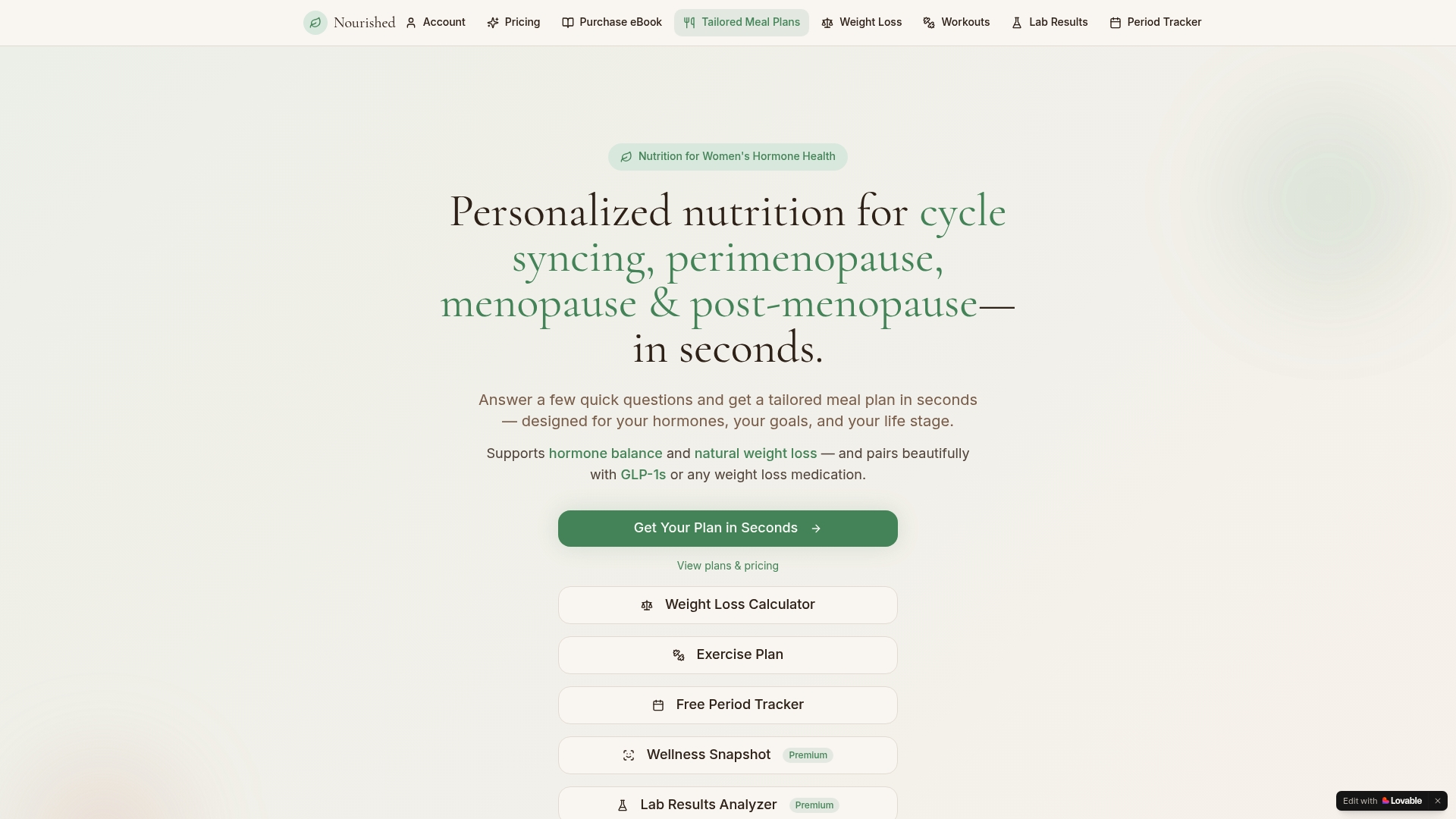
Nourished is a hormone-healthy nutrition platform designed specifically for women at every stage of the menstrual cycle and beyond, including perimenopause and menopause. It generates personalized meal plans using AI, with no calorie counting and no restrictive rules. The plans are built around the exact nutrients discussed in this article: protein targets, omega-3 sources, fiber-rich foods, and Mediterranean diet principles. You can also track your cycle and symptoms to see how your diet affects your mood in real time. Visit Nourished to get a meal plan tailored to your hormonal health today.
FAQ
What is the best diet for perimenopause mood swings?
The Mediterranean diet is the most evidence-backed dietary pattern for reducing mood instability during perimenopause. It delivers omega-3 fatty acids, B vitamins, fiber, and phytoestrogens consistently across meals.
How does blood sugar affect mood during perimenopause?
Blood sugar drops trigger cortisol and adrenaline release, which cause anxiety and irritability. Eating protein-rich meals every 3–4 hours prevents these drops and reduces emotional reactivity.
Which foods make perimenopause mood swings worse?
Caffeine, refined sugars, alcohol, and ultra-processed foods all worsen mood instability. They spike and crash blood sugar, disrupt sleep, and displace the nutrients your brain needs for mood regulation.
How much protein should I eat per meal during perimenopause?
Aim for 20–30 grams of protein per meal. That level supports both blood sugar stability and the neurotransmitter production your brain relies on during hormonal fluctuations.
Can food alone eliminate perimenopause mood swings?
Diet significantly reduces mood swing frequency and intensity, but works best alongside sleep improvement and stress management. Dietary changes are the most consistent daily lever available, but they are most effective as part of a broader lifestyle approach.