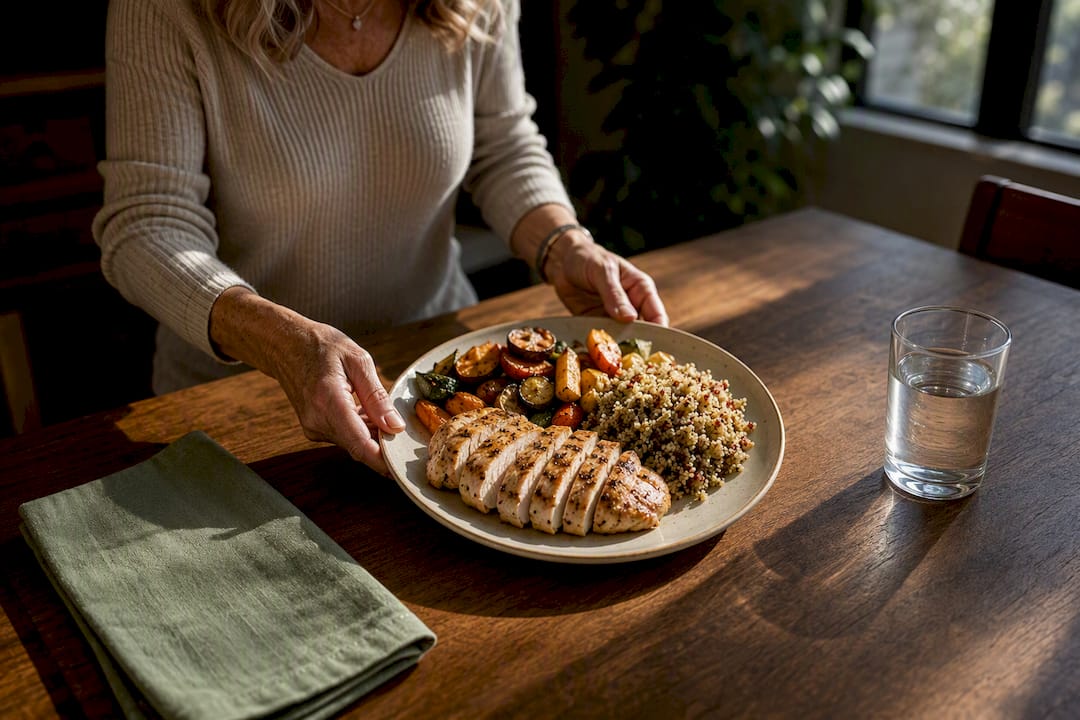
Not a Diet: Postmenopausal Women Should Eat 25–35g Protein per Meal
Nourished · September 3, 2026
Not a Diet: Postmenopausal Women Should Eat 25–35g Protein per Meal
The best post menopause diet is a Mediterranean-style, plant-forward eating pattern built around evenly distributed protein at every meal, with deliberate attention to calcium and vitamin D. That combination has the strongest evidence behind it for protecting your heart, your bones, and your muscle mass. Everything else, including supplements, is secondary to establishing this nutritional foundation, ideally starting with food and personalized clinical guidance.
TL;DR:
- A Mediterranean, plant-forward diet with balanced protein, calcium, and vitamin D intake offers the best overall support for heart, bone, and muscle health after menopause.
- Prioritize calcium intake of 1,200 mg daily through food sources like fortified products and canned fish, and maintain vitamin D levels between 600 and 800 IU daily.
- Distribute 1.0 to 1.2 grams of protein per kilogram of body weight across meals to preserve muscle mass, aiming for 25 to 35 grams per eating occasion.
- Limit added sugars, refined carbs, sodium, and ultra-processed foods to reduce hot flash triggers, blood sugar swings, and cardiovascular risks.
- Long-term adherence and sustainability of healthy habits are more effective than short-term restrictive diets or overly optimized plans.
Table of Contents
- What Diet Pattern Actually Works After Menopause?
- What Nutrients Should You Prioritize Postmenopause?
- How Do You Plan Meals That Hit These Targets?
- Which Foods Make Menopause Symptoms Worse?
- Do You Need Supplements, and How Do You Know?
- What Should You Actually Expect From Changing Your Diet?
- Best Post Menopause Diet for Symptom Relief and Bone Health
- Get a Meal Plan That Already Knows Your Protein Targets
- Sources
What Diet Pattern Actually Works After Menopause?
Three eating patterns keep showing up in the research, and they overlap more than they differ. The Mediterranean diet leans on olive oil, fish, legumes, vegetables, and modest wine, while DASH (Dietary Approaches to Stop Hypertension) trims sodium and emphasizes low-fat dairy and produce to control blood pressure. Plant-predominant eating simply shifts the center of your plate toward vegetables, legumes, and whole grains without necessarily cutting out meat or dairy entirely.
What they share matters more than their labels: minimal ultra-processed food, generous fiber, healthy fats, and lean protein sources. A systematic review of dietary interventions for menopausal health found Mediterranean and plant-predominant patterns consistently associated with better cardiometabolic markers and lower symptom burden compared with typical Western eating. Blood pressure drops, triglycerides improve, and some women report fewer or milder hot flashes on these patterns.
Nutrition researchers tend to frame Mediterranean and DASH eating as durable lifestyles rather than short-term diets built around inflammation-fighting foods, and that distinction matters for anyone who has tried and abandoned a restrictive plan before.
Here’s how to pick between them:
- Choose Mediterranean if you enjoy fish, olive oil, and a glass of wine with dinner and want flexibility over rigid rules.
- Choose DASH if your blood pressure runs high and you need a structured sodium ceiling.
- Choose plant-predominant if you’re managing cholesterol or want more fiber without overhauling your entire grocery list.
- Blend all three if none of them alone fits your taste or medical history. Most women who stick with a pattern long term end up doing exactly this.
What Nutrients Should You Prioritize Postmenopause?
Your nutrient targets after menopause are more specific than “eat healthier.” Clinicians work from actual numbers, and hitting them consistently matters more than any single superfood.
Calcium: 1,200 mg per day. Women 51 and older need this amount to protect bone density, according to the Office of Dietary Supplements at NIH, which is 200 mg more than the pre-menopause recommendation. Food sources beat supplements here: calcium-set tofu, canned salmon or sardines with bones, fortified plant milks, and yogurt all get you there without a pill.
Vitamin D: 600 to 800 IU daily. Standard guidance calls for 600 IU until age 70 and 800 IU after, though Mayo Clinic notes clinicians may titrate up to roughly 2,000 IU daily when bloodwork shows a real deficiency.
Calcium at a glance: Postmenopausal women need 1,200 mg of calcium daily, roughly the equivalent of four servings of fortified dairy or plant milk, to meaningfully lower fracture risk.
Protein: 1.0 to 1.2 g per kilogram of body weight daily, spread across meals to hit 25 to 35 grams each time. Mayo Clinic Proceedings ties this range directly to preserving muscle mass, which declines faster once estrogen drops.
Round out your plate with:
- Omega-3s from salmon, walnuts, or flaxseed for inflammation and heart health
- Fiber from beans, oats, and vegetables for gut health and blood sugar control
- Magnesium from leafy greens, almonds, and pumpkin seeds for bone matrix support
- B12 from eggs, fish, or fortified foods, since absorption often declines with age
How Do You Plan Meals That Hit These Targets?
Think in terms of “protein and produce” at every meal rather than counting anything. Put a protein source and a vegetable or fruit on your plate first, then fill in with whole grains or healthy fat. This one habit does more for consistent intake than any tracking app.
Even distribution beats loading protein into one big dinner. Clinicians increasingly recommend spacing protein across the day because your body can only use so much at once to build and maintain muscle.
Try these combinations, each landing in the 25 to 35 gram range:
- Greek yogurt with berries, chia seeds, and a scoop of protein powder
- Grilled salmon, quinoa, and roasted broccoli
- Lentil and vegetable soup with a side of cottage cheese
- Two eggs, avocado toast on whole grain bread, and a side of turkey sausage
- Tofu stir-fry with edamame and brown rice
For weight management, aim for a modest calorie deficit if that’s your goal, not a dramatic one. Very low calorie diets undertaken without medical supervision can backfire, undermining bone and metabolic health rather than protecting it.
Pro Tip: Batch-cook a protein base (shredded chicken, cooked lentils, hard-boiled eggs) every Sunday, then build different meals around it all week. This single habit removes most of the daily decision fatigue that derails healthy eating.
Which Foods Make Menopause Symptoms Worse?
Some foods work against you twice over: they spike cardiovascular risk and trigger hot flashes or restless nights in the same bite. Added sugars and refined carbs cause blood sugar swings that many women describe as worsening mood instability. Ultra-processed foods tend to pack in sodium and trans fats that push blood pressure up right when your cardiovascular risk is already climbing post-menopause.
The Academy of Nutrition and Dietetics recommends limiting added sugars, saturated fat, and sodium while favoring whole grains, legumes, nuts, fish, and low-fat or fortified dairy, guidance that mirrors the broader Dietary Guidelines for Americans.
Common hot-flash and sleep-disruption triggers include:
- Spicy foods and hot beverages, which raise core body temperature
- Caffeine, especially in the afternoon or evening
- Alcohol, which dilates blood vessels and fragments sleep
- Large, heavy meals close to bedtime
Not every woman reacts to every trigger, so keep a simple log for two weeks to spot your own patterns rather than eliminating everything at once. Quick label-reading swaps help too: pick canned beans with “no salt added,” choose plain yogurt over flavored (which can carry as much sugar as ice cream), and swap soda for sparkling water with citrus.
Do You Need Supplements, and How Do You Know?
Food should do most of the work. Calcium-set tofu, canned fish with bones, and fortified milks close most of the calcium gap without pills, and that matters because high-dose calcium supplements carry their own side-effect risks, including kidney stones in some women.
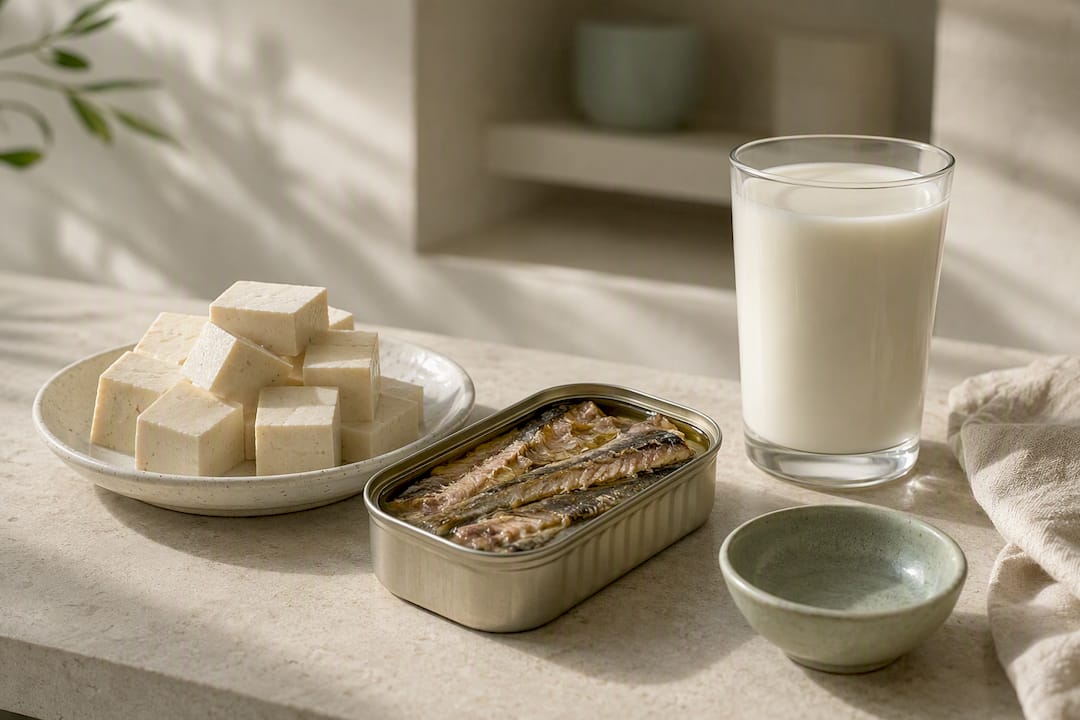
Vitamin D is the exception where testing genuinely helps. A simple blood test tells your clinician whether you need the standard 600 to 800 IU or a higher, monitored dose up to around 2,000 IU. Omega-3 supplements can help if you don’t eat fish twice a week, though food sources remain preferable when practical.
Watch for these red flags before adding anything:
- Kidney disease or a history of kidney stones (affects calcium supplementation safety)
- Blood-thinning medications (omega-3s can interact)
- Total calcium intake already near or above 1,200 mg from food alone
- Any new supplement started without telling your doctor or pharmacist
What Should You Actually Expect From Changing Your Diet?
Habits take roughly four to six weeks to feel automatic rather than effortful, so give any change that long before judging whether it’s working. The women who stick with these patterns long term aren’t the ones who overhaul everything overnight. They’re the ones who nail one habit, like protein at breakfast, before adding the next.
Nourished builds its meal plans around exactly this logic: AI-personalized menus that hit your protein and micronutrient targets automatically, without calorie counting, and adjusted to where you are hormonally rather than a generic template. The protein distribution strategy that clinicians recommend is baked into the plan structure itself, not left for you to calculate.
Registered dietitian-led, behavior-focused support tends to outperform self-directed changes over the long run, which is worth remembering before you go it alone with a spreadsheet.
Best Post Menopause Diet for Symptom Relief and Bone Health
Here’s my honest read after digging through the evidence: the wellness industry oversells novelty and undersells consistency. You don’t need a exotic new “menopause diet” branded product. You need to eat more protein than you probably do now, spread across the day instead of stacked at dinner, and you need to stop treating calcium and vitamin D as afterthoughts.
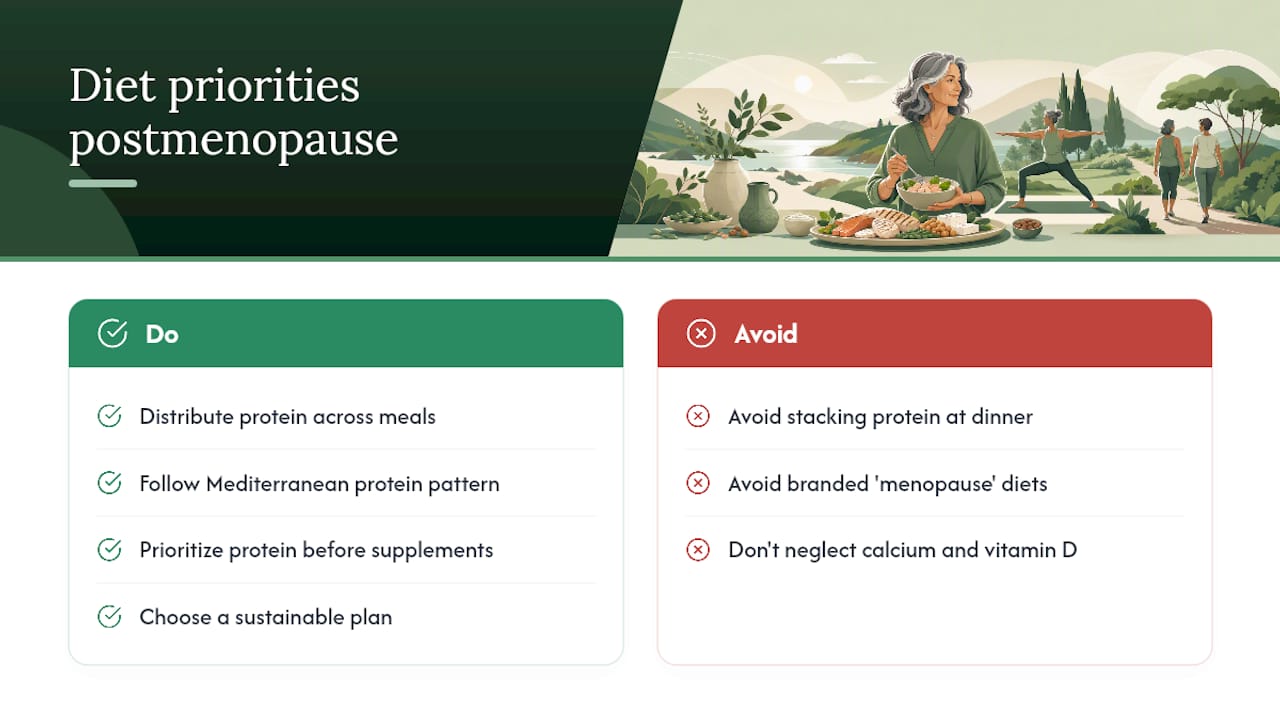
Where conventional advice falls short is in treating symptom relief and long-term disease prevention as separate problems requiring separate solutions. They’re not. The same Mediterranean, protein-forward pattern that steadies your blood sugar and mood is the one protecting your bones and heart twenty years from now. Prioritize protein distribution first. Everything else, including supplements, is a smaller lever pulled after that foundation is solid.
What gets overlooked most: sustainability beats optimization. A “good enough” pattern you actually follow for five years outperforms a “perfect” one you abandon in five weeks.
— Brittany
Get a Meal Plan That Already Knows Your Protein Targets
Building a Mediterranean-style, protein-distributed meal plan by hand, one that actually hits 1,200 mg of calcium and 25 to 35 grams of protein per meal, takes real time most women don’t have — which is why understanding hormonal anti-aging for women is critical for tailoring nutrition effectively. Nourished removes that math entirely. You answer a few questions about your hormonal stage and preferences, and the platform generates a personalized meal plan instantly, no calorie counting, no spreadsheet, no guesswork about whether today’s meals actually covered your nutrient targets.
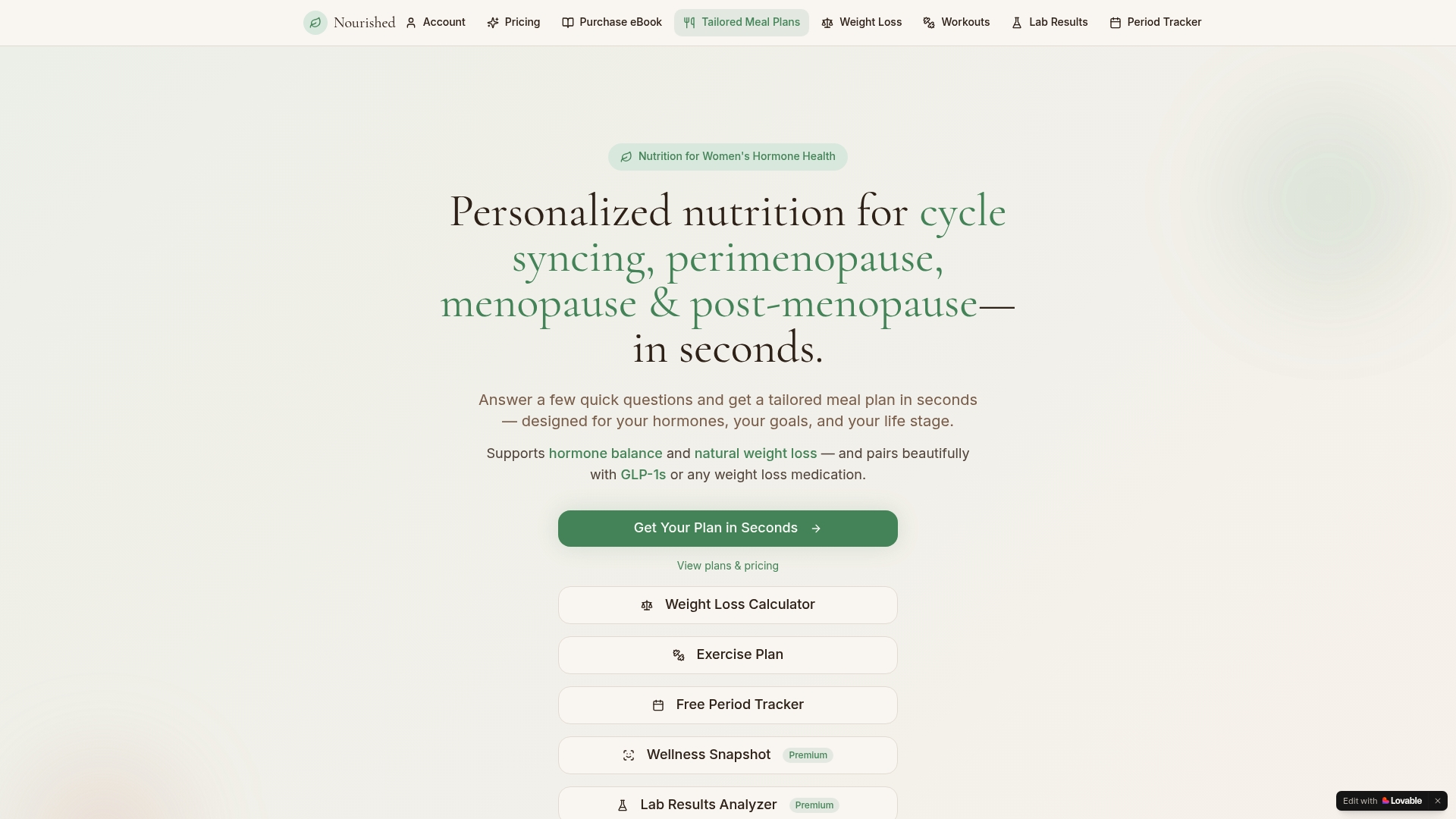
It’s built specifically for women navigating perimenopause, menopause, and post-menopause, with hormone-aware adjustments most generic nutrition apps don’t offer. If you want to see exactly how the personalization works before committing, walk through the step-by-step tutorial or check current plan options to find the fit that matches where you are right now.
This article is general information, not a substitute for advice from a qualified doctor. Consult a qualified healthcare professional about your own circumstances before acting on anything here.
Sources
- Calcium — Health Professional Fact Sheet | Office of Dietary Supplements (NIH)
- Vitamin D (dietary) — Mayo Clinic
- Dietary interventions and nutritional strategies for menopausal health: a mini review — Frontiers in Nutrition (2025)
- How much protein do you really need after menopause? — Mayo Clinic Proceedings (MCPRESS)