
Common Perimenopause Diet Mistakes to Stop Making
Nourished · July 2, 2026
Common Perimenopause Diet Mistakes to Stop Making
Common perimenopause diet mistakes are dietary patterns that disrupt hormone balance, accelerate muscle loss, and worsen symptoms like hot flashes, fatigue, and mood swings during the menopausal transition. Clinically, this phase is called the menopausal transition, and it demands a different nutritional approach than earlier decades. Registered dietitians consistently identify inadequate protein, poor carbohydrate quality, and trigger foods as the top dietary errors in perimenopause. The good news: correcting these mistakes does not require a restrictive diet. It requires understanding what your body actually needs right now.
1. Common perimenopause diet mistakes start with too little protein
Low protein intake is the single most damaging dietary error for women in perimenopause. Estrogen decline accelerates muscle breakdown, and without enough protein, your body cannot rebuild or maintain lean tissue. That leads to fatigue, slower metabolism, and blood sugar swings that make every other symptom worse.
Registered dietitians recommend 20–30g of protein per meal for perimenopausal women, targeting 1.2–1.6g per kilogram of body weight daily. That is meaningfully higher than general adult guidelines. Spreading protein across three meals matters as much as the daily total, because muscle protein synthesis has a ceiling per sitting.
Strong protein sources for this life stage include:
- Eggs and egg whites
- Greek yogurt and cottage cheese
- Chicken, turkey, and salmon
- Legumes like lentils and edamame
- Tofu and tempeh
Pro Tip: Add a protein source before you add anything else to your plate. Build the meal around it, not as an afterthought.
2. Under-eating and extreme calorie restriction
Cutting calories aggressively is one of the most common dietary errors in perimenopause, and it backfires reliably. Under-eating accelerates muscle loss, worsens sleep, and intensifies mood volatility. The body reads a large calorie deficit as a threat and raises cortisol, which then drives fat storage around the abdomen.

Many women in perimenopause notice weight gain and respond by eating less. The logic feels sound, but the physiology works against it. Lower estrogen already slows metabolism. Adding a steep calorie cut on top of that stresses the adrenal system and disrupts the hormones that regulate hunger, sleep, and energy.
The correction is not eating more junk. It is eating enough of the right foods at regular intervals. Balanced meals with protein, fiber, and carbohydrate keep you full for 3–4 hours and prevent the cortisol spikes that come from skipping meals or going too long without food.
Pro Tip: If you are hungry within 90 minutes of eating, your last meal lacked enough protein or fiber. Adjust the ratio before reducing portions.
3. Ignoring carbohydrate quality and timing
Avoiding carbohydrates entirely is a popular but misguided approach to perimenopause weight management. Very low-carbohydrate diets supplying less than 45% of total calories can worsen cortisol dysregulation and accelerate muscle loss in perimenopausal women. Carbohydrates fuel the brain, support thyroid function, and regulate serotonin production. Cutting them too low creates a different hormonal problem.
The real issue is not carbohydrates. It is eating them alone. Pairing carbohydrates with protein and fats prevents large glucose spikes and crashes that are common in perimenopause due to increasing insulin resistance. A plain rice cake raises blood sugar fast. The same rice cake with almond butter and a hard-boiled egg does not.
| Carb strategy | Effect on blood sugar | Suitability for perimenopause |
|---|---|---|
| Very low-carb (under 45% calories) | Reduces spikes but raises cortisol | Not recommended long-term |
| Balanced (45–50% calories, paired with protein and fat) | Stable glucose, steady energy | Recommended |
| High refined carb, eaten alone | Large spikes and crashes | Worsens symptoms |
Good carbohydrate choices for perimenopause include oats, sweet potato, quinoa, brown rice, and fruit. Timing matters too. Carbohydrates before and after exercise support muscle recovery. A small carbohydrate serving in the evening can support serotonin production and improve sleep quality.
4. Drinking alcohol and excess caffeine
Alcohol is one of the most underestimated triggers for perimenopausal symptoms. Alcohol worsens vasomotor symptoms and disrupts sleep and anxiety even at low intake after age 40. One standard drink meaningfully degrades sleep quality. That matters because poor sleep in perimenopause compounds fatigue, mood instability, and cortisol dysregulation the next day.
Caffeine creates a separate but related problem. Caffeine sensitivity increases during perimenopause due to estrogen’s effects on cortisol, causing anxiety and sleep disturbances. A morning coffee that felt fine at 35 may now trigger heart palpitations, afternoon energy crashes, or disrupted sleep at 45. The mechanism is hormonal: lower estrogen changes how quickly the liver metabolizes caffeine.
Practical steps to reduce these triggers:
- Set a firm caffeine cutoff by early afternoon, ideally before noon
- Switch to half-caff or matcha, which delivers lower caffeine with L-theanine for a calmer effect
- Replace evening wine with sparkling water, herbal tea, or a non-alcoholic alternative
- Track your symptoms for two weeks after reducing alcohol to see the direct impact
Reducing or eliminating alcohol can substantially improve vasomotor symptom frequency and sleep quality. The results are often noticeable within days, not weeks.
5. Eating spicy and heavily processed foods
Spicy foods trigger hot flashes in many women during perimenopause, though individual sensitivity varies. The mechanism involves capsaicin activating heat receptors in the body, which then signals vasodilation. For women already experiencing vasomotor instability, that signal amplifies existing symptoms. Not every woman reacts the same way, so tracking your personal response is more useful than blanket avoidance.
Processed foods create a different set of problems. They are dense in sodium, refined carbohydrates, and additives that promote inflammation and bloating. The sodium load alone drives water retention, which worsens the bloating many women already experience from hormonal shifts. Processed snacks, deli meats, canned soups, and fast food are the primary culprits.
Practical swaps that reduce symptom triggers:
- Replace chips and crackers with roasted chickpeas or rice cakes with nut butter
- Choose low-sodium canned beans and rinse them before use
- Use herbs like turmeric, ginger, and cumin for flavor instead of hot spice blends
- Read sodium labels: aim for under 600mg per serving in packaged foods
6. Skipping fiber and ignoring sodium intake
Fiber does more than support digestion during perimenopause. It plays a direct role in estrogen metabolism. The gut microbiome processes excess estrogen for excretion, and fiber feeds the bacteria that make this possible. Without enough fiber, estrogen recirculates in the bloodstream, contributing to hormonal imbalance. Dietary fiber requirements increase to 25–45g daily to support estrogen excretion and blood sugar stabilization.
Most women eat far less than that. The average American woman consumes roughly half the recommended fiber daily. Closing that gap does not require dramatic changes. It requires consistent additions to existing meals.
High-fiber foods well-suited to perimenopause nutrition:
- Chia seeds (10g fiber per 2 tablespoons)
- Lentils and black beans (15g per cooked cup)
- Avocado (10g per whole fruit)
- Raspberries and pears (8g per cup or fruit)
- Oats and barley
Sodium is the other side of this equation. 70% of dietary sodium comes from processed foods, increasing water retention and bloating during perimenopause. Reducing processed food intake is the most direct way to lower sodium without counting milligrams obsessively.
| Fiber source | Fiber per serving | Bonus benefit |
|---|---|---|
| Chia seeds (2 tbsp) | 10g | Omega-3 fatty acids |
| Cooked lentils (1 cup) | 15g | High protein |
| Raspberries (1 cup) | 8g | Antioxidants |
| Avocado (1 whole) | 10g | Healthy fats |
Pro Tip: Add one tablespoon of chia seeds to your morning yogurt or smoothie. That single swap adds 5g of fiber and requires zero cooking.
7. Following fad diets instead of sustainable patterns
Fad diets promise fast results but ignore the hormonal complexity of perimenopause. Keto, juice cleanses, and extreme elimination protocols create nutrient gaps that worsen the very symptoms women are trying to fix. There is no universal best diet for perimenopause. The evidence points toward eating patterns like the Mediterranean or DASH diets, which support cardiovascular and cognitive health without rigid rules.
The Mediterranean pattern works well for perimenopause because it is naturally high in fiber, healthy fats, and plant protein. It does not eliminate food groups. It prioritizes whole foods, olive oil, fish, legumes, and vegetables. That combination supports estrogen metabolism, reduces inflammation, and stabilizes blood sugar without requiring calorie counting.
Perimenopause meal planning advice that lasts focuses on consistency over perfection. A woman who eats balanced meals 80% of the time will manage her symptoms far better than one who follows a strict protocol for two weeks and then abandons it.
Key takeaways
Avoiding common perimenopause diet mistakes requires adequate protein at every meal, strategic carbohydrate pairing, sufficient fiber, and reducing alcohol, caffeine, and processed food triggers.
| Point | Details |
|---|---|
| Prioritize protein at every meal | Aim for 20–30g per meal to protect muscle and stabilize blood sugar. |
| Pair carbs with protein and fat | This single habit prevents glucose spikes and reduces energy crashes. |
| Reach 25–45g of fiber daily | Fiber supports estrogen excretion and reduces bloating from hormonal shifts. |
| Limit alcohol and caffeine | Both worsen vasomotor symptoms, anxiety, and sleep quality in perimenopause. |
| Choose sustainable eating patterns | Mediterranean and DASH-style eating outperform restrictive fad diets long-term. |
What I have learned about eating well through perimenopause
The most damaging idea I see women carry into perimenopause is that eating less is always the answer. It is not. Chronic under-fueling is one of the fastest ways to worsen every symptom on the list. Fatigue, brain fog, weight gain around the middle, poor sleep. All of it gets worse when you are not eating enough of the right things.
What actually works is less dramatic than most diet plans suggest. It is eating protein at breakfast before the coffee kicks in. It is adding chia seeds to something you already eat. It is noticing that the glass of wine you have on a Tuesday night is the reason you wake up at 3 a.m. on Wednesday. These are small observations with large payoffs.
I also want to push back on the idea that there is one perfect perimenopause diet. There is not. The Mediterranean pattern has strong evidence behind it. So does the DASH approach. But neither works if you hate the food or cannot maintain it past a month. The best eating pattern for perimenopause is the one you can sustain, that includes enough protein and fiber, and that you are willing to adjust as your symptoms change.
Your body is giving you real-time feedback during this phase. The symptoms are not random. They are signals. Learning to connect what you eat with how you feel is the most practical nutrition skill you can build right now.
— Brittany
Nourished makes hormone-healthy eating practical
Knowing what to eat is one thing. Building a plan that fits your life, your symptoms, and your hormonal phase is another. Nourished creates personalized meal plans designed specifically for women navigating perimenopause, with no calorie counting and no rigid rules.
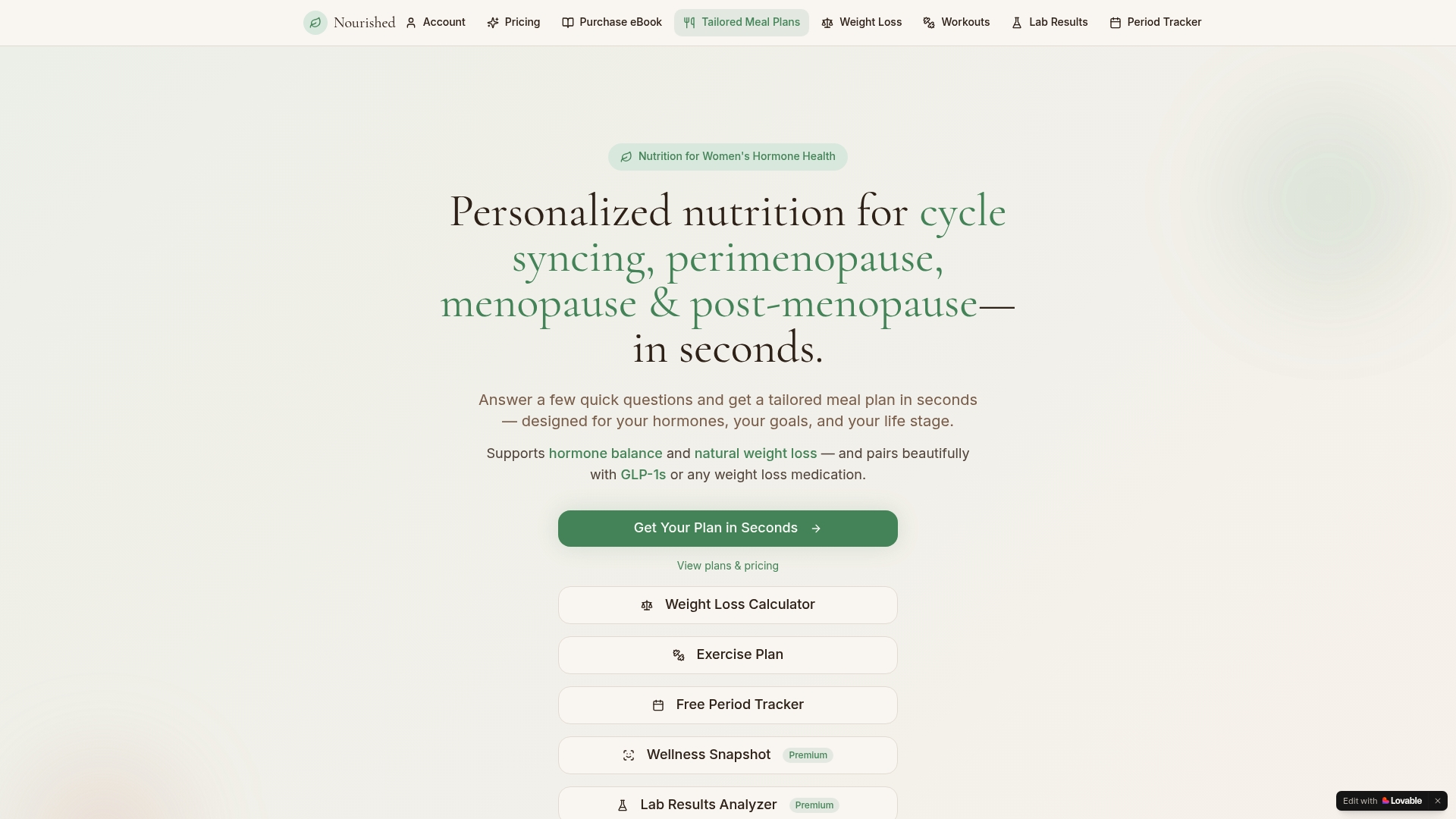
The platform uses AI to generate meal plans based on your hormonal needs and preferences, adapting as your cycle and symptoms shift. You get immediate access to hormone-supportive nutrition plans built around the principles covered in this article: adequate protein, fiber-rich foods, and balanced carbohydrate pairing. Nourished also offers a free cycle tracker to help you connect your symptoms to your hormonal patterns. If you want to see the evidence behind the recommendations, the full research references are publicly available.
FAQ
How much protein do perimenopausal women need daily?
Registered dietitians recommend 1.2–1.6g of protein per kilogram of body weight daily, with 20–30g per meal. Spreading intake across meals supports muscle protein synthesis more effectively than one large serving.
What foods trigger hot flashes in perimenopause?
Alcohol, spicy foods, and caffeine are the most commonly reported hot flash triggers. Individual sensitivity varies, so tracking your own response over two weeks gives more useful data than general avoidance lists.
Should women in perimenopause avoid carbohydrates?
No. Very low-carbohydrate diets can worsen cortisol dysregulation and muscle loss in perimenopausal women. The better approach is pairing carbohydrates with protein and fat to prevent blood sugar spikes.
How does fiber help with perimenopause symptoms?
Fiber supports the gut bacteria that process and excrete excess estrogen. A daily intake of 25–45g helps stabilize blood sugar, reduce bloating, and support more consistent hormone levels.
Why does alcohol affect perimenopause symptoms more than before?
Estrogen decline after age 40 changes how the liver processes alcohol, making even one standard drink enough to disrupt sleep architecture and worsen vasomotor symptoms like night sweats.