Reduce Cortisol with Anti Inflammatory Foods and 4 Timing Rules
Nourished · August 30, 2026
Reduce Cortisol with Anti Inflammatory Foods and 4 Timing Rules
No single food will flip a switch and drop your cortisol overnight. What actually moves the needle is a consistent anti-inflammatory, low-glycemic eating pattern built around omega-3s, vitamin C, magnesium, fiber, and fermented foods. Regular meal timing matters as much as the food list itself. Diet is one lever among several, working best alongside sleep, movement, and stress management, not as a replacement for them.
TL;DR:
- Consistent intake of omega-3 rich foods like fatty fish or walnuts can lower cortisol levels, but fish intake is more efficient than plant sources.
- Magnesium-rich foods such as leafy greens and seeds support stress response enzymes and are often deficient in Western diets.
- Eating vitamin C-rich produce like citrus and peppers can reduce cortisol reactivity, especially during acute stress encounters.
- Meal timing is crucial; eating within two hours of waking and earlier dinner times help align with natural cortisol rhythms.
- Reducing refined sugars, processed snacks, and excess alcohol helps prevent blood sugar swings and sleep disruptions that elevate cortisol.
Table of Contents
- Foods to Lower Cortisol: A Prioritized Shopping List
- The Science Behind Food and Cortisol Regulation
- Meal Timing Rules That Prevent Cortisol Spikes
- What to Cut Back On, and What to Swap In Instead
- A Sample Day: Meals, Snacks, and a Grocery Checklist
- Interactions and Contraindications to Know Before You Change Your Diet
- How Age, Stress Load, and Health Status Change the Approach
- Why Personalization Matters More Than a Perfect Food List
- Put This Into Practice With a Plan Built Around You
- Sources
Foods to Lower Cortisol: A Prioritized Shopping List
Cortisol doesn’t respond to isolated superfoods. It responds to nutrient patterns repeated over weeks. Still, some foods carry more evidence behind them than others, so they’re worth prioritizing at the grocery store.
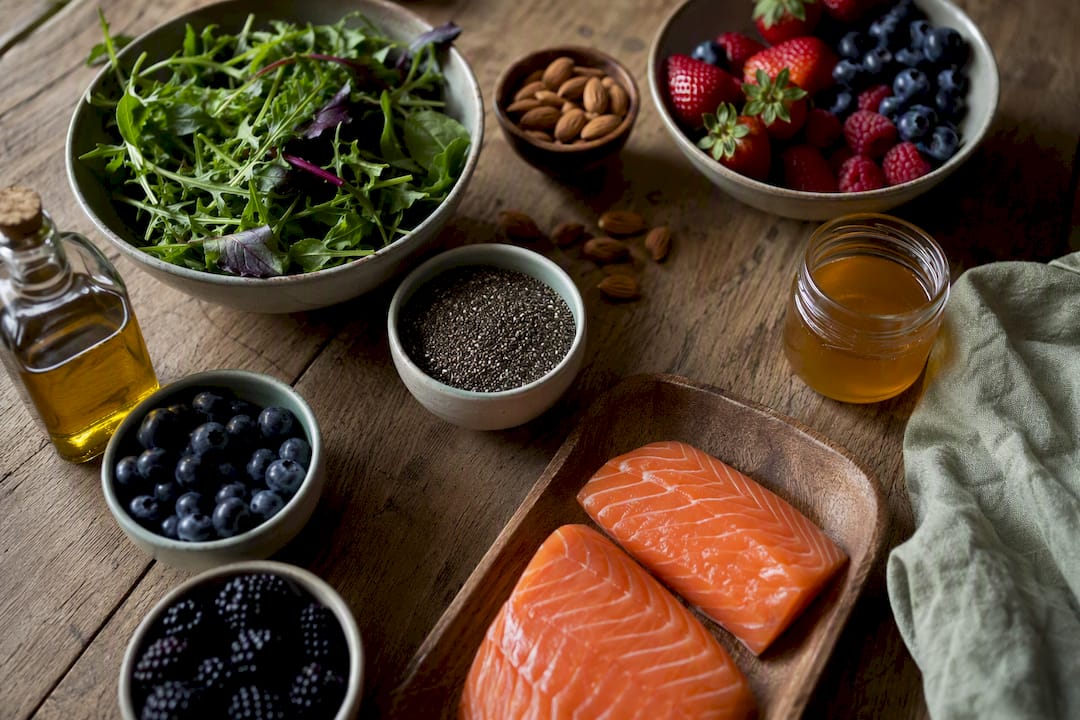
Fatty fish and plant omega-3 sources top the list. Salmon, sardines, walnuts, and chia seeds supply omega-3 fatty acids, and trials link omega-3 supplementation to lower morning cortisol and reduced burnout scores. If you don’t eat fish, walnuts and ground flaxseed are reasonable substitutes, though the conversion to the active omega-3 forms is less efficient than eating fish directly.
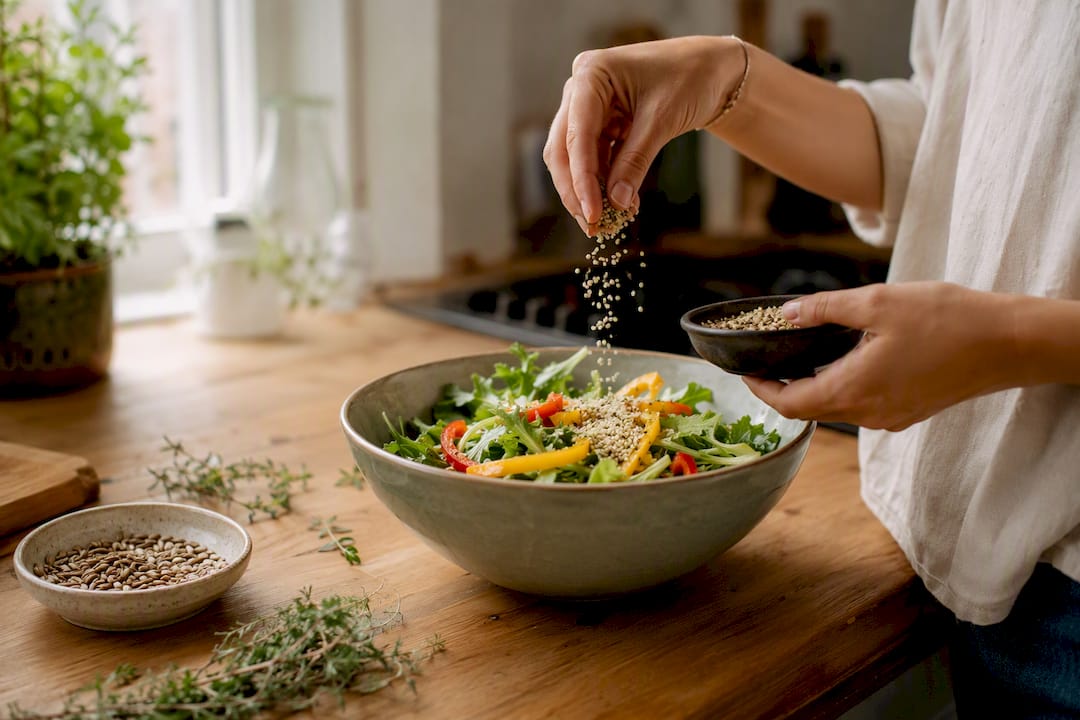
Magnesium-rich foods come next: leafy greens, pumpkin seeds, almonds, and avocado. Magnesium is a cofactor in dozens of enzymatic reactions tied to the stress response, and chronic low intake is common in Western diets heavy on refined grains.
Vitamin C-rich produce deserves a permanent spot in your cart. Citrus, bell peppers, and broccoli aren’t just immune-support clichés. Clinical work on stress physiology and vitamin C interventions shows reduced cortisol reactivity in some trials of healthy adults, particularly around acute stress exposure.
Polyphenol-rich foods like berries, dark cocoa (70% or higher), and green tea show modest but repeated signals for lowering inflammatory markers tied to cortisol regulation. Nobody’s claiming dark chocolate is medicine, but the polyphenol content genuinely does something at the cellular level.

Fermented foods and fiber work more slowly. Yogurt, kefir, and sauerkraut feed the bacteria that produce short-chain fatty acids, and gut-brain axis research shows this can modestly dampen stress-related cortisol responses, though the effect builds over weeks rather than days.
Protein at every meal (eggs, chicken, legumes, Greek yogurt) stabilizes blood sugar, which indirectly prevents the glucose swings that provoke cortisol release. Pair it with healthy fats and antioxidants like extra-virgin olive oil and mixed nuts for the anti-inflammatory backbone the whole pattern depends on.
- Fatty fish (salmon, sardines) or walnuts and chia for omega-3s
- Leafy greens, pumpkin seeds, avocado for magnesium
- Citrus, bell peppers, broccoli for vitamin C
- Berries, dark cocoa, green tea for polyphenols
- Yogurt, kefir, sauerkraut for gut-supportive fermentation
- Eggs, chicken, legumes for steady protein
- Olive oil and nuts for anti-inflammatory fat
Pro Tip: Build each plate around a protein, a fiber source, and a fat, then add color from produce. If you’ve hit those three targets, you’ve probably already hit half this list without trying.
The Science Behind Food and Cortisol Regulation
Blood sugar swings are the most direct trigger. A meal heavy in refined carbohydrate spikes glucose, and the resulting insulin surge and subsequent drop can provoke a stress response, including a cortisol bump. Pairing carbohydrate with protein, fiber, and fat blunts that swing, which is why “protein at every meal” isn’t just a bodybuilding cliché. It’s a cortisol-management tactic.
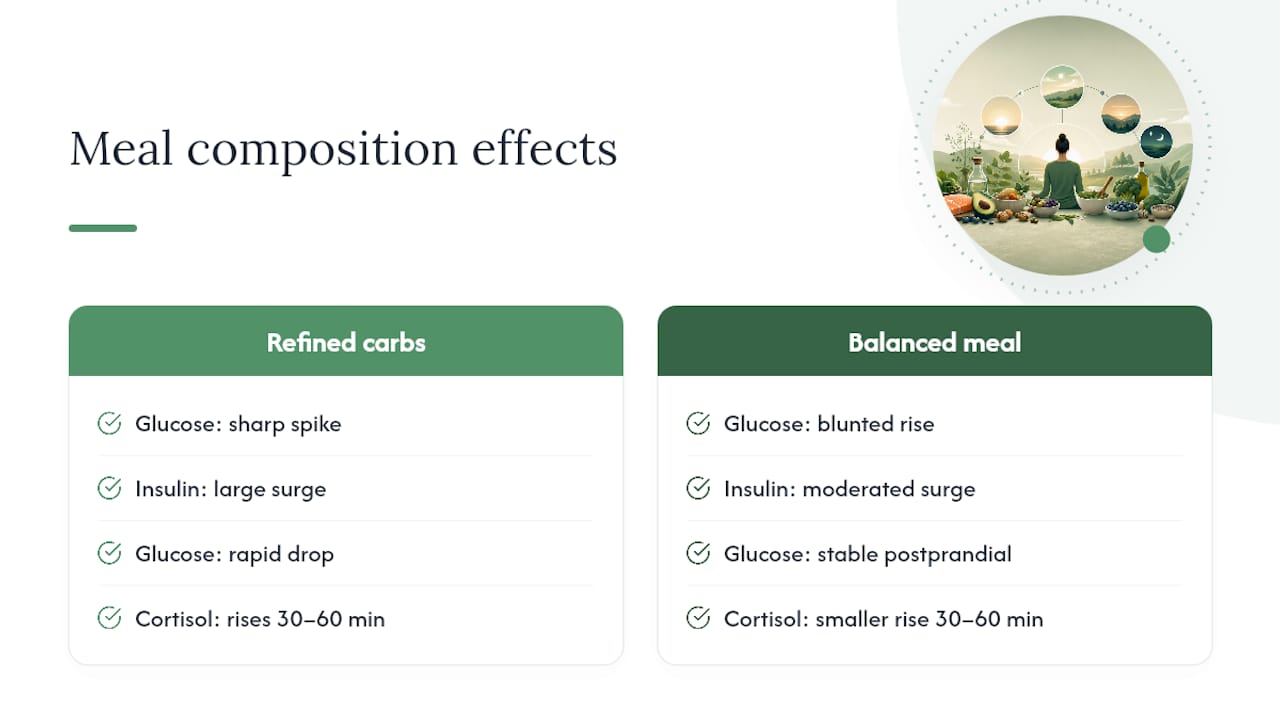
Cortisol itself rises within 30 to 60 minutes of eating and typically returns to baseline within about two hours, a pattern documented in research on how nutrients influence daily cortisol secretion. That window is exactly why meal composition, not just meal content, shapes your daily cortisol rhythm.
Omega-3s and vitamin C appear to work through different but complementary routes. Trials on omega-3 supplementation and stress outcomes report lower cortisol and reduced perceived stress after consistent supplementation. Antioxidants and magnesium support the inflammatory and adrenal pathways that keep the hypothalamic-pituitary-adrenal axis, the system governing cortisol release, from running hot.
The gut-brain axis adds a slower-acting layer: fermented foods and fiber that raise short-chain fatty acid production show small, reproducible reductions in stress-related cortisol responses, but the timeline is measured in weeks of consistent intake, not single servings.
Meal Timing Rules That Prevent Cortisol Spikes
When you eat matters almost as much as what you eat. Cortisol naturally peaks in the morning and declines through the day, and meal timing either supports or fights that rhythm.
- Eat within one to two hours of waking, and include protein. This works with your natural cortisol peak instead of against it.
- Favor earlier eating windows. High-glycemic meals late at night provoke wider glucose swings and reactive cortisol increases, according to research on food timing and daily cortisol secretion. An earlier dinner, or a modest early time-restricted eating window, tends to align better with cortisol’s natural evening decline.
- Skip extreme calorie restriction during high-stress stretches. Prolonged fasting on top of chronic stress can push cortisol higher rather than lower.
- Time caffeine around food. Black coffee on an empty stomach can amplify a cortisol response in sensitive people; pairing it with breakfast softens that effect.
Pro Tip: If you only change one habit this month, move dinner earlier and add protein to breakfast. Those two shifts touch both ends of your daily cortisol curve.
What to Cut Back On, and What to Swap In Instead
Refined sugar and ultra-processed snacks drive inflammation and repeated blood-sugar spikes, which keeps nudging cortisol upward through the day, illustrating the principles outlined in The Real Role of Comfort Foods in Your Emotional Health – TOJ EXPRESS. Frequent high-sugar snacking is worse than an occasional dessert because it keeps the glucose rollercoaster running on a loop.
Alcohol disrupts sleep architecture even when it feels relaxing in the moment, and poor sleep is one of the most reliable ways to elevate next-day cortisol. If you drink, earlier in the evening and in smaller amounts does less damage than a nightcap. Caffeine isn’t off limits, but drinking it on an empty stomach, especially before 10 a.m. when cortisol is already near its peak, can compound the response.
Small swaps make this sustainable:
- Soda → flavored sparkling water with a splash of juice
- Pastry → Greek yogurt with berries and a drizzle of honey
- Chips → roasted chickpeas or a handful of walnuts
- Evening wine → herbal tea or a lower-alcohol option earlier in the night
- Energy drink → coffee eaten alongside breakfast, not instead of it
A Sample Day: Meals, Snacks, and a Grocery Checklist
Here’s what the pattern looks like on an actual plate, not just a list of nutrients.
- Breakfast: Eggs with sautéed spinach and avocado on whole-grain toast, or Greek yogurt with berries, chia seeds, and walnuts.
- Lunch: Grilled chicken or lentils over greens with olive oil, roasted broccoli, and bell peppers.
- Dinner (earlier is better): Baked salmon or sardines with quinoa and a big side of roasted vegetables.
- Snacks: Apple with almond butter, a small handful of pumpkin seeds, or kefir with a few berries mixed in.
Grocery checklist to keep stocked: salmon or sardines, walnuts and chia seeds, leafy greens, citrus and bell peppers, plain yogurt or kefir, eggs, legumes, and extra-virgin olive oil.
Expect subtle shifts in energy and stress resilience within a few weeks, but the gut-related benefits from fermented foods and fiber build over a longer period of consistent intake.
Interactions and Contraindications to Know Before You Change Your Diet
Most of the foods discussed here are safe for the general population, but a few interactions deserve attention. High vitamin C intake, especially from supplements rather than food, can interfere with certain chemotherapy agents and may affect iron absorption in people managing hemochromatosis. Anyone on blood thinners like warfarin should be cautious with sudden increases in vitamin K-rich leafy greens, since consistency matters more than avoidance.
Omega-3 supplements at higher doses can have a mild blood-thinning effect, which matters for anyone already on anticoagulant or antiplatelet medication. Talk to a prescribing doctor before adding a concentrated fish oil supplement, even though food-based omega-3 sources like salmon rarely pose the same risk at normal serving sizes.
Fermented foods carry histamine, and people with histamine intolerance can experience headaches or flushing after kefir, sauerkraut, or aged cheese. That’s worth knowing before you load up on fermented foods expecting only benefits.
People managing diabetes or on medications that affect blood sugar, like insulin or sulfonylureas, should coordinate any shift toward lower-carbohydrate or time-restricted eating with their care team, since meal timing changes can affect medication dosing needs.
None of this means avoid these foods. It means introduce changes gradually and loop in a doctor or pharmacist if you’re on medication that interacts with vitamin K, blood thinners, or blood sugar regulation.
How Age, Stress Load, and Health Status Change the Approach
A 20-something dealing with occasional work deadlines has different needs than someone navigating perimenopause with chronic sleep disruption. Hormonal shifts across the menstrual cycle change how the body handles blood sugar and stress, which means a cortisol-friendly eating pattern that works one week may need adjusting the next.
Older adults often need more attention to protein intake, since muscle maintenance becomes harder with age and protein also plays a direct role in blood sugar stability. People under chronic, ongoing stress, rather than occasional acute stress, tend to benefit more from the slower-acting interventions like fermented foods and fiber, since their systems are working against a longer baseline of elevated cortisol.
Anyone managing PCOS, thyroid conditions, or autoimmune disease should treat this as a general framework, not a prescription, since inflammatory and metabolic baselines vary widely across those conditions. Adaptogens like ashwagandha and rhodiola show some promise in select studies on herbal stress interventions, but the evidence is mixed enough that they’re worth discussing with a clinician rather than adding blindly.
Why Personalization Matters More Than a Perfect Food List
The biggest gap between generic cortisol advice and what actually works is that most guides treat every reader the same. A woman in perimenopause dealing with disrupted sleep needs a different emphasis than someone tracking a regular cycle, and stress load itself changes how a body responds to the exact same plate of food.
Diet is one tool. Sleep, movement, and how you handle stress day to day carry just as much weight, and no eating pattern fixes a chronically short night of sleep. If your hormonal picture or stress load feels specific to you, a plan built around your actual cycle and life stage, not a one-size list, tends to serve you better than another generic food chart. Nutrition research increasingly backs inflammation’s role in weight and hormone regulation, which is exactly where personalized planning earns its keep.
— Brittany
Put This Into Practice With a Plan Built Around You
Nourished turns everything in this article into an actual meal plan instead of another list you have to figure out on your own. The AI customization adjusts recommendations to your cycle, life stage, and hormonal needs, whether that’s perimenopause, PCOS, or simple day-to-day stress management, and it generates meals immediately with no calorie counting involved.
That matters because a magnesium-and-omega-3 checklist is only useful if it turns into groceries and dinners you’ll actually make on a Tuesday night. Nourished handles that translation, pairing protein-forward, anti-inflammatory meals with workouts adapted to your hormonal phase. If you want to see exactly how the personalization works before committing, the tutorial walkthrough breaks down the process step by step. Ready to build a plan around your own hormonal picture instead of a generic list? Start with Nourished and get a plan generated around your specific needs.
Sources
For readers who want the primary research behind these recommendations, start with the MDPI review on food, nutrients, and daily cortisol secretion, the Cleveland Clinic’s guidance on lowering cortisol, and Nourished’s own research and references page.
This article is general information, not a substitute for advice from a qualified doctor. Consult a qualified healthcare professional about your own circumstances before acting on anything here.
- Feeding the Rhythm—Effects of Food and Nutrients on Daily Cortisol Secretion: From Molecular Mechanisms to Clinical Impact (MDPI)
- NCBI resource on stress physiology and interventions
- Omega-3s and stress response (NCBI PMC article)
- Gut–brain axis and probiotics research (NCBI PMC article)