
Creatine for Women: Muscle, Mood, and Menopause Support
Nourished · August 27, 2026
Creatine for Women: Muscle, Mood, and Menopause Support
Yes, creatine is safe and beneficial for most healthy adult women, and the evidence for it has never been stronger. A lifespan-focused review of women’s health research confirms creatine supplementation supports strength, physical function, and possibly bone density, particularly when paired with resistance training. Cedars-Sinai’s clinical guidance backs this up: creatine is one of the most studied supplements available, with a safety record that holds up across decades of research.
Here’s what that means for you in practice. The benefits show up in several places at once:
- Muscle and strength. Creatine helps you build and retain lean mass, which matters more with each passing decade.
- Bone support. When combined with resistance training, creatine may help protect bone density during the years estrogen decline puts it at risk.
- Cognition and mood. Emerging research points to modest but real improvements in mental clarity and mood, especially during hormonal transitions.
The caveats matter just as much as the benefits. Women with kidney disease, those who are pregnant or breastfeeding, and anyone on medications that affect kidney function should talk to a clinician before starting. For everyone else, the standard maintenance dose is 3 to 5 grams a day, and it works best as one piece of a bigger picture: creatine amplifies what resistance training already does. It won’t build muscle sitting in a kitchen cabinet.
Quick take: Creatine monohydrate at 3 to 5 grams daily, taken consistently, paired with strength training two to three times a week, is the protocol backed by the most research for women at any life stage.
TL;DR:
- Creatine supplementation provides the most benefit when combined with resistance training at least two to three times a week.
- Women, especially during menopause, have lower natural creatine stores, making supplementation more impactful for muscle and brain health.
- A daily dose of 3 to 5 grams of creatine is effective and safe for most healthy women, but those with kidney issues or during pregnancy should consult a healthcare professional.
- Creatine’s benefits for bone density depend on pairing it with weight-bearing exercises, not on supplementation alone.
- Consistent intake at the same time daily, paired with adequate protein and tailored nutrition, maximizes creatine’s effects across different life stages.
Table of Contents
- How Creatine for Women Works: Muscle, Brain, and Bone Evidence
- Is Creatine Safe? Contraindications and Screening Before You Start
- Creatine Dosing for Women: Loading, Maintenance, and Real Numbers
- Getting the Most From Creatine: Training, Protein, and a Sample Week
- Creatine After Menopause: Why the Timing Matters So Much
- What the Research Actually Supports (and What It Doesn’t Yet)
- Where Creatine Fits Into a Bigger Hormone-Health Picture
- A Guided Way to Pair Creatine With the Right Nutrition Plan
- Key Takeaways
- Sources
How Creatine for Women Works: Muscle, Brain, and Bone Evidence
Creatine’s job in your body is simple: it helps regenerate ATP, the molecule your muscles burn for quick, forceful effort. When you lift a heavier dumbbell than last week or sprint for a bus, your muscles pull from phosphocreatine stores to keep producing energy fast. More available creatine means more of that reserve on tap, particularly during the short, intense efforts that build strength over time.
Here’s the detail most women never hear: you start at a disadvantage. Women naturally carry 70 to 80 percent lower endogenous creatine stores than men, largely tied to lower muscle mass and hormonal differences in creatine synthesis and transport. That’s not a small gap. It helps explain why supplementation studies in women often show meaningful, sometimes outsized, functional improvements compared to men, who are already closer to their biological ceiling.
What the research shows for strength and performance
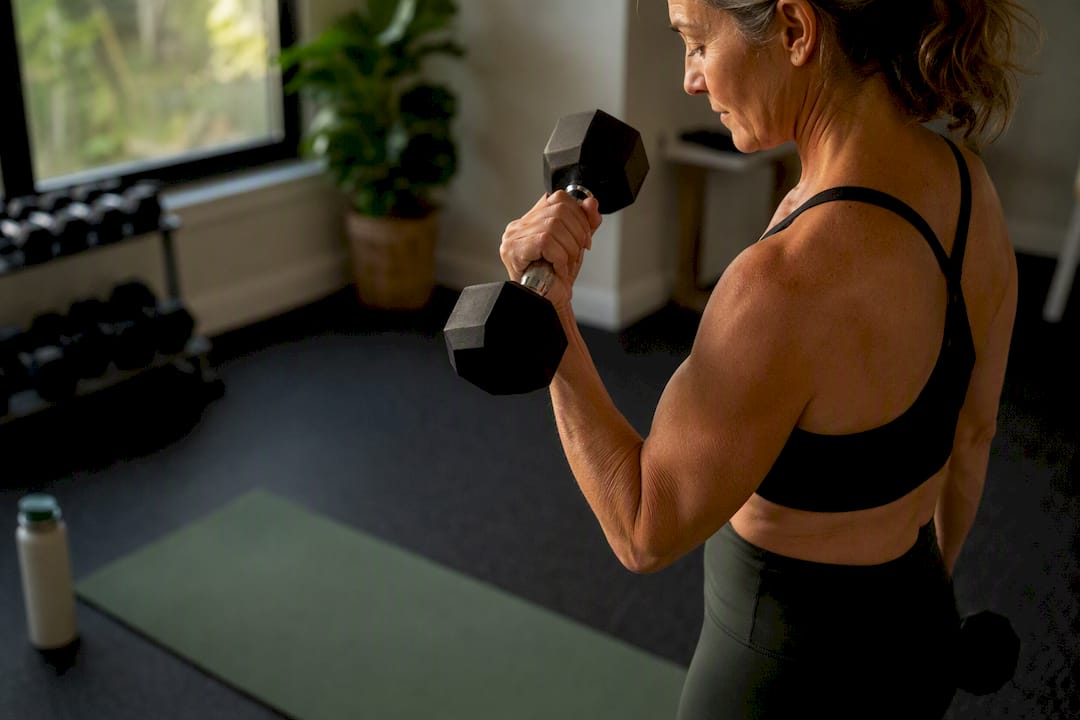
The lifespan-perspective review of women’s health research is the most useful single document on this topic because it tracks outcomes across different reproductive stages rather than treating “women” as one group. Its consistent finding: creatine supplementation improves strength and physical function in both premenopausal and postmenopausal women, with the largest, most reliable gains appearing when supplementation is stacked on top of a structured resistance training program. Creatine without training produces smaller, less consistent results. This is a recurring theme across the research, and it’s worth internalizing before you spend money on a tub of powder expecting magic.
Cognition and mood: the newer frontier
The muscle story is well established. The brain story is newer and arguably more interesting for women navigating perimenopause and menopause, when brain fog and mood shifts are common complaints. Researchers at CU Anschutz have been examining whether creatine can support women’s health as they age beyond the gym, and the early signal is promising. Creatine appears to support cognitive processing under conditions of physiological or metabolic stress, sleep deprivation being a well-studied example, and menopause itself functions as a prolonged metabolic stressor on the brain.

There’s also a mood dimension worth flagging. Some research suggests creatine may complement antidepressant treatment without disrupting hormonal balance, a finding that matters given how often mood symptoms surface during hormonal transitions. This isn’t a replacement for treatment. It’s a supporting player that seems to do no harm and may do some good, particularly for women whose diets are naturally lower in creatine to begin with.
Bone health: the training-dependent piece
Bone is where the evidence gets more nuanced, and it’s important to be honest about that nuance rather than oversell it. Creatine alone does not appear to meaningfully change bone density. The benefit shows up specifically when creatine is combined with resistance or “osteogenic” loading, the kind of weight-bearing, impact-friendly training that signals bone to remodel and strengthen. One useful breakdown on pairing creatine with osteogenic loading lays out why the mechanical stimulus and the supplement seem to work synergistically rather than independently.
Physiologists and registered dietitians who study this space are fairly unified on one point: creatine’s biggest returns come from consistent resistance training, at least two sessions a week, not from the supplement in isolation. Think of creatine as raising the ceiling on what your training can produce, not as a substitute for the training itself.
Is Creatine Safe? Contraindications and Screening Before You Start
For most healthy women, creatine monohydrate is about as safe as supplements get. Cedars-Sinai’s clinical summary places it among the best-researched supplements on the market, and Harvard Health echoes that assessment, noting creatine’s strong safety profile in healthy adults even as it acknowledges that long-term data in certain subgroups remains thinner than researchers would like.
That said, “safe for most” isn’t “safe for everyone,” and a short self-screen before you start can save you a headache later.
- Do you have known kidney disease or reduced kidney function? Creatine is processed by the kidneys, and while it doesn’t damage healthy kidneys, existing kidney impairment changes the risk calculus. Talk to your doctor first.
- Are you pregnant or breastfeeding? There isn’t enough safety data in these populations to recommend supplementation. Pause creatine and revisit the conversation with your OB or midwife postpartum.
- Are you taking NSAIDs regularly, diuretics, or other medications that affect kidney function? Long-term NSAID use, diuretics, and certain nephrotoxic drugs can interact with how your kidneys handle the extra creatine load. This warrants a conversation with whoever manages your prescriptions, not a guess.
- Do you have any diagnosed liver condition? Less commonly flagged, but still worth mentioning to your provider given creatine’s metabolic pathway.
If none of these apply to you, you’re in the population where creatine has been studied most and performs best.
Side effects and how to reduce them
The two complaints that come up most often are gastrointestinal upset and temporary water retention. Neither is dangerous, but both are avoidable with small adjustments.
GI discomfort, bloating or mild cramping, usually happens when someone takes a large dose all at once on an empty stomach. Splitting your daily dose (say, 2.5 grams twice a day instead of 5 grams once) and taking it with food resolves this for most people within days.
Water retention is the other common concern, and it trips people up because it can look like weight gain on a scale. Creatine draws water into muscle cells, which is part of how it supports performance. This is intracellular water, not fat, and it typically stabilizes within a couple of weeks. If it bothers you, skipping the loading phase and starting at a lower maintenance dose minimizes the early shift.
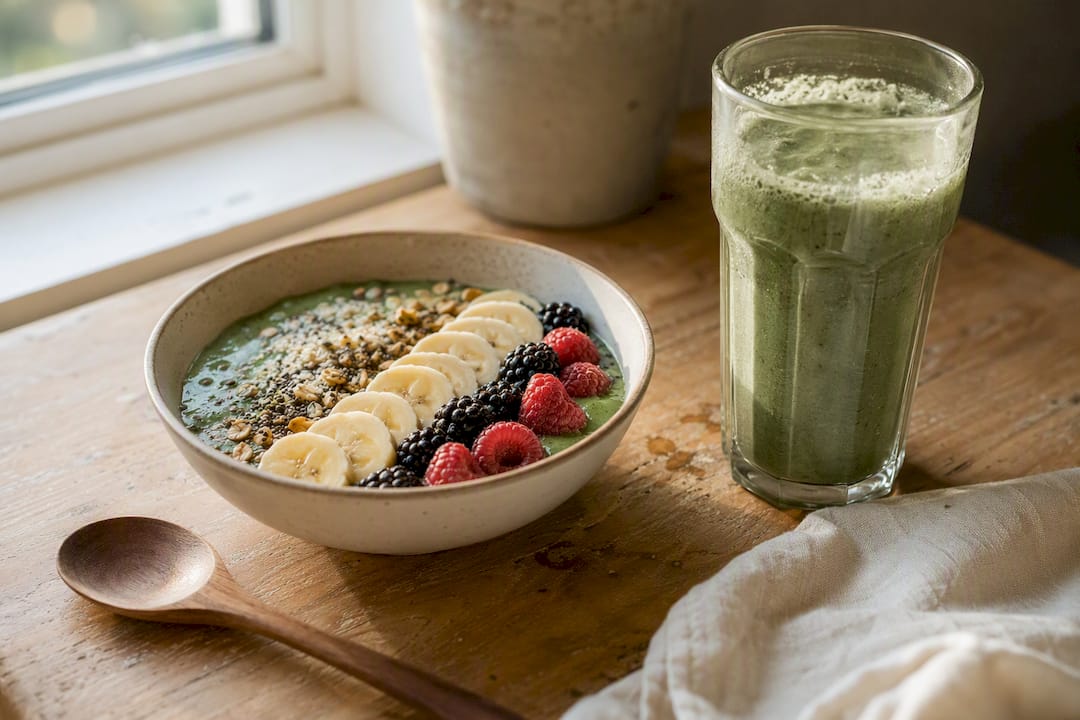
Pro Tip: If you’re sensitive to bloating, buy a micronized creatine monohydrate and mix it into a smoothie or oatmeal rather than water alone. The distribution across a thicker medium seems to reduce the “gulp of chalky powder” sensation that triggers stomach upset for some women.
Creatine Dosing for Women: Loading, Maintenance, and Real Numbers
Dosing confuses people because the internet is full of bodybuilding-forum advice that doesn’t reflect what the actual research supports for women. Here’s the version grounded in trial data.
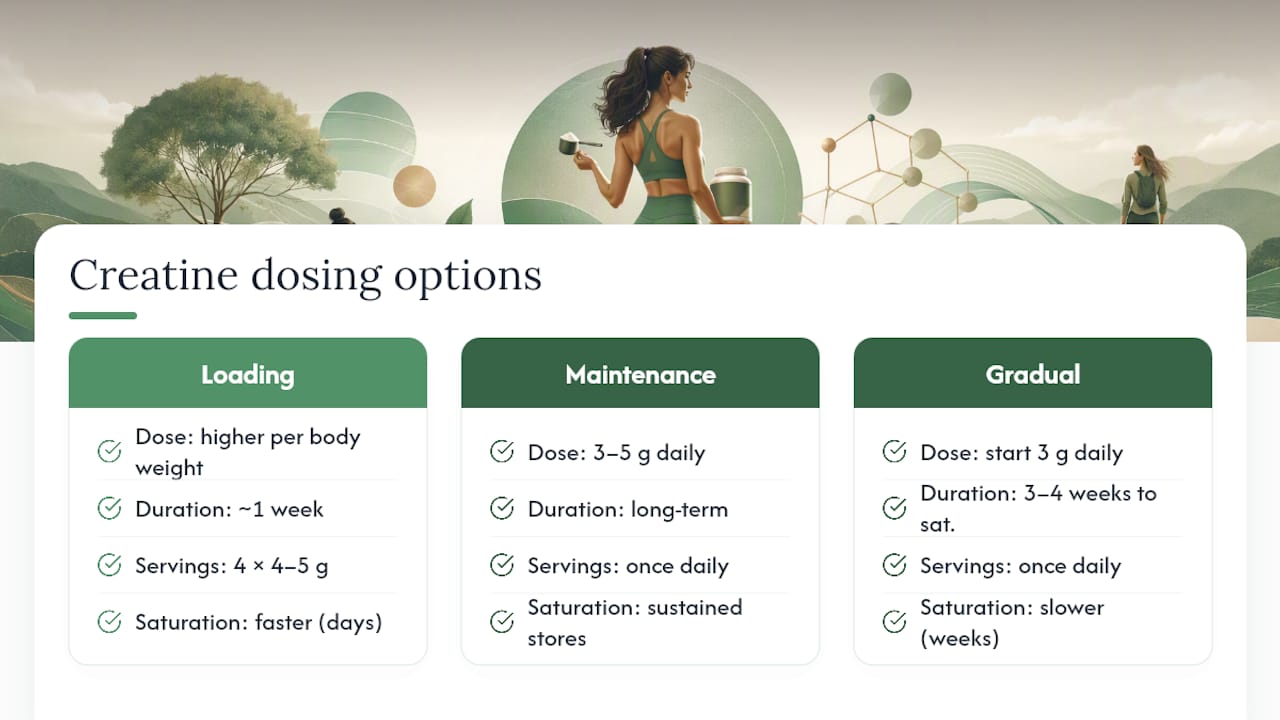
Maintenance dosing: 3 to 5 grams per day. This is the number that shows up across the majority of women’s health trials, and it’s the dose that sustains elevated muscle creatine stores once they’re saturated. For most women starting from scratch, this is also the simplest, lowest-friction way to begin.
Loading protocol: a higher daily dose per body weight for about a week, then dropping to a 3 to 5 gram maintenance dose. Loading saturates your muscle stores faster, which matters if you want to see effects within a week or two rather than a month. Some trials in older women have used exactly this kind of short-term loading phase to accelerate improvements in muscle mass and strength before settling into long-term maintenance dosing.
Here’s what that looks like with real body weights:
Loading doses are typically split into 4 servings of 4 to 5 grams spread across the day rather than taken all at once, which reduces GI discomfort significantly.
The gradual approach: skip loading entirely and start at 3 grams a day. You’ll reach saturated muscle stores in about three to four weeks instead of one, but you avoid the higher-volume dosing that sometimes causes stomach upset in people new to creatine. For most women without a specific performance deadline, this is the more comfortable on-ramp, and it’s what many registered dietitians recommend as a default.
There’s also a separate dosing pattern that shows up specifically in cognitive research: some trials examining brain-related outcomes have used short-term higher doses beyond standard maintenance levels. These protocols are less standardized than the muscle-focused research and should only be attempted under clinician supervision, since the safety and efficacy data at those doses is thinner than what backs the standard 3 to 5 gram range.
Pro Tip: Timing relative to your workout matters less than people assume. What matters is daily consistency. Take your dose at the same time each day, whether that’s with breakfast or right after your workout, so it becomes automatic rather than something you forget three days a week.
Getting the Most From Creatine: Training, Protein, and a Sample Week
Creatine is a multiplier, not a standalone strategy. Without the right training stimulus and enough protein to rebuild the muscle tissue you’re breaking down, you’re leaving most of its benefit on the table.
- Train with resistance at least two to three times a week. The CDC’s physical activity guidelines for adults recommend muscle-strengthening activity on two or more days weekly, and this happens to be the same frequency that shows up repeatedly in creatine research as the threshold for meaningful results. Progressive overload, gradually increasing weight, reps, or sets over time, is what actually drives the adaptation; creatine just gives you more fuel to push that progression.
- Eat 1.2 to 1.6 grams of protein per kilogram of body weight daily. For a 150-pound woman, that’s roughly 82 to 109 grams a day. Spreading this across three or four meals, rather than loading it all at dinner, appears to support muscle protein synthesis more effectively than one large serving. Nourished’s guide on protein needs during perimenopause breaks down what that looks like meal by meal.
- Stay ahead of hydration, and don’t panic about the scale. Creatine pulls water into your muscles, and that can nudge the number on your bathroom scale up by a pound or two in the first couple of weeks. Watch performance markers instead, how much you’re lifting, how you recover between sets, and use urine color as a rough hydration check rather than obsessing over daily weight.
- Build a program you’ll actually repeat. Consistency beats intensity here. A workable two-day split might look like: Day 1, squats, push-ups, rows, and a hip hinge movement like a Romanian deadlift; Day 2, lunges, an overhead press, pull-downs, and a single-leg balance exercise. Stanford’s strength training framework for women 50 and older centers on exactly these movement patterns: push, pull, squat, hinge, and single-leg work, done with enough resistance that the last two reps feel genuinely hard.
Take your creatine dose whenever fits your day best, morning coffee, post-workout shake, dinner. What predicts results isn’t the clock, it’s whether you’re still taking it in month three.
Pro Tip: Pair your creatine dose with a protein-rich meal instead of taking it separately. It’s one less thing to remember, and there’s some evidence that consuming creatine alongside carbohydrates or protein may modestly improve muscle uptake compared to taking it alone on an empty stomach.
Creatine After Menopause: Why the Timing Matters So Much
If there’s one life stage where creatine deserves more attention than it gets, it’s the menopause transition. The physiology explains why.
Estrogen plays a role in regulating creatine synthesis and how efficiently your body transports it into muscle. As estrogen declines through perimenopause and into menopause, that regulatory support fades, compounding the fact that women already store 70 to 80 percent less creatine than men to begin with. This is also the exact window when muscle loss accelerates and bone density starts declining faster, which is precisely why researchers have zeroed in on postmenopausal women as a group likely to benefit substantially from supplementation.
The trial data backs this up. Studies in postmenopausal women have shown improvements in muscle mass, strength, and functional measures like sit-to-stand performance, with the strongest results appearing when creatine is paired with structured resistance training rather than used alone. A practical way to test your own response: try a six to eight week trial alongside two to three weekly resistance sessions, tracking a simple function measure like how many times you can stand from a chair without using your hands in 30 seconds.
A few other groups worth flagging specifically:
- Vegetarians and vegans typically start with lower baseline creatine stores, since dietary creatine comes almost exclusively from meat and fish. This means plant-based women often see larger relative improvements from supplementation than omnivores, simply because they have more room to gain.
- Women on hormone therapy haven’t been extensively studied in creatine trials specifically, but nothing in the current research suggests a conflict. This is a reasonable conversation to have with your prescribing physician.
- Pregnant and breastfeeding women should still avoid supplementation. This bears repeating because the postmenopausal enthusiasm around creatine sometimes gets applied indiscriminately across every life stage, and pregnancy and lactation remain firm exceptions until more safety data exists.
What the Research Actually Supports (and What It Doesn’t Yet)
Evidence quality varies a lot depending on which benefit you’re asking about, and being upfront about that difference is part of using creatine responsibly.
- Strength and physical function: strong evidence. Multiple trials across different female populations, including postmenopausal women, consistently show improvement, particularly when paired with resistance training.
- Bone density: moderate evidence, training-dependent. Benefits appear real but are inconsistent unless creatine is combined with mechanical loading exercises.
- Cognition and mood: emerging, moderate evidence. Promising signals, especially under conditions of physiological stress, but the research base is smaller and less mature than the strength literature.
- Long-term safety across decades of use: reassuring but incomplete. Short and medium-term safety data is robust. Multi-year trials in older women specifically, and any data in pregnancy, remain limited.
Trial heterogeneity is the honest asterisk on all of this. Studies vary in dose, whether they use a loading phase, participant age, and training status, and that variation explains why headlines sometimes seem to contradict each other. A trial using low-dose creatine with no training component will naturally produce weaker results than one combining higher doses with supervised resistance training.
The research gap that matters most for women isn’t whether creatine works. It’s how it behaves specifically across female biology, hormone status, and life stage, questions that are only now getting the dedicated attention they deserve.
Large-scale, multi-year female-specific trials, particularly in pregnancy and older age, remain the frontier researchers still need to close.
Where Creatine Fits Into a Bigger Hormone-Health Picture
Creatine is one of the few supplements I’d call genuinely evidence-backed rather than trend-driven, and that matters to me because so much of what gets marketed to women during perimenopause and menopause is not. But a supplement is still just one input. It works because of what surrounds it: consistent resistance training, adequate protein, and a nutrition approach that actually accounts for what’s happening hormonally rather than treating every woman’s calorie needs as identical.
That’s the gap Nourished is built to close. Its AI-personalized meal and workout plans adjust for cycle phase, perimenopause, and menopause, which means the protein targets and training splits that make creatine effective aren’t guesswork. They’re built into the plan from day one. If you’re already taking creatine and wondering whether your nutrition is actually supporting it, that’s worth investigating.
— Brittany
A Guided Way to Pair Creatine With the Right Nutrition Plan
Getting the dosing right is one part of the equation. Getting your protein, training split, and calorie intake to actually match your hormonal life stage is the harder part, and it’s the part most generic fitness apps get wrong because they treat a 45-year-old in perimenopause the same as a 25-year-old with a stable cycle.
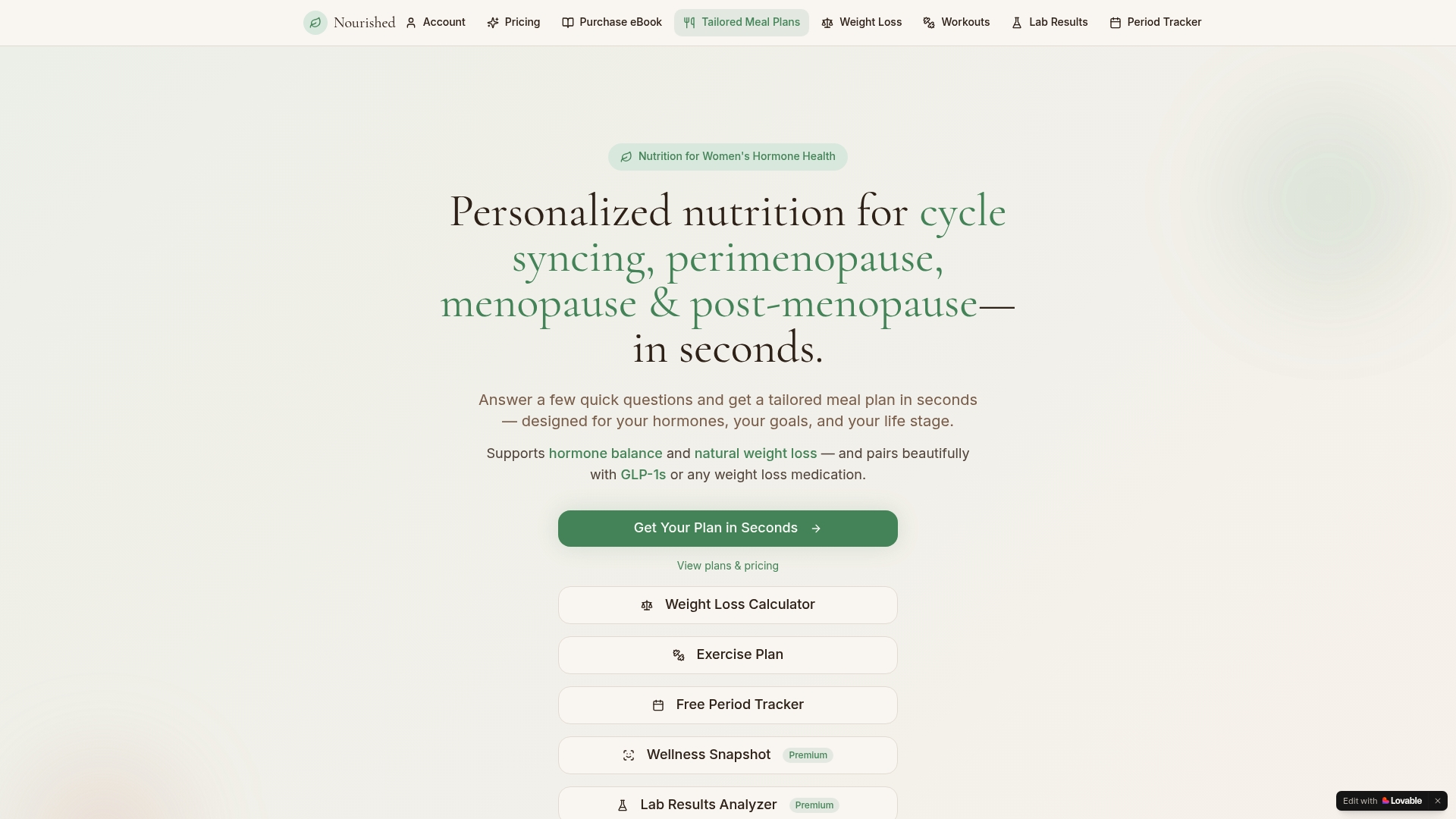
Nourished builds personalized meal plans and hormone-adaptive workout routines that adjust automatically for where you are, whether that’s cycle syncing, perimenopause, menopause, or post-menopause, without calorie counting or restrictive rules. The plans generate instantly and account for the protein targets and training frequency this article just walked through, so you’re not left reverse-engineering macros on your own. If you’re a woman who wants a guided plan built specifically around strength maintenance and hormonal support rather than one-size-fits-all advice, see how Nourished’s plans work and start building a routine that actually matches your life stage.
Key Takeaways
Creatine at 3 to 5 grams daily works best for women when paired consistently with resistance training, adequate protein, and life-stage-adjusted nutrition.
| Point | Details |
|---|---|
| Verdict on safety | Creatine is safe for most healthy adult women; kidney disease, pregnancy, and breastfeeding are the main exceptions. |
| Dosing that works | Maintenance of 3 to 5 grams daily, with or without a loading phase of about 5 days. |
| Training is non-optional | Benefits for muscle, strength, and bone depend on resistance training at least 2 to 3 times weekly. |
| Menopause is a key window | Estrogen decline lowers creatine synthesis, making supplementation especially relevant in perimenopause and beyond. |
| Nourished for the nutrition side | Nourished pairs hormone-stage-adjusted meal and workout plans with the protein and training targets creatine research supports. |
This article is general information, not a substitute for advice from a qualified doctor. Consult a qualified healthcare professional about your own circumstances before acting on anything here.
Sources
- Creatine Supplementation in Women’s Health: A Lifespan Perspective
- Should You Take Creatine? Benefits, Risks and Uses | Cedars-Sinai
- Can Taking Creatine Help Women Stay Healthy as They Age?
- Strength training for women 50+ (Stanford Lifestyle Medicine)