Skip the Science: Cycle Syncing Meal Prep Built on One Weekly Batch
Nourished · August 29, 2026
Skip the Science: Cycle Syncing Meal Prep Built on One Weekly Batch
Yes, meal prep can make cycle syncing practical: batch a protein, a grain, a cruciferous vegetable, and one easy sauce every week, then remix them into phase-specific meals as your hormones shift. Nourished builds tools around exactly this idea, and the Cleveland Clinic backs the underlying logic that nutrient needs move with your cycle.
TL;DR:
- During the menstrual phase, focus on iron-rich foods like lentils, spinach, and beef, and prepare bulk meals such as stews and boiled eggs for easy access.
- The follicular phase is ideal for batch cooking complex carbs and cruciferous vegetables, with roasted vegetables and cooked grains supporting energy and estrogen metabolism.
- Ovulation calls for light, high-quality meals, including seared fish and pre-chopped salads, with quick, versatile dressings to accommodate active schedules.
- The luteal phase benefits from meals rich in complex carbs and healthy fats, like roasted sweet potatoes and coconut curry, to manage cravings and stabilize blood sugar.
- A weekly batch prep session of proteins, grains, vegetables, and sauces, tailored to cycle phases, simplifies meal planning and adapts easily to variations in cycle length or food sensitivities.
Table of Contents
- What Should You Eat During Your Menstrual Phase?
- How Do You Prep Meals for the Follicular Phase?
- What Foods Support the Ovulatory Phase?
- How Should You Eat During the Luteal Phase?
- What Does a Weekly Cycle-Syncing Prep Session Look Like?
- What Should Be on Your Cycle Syncing Grocery List?
- How Long Do Prepped Meals Stay Fresh?
- Is Cycle Syncing Backed by Research?
- How Do You Adapt This for Food Allergies or Sensitivities?
- Why a Meal-Prep-First Approach Beats Overthinking the Science
- Let Nourished Build Your Phase-Aligned Grocery List for You
- Sources
What Should You Eat During Your Menstrual Phase?
During the menstrual phase (roughly days 1 through 7), your body is losing iron and often craving something warm and easy to digest. Cleveland Clinic recommends leaning into iron-rich foods like grass-fed beef, lentils, and spinach, paired with vitamin C sources such as citrus to help absorption. This is also the phase where energy tends to dip hardest, so your prep should ask nothing of you on the actual day.
- Batch a big pot of lentil stew with turmeric and ginger, then freeze in single-serve containers
- Make bone broth ahead and hard-boil a dozen eggs for grab-and-go protein
- Keep pre-cooked grains and frozen chopped veg on hand for five-minute bowls
- Vegetarians can swap grass-fed beef for lentils, tempeh, or black beans without losing the iron focus
Pro Tip: Freeze stews and soups flat in gallon bags. They thaw in half the time and stack like files in your freezer instead of eating up shelf space.
How Do You Prep Meals for the Follicular Phase?
As estrogen starts climbing, energy usually follows, which makes the follicular phase the best window to prep in bulk. This is when your body handles complex carbs and cruciferous vegetables well, and fermented foods can support the estrogen metabolism happening behind the scenes.
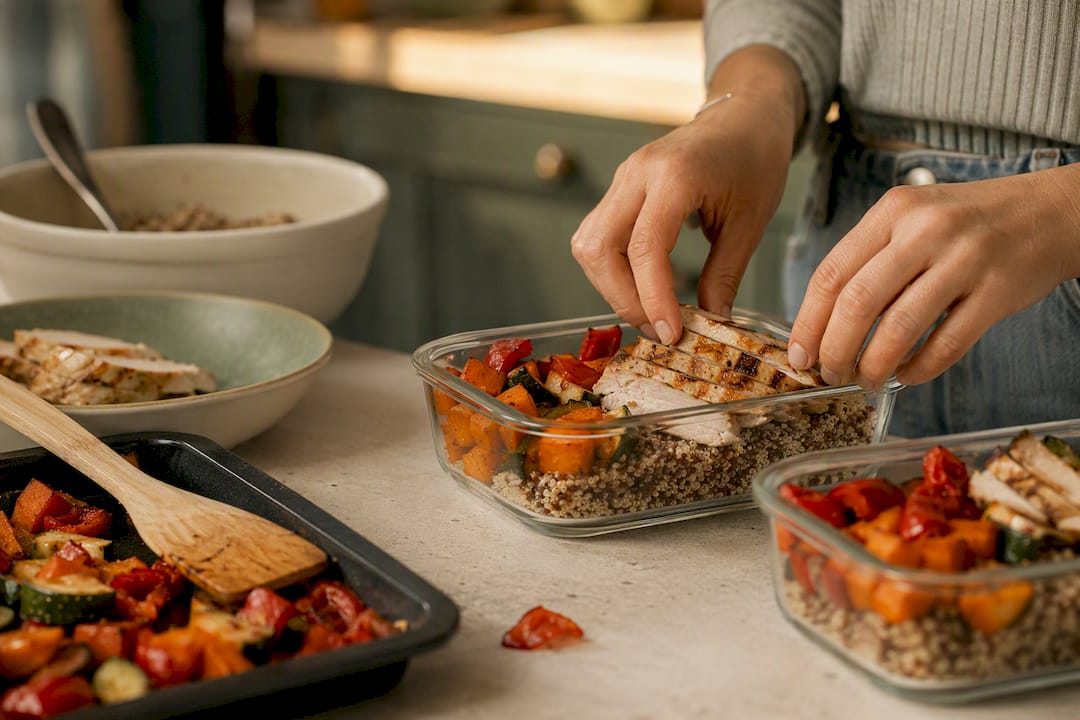
- Roast a full sheet pan of broccoli, brussels sprouts, and cauliflower to use across three or four meals
- Cook a large batch of quinoa or brown rice on Sunday, enough for the whole week
- Add a quick fermented side like sauerkraut or kimchi, both of which keep for weeks in the fridge
- Build grain bowls, overnight breakfast jars, and portable protein packs (hard-boiled eggs, nuts, turkey slices) for busy mornings
The Healthline guidance on cycle nutrition points to exactly this kind of batch cooking as the difference between sticking with a plan and abandoning it by Wednesday.
What Foods Support the Ovulatory Phase?
Ovulation is typically when energy peaks, appetite often dips slightly, and your calendar tends to fill up with plans. Meals should stay light on effort but high on quality: keep the lean protein and fiber habits going, and add antioxidant-rich foods like citrus and extra crucifers to support liver clearance of estrogen.
- Sear a batch of chicken breast or salmon early in the week for quick reheats
- Pre-chop salad bases (kale, cabbage, carrots) so assembly takes two minutes
- Make one versatile dressing or marinade that works on three different proteins
- Lean on colorful, no-cook options (citrus salads, pre-washed greens) that fit a social schedule without extra dishes
How Should You Eat During the Luteal Phase?
The luteal phase is where cravings hit hardest and blood sugar swings get harder to ignore. Complex carbs, fiber, magnesium, and healthy fats work together here to blunt the crash that drives most PMS snacking. This is also the phase to lean on comfort foods that still deliver nutrients, since willpower alone rarely wins against a 4 p.m. sugar craving.
- Batch-roast sweet potatoes; they reheat well and pair with almost anything
- Prep overnight oats with chia seeds and berries for a fiber-and-magnesium breakfast
- Portion snack packs of pumpkin seeds, dark chocolate squares, and dried apricots
- Make a big batch of a warming dish, like a coconut curry, that reheats without drying out
Craving management works better when the satisfying option is as easy to grab as the vending-machine one.*
What Does a Weekly Cycle-Syncing Prep Session Look Like?
A repeatable Sunday session removes the guesswork, whatever phase you happen to be in that week. Verywell Fit’s hormone-balancing meal plan uses the same core idea: batch a handful of components once, then reassemble them differently across the week.
- Cook two proteins (one lean like chicken, one plant-based like lentils or chickpeas)
- Cook two grains or starches (quinoa and sweet potato cover most phases)
- Roast two vegetable types, including at least one cruciferous option
- Make one sauce or dressing that works hot or cold
- Portion three or four snack packs for the week ahead
- Mix-and-match rule: pair the lean protein with grains and citrus during follicular and ovulatory weeks, and pair the plant protein with warming spices and root vegetables during menstrual and luteal weeks
- Expect roughly two to three hours of prep time and a grocery bill similar to your normal weekly shop, since you’re not buying specialty ingredients
If your cycle runs shorter or longer than the typical range, follow your symptoms that week rather than a fixed day count. Cleveland Clinic’s own guidance treats cycle syncing as a flexible template, not a rigid 28-day calendar.
What Should Be on Your Cycle Syncing Grocery List?
Short, phase-keyed lists make the grocery run faster and cut down on impulse buys that don’t fit any phase.
| Phase | Pantry Staples | Fresh Staples | Quick Recipe Idea |
|---|---|---|---|
| Menstrual | Lentils, canned tomatoes, bone broth | Spinach, grass-fed beef, ginger | Lentil stew, prep in bulk, freezes well |
| Follicular | Quinoa, brown rice, sauerkraut | Broccoli, brussels sprouts, citrus | Roasted crucifer grain bowl, batch roast, multiple servings |
| Ovulatory | Olive oil, vinegar, canned salmon | Kale, cabbage, berries | Seared salmon salad, quick prep, multiple servings |
| Luteal | Chia seeds, pumpkin seeds, dark chocolate | Sweet potatoes, coconut milk, oats | Coconut curry, 40 min, 6 servings |
Vegetarian and dairy-free swaps are simple: replace grass-fed beef with tempeh or extra lentils, and use coconut yogurt or tahini in place of dairy-based dressings.
How Long Do Prepped Meals Stay Fresh?
A basic labeling system, phase, date, and reheating notes on masking tape, saves more prepped food than any container upgrade. Most soups and stews hold for four days refrigerated or three months frozen; cooked grains last five days in the fridge; roasted vegetables are best within four days before texture suffers.
- Reheat soups and stews to a full simmer, not just warm, to kill off any bacterial growth
- Store sauces and dressings separately from grains to avoid sogginess
- Revive dry reheated protein with a splash of broth or a drizzle of olive oil before microwaving
- Freeze in flat bags or shallow containers so items thaw evenly instead of staying icy in the center
Roughly a third of household food waste in the U.S. traces back to poor storage habits rather than genuine spoilage, which is exactly what a simple label system fixes.
Is Cycle Syncing Backed by Research?
Cycle syncing rests on a real physiological premise: appetite, metabolism, and nutrient needs shift measurably across the menstrual cycle, and Ohio State University’s practical guidance echoes the same phase-by-phase logic used here. Formal clinical trials on cycle syncing specifically are still limited, so treat this as a flexible, symptom-guided framework rather than a medical prescription.
- Nourished’s meal plan tools generate phase-aware shopping lists automatically, cutting the manual tracking out of the equation
- The Nourished references page lists the research behind its recommendations for readers who want to dig deeper
- Women managing PCOS, perimenopause, or other hormonal conditions should loop in a registered dietitian before making major dietary changes
How Do You Adapt This for Food Allergies or Sensitivities?
Cycle syncing gives you a nutrient framework, not a fixed ingredient list, which makes it easier to adapt around allergies than most rigid diet plans. The goal in each phase is a nutrient category (iron, fiber, magnesium, antioxidants), and most categories have several substitution paths.
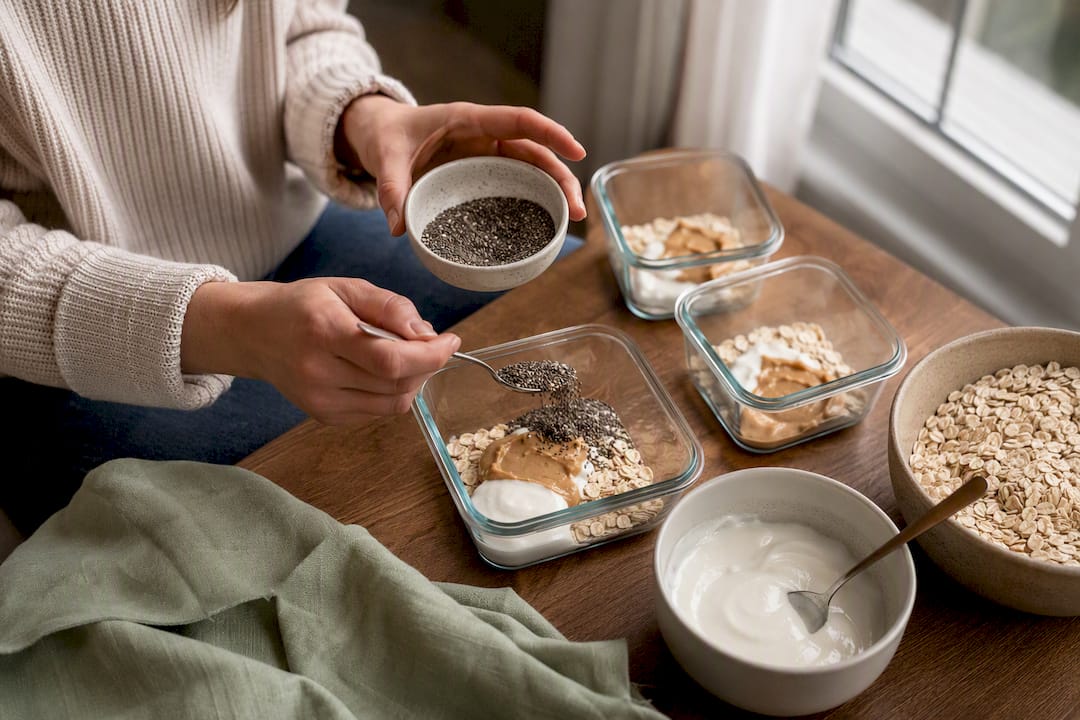
If dairy is an issue, swap Greek yogurt for coconut or oat-based yogurt in luteal-phase snack packs; the magnesium and fat content stay similar. Gluten sensitivity affects the grain choices most directly: swap quinoa or brown rice for buckwheat or certified gluten-free oats in follicular and ovulatory bowls, since both hold up well to batch cooking. Tree nut allergies are common enough to plan around directly. Pumpkin seeds and sunflower seed butter cover the magnesium and healthy-fat roles that almonds or walnuts usually fill in luteal snack packs.
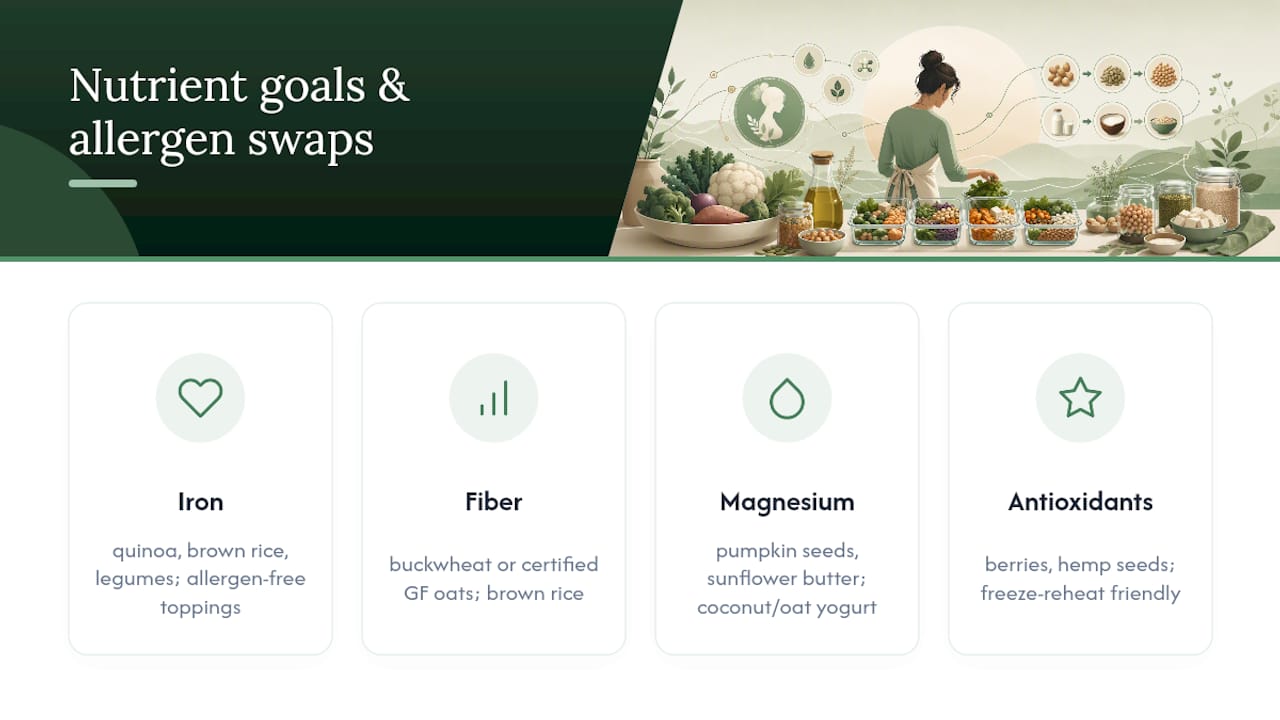
Soy sensitivity mostly affects vegetarian protein swaps. Chickpeas, lentils, and hemp seeds provide plant protein without soy, and they hold their texture through freezing and reheating better than tofu does anyway. If you’re managing multiple sensitivities at once, prep one “base” version of each week’s protein and grain without common allergens, then add allergen-containing toppings (nuts, seeds, dairy) only to individual portions rather than the whole batch. That one habit prevents a single ingredient from taking an entire week’s prep off the table. Anyone with a diagnosed food allergy should still confirm substitutions with an allergist or registered dietitian, since cross-contact risk varies by ingredient and kitchen setup in ways a general guide can’t account for.
Why a Meal-Prep-First Approach Beats Overthinking the Science
Most cycle-syncing content spends so much time explaining follicle-stimulating hormone and estrogen curves that readers close the tab before ever opening a grocery app. That’s backwards. The actual behavior change, batching a protein, a grain, a vegetable, and a sauce once a week, works whether or not you can recite which hormone peaks on day fourteen.
Where conventional advice falls short is the rigid 28-day calendar. Cycles vary, life gets in the way, and a plan that demands you eat kale on exactly day nine collapses the first time your period comes early. The flexible, symptom-guided version Cleveland Clinic and Healthline both point toward holds up much better in practice.
If you take one thing from this guide, prioritize the Sunday batch session over any specific recipe. Everything else, sauces, spices, plating, is just remixing what you already cooked.
— Brittany
Let Nourished Build Your Phase-Aligned Grocery List for You
Nourished turns everything in this guide into a plan you don’t have to build yourself: personalized meal plans that shift automatically as you move through your cycle, with no manual tracking or calorie counting required.

Tell it where you are in your cycle and it generates a shopping list and recipe set for that phase in minutes, built around the same iron-rich, fiber-rich, and magnesium-rich priorities covered above. You’ll see example meals immediately, not after a week of onboarding questions. If you’re managing PCOS alongside cycle syncing, Nourished’s plans account for that too, and pairing food choices with the right training approach can round out the picture, something Level Up Gym’s nutrition guide covers well for anyone syncing workouts to their cycle. Head to the Nourished landing page to see current plan options, or walk through the step-by-step tutorial to see exactly what your first week of shopping lists would look like.
Sources
- Cycle Syncing — Cleveland Clinic
- 5-Day hormone-balancing meal plan — Verywell Fit
- How to eat for your cycle — Healthline
- Peer-reviewed review on cycle-related metabolic changes — NCBI PMC
- Cycle syncing with food — Ohio State University