
GLP-1 Compatible Nutrition Tools: A Practical Comparison
Nourished · August 6, 2026
GLP-1 Compatible Nutrition Tools: A Practical Comparison
The best approach for people on GLP-1 medications is a phase-aware tracker paired with a protein-forward meal plan. Nourished is the recommended platform for women who want a GLP-1–compatible workflow that adapts as their dose and appetite change. Start here:
- Set a hydration target today. Aim for more than 2–3 liters of water daily, adjusting for climate, activity, and health status. GLP-1s blunt thirst, so dehydration sneaks up fast and worsens nausea.
- Set a protein floor per meal. Target at least 20–25 grams of protein per meal to protect muscle while your total intake is reduced.
- Enable symptom logging. Link what you eat to how you feel. That connection is what separates useful tracking from just counting calories.
If you experience severe vomiting, dizziness, or signs of dehydration (dark urine, rapid heart rate), contact your prescriber before adjusting your nutrition plan.
Pro Tip: The sections below go deep on each tool category, meal templates, and supplement safety. If you’re in your first four weeks of titration, jump to the phase-aware nutrition section first.

Table of Contents
- What types of GLP-1 nutrition tools are out there?
- How do you pick the right GLP-1 nutrition tool?
- What does phase-aware nutrition actually look like during titration?
- What does a practical GLP-1 meal day look like?
- When do supplements actually help on a GLP-1?
- How does Nourished support people on GLP-1 medications?
- When should you call your prescriber or dietitian?
- Key Takeaways
- What most people miss about GLP-1 nutrition tools
- Nourished is built for exactly this moment in your treatment
- Useful sources and further reading
What types of GLP-1 nutrition tools are out there?
Not every tool solves the same problem. Before comparing options, it helps to know which category actually matches where you are in treatment.
- Phase-aware nutrition apps: Adapt meal plans and targets to your titration stage. Best for the first 8–16 weeks when appetite and side effects shift week to week. Phase-aware guidance that adapts to titration consistently outperforms generic logging for adherence.
- Photo-first food trackers: Snap a photo instead of typing every ingredient. Photo-first logging reduces friction for people eating small, infrequent meals and makes it easier to monitor per-meal protein without manual entry.
- Micronutrient-focused trackers: Go beyond calories and macros to flag shortfalls in B12, iron, vitamin D, and calcium. Critical once total intake drops significantly.
- Meal-delivery and meal-replacement services: Pre-portioned or ready-made options that simplify nutrient adequacy during low-appetite windows. Evidence shows meal replacements during early treatment can improve short-term weight outcomes when combined with medication.
- Protein supplements and ready-made drinks: Whey, pea protein, and high-protein shakes fill gaps when whole-food protein is hard to tolerate. Most useful during nausea-heavy titration weeks.
- Hydration and electrolyte tools: Reminder apps, electrolyte mixes, or simple water-tracking features. Underused but genuinely important given how GLP-1s suppress thirst.
- Telehealth and RDN services: Registered dietitian access via video or async messaging. The AJCN joint advisory specifically highlights digital platforms with clinician-sharing and remote monitoring as promising for scaling evidence-based nutrition support.
| Tool Category | Core Benefit for GLP-1 Users | Integration Expectation |
|---|---|---|
| Phase-aware nutrition apps | Adapts targets as dose and appetite change | Health app sync, clinician export |
| Photo-first trackers | Low-friction logging for small meals | Wearable sync, macro export |
| Micronutrient trackers | Flags B12, iron, vitamin D, calcium gaps | Lab-result import, clinician sharing |
| Meal delivery / replacements | Simplifies nutrient adequacy during low appetite | None typically required |
| Protein supplements | Fills protein gaps during nausea windows | Manual log entry |
| Hydration / electrolyte tools | Counters blunted thirst and GI side effects | Reminder integration, water tracking |
| Telehealth / RDN services | Clinical oversight, medication-aware guidance | EHR or app-based data sharing |

How do you pick the right GLP-1 nutrition tool?
The wrong tool creates friction exactly when you need the least of it. Use these criteria to narrow your options fast.
Criteria that actually matter
- Micronutrient tracking: — Calories and protein alone aren’t enough. A framework like BiteKit’s GLP-1 Nutrition Score grades diets across protein adequacy, fiber, hydration, micronutrient density, and nausea-trigger avoidance. That’s the right set of dimensions.
Questions to ask before committing
- Does the plan update when my dose changes, or is it static after onboarding?
- Who reviewed the nutrition guidance? Is there documented clinical oversight?
- How does the tool handle a week when I can barely eat?
- What happens to my data? Can I export it or share it with my care team?
- Is pricing transparent, and what does the free tier actually include?
Red flags to walk away from
- Weight-loss gamification (streaks, leaderboards) that adds psychological pressure during nausea weeks
- No micronutrient tracking beyond basic macros
- Opaque pricing or automatic renewals without clear disclosure
- No mention of clinical review or RDN involvement in the guidance
Pro Tip: Ask any tool vendor directly: “Does your plan adapt if I skip a dose or my prescriber pauses titration?” If they can’t answer that, the tool isn’t built for GLP-1 users.

What does phase-aware nutrition actually look like during titration?
The titration window, typically the first 8–16 weeks on a GLP-1 medication, is when nutrition needs shift the most. Appetite suppression is strongest, GI side effects peak, and the risk of muscle loss and micronutrient deficiency is highest.
Why this window is different
GLP-1 therapies can reduce calorie intake by up to approximately 40%, and large retrospective analyses show more than 20% of patients had diagnosed nutritional deficiencies within one year, with vitamin D being the most common. Muscle loss is also a documented risk without targeted protein support. That’s not a reason to panic. It’s a reason to track the right things from week one.
Hydration comes first
Hydration target: Aim for more than 2–3 liters of fluid daily, adjusted for climate, activity, and health status.
GLP-1s suppress thirst alongside appetite, so dehydration often goes unnoticed until headaches, constipation, or worsening nausea appear. Proactive hydration is one of the highest-leverage habits you can build in week one.
Protein and micronutrient priorities
When total intake drops, protein distribution across meals matters more than the daily total. Aim for 20–25 grams per meal across three to four eating occasions rather than trying to hit a daily number in one or two sittings. For micronutrients, the watchpoints are B12, iron, vitamin D, and calcium. These are the nutrients most likely to fall short within the first year of treatment.
Sample protein targets by meal:
- Breakfast: 20–25 g (Greek yogurt + protein powder, or eggs + cottage cheese)
- Lunch: 20–25 g (canned salmon or chicken, soft legumes)
- Dinner: 25–30 g (lean protein, tofu, or fish with a cooked vegetable)
- Snack: 10–15 g (string cheese, edamame, a small protein shake)
Behavioral tactics that reduce friction
Smaller, more frequent meals are easier to follow than three large meals when appetite is suppressed, and they help preserve protein intake across the day. Photo-first logging removes the mental load of manual entry. Symptom-linked meal planning, where you note how you felt after each meal, helps you identify personal triggers rather than eliminating entire food groups.
Pro Tip: Keep a simple symptom-timing note alongside your food log for the first four weeks. Even a one-word entry (“nauseous,” “fine,” “bloated”) after each meal gives your dietitian or prescriber far more to work with at your next visit.
What to monitor across the titration window
| Weeks | Focus |
|---|---|
| 1–4 | Hydration habit, protein floor per meal, symptom logging |
| 5–8 | Micronutrient check-in (B12, vitamin D), adjust meal size if nausea persists |
| — | Reassess protein targets as appetite stabilizes, add fiber gradually |
| — | Transition to maintenance targets, consider baseline labs if not yet done |
What does a practical GLP-1 meal day look like?
This sample day is built for someone in weeks 4–8 of titration: appetite is reduced, nausea is possible, and protein needs to be distributed across smaller meals.
| Time | Meal / Snack | Approx. Protein | Hydration Cue | Notes |
|---|---|---|---|---|
| 7:30 AM | Greek yogurt (¾ cup) + berries + 1 tbsp chia | 20–25 g | 12 oz water before eating | Soft, cold, easy to tolerate |
| 10:30 AM | String cheese + a small handful of almonds | 10 g | 8 oz water | Portable; skip if not hungry |
| 12:30 PM | ½ cup cottage cheese + cucumber slices + 2 oz canned salmon | 20–25 g | 12 oz water with lemon | No cooking required |
| 3:30 PM | Protein smoothie: ½ scoop protein powder + ½ banana + electrolyte mix | 12–15 g | Counts toward daily fluid | Useful if solid food feels hard |
| 6:30 PM | 3 oz baked white fish + ½ cup mashed sweet potato + steamed spinach | 25–30 g | 8 oz water | Soft textures; low fat to reduce nausea |
Grocery list priorities
- Portable protein: Greek yogurt, cottage cheese, string cheese, canned salmon or tuna, hard-boiled eggs, edamame
- Soft foods for nausea: Mashed sweet potato, banana, cooked oatmeal, soft tofu, scrambled eggs
- Fiber sources: Chia seeds, berries, cooked lentils, steamed vegetables (avoid raw cruciferous in early weeks)
- Hydration support: Electrolyte packets (low sugar), herbal teas, broth, cucumber water
Three quick prep formulas
- Protein electrolyte smoothie: ½ scoop unflavored whey or pea protein + ½ cup frozen mango + 1 cup water + 1 low-sugar electrolyte packet. Blend 30 seconds. About 15 grams of protein, counts toward daily fluid.
- Savory yogurt bowl: ¾ cup plain Greek yogurt + 2 oz canned salmon + everything bagel seasoning + sliced cucumber. No cooking, about 25 grams of protein, ready in two minutes.
- Warm egg and broth bowl: 2 soft-scrambled eggs in 1 cup low-sodium chicken broth with a handful of baby spinach stirred in. Gentle on the stomach, about 14 grams of protein, and hydrating.
When do supplements actually help on a GLP-1?
Supplements fill gaps that whole foods can’t cover when total intake is low. The key is knowing which ones are worth it and which add cost without benefit.
Categories worth considering
- Whey or pea protein powder: Useful when hitting 20+ grams per meal from whole foods is difficult. Look for products with fewer than 5 grams of added sugar and no stimulants. Pea protein is a good option for those avoiding dairy.
- Ready-made high-protein drinks: Convenient for travel or nausea days. Check labels for added sugars and artificial sweeteners, which can worsen GI symptoms in some people.
- Fiber supplements (psyllium husk, inulin): GLP-1s slow gastric emptying, which can cause constipation. A fiber supplement added gradually, starting with half a dose, can help. Avoid taking it with other medications.
- Electrolyte mixes: Low-sugar options support hydration and reduce headaches. Avoid products with high caffeine or excessive sodium if you have blood pressure concerns.
- Targeted multivitamins: Because vitamin D deficiency is the most common nutritional shortfall within the first year, a vitamin D supplement is often warranted. B12, iron, and calcium are the other watchpoints. A targeted formula beats a generic multivitamin for most GLP-1 users.
| Supplement | Best Use Case | Watch For | Typical Cost |
|---|---|---|---|
| Whey / pea protein powder | Protein gaps during low-appetite weeks | Added sugar, stimulants | $25 per tub (30 servings) |
| Ready-made protein drinks | Travel, nausea days | Artificial sweeteners, high sugar | $2–$4 per serving |
| Psyllium husk / fiber | Constipation prevention | Take separately from medications | $10–$20 per month |
| Electrolyte mix (low sugar) | Hydration support, headache prevention | Caffeine, excessive sodium | $20–$40 per month |
| Vitamin D + B12 supplement | Micronutrient gap prevention | Dose per prescriber guidance | $10–$25 per month |
Pro Tip: Avoid drinking large volumes of liquid during a meal. It can worsen the sensation of fullness and nausea. Sip water between meals instead, and take supplements with a small amount of food rather than on an empty stomach.
Always check with your prescriber before adding supplements, especially iron or calcium, which can interact with medication absorption timing.
How does Nourished support people on GLP-1 medications?
Nourished is built around the idea that nutrition needs to adapt to where you are hormonally and medically, not just calorically. For women on GLP-1 medications, that means the platform’s phase-adaptive logic applies directly to titration stages, not just menstrual cycle phases.
Feature map for GLP-1 users
- Phase-aware meal plans: Plans adjust as your dose and tolerance change, so week 3 looks different from week 12.
- Per-meal protein goals: Nourished surfaces protein targets at the meal level, not just daily totals, which is exactly what’s needed when appetite is suppressed.
- AI nutrition chat: Ask questions about what to eat when nausea hits, how to hit protein targets on a soft-food day, or whether a supplement fits your plan.
- Cycle and phase tracking: For women whose GLP-1 use overlaps with cycle-related hormonal shifts, this feature adds a layer of personalization that generic trackers miss.
- Food and lab trackers: Log meals and track lab results in one place, making it easier to share a complete picture with your care team.
- Downloadable resources: eBooks and guides that cover GLP-1–specific nutrition topics, including micronutrient monitoring and meal prep for low-appetite days.
- Clinician-sharing options: Export or share logs with your prescriber or dietitian before appointments.
The AJCN joint advisory specifically calls out digital platforms with dietary tracking, RDN access, and remote monitoring as promising for improving adherence. Nourished’s feature set maps directly to that recommendation.
Sample onboarding flow
- Answer intake questions about your current GLP-1 medication, dose stage, health goals, dietary preferences, and any known food intolerances.
- Receive an immediate personalized meal plan with per-meal protein targets and hydration cues built in.
- Log meals using the food tracker. The AI chat is available for real-time adjustments when appetite or symptoms change.
- At each check-in interval, update your dose stage or symptom patterns. The plan adapts accordingly.
- Export your food and symptom log before prescriber or dietitian appointments.
See the full onboarding tutorial for a step-by-step walkthrough of how plans are built and adapted.
Pro Tip: During your first two weeks on Nourished, use the symptom logging feature after every meal, even if you feel fine. The pattern data becomes genuinely useful by week four when you’re adjusting your dose.
Nourished offers monthly and yearly subscription tiers. Pricing details and current plan options are listed at nourished.today/pricing.
When should you call your prescriber or dietitian?
Nutrition tools are support, not substitutes for clinical care. These signals mean it’s time to pick up the phone.
Red flags that warrant a call
- Severe or persistent nausea or vomiting lasting more than 48 hours
- Unintended weight loss that feels rapid or is accompanied by weakness
- Signs of dehydration: dark urine, rapid heart rate, dizziness, or dry mouth that doesn’t resolve with fluids
- New or worsening muscle weakness or cramping
- Fainting or near-fainting (syncope)
- Inability to keep food or fluids down for more than 24 hours
What to bring to your appointment
- A one-week food log with symptom notes linked to meals
- Your average daily protein intake estimate (even a rough one helps)
- A hydration log or daily fluid estimate
- Your current supplement list with doses
- Any recent lab results, especially vitamin D, B12, iron, and CBC
- A note on weight trend over the past two to four weeks
Your prescriber may recommend labs for micronutrient levels or a body-composition assessment, particularly if you’re losing weight quickly or experiencing persistent fatigue. Medication dose adjustments are common during titration, and your nutrition plan should update alongside any change your clinician makes.
Key Takeaways
Phase-aware nutrition tools that track protein per meal, hydration, and micronutrients give GLP-1 users the best foundation for safe, sustainable results during titration and beyond.
| Point | Details |
|---|---|
| Hydration is the first priority | Target more than 2–3 liters of fluid daily; GLP-1s suppress thirst and worsen GI side effects when intake is low. |
| Protein per meal, not just per day | Aim for 20–25 g per meal across 3–4 eating occasions to protect muscle while total intake is reduced. |
| Micronutrient monitoring matters | Vitamin D, B12, iron, and calcium are the most common shortfalls within the first year on GLP-1 therapy. |
| Phase-aware tools outperform generic ones | Tools that adapt to titration stage improve adherence because appetite and side effects shift markedly in early weeks. |
| Nourished for GLP-1–compatible planning | Nourished provides phase-adaptive meal plans, per-meal protein goals, AI chat, and symptom logging built for women on GLP-1 medications. |
What most people miss about GLP-1 nutrition tools
The conversation around GLP-1 nutrition tools tends to focus on what to eat and what to avoid. That’s useful, but it misses the harder problem: the tool itself has to work differently at week 2 than it does at week 14.
Generic calorie trackers were built for people eating normal volumes. They weren’t designed for someone eating 40% less than usual, fighting nausea at 6 PM, and trying to hit a protein target on a day when the idea of chicken is genuinely unappealing. Asking that person to manually log every ingredient is asking them to do the hardest possible version of a task at the worst possible moment.
Phase-aware planning changes the frame entirely. Instead of asking “did you hit your calories today,” it asks “what can you realistically eat right now, and how do we protect muscle and micronutrients within that constraint?” That’s a fundamentally different question, and it’s the one that actually matters during titration.
What I find underappreciated is the symptom-logging piece. Most people skip it because it feels like extra work. But linking a nausea episode to a high-fat meal, or a headache to a low-fluid afternoon, gives you and your care team real data to work with. Without it, you’re guessing. With it, you can make one or two targeted changes instead of overhauling your entire diet.
Nourished’s approach, building phase-adaptive plans around hormonal and medication context rather than generic calorie math, is exactly the direction clinical guidance is pointing. The AJCN joint advisory calls for patient-centered initiation, micronutrient prevention, and digital support tools. That’s not a coincidence. It’s where the evidence has been heading for years.
Nourished is built for exactly this moment in your treatment
Women on GLP-1 medications don’t need another generic calorie counter. They need a plan that knows they’re in week 6 of titration, that protein per meal matters more than daily totals right now, and that nausea on Tuesday doesn’t mean the whole week is lost.
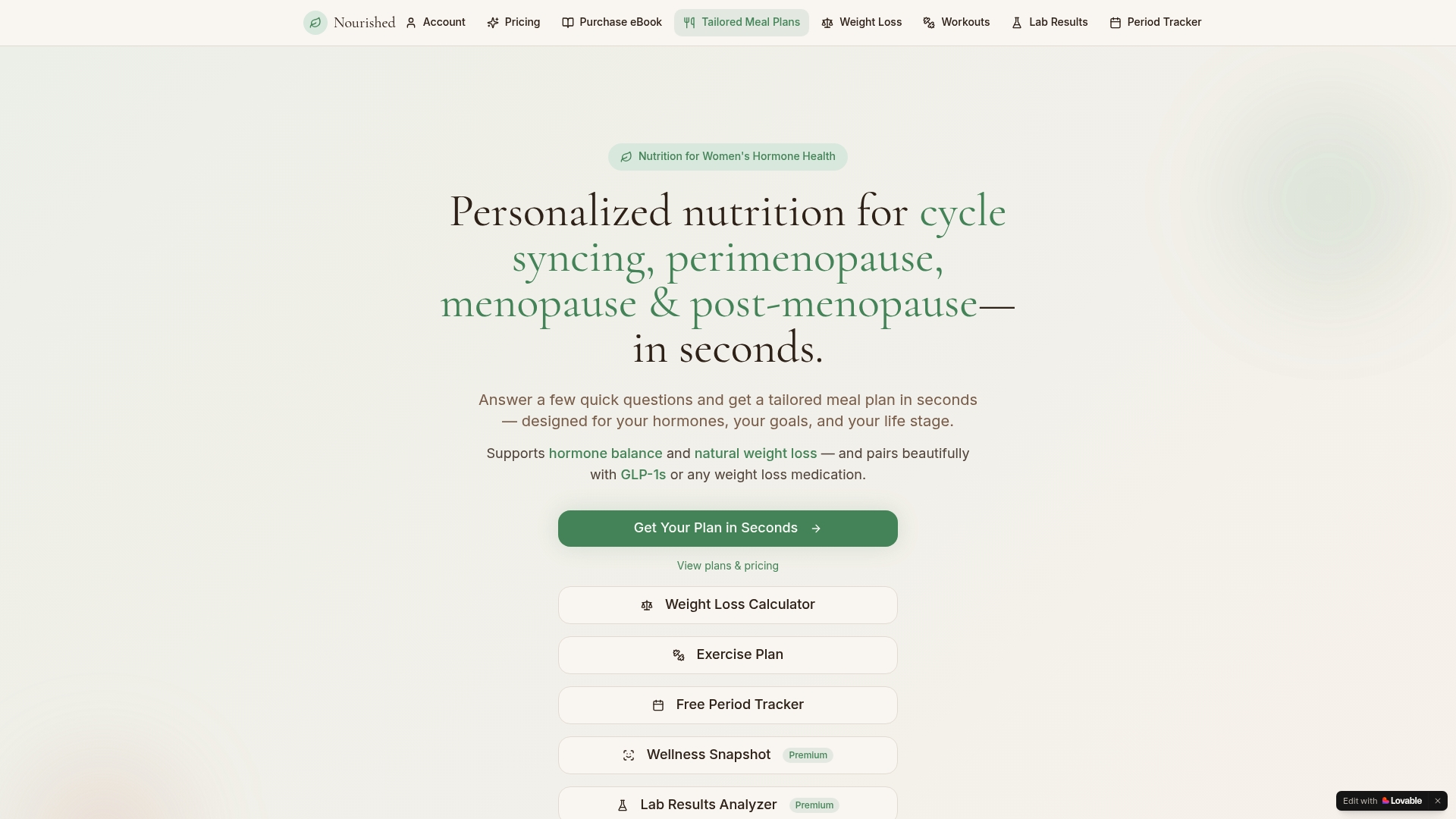
Nourished delivers phase-adaptive meal plans, per-meal protein targets, AI nutrition chat, and symptom logging in one place, without calorie counting or rigid meal rules. The platform is built for women navigating hormonal and medication-related shifts, which means it adapts when your dose changes, your appetite shifts, or your cycle adds another layer of complexity.
Visit nourished.today to start a personalized plan. You’ll answer a short intake questionnaire and receive an immediate meal plan tailored to your current phase and goals. Subscription tiers and current pricing are listed at nourished.today/pricing. If you want to see the clinical sources behind the recommendations before signing up, the references page lists them in full.
Useful sources and further reading
These are the primary sources used in this article. Each is worth bookmarking if you’re working with a dietitian or prescriber who wants to review the evidence.
- Application of nutrition interventions with GLP-1 based therapies: A narrative review — PMC The most comprehensive peer-reviewed review available on nutrition challenges and solutions for GLP-1 users, covering micronutrient deficiency rates, protein priorities, hydration, and meal replacement evidence.
- Nutritional priorities to support GLP-1 therapy for obesity: a joint Advisory — AJCN00240-0/fulltext) A multi-society joint advisory covering evidence-based nutrition and behavioral therapy alongside GLP-1 use, including digital platform recommendations and telehealth support.
- GLP-1 Diet: What To Eat and Avoid — Cleveland Clinic Practical, clinician-reviewed guidance on meal structure, food choices, and behavioral strategies for people on GLP-1 medications.
- Effect of liraglutide compared to caloric restriction on appetite and body composition — PubMed Randomized trial examining how GLP-1 receptor agonist therapy affects lean mass versus fat mass compared to caloric restriction alone, relevant to muscle-preservation priorities.
- Nourished research and references page Curated clinical sources that back Nourished’s nutrition recommendations, useful for readers and clinicians who want to review the evidence behind the platform’s guidance.
| Source | Type | Best For |
|---|---|---|
| PMC narrative review | Peer-reviewed | Micronutrient deficiency rates, protein and hydration targets |
| AJCN joint advisory | Multi-society advisory | Clinical framework, digital tool recommendations |
| Cleveland Clinic GLP-1 diet | Clinical patient guidance | Practical meal structure and food choices |
| PubMed liraglutide trial | Randomized controlled trial | Lean mass preservation evidence |
| Nourished references | Platform evidence base | Clinical sources behind Nourished recommendations |
This article is general nutrition information, not medical or dietary advice. Confirm current guidance and any medication-related nutrition decisions with your prescriber or a registered dietitian.