The Best GLP-1 Friendly Snacks, Backed by Dietitians
Nourished · August 14, 2026
The Best GLP-1 Friendly Snacks, Backed by Dietitians
The snacks dietitians reach for first when working with GLP-1 patients are protein-dense, low in added sugar, and small enough to fit a stomach that empties slowly. The top picks: Greek yogurt, cottage cheese, hard-boiled eggs, string cheese or Babybel, pistachios, roasted edamame, beef jerky or biltong, low-sugar protein bars, and ready-to-drink protein shakes. These GLP-1 friendly snacks cover refrigerated, shelf-stable, and drinkable formats so you always have something that works, regardless of how your appetite is behaving that day.
Six rules cover almost every snack decision you will face on GLP-1 therapy:
- Protein first. Every snack should lead with a protein source, not a carb.
- Keep portions small. A half-cup of Greek yogurt or one hard-boiled egg is enough when gastric emptying is slowed.
- Limit added sugar. Aim for fewer than 5 g added sugar per snack to avoid blood sugar spikes and GI discomfort.
- Choose lower fat on nausea days. High-fat foods delay stomach emptying further, which worsens nausea.
- Pair protein with fiber when you can. A small handful of pistachios or a few berries alongside a protein source extends satiety without overwhelming your stomach.
- Rotate your options. Eating the same snack daily on GLP-1s often leads to taste fatigue and skipped snacks.
Pro Tip: Target 8–15 g of protein per snack on most days. If a snack is replacing part of a meal because your appetite is very low, push toward 15–25 g.
Key Takeaways
Protein-first, small-portion snacks are the single most effective strategy for preserving muscle and managing GI side effects while on GLP-1 therapy.
| Point | Details |
|---|---|
| Protein target per snack | Aim for 8–15 g on regular days; push to 15–25 g when a snack replaces part of a meal. |
| Build a rotation | Keep 3 staple snacks plus 1 drinkable backup to handle unpredictable appetite and taste changes. |
| Limit added sugar | Choose snacks with under 5 g added sugar to avoid blood sugar spikes and GI discomfort. |
| Know when to get help | Call your clinician or RDN for persistent vomiting, rapid weight loss, or signs of nutrient deficiency. |
| Nourished for personalization | Nourished builds hormone-aware snack and meal plans that adapt to your GLP-1 dose phase and cycle. |
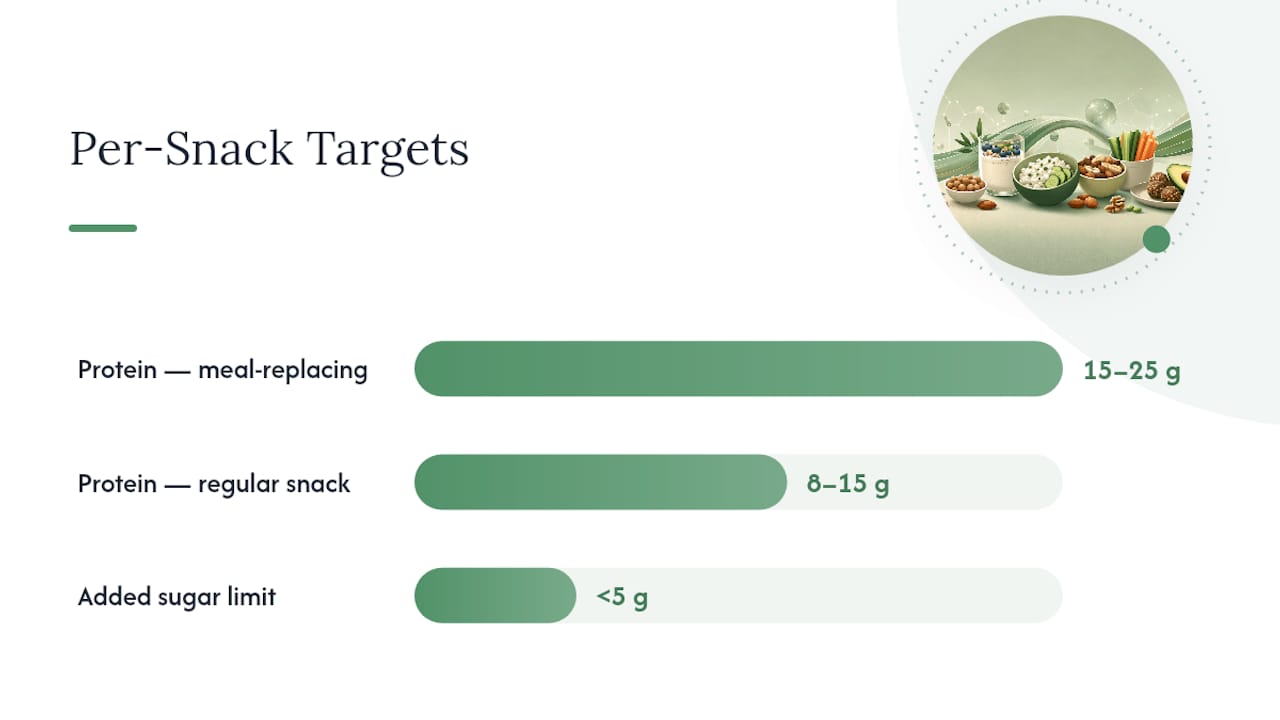
Table of Contents
- Why protein and fiber matter so much when you’re on a GLP-1
- Top GLP-1 friendly snacks organized by what you need right now
- Snacks and foods to limit while you’re on a GLP-1
- How to build a snack rotation that actually holds up
- When to call your clinician or a registered dietitian
- What a dietitian actually does when building a snack plan for GLP-1 patients
- Nourished makes hitting your protein targets simpler on low-appetite days
- Sources
Why protein and fiber matter so much when you’re on a GLP-1
GLP-1 receptor agonists like semaglutide and tirzepatide work partly by slowing gastric emptying and suppressing appetite. That is the mechanism behind the reduced hunger, but it also means you are eating significantly less food overall. Less food means fewer opportunities to hit your protein, fiber, calcium, and vitamin D targets, which is exactly why dietitians treat snacks as essential nutrient tools rather than optional extras.
Protein protects your muscle. Rapid weight loss without adequate protein accelerates the loss of lean mass alongside fat. Distributing protein across meals and snacks throughout the day helps preserve muscle during pharmacologically assisted weight loss. On GLP-1 therapy, where total food volume drops sharply, snacks become one of the primary delivery vehicles for that protein.
Fiber adds satiety without volume. A modest fiber addition, think a small handful of berries, a few roasted edamame, or a tablespoon of chia seeds, slows digestion gently and helps stabilize blood sugar. The key word is modest. Large fiber loads on a slowed stomach can cause bloating and discomfort, so the goal is a small fiber addition paired with protein, not a high-fiber snack on its own.
Practical protein targets to use right now:
- Aim for 8–15 g protein per snack on days when you are eating regular meals.
- Push toward 15–25 g when a snack is replacing part of a meal or when total daily intake is very low.
- Leucine-rich proteins (dairy, eggs, meat, soy) are especially useful for muscle protein synthesis.
What to check on a nutrition label:
- Protein grams per serving (target: 8 g minimum)
- Added sugar grams (target: under 5 g)
- Serving size (check whether the package is one serving or two)
- Total fat grams (keep lower on nausea-prone days)
Top GLP-1 friendly snacks organized by what you need right now
Every category below contains options suited to different tolerance levels and situations. Some days you want something cold from the fridge; other days you need a shelf-stable option you grabbed on the way out the door. Build your rotation from at least two categories.
Refrigerated and quick-prep
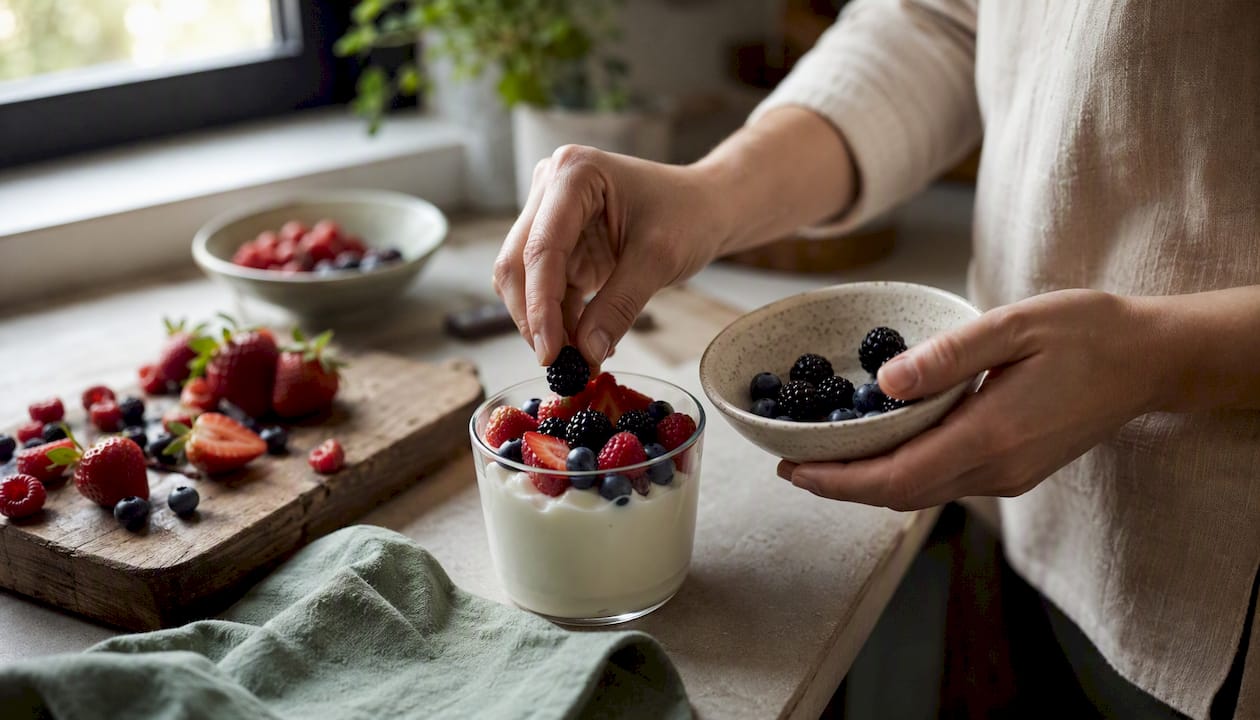
Greek yogurt is the single most recommended snack across dietitian sources. A 5.3 oz single-serve container of plain, nonfat Greek yogurt delivers roughly 15–17 g protein and 0 g added sugar. Add a few berries for fiber and natural sweetness. Skyr, the Icelandic-style strained yogurt, is nearly identical nutritionally and worth rotating in when Greek yogurt starts feeling repetitive.
Cottage cheese offers a similar protein profile (about 14 g per half-cup) with a softer texture that many people tolerate well on nausea days. It pairs well with cucumber slices or a small amount of fruit. Low-fat versions are easier on the stomach when GI symptoms are present.
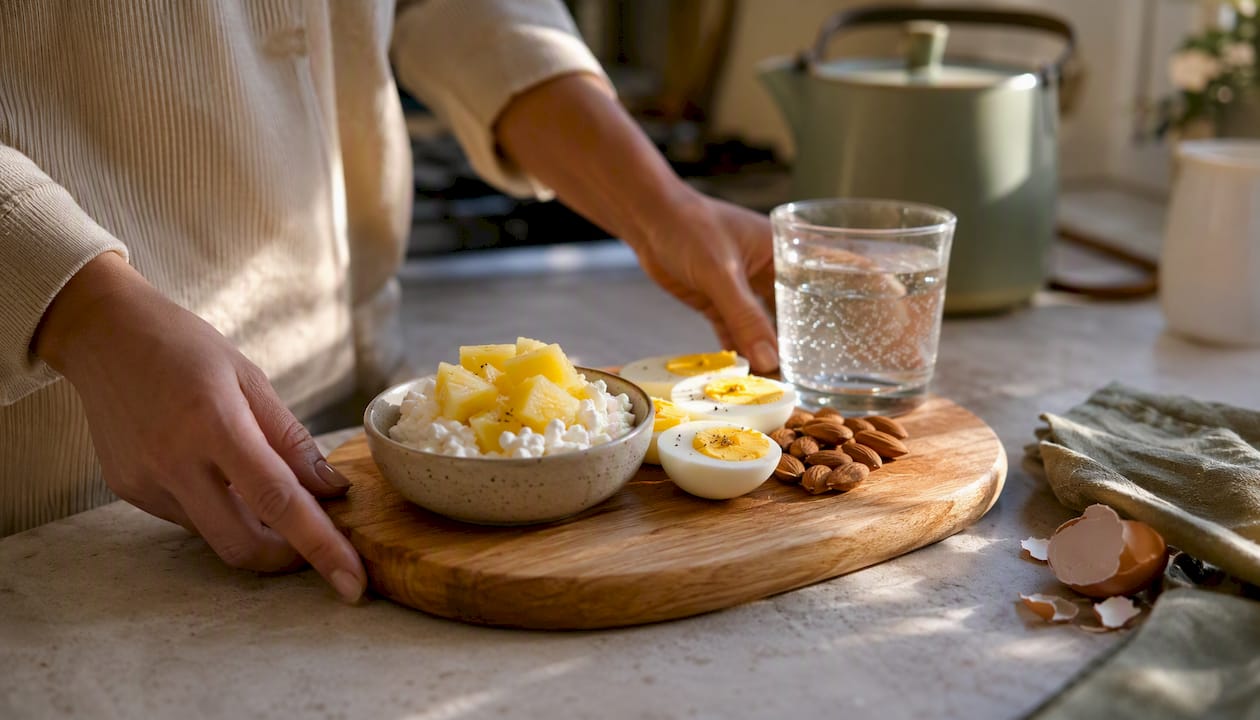
Hard-boiled eggs are one of the most portable refrigerated options. One large egg provides about 6 g of complete protein, so two eggs gives you a solid 12 g snack with essentially no prep if you batch-cook them at the start of the week. They are also leucine-rich, which matters for muscle preservation.
String cheese or Babybel rounds out the refrigerated category. One piece delivers roughly 6–8 g protein and is individually portioned, which removes any guesswork about serving size.
Shelf-stable high-protein
Beef jerky and biltong are among the most practical shelf-stable options. A 1 oz serving of jerky typically contains 9–10 g protein. Choose brands with less than 200 mg sodium per serving and no added sugar when possible. Biltong tends to be lower in sugar than traditional jerky and is worth seeking out. For a broader look at high-protein weight loss snacks that travel well, shelf-stable meat options consistently rank at the top.
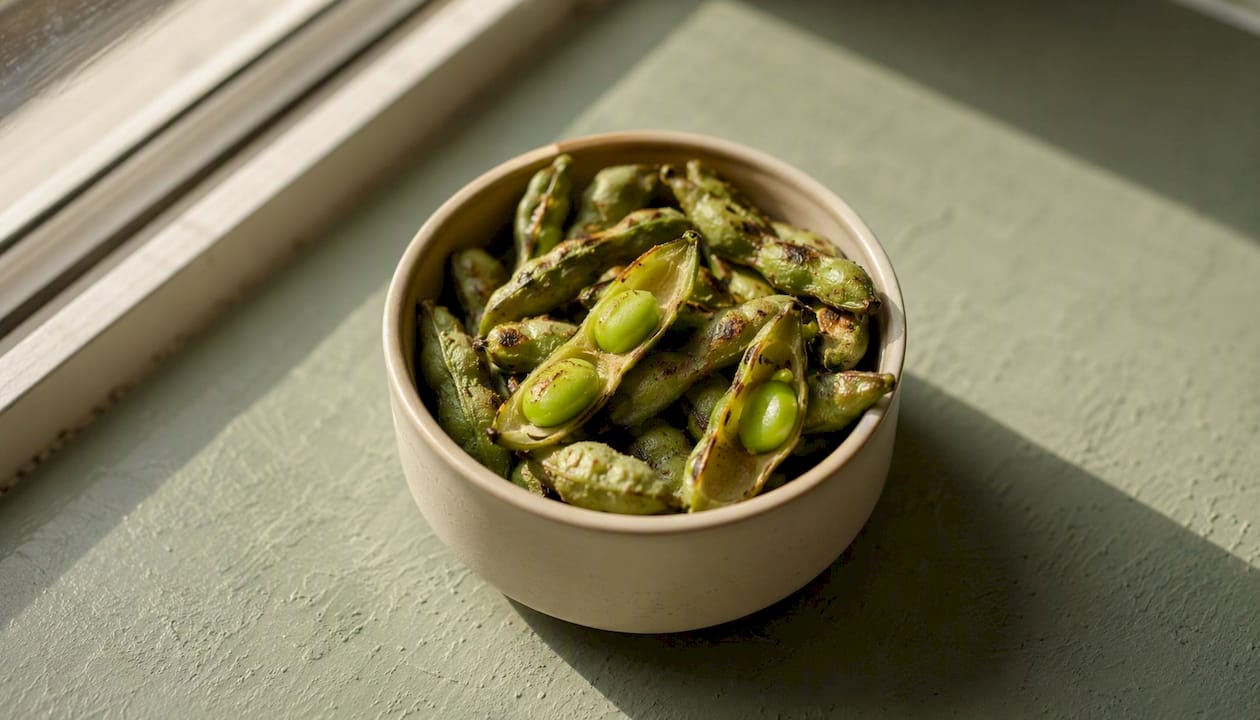
Roasted edamame gives you roughly 11 g protein and 4 g fiber per quarter-cup serving, making it one of the few plant-based snacks that hits both targets simultaneously. It is also crunchy, which satisfies a texture craving that soft foods cannot.
Pistachios deliver about 6 g protein and 3 g fiber per ounce (roughly 49 nuts). They are calorie-dense, so a single ounce is the right portion on GLP-1 therapy. Pre-portioned snack packs make this easy.
Tuna pouches are underused. A single 2.6 oz pouch of tuna in water contains about 17 g protein, requires no refrigeration, and costs under $2. Pair with a few whole-grain crackers or eat straight from the pouch.
Meat sticks (the leaner, lower-sodium variety) offer 6–7 g protein per stick and are genuinely pocketable.
Low-volume drinkables
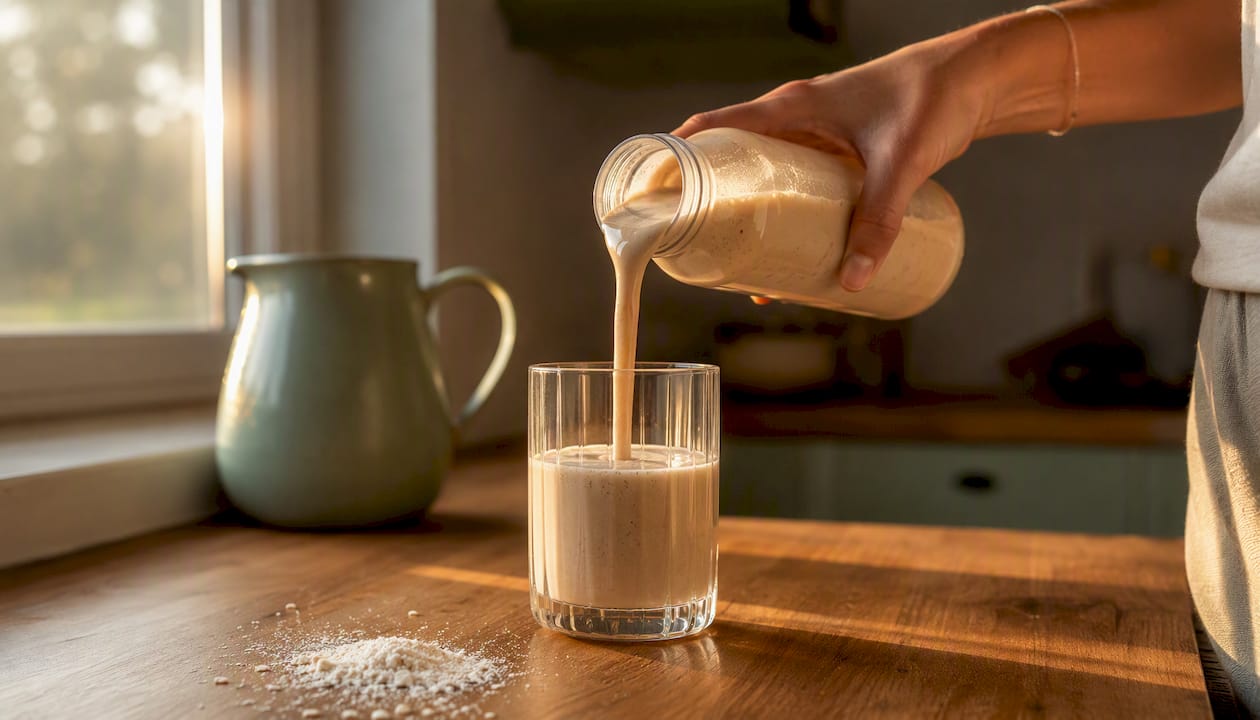
On days when solid food feels unappealing, a ready-to-drink (RTD) protein shake or a small protein powder mixed into water or milk can provide a substantial amount of protein without requiring you to eat much volume. Look for options with fewer than 5 g added sugar and a short ingredient list. Whey-based options digest quickly; casein or plant-based blends digest more slowly, which can be useful or uncomfortable depending on your GI tolerance that day.
Bars and bites
Low-sugar protein bars are convenient but require label scrutiny. Many bars marketed as “healthy” contain 15–20 g added sugar, which defeats the purpose on GLP-1 therapy. Target bars with a meaningful amount of protein and low added sugar. Cheese crisps (baked, not fried) are a satisfying crunchy option with 10–12 g protein per serving and minimal carbohydrates.
Plant-based options
Roasted chickpeas offer about 6 g protein and 5 g fiber per ounce and work well for vegetarian and vegan patients. Firm tofu snack packs, available in many grocery stores, provide 8–10 g protein per serving. Edamame, whether fresh, frozen, or roasted, is the most protein-complete plant-based snack on this list.
GI tolerance tips:
- Cold or room-temperature snacks are often better tolerated than hot foods on nausea days.
- Eat slowly and take small bites. GLP-1s slow the stomach; eating quickly on top of that is a recipe for discomfort.
- If solid food is triggering nausea, switch to a drinkable protein source for that snack occasion.
- Lower-fat options are consistently better tolerated on difficult days because fat delays gastric emptying further.
Pro Tip: Keep one drinkable protein option in your bag or desk drawer at all times. On days when your appetite drops to near zero, a protein shake is far easier to get down than solid food, and it still protects your muscle.
Snacks and foods to limit while you’re on a GLP-1
Cleveland Clinic guidance is direct on this: GLP-1 users should limit added sugars, refined carbohydrates, heavily processed foods, high-fat foods, and spicy items. The reason is not just general nutrition advice. On a slowed stomach, these foods either worsen nausea, cause blood sugar spikes, or crowd out the protein and fiber your body actually needs.
Snack types to limit or avoid:
- High added sugar snacks (candy, sweetened granola bars, flavored yogurts with 15+ g sugar): spike blood sugar and provide almost no protein or fiber.
- Large high-fat snacks (full-fat cheese in large amounts, nut butters by the spoonful, chips fried in oil): fat delays gastric emptying further, which is the last thing you need when the medication is already slowing your stomach.
- Heavily fried foods (french fries, fried chips, fried cheese): combine high fat with low nutrient density, a poor trade-off on reduced appetite.
- Very spicy foods: can irritate the GI tract and worsen nausea, particularly in the first weeks of a new dose.
- Sugary beverages and juice: liquid calories with no protein and high sugar load, and they do not trigger the same satiety signals as solid food.
- Large-volume refined carb snacks (big bags of pretzels, crackers eaten by the handful): fill stomach space without delivering meaningful protein or fiber.
Quick swaps for common cravings:
- Fried chips → roasted chickpeas or baked cheese crisps
- Soda or juice → sparkling water with a squeeze of lemon or a small piece of fruit
- Sweetened granola bar → a low-sugar protein bar (under 5 g added sugar)
- Candy → freeze-dried fruit (no added sugar) or a small square of dark chocolate with a protein source
Craving checklist: When a craving hits, wait 10 minutes. Drink a glass of water. Then try a protein-first bite, one hard-boiled egg, a spoonful of cottage cheese, or a few edamame. If the craving persists after the protein, have a small portion of what you wanted. Deprivation on GLP-1 therapy tends to backfire because your appetite signals are already unreliable.
How to build a snack rotation that actually holds up
The practical answer: pick three staple snacks and two emergency options, then cycle through them across the week. A mix of refrigerated and shelf-stable options means you are covered whether you are at home, at work, or traveling. Dietitians consistently recommend keeping 2–3 reliable options on hand to handle unpredictable appetite and taste changes.
Rotation template:
- Choose two refrigerated staples (example: Greek yogurt and hard-boiled eggs).
- Choose one shelf-stable staple (example: beef jerky or roasted edamame).
- Add one drinkable backup for low-appetite days (example: RTD protein shake).
- Add one emergency shelf-stable option that requires zero prep and travels anywhere (example: individual pistachio packs or a tuna pouch).
Sample snack combos with protein and fiber notes:
- Small Greek yogurt (plain, nonfat) + 1 tbsp chia seeds: ~17 g protein, ~5 g fiber
- 2 hard-boiled eggs + cucumber slices: ~12 g protein, ~1 g fiber
- Tuna pouch + 4 whole-grain crackers: ~19 g protein, ~2 g fiber
- ¼ cup roasted edamame + a small orange: ~11 g protein, ~6 g fiber
- 1 oz pistachios + 1 string cheese: ~12 g protein, ~3 g fiber
- Low-sugar protein bar: ~15 g protein, ~3 g fiber (varies by brand)
- Cottage cheese (½ cup) + a few sliced strawberries: ~14 g protein, ~1 g fiber
Packing and prep checklist:
- Batch-cook hard-boiled eggs on Sunday for the week.
- Portion pistachios and jerky into small zip-lock bags or snack containers.
- Keep a cooler pack in your bag if your commute is long.
- Store RTD protein shakes at room temperature until needed, then refrigerate after opening.
- Pack a small spoon and napkins if your snack requires them.
Pro Tip: If a snack you loved last week suddenly tastes wrong or unappealing, that is a known GLP-1 side effect called taste aversion. Switch to a different texture (cold instead of warm, crunchy instead of soft) or a blander flavor profile. Forcing yourself to eat a food that now repels you leads to skipped snacks and missed protein.
When to call your clinician or a registered dietitian
Call your prescribing clinician or a registered dietitian (RDN) when any of the following apply. These are not situations to manage with snack swaps alone.
- Persistent vomiting that prevents you from keeping any food or liquid down for more than 24 hours.
- Inability to meet protein needs for more than a few days despite trying drinkable and soft options.
- Rapid, unexpected weight loss beyond what your clinician projected, particularly if accompanied by fatigue or weakness.
- Signs of nutrient deficiency: hair thinning, muscle cramps, extreme fatigue, or dizziness.
- Severe or persistent constipation that does not respond to increased water and fiber.
- Persistent nausea beyond two weeks at a stable dose, which may warrant a dose adjustment conversation.
When you go to that appointment, bring a 3-day food log (even a rough one), your current medication name and dose, a weight trend over the past 4–6 weeks, and any recent lab results if you have them. That information lets your clinician or RDN make a specific recommendation rather than a generic one.
An RDN who works with GLP-1 patients can build a personalized snack plan around your food preferences, GI tolerance, and protein targets, and can adjust it as your dose changes. If your prescriber does not have an RDN on staff, ask for a referral. The clinical context around GLP-1 physiology makes individualized nutrition support genuinely valuable, not optional.
What a dietitian actually does when building a snack plan for GLP-1 patients
The first step is always setting a protein target, not a calorie target. On GLP-1 therapy, total calories often fall naturally. The real risk is that protein falls with them. So the plan starts with a daily protein goal and works backward to figure out how many snacks are needed to hit it given what the patient can realistically eat at meals.
From there, the approach is to identify three snacks the patient already likes and can tolerate, then build the rotation around those. Reliable beats optimal. A patient who consistently eats two hard-boiled eggs and a Greek yogurt every day will preserve more muscle than one who has a theoretically perfect plan they cannot stick to.
Injection days often require a different strategy. Many patients experience a nausea peak in the 24–48 hours after their dose. On those days, the plan shifts to drinkable protein, cold foods, and smaller volumes. A warm broth with a protein powder stirred in, a cold protein shake, or a few bites of cottage cheese straight from the fridge are all reasonable options when solid food is not happening.
Scheduling snacks matters more than most patients expect. GLP-1s suppress hunger signals so effectively that many people simply forget to eat until they are hours past their last meal and running on empty. Setting a phone reminder for a mid-morning and mid-afternoon snack, regardless of hunger, keeps protein intake steady and prevents the energy crashes that come from going too long without food.
Nourished makes hitting your protein targets simpler on low-appetite days
Knowing which snacks to eat is one thing. Knowing how they fit into your specific hormone cycle, your current dose phase, and your daily protein target is where most people get stuck. Nourished builds personalized meal and snack plans that account for exactly those variables, including appetite fluctuations tied to your cycle and adjustments for days when GI tolerance is low.

The platform generates snack and meal suggestions based on your hormonal phase, protein needs, and food preferences, with no calorie counting required. If your appetite drops mid-cycle or spikes after a dose change, the plan adapts. For women on GLP-1 therapy who also want cycle-aware nutrition, that kind of personalization closes the gap between general snack advice and what actually works for your body on any given day.
See how Nourished works and get a personalized snack plan that fits your GLP-1 protocol.
Sources
- 11 Dietitian-Recommended Snacks if You’re on GLP-1s
- GLP-1 Diet: What To Eat & Avoid
- 21 Best Snacks for GLP-1, Ozempic & Wegovy (2026) - LiveDontDiet
- Best High Protein Snacks on GLP-1 — What to Eat on Ozempic, Wegovy & Mounjaro - Fueled Framework
- Pmc
This article is general information, not a substitute for advice from a qualified doctor. Consult a qualified healthcare professional about your own circumstances before acting on anything here.