91 Ounces a Day on GLP‑1? Habit First Hydration for Women
Nourished · September 4, 2026
91 Ounces a Day on GLP‑1? Habit First Hydration for Women
Aim for fluid intake around the general adult total water guidance for your gender, then adjust upward on rough days. Because GLP-1 medications blunt thirst and shrink food-based fluid intake, waiting to feel thirsty is the wrong strategy. Build a sipping schedule tied to fixed daily anchors, count soups and fruit toward your total, and keep an electrolyte drink on hand for vomiting or diarrhea. If you can’t keep fluids down and your urine output drops sharply, call your clinician the same day.
TL;DR:
- Patients on GLP-1 medications should expect a reduced thirst signal, requiring structured hydration routines tied to daily habits rather than relying on thirst cues.
- Daily water needs start at about 2.7 liters for women and 3.7 liters for men, with additional adjustments for gastrointestinal symptoms like vomiting or diarrhea.
- Small, frequent sips of electrolyte-rich fluids are crucial during GI side effects, as plain water alone cannot replace lost sodium, potassium, or chloride.
- Severe dehydration risks increase when vomiting and diarrhea happen together, especially if urine output drops, prompting immediate medical consultation.
- Food sources such as soups, yogurt, fruits, and salty snacks play a key role in hydration, especially since GLP-1 drugs decrease appetite and fluid intake from food.
Table of Contents
- How GLP-1 Medications Change Thirst, Appetite, and Fluid Balance
- How Much Water Should You Drink on a GLP-1?
- Building a Daily Hydration Routine That Doesn’t Rely on Thirst
- What to Do When Nausea, Vomiting, or Diarrhea Hit
- Do You Need Electrolytes, or Just Food?
- When Should You Call Your Doctor About Dehydration?
- Meal and Snack Pairings That Do Double Duty on Hydration
- The Habit-First Take on GLP-1 Hydration
- Sources
How GLP-1 Medications Change Thirst, Appetite, and Fluid Balance
GLP-1 receptor agonists don’t just quiet your appetite. They quiet your thirst, too, and that’s the part almost nobody warns you about before the first prescription refill.
The mechanism traces back to how these drugs work. GLP-1 receptor agonists slow gastric emptying, which is exactly why food sits in your stomach longer and you feel full faster. That same slowdown makes drinking a full glass of water at once feel uncomfortable, even bloating, so people unconsciously start sipping less. Layer on the appetite suppression itself, and you lose a second source of fluid you probably weren’t tracking: food. Soups, fruit, yogurt, and vegetables typically supply a meaningful share of daily water intake, and when you’re eating half of what you used to, that source shrinks along with your plate.
The animal research behind this is more specific than most people realize. A peer-reviewed physiology study found that GLP-1 receptor agonists suppress water intake independent of their effect on food intake. In other words, this isn’t just “you eat less so you drink less.” The medication appears to dampen the drive to drink through a separate pathway, which lines up with what many patients report: they simply forget to drink, or the urge never shows up in the first place.
The signal to drink water can go quiet on GLP-1 therapy well before you notice you’re behind on fluids, which is why routine matters more than instinct here.
That quieted signal is exactly why the labels come with warnings. FDA prescribing information for GLP-1 agents flags that severe gastrointestinal reactions, nausea, vomiting, and diarrhea can lead to dehydration and, in some cases, acute kidney injury. That’s not boilerplate caution. It reflects a real physiological chain: reduced intake plus increased losses equals a faster slide toward dehydration than most people expect from “just some nausea.”
Fast fact: researchers are now testing whether structured hydration coaching can actually reverse this pattern. An ongoing clinical trial recruiting through 2026 and 2027 is evaluating a hydration intervention with behavior-change coaching and biomarker monitoring specifically for people on GLP-1 medications. Its existence tells you something important: this isn’t a fringe concern doctors quietly wave off. It’s significant enough to warrant a dedicated study.
What the evidence does not give you is a precise, medication-specific ounce target. No large trial has established “drink exactly this much if you’re on semaglutide” guidance. That gap is why the practical approach, and the one this article uses throughout, borrows from general adult hydration science and layers GLP-1-specific adjustments on top. Guidance from GLP-1 Nutrition makes the same point: reduced thirst and lower food intake both cut into your fluid intake on these medications, and a structured routine is usually what prevents chronic, low-grade dehydration from creeping up unnoticed.
How Much Water Should You Drink on a GLP-1?
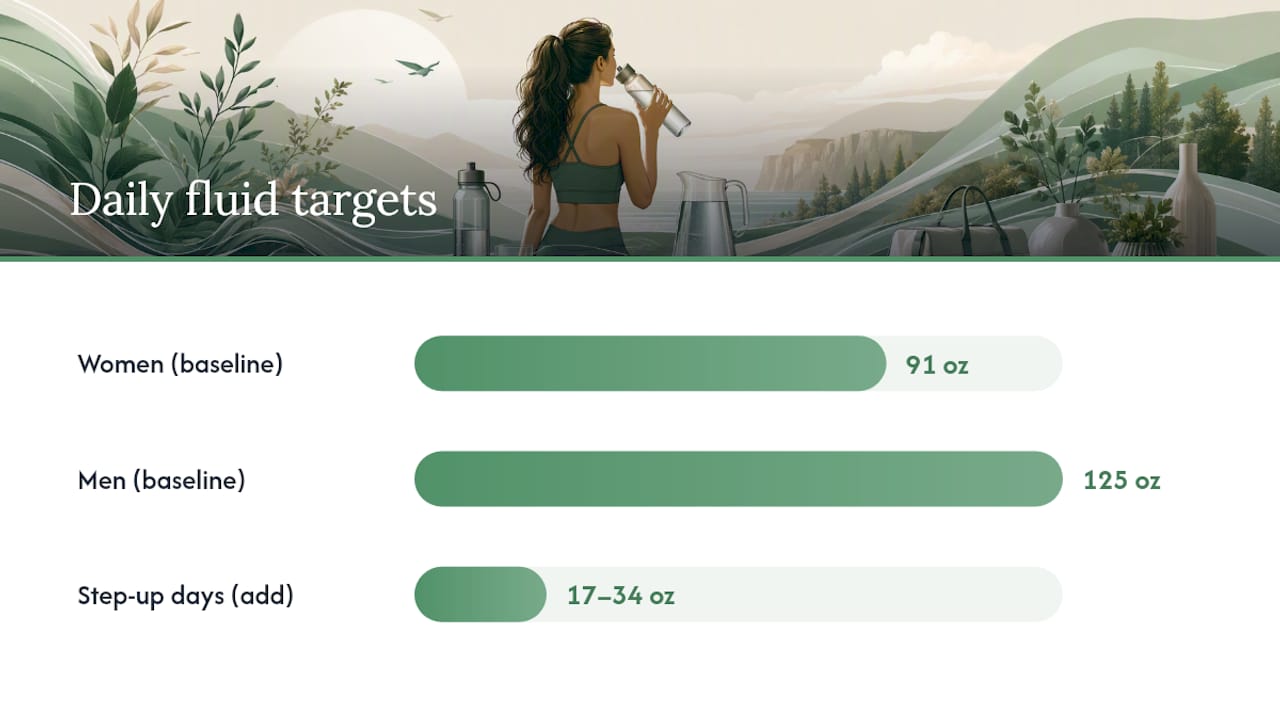
Start with the same baseline used for any adult, then build in step-ups for the side effects unique to GLP-1 therapy. The National Academies’ total water guidance, summarized by Harvard’s Nutrition Source, puts total daily fluid needs at around 2.7 liters for women and 3.7 liters for men, counting everything you drink plus the water in food.
The daily water target includes fluids from all sources such as soup, fruit, coffee, tea, and water. Food supplies a meaningful portion of total fluid intake, which may be reduced on GLP-1 therapy.
In practical units, that breaks down roughly like this:
- Women: about 91 ounces total daily, translating to roughly three to four 24 to 32 ounce bottles if you’re getting most fluid from beverages.
- Men: about 125 ounces total daily, or roughly four to five bottles of the same size.
- Step-up days: add 0.5 to 1 liter (about 17 to 34 ounces) on days with vomiting, diarrhea, heavy sweating, or intense exercise.
- Coffee and tea count: they contribute to your daily total despite older myths about caffeine being dehydrating in normal amounts.
Some patient-facing GLP-1 resources simplify this further, recommending a round 2 to 3 liters of total fluid per day as a starting point with step-ups for side effects, heat, or exercise. That’s a reasonable simplification of the same underlying science, and it’s easier to remember mid-afternoon than “2.7 liters.”
The catch: this baseline assumes normal kidney and heart function. If you have chronic kidney disease, heart failure, or you’re on diuretics, fluid targets can shift in either direction, and self-adjusting without medical input is genuinely risky. Ask your clinician for a number specific to your labs and history rather than defaulting to the general guidance above.
Building a Daily Hydration Routine That Doesn’t Rely on Thirst
Since thirst is an unreliable signal on GLP-1 therapy, the fix isn’t willpower. It’s structure. Anchor your fluid intake to events that already happen every day, whether you feel thirsty or not.
A workable schedule looks something like this:
- On waking: one full glass of water before coffee, before anything else. This is the easiest anchor because it happens before your day gets complicated.
- With each meal: a glass of water or broth-based soup alongside food, which does double duty by easing the slowed digestion that makes big gulps uncomfortable later.
- Mid-morning: a bottle refill paired with a break you already take, a work pause, a school drop-off, a dog walk.
- Mid-afternoon: the second refill, ideally paired with your GLP-1 dose day if you’re on a weekly injection, so the habit and the medication reinforce each other.
- Evening: a final glass a few hours before bed, early enough that it doesn’t disrupt sleep.
The trick is sipping, not chugging. Slowed gastric emptying means a full glass all at once can sit uncomfortably, sometimes triggering nausea rather than relieving it. Small, steady sips throughout the day move more total volume with far less discomfort than trying to catch up with three big glasses in the evening.
Temperature and flavor matter more than people expect. Cold water often goes down easier than room temperature when nausea is present, and a splash of lemon, cucumber, or a low-sugar electrolyte packet can make plain water feel less like a chore. Herbal tea, broth, and even watery foods like watermelon or cucumber salad genuinely count toward your daily total, per guidance from the Academy of Nutrition and Dietetics. You don’t need every ounce to come from a water bottle.
Behavior tools do a lot of the heavy lifting here. A visible water bottle on your desk, a phone reminder set for your weak points in the day, or a hydration app that logs intake all work by removing the need to notice thirst in the first place. Pairing your fluid habit with something you already do, your morning coffee, your lunch break, your evening medication, is more durable than any standalone reminder, because the existing habit becomes the trigger.
Pro Tip: Tie your biggest glass of water to the moment right before your GLP-1 injection or daily dose. You’ll remember the dose reliably, so let it drag the water habit along with it.
One caution worth flagging: don’t swap water for sugary sports drinks or juice as your default fluid source. They add calories and blood sugar swings you likely don’t want, especially if you’re managing GLP-1 therapy partly for metabolic reasons. Save flavored, sugar-containing drinks for genuine electrolyte replacement during active losses, not as your everyday hydration habit.
What to Do When Nausea, Vomiting, or Diarrhea Hit
GI side effects don’t just cost you volume, they cost you specific electrolytes, and that distinction changes how you should rehydrate. Vomiting drains chloride and potassium along with fluid. Diarrhea pulls sodium and potassium out fast. Plain water alone doesn’t replace either, which is why relying on water during an active GI flare can leave you feeling worse even as you’re drinking more.
The fix is small-sip rehydration, not volume rehydration. Gulping a large glass when your stomach is already upset often triggers more vomiting. Instead:
- Take small sips, roughly every 10 to 15 minutes, rather than large glasses spaced further apart.
- Prioritize sodium-containing fluids first: oral rehydration solutions, diluted electrolyte mixes, or salted broth.
- Let diluted juice or a low-sugar electrolyte drink fill in once sips are staying down consistently.
- Reintroduce plain water gradually once the sodium and potassium losses are addressed, not as your first move.
Here’s the number that matters most in a GI flare: a body losing fluid through both vomiting and diarrhea simultaneously can dehydrate faster than either symptom alone, which is exactly the scenario FDA labeling points to when it warns about acute kidney injury risk tied to severe GI reactions on GLP-1 therapy.
There’s a real caution here for people replacing large sodium losses with plain water alone. Doing so can worsen hyponatremia, a dangerously low blood sodium level, in people already losing significant sodium through vomiting or diarrhea. This is one of the clearest cases where “just drink more water” is actually the wrong advice.
If you’re on a diuretic, or you have kidney or cardiac disease, GI-related fluid loss carries extra risk, and self-managing with over-the-counter electrolyte products isn’t the safest first move. Call your prescriber before layering electrolyte supplementation onto an existing diuretic regimen, since the two can interact in ways that shift your sodium or potassium levels further than intended.
Know your ceiling for home management. If sips aren’t staying down after a few hours, if diarrhea and vomiting are happening together, or if you’re feeling lightheaded standing up, that’s the point to stop trying to manage it with a water bottle and get evaluated. IV fluids and lab work exist for exactly this scenario, and waiting too long to use them is the most common mistake people make.
Do You Need Electrolytes, or Just Food?
Most people with normal kidney function don’t need a daily electrolyte packet. That’s worth saying plainly, because the supplement aisle wants you to believe otherwise. On an ordinary day, without vomiting, diarrhea, heavy sweating, or intense exercise, food and water cover your electrolyte needs just fine.
Electrolyte products earn their place during active losses, not as a daily default. A patient-facing hydration guide for GLP-1 users makes this same distinction: replacement is warranted when you’re actively losing fluid and sodium, but routine daily supplementation isn’t necessary for most people with healthy kidneys.
Food-first sources cover the same ground without a packet:
- Sodium: broths, soups, and salted foods, useful both for everyday needs and for topping off during GI losses.
- Potassium: bananas, potatoes (with the skin), and dairy products like yogurt or milk.
- Magnesium: nuts, seeds, and leafy greens such as spinach or Swiss chard.
Reach for a formal oral rehydration solution or a low-sugar electrolyte mix specifically when you’re dealing with vomiting, diarrhea, a hot day of heavy sweating, or a long workout, not as a substitute for a balanced diet on a normal Tuesday.
If you have kidney disease, heart failure, or you’re taking medications that affect potassium or sodium levels, don’t self-dose electrolyte supplements without checking with your clinician first. Ad-hoc high-dose supplementation in that context can push electrolyte levels in the wrong direction just as easily as it corrects a deficit.
When Should You Call Your Doctor About Dehydration?
Some symptoms mean “adjust your water bottle habit.” Others mean “call now.” Knowing the difference matters more on GLP-1 therapy, because the FDA’s own labeling specifically ties severe GI side effects to acute kidney injury risk, not just garden-variety discomfort.
Contact your clinician the same day, or seek urgent care, if you notice any of the following:
- Little or no urination over an eight to twelve hour stretch, or urine that’s noticeably dark despite drinking fluids.
- Persistent vomiting lasting more than 24 hours, especially if you can’t keep even small sips down.
- Fainting, confusion, or sudden dizziness, particularly when standing up paired with a racing heartbeat.
- Vomiting and diarrhea happening together, since combined losses dehydrate faster than either alone.
- Signs of worsening despite home rehydration attempts, meaning you’ve tried small sips and oral rehydration solution and you’re still getting worse, not better.
If you’re facing one of these, the triage logic is simple: try small sips of an oral rehydration solution first if you can tolerate them. If you can’t keep fluids down at all, or the red-flag symptoms above are present, skip the wait-and-see approach and go to urgent care for IV fluids and basic labs. Kidney function can decline faster than symptoms make obvious, and catching it early is far easier to reverse than catching it late.
Meal and Snack Pairings That Do Double Duty on Hydration
Some of the best hydration tools aren’t in your water bottle at all. They’re on your plate, and they’re especially useful on the days GLP-1 side effects make drinking a full glass of water feel like a chore.
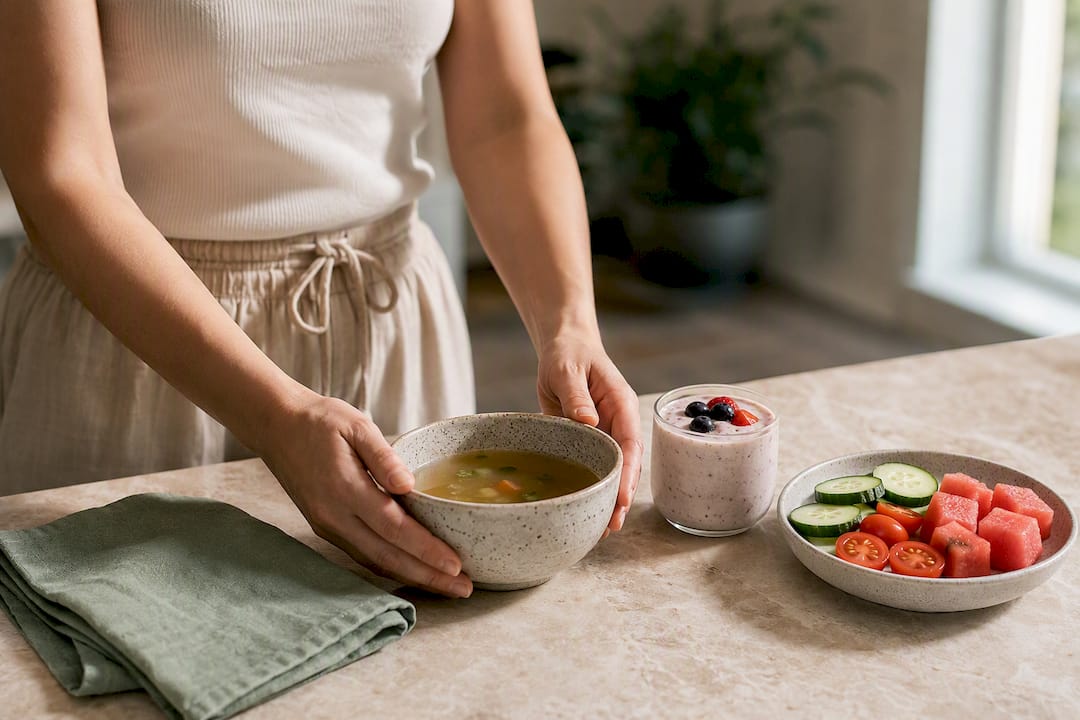
Broth-based soups are the obvious starting point: chicken and vegetable broth, miso, or a simple bone broth deliver fluid, sodium, and a gentle, low-volume way to eat when your stomach is unsettled. Yogurt and fruit smoothies work similarly, adding calcium and potassium alongside real fluid volume in a form that’s easy to sip slowly rather than force down. Savory porridge made with extra broth or milk instead of just water stretches a small meal into a bigger fluid contribution. High-water salads, cucumber, tomato, and watermelon in particular, round out the list as snack-sized hydration that doesn’t feel like “drinking more.”
These pairings matter more for women managing GLP-1 therapy alongside hormonal shifts, since fluid retention and thirst cues can already fluctuate across the menstrual cycle or through perimenopause, layering another variable on top of what the medication is already changing. That’s a gap personalized meal plans can help close: adapting to your hormonal stage while keeping an eye on the practical, food-based side of hydration, not just calories or macros.
Where a personalized nutrition plan earns its keep is in the pairing itself. Nourished’s meal planning tools generate hormone-aware meal suggestions without calorie counting, which means you can build broth-forward dinners or yogurt-based breakfasts into your week without doing the math yourself. Habit-pairing works the same way here as it does for water: link a hydrating meal to a time you already eat, and it sticks without extra willpower. Readers who want the research behind these recommendations can dig into Nourished’s compiled references for the studies informing its hormone-focused approach.
| Food or Drink | Hydration Role | Bonus Nutrient |
|---|---|---|
| Chicken or vegetable broth | High fluid volume, gentle on unsettled stomach | Sodium |
| Yogurt and fruit smoothie | Fluid plus easy-to-tolerate calories | Potassium, calcium |
| Savory porridge (milk or broth base) | Stretches meal fluid without big gulps | Protein, sodium |
| Watermelon or cucumber salad | Snack-sized hydration, low effort to eat | Potassium, magnesium |
The Habit-First Take on GLP-1 Hydration
The conventional advice on this topic treats hydration like a math problem: hit your ounce target, done. That misses the actual failure point. People on GLP-1 therapy don’t dehydrate because they don’t know the target. They dehydrate because the internal cue to drink goes quiet, and no amount of knowing “2.7 liters” fixes a signal that isn’t firing.
What actually works is anchoring fluid intake to events that happen regardless of thirst: dose day, meals, the coffee you’re already making. That’s a behavior problem, not a knowledge problem, and it’s exactly why pairing hydration habits with food, broths, smoothies, water-rich meals, works better than treating water and food as separate categories.
If you take one thing from this: stop waiting to feel thirsty before you drink. Build the routine around your day, not your body’s unreliable signal, and treat food as a legitimate part of your fluid math, not an afterthought.
— Brittany
This article is general information, not a substitute for advice from a qualified doctor. Consult a qualified healthcare professional about your own circumstances before acting on anything here.