
How Gut Hormones Drive Weight Regulation
Nourished · June 25, 2026
How Gut Hormones Drive Weight Regulation
Gut hormones are the primary chemical signals that control hunger, fullness, and how your body stores or burns energy. The role of gut hormones in weight regulation works through a direct communication network called the gut-brain axis, where hormones like GLP-1, PYY, ghrelin, CCK, and leptin send real-time signals between your digestive tract and your brain. When this system functions well, you eat the right amount and maintain a stable weight. When it breaks down, weight gain follows almost automatically. Emerging therapies now target these exact hormones, making this one of the most active areas in metabolic medicine.
How do gut hormones regulate appetite and food intake?
Gut hormone signaling in appetite control is bidirectional by design. Hunger hormones rise before meals, and satiety hormones reduce food intake after eating. This back-and-forth keeps calorie intake matched to your body’s actual needs.
Ghrelin is the primary hunger hormone. It rises sharply before meals and drops after eating. No other gut hormone triggers appetite as directly or as reliably.
GLP-1 and PYY work on the opposite end. Both are released from the small intestine and colon after you eat, and both signal your brain to stop eating. GLP-1 also enhances insulin secretion, suppresses glucagon, and delays gastric emptying, all of which slow digestion and extend the feeling of fullness. PYY acts directly on the hypothalamus to reduce appetite.

CCK (cholecystokinin) is released from the upper small intestine in response to fat and protein. It slows gastric emptying and signals the vagus nerve to tell your brain the meal is sufficient.
The physical pathway matters here. Vagal afferent nerves carry hormone signals from the gut to the dorsal vagal complex (DVC) in the brainstem. From there, signals travel to the hypothalamus, which governs long-term energy balance. This is not a slow, indirect process. The gut-to-brain signal travels in minutes.
What you eat shapes which hormones get released:
- Protein is the strongest trigger for GLP-1, PYY, and CCK release.
- Dietary fat stimulates CCK and, to a lesser degree, GLP-1.
- Fermentable fiber feeds gut bacteria that produce short-chain fatty acids (SCFAs), which then stimulate GLP-1 and PYY through free fatty acid receptors on enteroendocrine cells.
- Refined carbohydrates produce a weaker hormonal satiety response compared to protein or fiber.
Pro Tip: Eating 25–30 grams of protein at breakfast triggers a stronger GLP-1 and PYY response than a carbohydrate-heavy meal. This single shift can reduce total calorie intake for the rest of the day without any deliberate restriction.
What changes in gut hormone profiles occur with obesity?
Obesity is associated with lowered GLP-1, CCK, and PYY levels, which directly increases appetite and food intake. This creates a feedback loop: excess body fat disrupts hormone secretion, which drives more eating, which worsens the hormonal disruption.
The picture is more complicated than just low hormone levels. Preserved GLP-1 levels can coexist with reduced receptor function and diminished clinical effects. This means measuring fasting or postprandial gut hormone levels can underestimate the true degree of dysfunction. The hormone is present, but the body no longer responds to it properly.
Ghrelin adds another layer of difficulty. In people with obesity, ghrelin suppression after eating is blunted. The normal post-meal drop in ghrelin does not occur as expected, which means the hunger signal stays elevated longer than it should. This is one reason weight regain after dieting is so common. Ghrelin rises during calorie restriction and stays elevated even after weight loss, pushing the body back toward its previous weight.
| Hormone | Normal function | Change in obesity |
|---|---|---|
| GLP-1 | Promotes satiety, enhances insulin | Reduced secretion and receptor sensitivity |
| PYY | Suppresses appetite via hypothalamus | Lower postprandial release |
| CCK | Signals fullness via vagus nerve | Diminished secretion and effect |
| Ghrelin | Stimulates hunger before meals | Blunted suppression after eating |

Enteroendocrine cell dysfunction also connects to gut microbiota dysbiosis. When the microbial community in the gut shifts away from SCFA-producing bacteria, the chemical signals that trigger GLP-1 and PYY release weaken. The gut lining produces fewer hormones, and the brain receives less satiety signaling.
Pro Tip: If you have struggled with persistent hunger despite eating enough calories, the issue may be hormonal resistance rather than willpower. A diet high in fermentable fiber and protein directly addresses the hormonal side of this problem.
How do gut microbiota influence hormone secretion and weight?
The gut microbiota controls a significant portion of gut hormone output. Microbiota dysbiosis characterized by loss of SCFA-producing bacteria impairs gut hormone release and disrupts the free fatty acid receptor signaling involved in obesity. This is the microbiota-enteroendocrine axis, and it is now considered a core mechanism in metabolic weight regulation.
SCFAs, primarily acetate, propionate, and butyrate, are produced when gut bacteria ferment dietary fiber. These molecules bind to G-protein-coupled receptors (GPCRs) on enteroendocrine cells in the gut lining. That binding triggers the release of GLP-1 and PYY. When SCFA-producing bacteria are depleted, this entire cascade weakens.
Strategies that support the microbiota-hormone connection:
- Eat 25–35 grams of fermentable fiber daily from sources like oats, legumes, Jerusalem artichokes, and green bananas.
- Include fermented foods such as plain yogurt, kefir, sauerkraut, and kimchi to maintain microbial diversity.
- Reduce ultra-processed foods, which actively reduce SCFA-producing bacterial populations.
- Avoid unnecessary antibiotic use, which disrupts the microbial communities that drive hormone production.
Comparing microbiota-targeting approaches to pharmacologic hormone therapies reveals an important gap. Microbiota-targeting therapies produce modest metabolic effects alone. GLP-1 receptor agonists produce substantially greater weight loss in clinical settings. The practical implication is that diet and microbiome strategies work best as foundations, not replacements, for medical treatment when obesity is clinically significant.
| Approach | Mechanism | Relative effect on weight |
|---|---|---|
| Fermentable fiber diet | Increases SCFA production, stimulates GLP-1 and PYY | Moderate |
| Probiotic supplementation | Supports microbial diversity | Modest |
| GLP-1 receptor agonists | Directly activates CNS GLP-1 receptors | Strong |
| Combined diet and pharmacotherapy | Addresses both microbiota and hormonal signaling | Strongest |
The most promising direction is combining microbiome support with hormonal pharmacotherapy. Multimodal precision care strategies that address both the microbial and hormonal layers show the greatest potential for sustained weight management.
What are the latest therapeutic approaches targeting gut hormones?
GLP-1 receptor agonists are the most clinically significant gut hormone therapies available today. Drugs like semaglutide and liraglutide work primarily through the central nervous system. GLP-1 receptor agonists produce weight loss via CNS GLP-1 receptor signaling, particularly through neurons in the dorsal vagal complex, rather than through peripheral effects alone. This distinction matters because it explains why these drugs reduce appetite so powerfully even at doses far above natural GLP-1 levels.
Preclinical research confirms the brain’s central role. Knocking out CNS GLP-1 receptors eliminates the weight loss effect of GLP-1 receptor agonists entirely. Without DVC neuron activation, the drugs do not work. This finding has reshaped how researchers think about gut hormone pharmacology.
- GLP-1 receptor agonists (semaglutide, liraglutide): Reduce appetite, slow gastric emptying, and produce clinically meaningful weight loss. Side effects include nausea, vomiting, and gastrointestinal discomfort, particularly at the start of treatment.
- Dual and triple agonists: Newer agents target GLP-1 alongside GIP and glucagon receptors simultaneously, producing greater weight loss than single-target drugs in clinical trials.
- Dietary fiber protocols: Increase SCFA production and natural GLP-1 release. Effective as a foundation but insufficient as a standalone treatment for clinical obesity.
- Cycle-synced nutrition: Adjusting macronutrient timing and composition to hormonal phases supports natural gut hormone rhythms, particularly relevant for women whose hormonal environment shifts across the menstrual cycle.
The limitations of current pharmacologic approaches are real. Nausea affects a substantial portion of people starting GLP-1 receptor agonists. Weight regain after stopping the medication is common because the underlying hormonal dysregulation is not permanently corrected. Lifestyle and dietary changes that support gut hormone function remain necessary for long-term success.
Pro Tip: If you are using or considering a GLP-1 receptor agonist, pairing it with a high-protein, high-fiber diet maximizes the hormonal satiety response and supports the gut microbiota changes that sustain weight loss after treatment ends.
Key takeaways
Gut hormone dysregulation is not a side effect of obesity. It is a core driver of it, and addressing it requires both dietary and, in many cases, pharmacologic strategies.
| Point | Details |
|---|---|
| GLP-1 and PYY drive satiety | Both hormones signal the brain to stop eating and are reduced in obesity. |
| Ghrelin resists suppression in obesity | Blunted post-meal ghrelin drop keeps hunger elevated and drives weight regain. |
| Microbiota shapes hormone output | SCFA-producing bacteria directly trigger GLP-1 and PYY release via gut receptors. |
| CNS signaling mediates drug effects | GLP-1 receptor agonists work through brain neurons, not peripheral gut effects alone. |
| Combined strategies work best | Diet, microbiome support, and pharmacotherapy together produce the strongest outcomes. |
Why gut hormone research changes how I think about weight
The most common mistake I see is treating weight management as a discipline problem. People assume that hunger means weakness. The science says otherwise. Ghrelin rises mechanically after calorie restriction, and GLP-1 receptor sensitivity drops with excess body fat. These are physiological events, not personal failures.
What strikes me most about the 2026 research is the emphasis on receptor sensitivity over hormone levels alone. A woman can have normal fasting GLP-1 levels and still have a profoundly impaired satiety response because her receptors are not responding. That nuance is almost never discussed in mainstream nutrition advice, and it explains why so many women feel chronically hungry despite eating what appears to be an adequate diet.
The microbiota connection also shifts my thinking on restrictive diets. Cutting calories aggressively tends to reduce dietary diversity, which depletes SCFA-producing bacteria, which weakens GLP-1 and PYY output. The restriction itself worsens the hormonal environment. This is why I am consistently more interested in what women add to their diet than what they remove.
Precision approaches are the future here. Cycle-synced nutrition, personalized fiber targets, and timed protein intake are not trends. They are practical applications of what the gut hormone research actually shows. The women who see lasting results are the ones who work with their hormonal biology rather than against it.
— Brittany
Nourished and the hormonal side of weight management
Understanding how gut hormones affect weight is one thing. Building a daily nutrition plan that actually supports them is another.
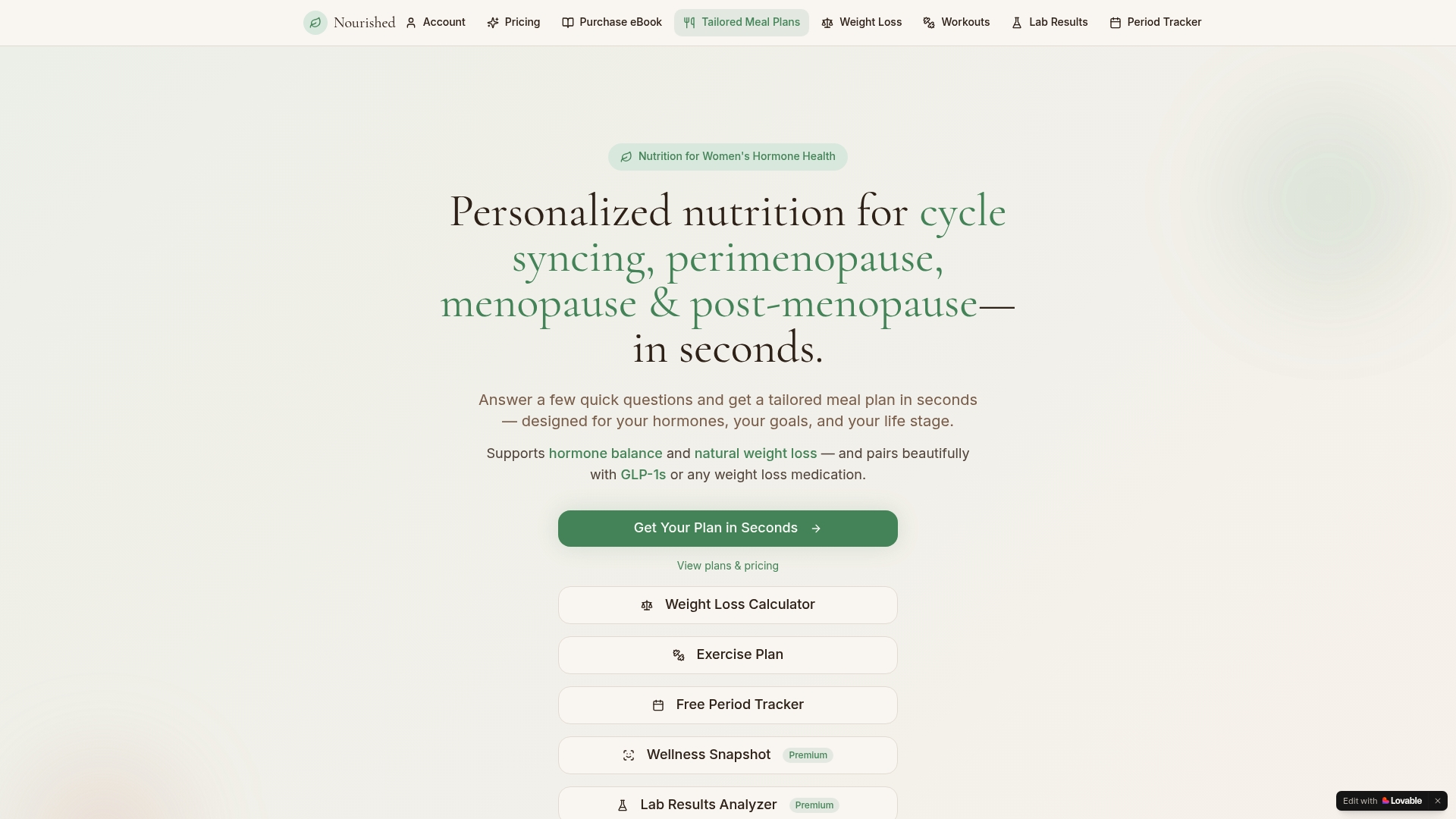
Nourished is built specifically for women’s hormonal health, with personalized meal plans that adapt to your menstrual cycle, perimenopause, or post-menopause stage. The platform uses AI to match your nutrition to your hormonal needs at each phase, prioritizing the protein and fiber combinations that support GLP-1 and PYY release without calorie counting or restrictive rules. You can also track your cycle with the free period tracker to align your meals with your body’s natural hormonal rhythm. No guesswork, no generic plans, just nutrition built around how your hormones actually work.
FAQ
What are the main gut hormones involved in weight regulation?
The main weight control hormones from the gut are GLP-1, PYY, CCK, and ghrelin. GLP-1, PYY, and CCK promote satiety, while ghrelin stimulates hunger before meals.
How does the gut microbiota affect gut hormone levels?
SCFA-producing gut bacteria stimulate GLP-1 and PYY release by binding to receptors on enteroendocrine cells. Dysbiosis reduces this signaling and impairs appetite control.
Why do people regain weight after dieting?
Ghrelin suppression after eating is blunted in people with obesity, and calorie restriction raises ghrelin further. This sustained hunger signal pushes the body back toward its previous weight.
How do GLP-1 receptor agonists cause weight loss?
GLP-1 receptor agonists work primarily through CNS GLP-1 receptors, especially neurons in the dorsal vagal complex. Preclinical studies show that removing these receptors eliminates the drugs’ weight loss effect entirely.
Can diet alone restore healthy gut hormone function?
A high-protein, high-fiber diet supports natural GLP-1 and PYY release and improves the gut microbiota that drives hormone production. For clinical obesity, diet works best as a foundation alongside medical treatment rather than as a standalone solution.