
How Hormones Respond to a Caloric Deficit
Nourished · July 9, 2026
How Hormones Respond to a Caloric Deficit
A caloric deficit triggers a coordinated hormonal response that slows metabolism, increases hunger, and works against fat loss. This biological defense mechanism involves at least five major hormone systems: leptin, ghrelin, thyroid hormones, cortisol, and reproductive hormones. Understanding how hormones respond to a caloric deficit explains why weight loss stalls, why hunger intensifies, and why keeping weight off is harder than losing it. Metabolic adaptation affects up to 85% of dieters, making this one of the most clinically significant barriers to sustained weight loss. For women especially, these hormonal shifts interact with the menstrual cycle, perimenopause, and menopause in ways that standard diet advice rarely addresses.
What hormonal changes occur during a caloric deficit?
The hormonal changes triggered by caloric restriction begin faster than most people expect. Leptin drops within days of starting a deficit, signaling to the brain that fat stores are shrinking. That signal sets off a cascade of compensatory responses across multiple hormone systems.
Ghrelin, the hunger hormone, rises in response to lower leptin. This is not a temporary adjustment. Ghrelin stays elevated as long as the deficit continues, making sustained hunger a physiological reality rather than a willpower problem. Thyroid hormone conversion slows over weeks to months, specifically the conversion of T4 to the active form T3. T3 reductions slow metabolic rate but typically stay within normal lab ranges, which means standard thyroid panels often miss the functional change.

Cortisol rises under severe restriction or chronic dieting stress. Elevated cortisol impairs T4 to T3 conversion and disrupts reproductive hormones, compounding fatigue and metabolic slowdown. Reproductive hormones, particularly estrogen and progesterone, respond to energy availability. When caloric intake drops too low, the body deprioritizes reproduction, which affects mood, libido, and cycle regularity.
Key hormonal shifts during caloric restriction:
- Leptin: Falls within days, reducing satiety signals to the brain
- Ghrelin: Rises quickly, increasing appetite and food-seeking behavior
- T3 (active thyroid hormone): Decreases over weeks, lowering resting metabolic rate
- Cortisol: Elevates under severe or prolonged restriction, adding metabolic stress
- Estrogen and progesterone: Decline when energy availability drops too low
Pro Tip: Eating adequate dietary fat, particularly omega-3s from sources like salmon and walnuts, supports thyroid hormone conversion and helps buffer cortisol during a caloric deficit.
How do hormonal adaptations affect metabolism and weight loss?
Metabolic adaptation is the clinical term for what most people call a weight loss plateau. The body reduces energy expenditure through several mechanisms simultaneously, and hormones coordinate all of them. Resting metabolic rate drops as thyroid hormones fall. The thermic effect of food decreases as the body becomes more efficient at extracting calories. Most significantly, non-exercise activity thermogenesis (NEAT) decreases without any conscious decision, meaning people fidget less, sit more, and move less throughout the day.
NEAT reduction is the most underappreciated mechanism in metabolic adaptation. A person may maintain their formal exercise routine while unknowingly burning hundreds fewer calories through reduced spontaneous movement. Adaptive thermogenesis is coordinated through leptin signaling and includes reduced sympathetic nervous system tone, which explains the fatigue, cold intolerance, and low motivation that accompany prolonged dieting.

The table below shows how each hormonal shift translates into a measurable effect on the body:
| Hormone | Direction during deficit | Primary effect |
|---|---|---|
| Leptin | Decreases | Reduced satiety, lower metabolic rate |
| Ghrelin | Increases | Elevated hunger, increased food cravings |
| T3 (thyroid) | Decreases | Slower resting metabolism |
| Cortisol | Increases | Muscle breakdown, disrupted sleep, fat retention |
| Estrogen | Decreases | Altered fat distribution, mood changes |
These shifts serve a biological purpose. The body interprets a caloric deficit as a threat to survival, not a deliberate health choice. That framing matters because it reframes the experience of hunger and fatigue from personal failure to predictable physiology.
Pro Tip: Tracking weekly averages on the scale rather than daily readings gives a clearer picture of fat loss progress, since hormonal water retention can mask real changes for days at a time.
How long do hormonal changes last after ending a caloric deficit?
The hormonal response to dieting does not end when the diet does. Hormonal patterns persist for over 62 weeks post-diet, meaning ghrelin stays elevated and leptin stays suppressed long after a person returns to normal eating. This is the primary biological explanation for weight regain after dieting. The body maintains what researchers call a “defended posture,” actively working to restore lost fat stores.
This persistence has real consequences for weight maintenance strategies. A person who lost weight six months ago is still operating with a hormonal profile that favors fat storage and increased appetite. Knowing this changes the approach to maintenance. It is not a matter of discipline. It is a matter of working with a biology that is still in recovery mode.
Strategies that support hormonal rebalancing after a caloric deficit:
- Gradual refeeding: Increasing calories slowly over weeks rather than returning abruptly to pre-diet intake reduces the hormonal rebound effect
- Prioritizing protein: Adequate protein intake preserves lean muscle mass, which supports a higher resting metabolic rate during recovery
- Sleep quality: Sleep, stress management, and protein intake directly counteract the body’s adaptive conservation response
- Resistance training: Building muscle tissue increases resting energy expenditure and improves leptin sensitivity over time
- Patience with the timeline: Hormonal normalization takes months, not weeks, and expecting faster recovery leads to repeated restriction cycles that compound the problem
The most damaging pattern is the cycle of aggressive restriction followed by rapid refeeding. Each cycle deepens the hormonal adaptation and makes subsequent weight loss harder. Severe caloric restriction is counterproductive precisely because the hormonal response it triggers outlasts the diet itself.
How do women’s hormonal cycles affect their response to caloric restriction?
Women face a layer of hormonal complexity that standard dietary advice ignores. Female hormonal cycles affect fat storage and metabolism throughout the month, meaning the same caloric deficit produces different physiological effects depending on cycle phase. During the follicular phase, estrogen is higher and insulin sensitivity is better, making fat loss more efficient. During the luteal phase, progesterone rises, basal metabolic rate increases slightly, and cravings intensify, making the same deficit feel much harder.
Perimenopause and menopause add further complexity. Declining estrogen alters fat distribution, shifting storage toward the abdomen. Appetite regulation becomes less predictable as estrogen’s role in leptin sensitivity diminishes. Women in these life stages often find that caloric deficits that worked in their 30s produce minimal results in their 40s and 50s, not because of discipline failures but because the hormonal context has fundamentally changed.
Caloric deficits that are too aggressive can trigger hypothalamic amenorrhea, a condition where the brain shuts down the reproductive hormone axis to conserve energy. This is most common in women under 35 but can occur at any age under sufficient restriction. The loss of estrogen and progesterone from hypothalamic amenorrhea has downstream effects on bone density, cardiovascular health, and mood that extend well beyond weight management.
Practical strategies for women navigating caloric restriction:
- Cycle syncing nutrition: Adjusting macronutrient ratios and caloric intake to match cycle phase reduces hormonal friction during dieting
- Avoiding extreme deficits: Keeping the deficit moderate, typically no more than 500 calories below maintenance, protects reproductive hormone function
- Protein at perimenopause: Protein’s role in perimenopause is especially significant for preserving muscle mass and supporting metabolic rate as estrogen declines
- Monitoring symptoms: Cycle irregularity, extreme fatigue, or persistent cold intolerance during dieting signals that the deficit is too aggressive for current hormonal status
Hormones do not act alone in women. Menstrual and menopausal hormone changes strongly shape how the body responds to any caloric restriction strategy. Ignoring this interaction is the single biggest reason women experience frustrating results despite consistent effort.
Key Takeaways
Hormonal adaptation to a caloric deficit is a coordinated biological process that reduces metabolism, increases hunger, and persists long after dieting ends, making sustainable approaches and hormonal awareness the most effective tools for lasting weight management.
| Point | Details |
|---|---|
| Hormonal changes start fast | Leptin drops within days; thyroid and cortisol shifts develop over weeks to months. |
| Metabolic adaptation is widespread | Up to 85% of dieters experience a weight loss plateau driven by coordinated hormonal shifts. |
| Effects outlast the diet | Hormonal patterns like elevated ghrelin can persist for over 62 weeks after dieting ends. |
| Women face added complexity | Cycle phase, perimenopause, and menopause all alter how the body responds to caloric restriction. |
| Moderate deficits protect hormones | Aggressive restriction triggers stronger hormonal defense responses and increases weight regain risk. |
What I’ve learned about dieting that most advice gets wrong
Most weight loss content treats hunger as a motivation problem. After years of working with women on hormone-focused nutrition, I see it differently. Hunger during a caloric deficit is a hormonal signal, and fighting it with willpower alone is a losing strategy. The biology is not on your side, and that is not a personal failing.
What actually works is building a deficit that the body does not perceive as a crisis. That means keeping the restriction moderate, eating enough protein to preserve muscle, sleeping consistently, and managing stress actively. Consistent habits and long-term trends matter far more than any single day on the scale. The women I see make the most progress are the ones who stop chasing the fastest possible result and start working with their hormonal reality instead of against it.
The other thing I want to say clearly: if your cycle is becoming irregular or disappearing during a diet, that is your body telling you the deficit is too large. Reproductive hormone disruption is not a side effect to push through. It is a signal to adjust. Understanding what hormonal weight means for your body is the first step toward making changes that actually last.
— Brittany
Nourished and hormone-aware nutrition for women
Caloric restriction does not happen in a hormonal vacuum, and generic meal plans do not account for that reality.
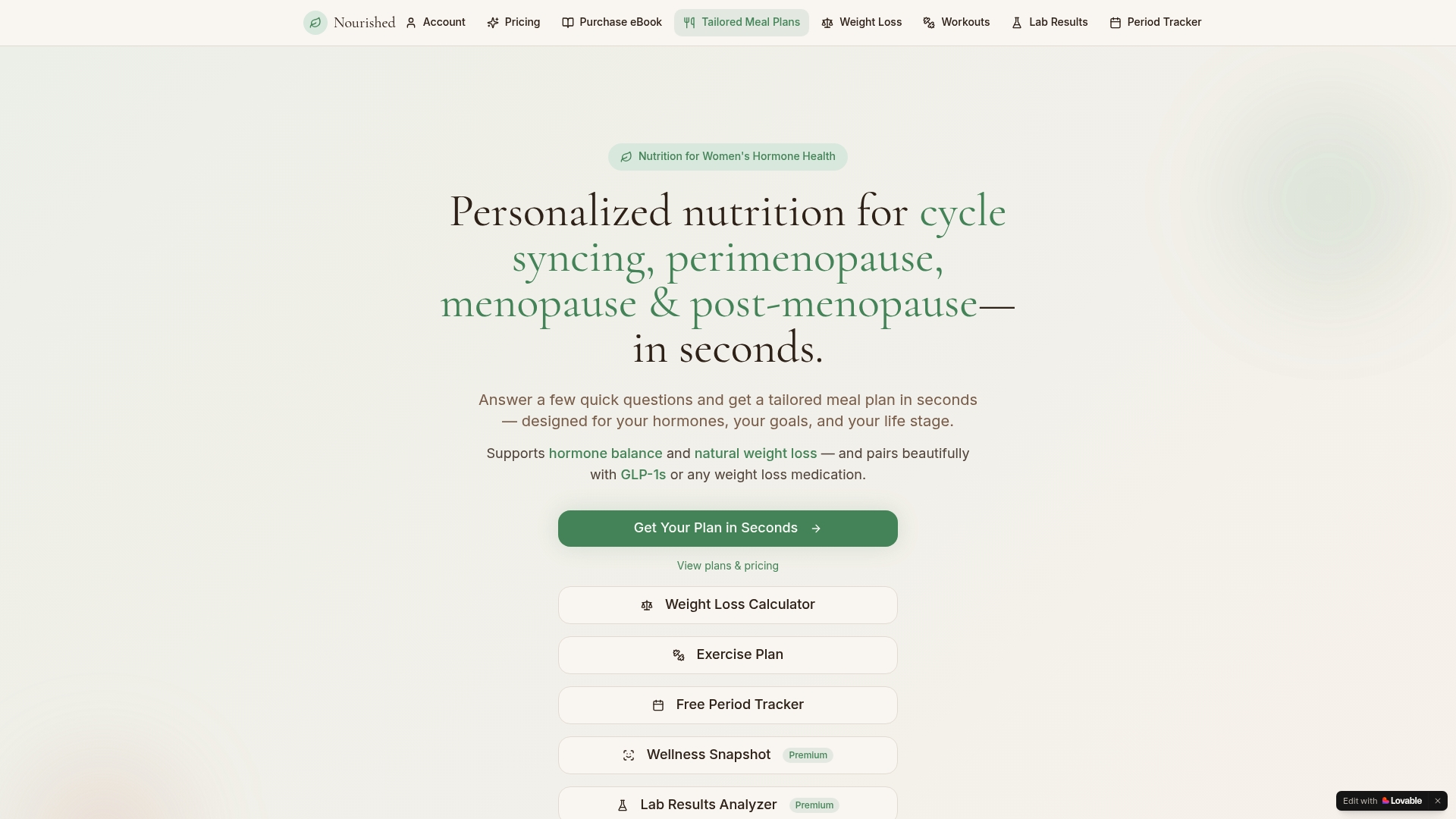
Nourished builds personalized nutrition plans specifically for women’s hormonal health, whether you are managing your menstrual cycle, navigating perimenopause, or working through menopause. The platform uses AI to align your meal plan with your cycle phase, adjusting macronutrients and caloric targets to work with your hormonal fluctuations rather than against them. There is no calorie counting required. Nourished generates your plan immediately based on your specific hormonal profile and goals. See how Nourished works to support metabolic health at every life stage, or get your personalized plan and start eating in a way your hormones will actually respond to.
FAQ
What is the first hormone to change during a caloric deficit?
Leptin is the first hormone to respond, dropping within days of starting a caloric deficit. This drop signals the brain to reduce energy expenditure and increase appetite.
Why do I feel so hungry even when eating at a caloric deficit?
Ghrelin rises during caloric restriction and stays elevated, creating persistent hunger that is physiological rather than psychological. This hormonal pattern can persist for over a year after dieting ends.
Does a caloric deficit affect thyroid function?
A caloric deficit reduces the conversion of T4 to the active thyroid hormone T3, slowing metabolic rate. These changes typically stay within normal lab ranges and do not indicate thyroid disease.
How does caloric restriction affect women differently than men?
Women’s menstrual cycle, perimenopause, and menopause create additional hormonal variables that alter fat storage, appetite, and metabolic rate throughout the month. Caloric deficits that are too aggressive can also disrupt reproductive hormones, leading to cycle irregularity or hypothalamic amenorrhea.
How long does it take for hormones to normalize after stopping a diet?
Hormonal normalization after a caloric deficit can take over a year. Gradual refeeding, adequate protein, quality sleep, and resistance training support faster hormonal recovery.