
How Post-Menopause Changes Body Composition
Nourished · June 26, 2026
How Post-Menopause Changes Body Composition
Post-menopause permanently shifts body composition by increasing visceral fat and reducing lean muscle mass, driven almost entirely by the decline of estrogen. This is not simple weight gain. It is a biological remodeling that changes where fat is stored, how muscle is maintained, and how your metabolism functions. Understanding how post-menopause changes body composition is the first step toward protecting your long-term health, energy levels, and physical strength. The good news: targeted nutrition and strength training can meaningfully slow these changes.
What are the physiological changes in body composition after menopause?
Estrogen does far more than regulate your menstrual cycle. Skeletal muscle contains estrogen receptors that directly regulate muscle regeneration and fat distribution. When estrogen declines after menopause, two things happen simultaneously: fat shifts from your hips and thighs toward your abdomen, and your muscles lose their ability to repair and grow at the same rate.
The timing of these changes surprises most women. Fat gain and muscle loss accelerate starting about two years before your final menstrual period and continue into early postmenopause. Fat mass increases at roughly 1.7% per year during this window. Lean mass decreases at roughly 0.2% per year. These rates are modest year to year, but they compound significantly over a decade.

The cumulative effect is measurable. Muscle mass is approximately 2.5% lower in perimenopausal women and 5.7% lower in postmenopausal women compared to premenopausal women of similar age. Postmenopausal women also show significantly lower lean body mass and higher visceral fat area than pre- and perimenopausal women. These are not marginal differences. They represent a real shift in how your body functions day to day.
The key changes to know:
- Central fat accumulation: Fat redistributes from peripheral areas (hips, thighs) to the abdomen, increasing waist circumference and waist-to-hip ratio.
- Visceral fat increase: Fat accumulates around internal organs, not just under the skin.
- Lean mass decline: Muscle protein turnover slows, and the anabolic response to exercise and protein may be blunted.
- Metabolic rate reduction: Less muscle mass means fewer calories burned at rest.
Pro Tip: If you are still in perimenopause, start strength training now. Research confirms that body remodeling begins before your last period. Waiting until full postmenopause means losing ground you did not have to lose.
How do these changes affect health and physical function?
The health consequences of post-menopause body composition changes extend well beyond appearance. Visceral fat is metabolically active tissue. It releases inflammatory compounds that raise the risk of cardiovascular disease, insulin resistance, and type 2 diabetes. This is why the shift from peripheral to central fat storage matters so much clinically.
One underrecognized risk is sarcopenic obesity. This is the combination of excess body fat and low muscle mass occurring simultaneously. A woman can maintain a stable body weight while losing muscle and gaining fat in equal measure. Body weight and BMI can mask this remodeling entirely. The scale stays the same, but the ratio of fat to muscle shifts in a direction that raises health risk. This is why clinicians now refer to menopause as a biological “phenotype transition,” not simply a hormonal event.

Physical function declines in parallel. Lower muscle mass reduces strength, balance, and the ability to perform daily tasks without fatigue. Post-menopause energy levels drop partly because muscle tissue is a primary driver of metabolic energy. Women with greater muscle loss report more fatigue, reduced exercise tolerance, and slower recovery after physical activity.
Preventing weight gain alone does not protect you if muscle loss and visceral fat are not actively addressed. A woman who avoids gaining weight but does nothing to preserve muscle is still accumulating the health risks associated with sarcopenic obesity.
What lifestyle strategies help prevent muscle loss and fat gain?
Evidence is clear on the most effective interventions: strength training combined with adequate protein intake and a moderate calorie deficit produces the best outcomes for post-menopause body composition nutrition.
-
Prioritize strength training. Resistance exercise is the single most effective tool for preserving lean muscle after menopause. Aim for two to three sessions per week targeting all major muscle groups. Compound movements like squats, deadlifts, rows, and presses produce the greatest muscle stimulus.
-
Meet your protein minimum. Protein intake of at least 0.8 g per kg of body weight per day is the established floor during a calorie deficit. For a 150-pound (68 kg) woman, that is roughly 55 grams of protein daily at minimum. Many researchers recommend higher intakes for postmenopausal women because the anabolic response to protein may be reduced. Practical protein sources for muscle maintenance include eggs, Greek yogurt, cottage cheese, salmon, chicken breast, lentils, and edamame.
-
Use a moderate calorie deficit. A deficit of 250–750 calories per day supports fat loss without triggering the aggressive muscle breakdown that comes with severe restriction. Cutting calories too hard accelerates lean mass loss, which is the opposite of what you need.
-
Distribute protein across meals. Spreading protein intake across three to four meals rather than concentrating it in one sitting improves muscle protein synthesis. A breakfast with eggs or Greek yogurt, a lunch with chicken or legumes, and a dinner with fish or tofu covers this effectively.
-
Stay consistently active. Daily movement beyond formal workouts, including walking, gardening, and climbing stairs, contributes to calorie balance and supports metabolic health. A post-menopause strength training meal plan works best when paired with consistent daily activity.
Pro Tip: Track your protein intake for one week using a free app like Cronometer or MyFitnessPal. Most women are surprised to find they are eating far less protein than they think. Closing that gap is often the fastest way to notice improved energy and muscle recovery.
For a deeper look at why protein matters specifically during this life stage, the protein guide for perimenopause from Nourished covers the mechanisms and practical meal ideas in detail.
Does menopause hormone therapy help with body composition?
Menopause hormone therapy (MHT) does affect body composition, but not in the way most women expect. MHT may reduce central fat accumulation and help preserve lean mass, but it is not a weight-loss intervention. Women who start MHT hoping to lose fat without changing their diet or exercise habits will be disappointed.
The benefits of MHT for body composition include:
- Reduced visceral fat accumulation: Estrogen replacement partially counteracts the central fat shift that drives cardiometabolic risk.
- Lean mass preservation: MHT supports the muscle maintenance mechanisms that estrogen normally regulates.
- Improved exercise response: Some research suggests MHT may restore a more normal anabolic response to strength training.
The limitations are equally important. MHT benefits body composition primarily as a supportive measure, not as a standalone fat-loss strategy. Lifestyle interventions, meaning strength training and nutrition, remain the primary drivers of body composition outcomes. MHT also carries risks that vary by individual health history, and the decision to use it requires a conversation with a physician who knows your full medical picture.
The most effective approach combines MHT (when appropriate and prescribed) with consistent strength training and a protein-focused diet. Neither MHT nor exercise alone produces the same result as both together.
How do age and BMI influence body composition after menopause?
Not all postmenopausal women experience the same degree of change. Age and BMI both shape how dramatically body composition shifts, and the relationship is more nuanced than most people realize.
| Factor | Effect on fat mass | Effect on lean mass |
|---|---|---|
| Menopausal status alone | Significant increase in visceral fat | Significant decrease in skeletal muscle |
| Age (independent of menopause) | Modest additional increase | Modest additional decrease |
| Higher BMI | Greater absolute fat mass | Relatively attenuated muscle loss |
| Normal weight | Lower absolute fat mass | Greater relative muscle loss risk |
When matched by age and BMI, menopausal status alone is not the dominant predictor of total body fat percentage. BMI is the strongest single predictor of fat parameters. Age shows a correlation with fat percentage, but it is modest. This finding does not minimize the role of menopause. It means that a woman’s starting weight and age at menopause both shape how much change she experiences.
Women with higher BMI at menopause tend to have greater absolute fat mass but somewhat less relative muscle loss. Women at normal weight face a different risk profile: their muscle loss is proportionally more significant. This is why individualized approaches matter. A one-size-fits-all post-menopause body composition nutrition plan ignores real differences in starting point and risk.
The practical implication: hormone-healthy nutrition tools that account for your specific body composition, age, and hormonal status will outperform generic diet advice every time.
Key Takeaways
Post-menopause body composition changes are driven by estrogen decline and begin before the final menstrual period, making early intervention with strength training and adequate protein the most effective strategy for long-term muscle and metabolic health.
| Point | Details |
|---|---|
| Estrogen drives the shift | Estrogen loss causes fat to move centrally and reduces muscle repair capacity. |
| Changes start before menopause | Fat gain and muscle loss accelerate roughly two years before the final period. |
| Protein intake is non-negotiable | Aim for at least 0.8 g per kg of body weight daily to preserve lean mass. |
| Moderate deficits protect muscle | A 250–750 calorie daily deficit supports fat loss without accelerating muscle breakdown. |
| BMI and scale weight mislead | Body composition tracking with DXA or similar tools reveals changes the scale misses. |
What I have learned from watching women navigate this transition
By Brittany
The most common mistake I see is waiting. Women notice the scale creeping up or their clothes fitting differently and assume it is ordinary weight gain. They cut calories, lose a few pounds, and feel like they have solved the problem. They have not. The scale going down does not mean muscle is being preserved. It often means the opposite.
The second mistake is treating strength training as optional. Cardio is great for cardiovascular health, but it does not build or preserve muscle the way resistance training does. I have seen women walk five miles a day and still lose significant muscle mass because they never picked up a weight. Muscle requires a specific stimulus, and walking is not it.
What actually works is less complicated than the wellness industry makes it sound. Lift weights two to three times a week. Eat enough protein at every meal. Do not cut calories so aggressively that your body starts breaking down muscle for fuel. These three things, done consistently, produce real results.
The hardest part is consistency over months and years, not perfection over weeks. Body composition changes in menopause happen slowly. The interventions that reverse them also work slowly. Women who understand this stay the course. Women who expect fast results quit before the work pays off.
— Brittany
Nourished and hormone-healthy nutrition for postmenopausal women
Managing body composition after menopause requires more than generic diet advice. It requires a nutrition approach built around your hormonal reality.
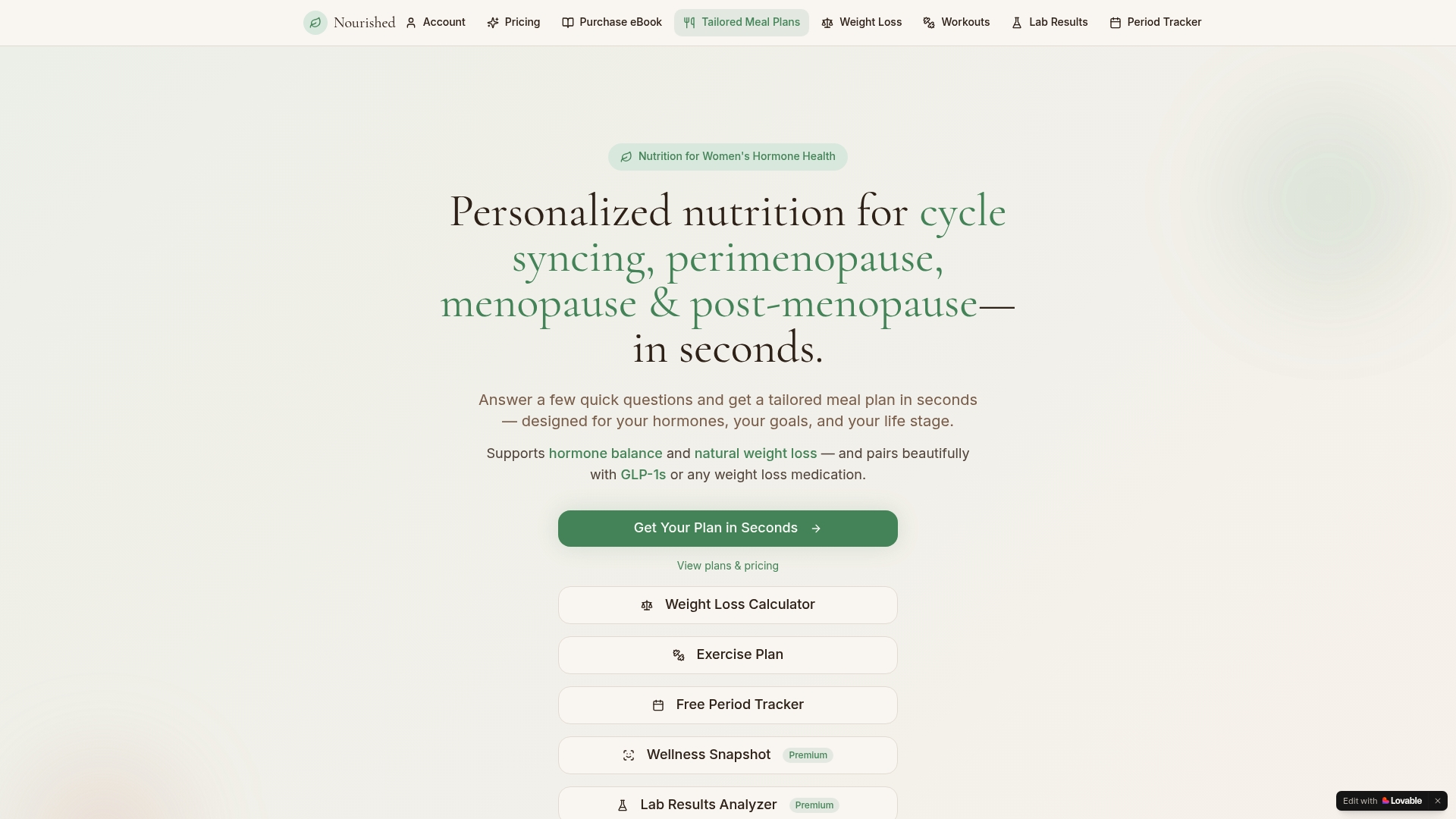
Nourished builds personalized meal and workout plans specifically for women in perimenopause, menopause, and post-menopause. The platform uses AI to match your nutrition to your hormonal needs, without calorie counting or restrictive dieting. Meal plans are generated immediately and adapt to your goals, whether that is building muscle, managing fat, or improving energy. Nourished also compiles the evidence behind its recommendations so you can see exactly what the science supports. For women who want a structured, hormone-aware starting point, Nourished is built for this exact stage of life.
FAQ
What causes muscle loss after menopause?
Estrogen decline impairs muscle protein turnover and reduces the regenerative capacity of skeletal muscle. Muscle mass is approximately 5.7% lower in postmenopausal women compared to premenopausal women.
How much protein do postmenopausal women need to maintain muscle?
The established minimum is 0.8 g of protein per kg of body weight per day during a calorie deficit. Many researchers recommend higher intakes because the anabolic response to protein may be reduced after menopause.
Does menopause hormone therapy prevent fat gain?
MHT reduces central fat accumulation and supports lean mass preservation, but it is not a fat-loss treatment. Lifestyle interventions including strength training and nutrition remain the primary tools for managing body composition.
Can you build muscle after menopause?
Yes. Strength training two to three times per week, combined with adequate protein intake, produces measurable muscle gains in postmenopausal women. The anabolic response may be slower, but it is not absent.
Why does the scale stay the same but clothes fit differently?
Fat redistribution and muscle loss can occur simultaneously without changing total body weight. This “invisible remodeling” is why body composition tracking with tools like DXA scans provides more useful information than scale weight alone.