
How Progesterone Influences Food Cravings in Women
Nourished · August 18, 2026
How Progesterone Influences Food Cravings in Women
Progesterone raises food cravings for many women, particularly during the late luteal phase, when levels of the hormone peak alongside a drop in leptin sensitivity. The effect isn’t universal or perfectly linear. A 2023 study found mid-luteal progesterone was actually inversely associated with premenstrual cravings in its sample, while broader cohort data tracked through the BioCycle Study point to inflammation, not hormones alone, as a major driver of craving intensity.
That contradiction is the whole story. Progesterone doesn’t act in isolation. It works against estrogen, interacts with inflammatory markers, and shifts how satiety signals from leptin and ghrelin reach the brain. The result is a hormonal tug-of-war that plays out differently depending on when in the cycle you measure it, and how a study defines “craving” in the first place.
Three things drive the apparent inconsistency in the research:
- Timing of hormone sampling. Mid-luteal progesterone behaves differently than late-luteal progesterone, and studies that blur the two produce conflicting results.
- Inflammatory load. Markers like hsCRP and IL-6 predict craving severity independent of hormone levels, according to BioCycle Study data on 259 women.
- Estrogen-progesterone balance. Estrogen tends to suppress appetite, so cravings often spike when progesterone rises as estrogen falls, per a review in Physiology & Behavior.
Key Takeaways
Progesterone raises cravings for many women in the late luteal phase by reducing leptin sensitivity and shifting reward-circuit chemistry, though inflammation and estrogen balance shape the intensity just as much.
| Point | Details |
|---|---|
| Late luteal phase is peak craving time | Craving scores for sweets and salty foods are significantly higher late luteal compared to other phases. |
| Estrogen and progesterone counterbalance each other | Estrogen suppresses appetite while progesterone can stimulate it, so their ratio matters more than progesterone alone. |
| Inflammation is an independent driver | Elevated hsCRP and cytokines predict craving severity separately from hormone levels in the BioCycle Study. |
| Protein timing helps most | Increasing protein starting mid-luteal aligns with natural intake patterns and blunts later cravings. |
| PMS amplifies the effect | Women with PMS show measurably higher hedonic hunger scores during the luteal phase. |
| Nourished adapts plans to your cycle | Nourished adjusts protein, fiber, and anti-inflammatory recommendations across cycle phases instead of using one static plan. |
Table of Contents
- What Does the Evidence Say About Progesterone and Cravings?
- How Does Progesterone Change Appetite at the Cellular Level?
- When in the Menstrual Cycle Do Cravings Peak?
- Who Experiences the Strongest Progesterone-Linked Cravings?
- What Actually Helps With Cycle-Linked Cravings?
- Why Do Studies on Progesterone and Cravings Disagree?
- How Nourished Applies This Research to Real Meal Plans
- What I’ve Learned About Cycle-Aware Nutrition Planning
- Try Cycle-Aware Nutrition Built Around Your Hormones
- Sources
What Does the Evidence Say About Progesterone and Cravings?
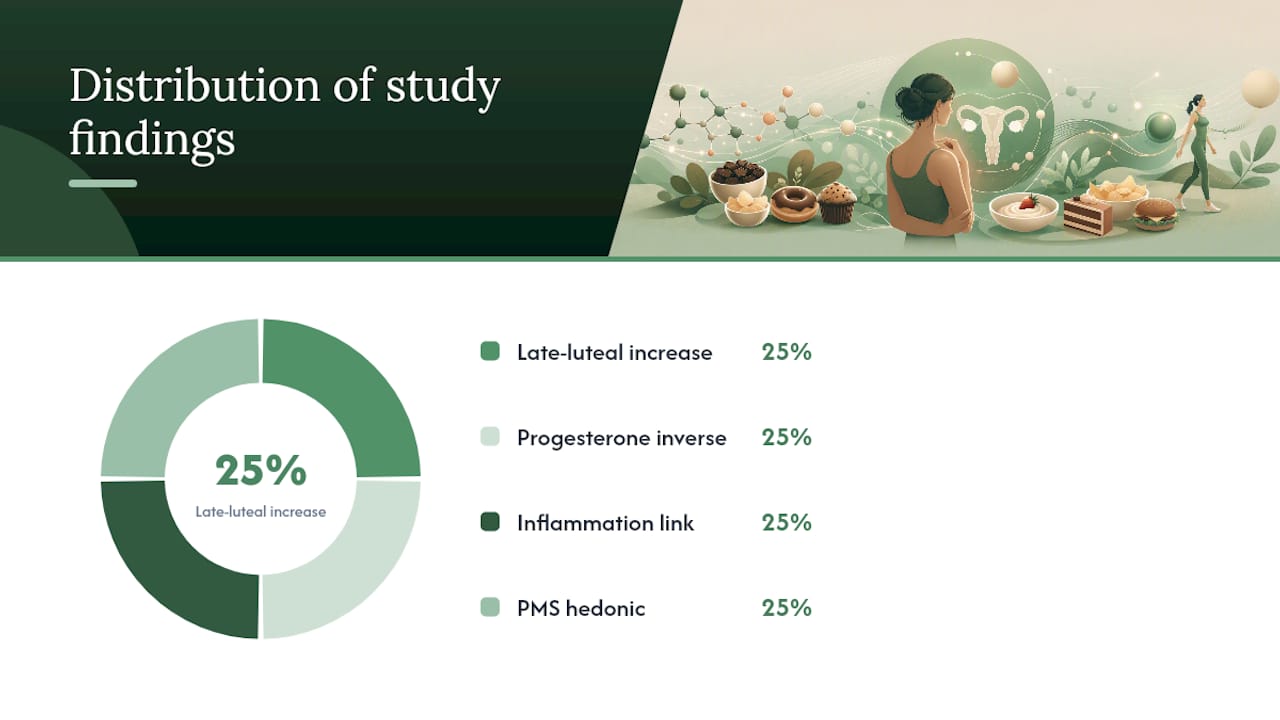
The strongest signal in the research points to the late luteal phase as the window where cravings for chocolate, sweets, and salty foods climb most reliably. A cohort study using repeated 24-hour dietary recalls and symptom questionnaires found craving scores for these foods were significantly higher in the late luteal phase compared to other cycle phases, with a strong statistical association (P < 0.001), based on ovarian hormone tracking research. The same study found something less expected: total and animal protein intake increased during the mid-luteal phase, before the craving spike hit.
That detail matters because it hints at a physiological pattern rather than a psychological one. Bodies appear to seek more protein before the craving window opens, almost like an anticipatory adjustment.
Not every study agrees on the hormone-craving link itself. The 2023 mid-luteal analysis found an inverse relationship between progesterone and premenstrual cravings in its participants, the opposite direction from what a simple “progesterone equals cravings” model would predict. Researchers point to differences in when progesterone was drawn relative to when cravings were self-reported. A woman surveyed about cravings in the late luteal phase but sampled for hormones mid-luteal is being measured at two different hormonal moments entirely.
“Higher levels of hsCRP, GCSF, GMCSF, IL-6, RANTES, and MIP1B were each associated with an increased risk of moderate to severe food cravings across the menstrual cycle, with hsCRP retaining significance for certain craving categories even after adjustment.” This finding from the BioCycle Study reframes cravings as partly an inflammatory phenomenon, not a pure hormone story.
Here’s how the major findings stack up when you line up study design against outcome:
| Study/Data Source | Design | Sample Size | Progesterone Measured | Main Finding |
|---|---|---|---|---|
| Ovarian hormone/food intake cohort | Repeated 24-hr recalls + symptom logs | Multi-cycle cohort | Multiple cycle phases | Craving scores highest in late luteal phase (P < 0.001); protein intake rose mid-luteal |
| Mid-luteal progesterone study | Cross-sectional hormone sampling | Single-cycle sample | Mid-luteal | Progesterone inversely associated with premenstrual cravings |
| BioCycle Study | Prospective inflammatory biomarker tracking | 259 women | Across cycle | Inflammatory markers (hsCRP, IL-6, others) predicted craving severity independent of hormones |
| PMS hedonic hunger study | Comparative (PMS vs. non-PMS) | Clinical sample | Luteal phase | Women with PMS scored higher on hedonic hunger measures during luteal phase |
The pattern that emerges: hormone-only models miss a lot. Add inflammation and PMS status to the picture, and the mixed findings start making more sense.
How Does Progesterone Change Appetite at the Cellular Level?
Progesterone touches several separate systems that each nudge appetite in a slightly different direction. None of them work alone, and none fully explain cravings by itself.
- Leptin sensitivity drops. Progesterone appears to blunt how effectively leptin signals fullness to the brain, according to Harvard’s Nutrition Source, which means the “I’m full” signal arrives weaker and later, especially around energy-dense, carbohydrate-heavy foods.
- Ghrelin and GLP-1 shift. Hunger-signaling ghrelin and satiety-linked GLP-1 both fluctuate across the cycle, and progesterone’s rise in the luteal phase coincides with changes in both that can tip the balance toward hunger.
- Allopregnanolone alters brain chemistry. Progesterone converts into allopregnanolone, a metabolite that acts on GABA receptors and interacts with serotonergic pathways, according to research on hormone and appetite regulation. This can increase hedonic drive (wanting food for pleasure, not just energy) while lowering the brain’s inhibitory brakes on reward-seeking behavior.
- Reward circuits get more sensitive. The same mechanism that shifts GABA and serotonin tone also interacts with dopamine and endocannabinoid signaling, which is part of why luteal-phase cravings feel less like hunger and more like wanting.
- Gastric emptying and CCK slow slightly. Some evidence suggests progesterone slows digestive transit, changing how quickly fullness cues from cholecystokinin (CCK) register after a meal.
Estrogen complicates all of this. A review of sex hormones and eating behavior concludes that estrogen generally suppresses food intake, while progesterone (particularly alongside androgens) tends to stimulate it. When estrogen is high and progesterone low, as in the late follicular phase, appetite often stays in check. Flip that ratio in the luteal phase, and the suppressive brake loosens.
Inflammation adds a third layer. Elevated hsCRP and cytokines correlate with craving severity independently of hormone levels, and endocannabinoid signaling may interact with progesterone to amplify reward-driven eating beyond what hormone levels predict on their own, per endocannabinoid research.
Pro Tip: If cravings feel disproportionate to actual hunger, check whether you’re also dealing with poor sleep or a recent illness. Inflammatory markers spike independently of your cycle, and they stack on top of hormonal effects rather than replacing them.
When in the Menstrual Cycle Do Cravings Peak?
Cravings aren’t evenly distributed across the month. They cluster, and the clustering tracks fairly closely with hormone patterns, though not perfectly.
| Cycle Phase | Typical Hormone Pattern | Appetite/Craving Pattern | Common Craving Types |
|---|---|---|---|
| Follicular (early) | Low estrogen, low progesterone | Moderate appetite | Varied, no strong pattern |
| Peri-ovulatory | Estrogen peaks, progesterone still low | Appetite often lowest | Fewer intense cravings reported |
| Mid-luteal | Progesterone rising, estrogen moderate | Protein intake rises | Higher animal and total protein intake |
| Late luteal | Progesterone peaks then falls, estrogen drops | Cravings highest | Chocolate, sweets, salty foods |
The ovarian hormone cohort data makes the late-luteal spike hard to dismiss: craving scores for sweet and salty foods were significantly elevated compared to every other phase measured. Around ovulation, when estrogen is at its highest relative to progesterone, appetite commonly dips, consistent with estrogen’s known suppressive effect on intake.
This timeline explains a lot of confusing personal experience. If you’ve noticed you can white-knuckle through a salad in week two of your cycle but feel bottomless by day 24, that’s not a willpower story. It’s the estrogen-to-progesterone ratio flipping, combined with a leptin signal that’s working less efficiently than it did ten days earlier.
Measurement timing also explains why researchers disagree. A study drawing blood mid-luteal but asking about cravings during the late luteal phase is comparing two different hormonal states as if they were one. That mismatch alone accounts for a good chunk of the contradictory findings in the literature.
Who Experiences the Strongest Progesterone-Linked Cravings?
Cravings during the luteal phase aren’t distributed evenly across all women, and a handful of factors make the experience considerably more intense for some than others.
- PMS and PMDD status. Women with premenstrual syndrome report significantly higher hedonic hunger scores during the luteal phase than women without PMS, according to research published in the Journal of Nutritional Science. For this group, cravings aren’t a mild inconvenience. They’re driven by measurably stronger “wanting” circuits.
- Baseline hedonic eating tendencies. Women who already score high on food-reward sensitivity outside their cycle tend to see that trait amplified in the luteal phase rather than replaced by it.
- Chronic low-grade inflammation. Elevated hsCRP or IL-6 from poor sleep, stress, or underlying metabolic conditions compounds hormone-driven cravings, per the BioCycle inflammation data.
- Sleep disruption. Poor sleep independently raises ghrelin and lowers leptin sensitivity, stacking directly on top of progesterone’s own effect on the same systems.
- Hormonal contraceptive or progesterone therapy use. Exogenous progesterone doesn’t always behave like endogenous progesterone. Some controlled trials show progesterone supplementation reduced cravings relative to placebo, a reminder that dose, form, and delivery route matter.
- Perimenopause transition. As cycles become anovulatory or irregular, progesterone patterns shift unpredictably, and craving patterns often become less predictable along with them.
A few situations deserve more than a dietary tweak. Rapid, unexplained weight change, cravings paired with a loss of control over eating, or mood symptoms severe enough to disrupt work or relationships point toward possible PMDD or a disordered eating pattern rather than typical hormonal fluctuation. Those situations call for a conversation with a healthcare provider, not a new snack strategy.
What Actually Helps With Cycle-Linked Cravings?
Cravings driven by progesterone respond reasonably well to targeted nutrition and behavior changes, though nothing here eliminates the biology entirely. The goal is working with the hormone shift, not fighting it.
- Increase protein starting in the mid-luteal phase. Cohort data shows women naturally increase protein intake mid-luteal, and leaning into that pattern with intention, rather than fighting a late-luteal sweets craving with willpower alone, tends to work better.
- Prioritize fiber and low-glycemic carbohydrates. CDC guidance on carbohydrate choice recommends complex, fiber-rich carbs to blunt glucose swings, which helps prevent the sharp hunger rebound that follows a sugar spike.
- Eat on a regular schedule. Skipping meals during the luteal phase, when leptin signaling is already less effective, tends to backfire by intensifying the next craving.
- Address inflammation directly. Anti-inflammatory food choices, consistent sleep, and stress management all target the hsCRP and cytokine pathways shown to independently predict craving severity.
- Practice mindful eating around hedonic cravings. Since allopregnanolone shifts reward-circuit sensitivity, cravings in the luteal phase often reflect wanting rather than true hunger. Pausing before eating to name which one you’re feeling changes the response more than any food swap does.
For meal-level examples, keep it practical rather than restrictive:
- Portable protein snacks: hard-boiled eggs, jerky, or protein-forward snack options that travel well through a busy luteal-phase week.
- Breakfast pairing: eggs with whole-grain toast and avocado, rather than a carb-only option, to stabilize morning glucose.
- Evening balance: a dinner built around lean protein, a fiber-rich vegetable, and a modest complex carb, which tends to prevent the 9 p.m. sweet craving from escalating.
Better sleep and stress management aren’t separate from nutrition here. They’re part of the same inflammatory pathway, and the connection between period-related discomfort and lifestyle factors is worth understanding if cramps or poor sleep are compounding your cravings each cycle.
Pro Tip: If you’re working with a client or patient on cycle-aware eating, adjust protein targets upward starting a few days before the expected late-luteal craving window rather than reacting once cravings have already started. Anticipating the shift beats responding to it.
Seek professional input if cravings come with rapid weight change, a sense of losing control around food, or mood symptoms severe enough to interfere with daily functioning. These can signal PMDD or a disordered eating pattern that needs more than dietary adjustment.
Why Do Studies on Progesterone and Cravings Disagree?
The contradictions in this research aren’t sloppy science. They reflect real methodological hurdles that are hard to solve cleanly.
- Inconsistent measurement timing. Some studies draw progesterone mid-luteal and assess cravings late luteal, or vice versa, comparing two different hormonal snapshots as if they were one.
- Small sample sizes. Many hormone-craving studies run in the dozens rather than hundreds of participants, which limits how confidently results generalize.
- Self-report bias. Craving questionnaires and food-frequency recalls depend on memory and honesty, and both can shift depending on mood, which itself fluctuates with the cycle.
- Ovulatory versus anovulatory cycles. Studies that don’t confirm ovulation via hormone testing may unknowingly mix cycles with very different progesterone profiles into the same dataset.
- No standardized craving metric. Some studies use the Power of Food Scale, others use custom Likert-scale craving questionnaires, and still others rely on dietary recall as a craving proxy. These aren’t interchangeable measures.
Inflammation and endocannabinoid signaling add another layer of difficulty. Since these systems interact with progesterone rather than sitting downstream of it, isolating “progesterone’s effect” from “inflammation’s effect” in a given study is genuinely hard to do cleanly, per endocannabinoid and hormone research.
Future research would benefit from prospectively timed late-luteal dietary recalls paired with same-day biomarker panels covering progesterone, inflammatory markers, and endocannabinoid levels together, rather than studying each system in isolation. Confirmed ovulatory status and larger, more diverse samples would help too.
How Nourished Applies This Research to Real Meal Plans
Translating hormone research into a daily eating pattern is where most general nutrition advice falls short. Cycle-aware planning means adjusting macronutrient targets and meal timing to match what’s happening hormonally each week, not applying one static plan across an entire month.
Nourished builds meal plans that shift protein and fiber targets upward heading into the mid-to-late luteal phase, in line with cohort data showing natural protein intake increases during that window. The platform’s cycle-phase nutrition tracking adapts recommendations as a user moves through follicular, ovulatory, and luteal phases, rather than asking someone to interpret hormone research on their own.
Anti-inflammatory food emphasis is built into the approach as well, given how strongly inflammatory markers predict craving severity independent of hormone levels. Meal swaps focus on maintaining glucose stability and protein adequacy rather than restriction, which matters most in the days when leptin sensitivity is already working against you.
A user managing recurring late-luteal sugar cravings adjusted her plan to front-load protein starting five days before her typical craving onset, paired with consistent anti-inflammatory food choices. Over several cycles, she reported the cravings felt less urgent and easier to satisfy with planned snacks rather than reactive eating. This example is illustrative and not a guarantee of individual results.
The mechanism-to-meal-plan translation works because it respects the biology instead of fighting it. Progesterone’s effect on leptin sensitivity, appetite, and reward circuits doesn’t disappear with a meal plan, but a plan that anticipates it changes how disruptive it feels.
What I’ve Learned About Cycle-Aware Nutrition Planning
Working through this research changes how you think about cravings entirely. The old framing treats a luteal-phase chocolate craving as a failure of discipline. The evidence says something different: it’s leptin sensitivity dropping, allopregnanolone loosening reward-circuit inhibition, and inflammation adding fuel, all at once, in a body that’s doing exactly what progesterone tells it to do.
What surprised me most digging through the BioCycle and ovarian hormone data wasn’t that cravings spike in the late luteal phase. Most women could have told you that. It’s that protein intake rises naturally in the mid-luteal phase, almost like the body is preparing for what’s coming. That’s not a coincidence worth ignoring. It’s a signal that anticipatory eating, rather than reactive eating, is where the real leverage sits.
The practical payoff of cycle-aware planning isn’t dramatic. It’s fewer 9 p.m. decisions made from a place of depleted willpower, more satisfaction from meals that actually match what your body is asking for, and a framework for women with strong PMS-linked cravings to work with their biology instead of white-knuckling through it every month.
Try Cycle-Aware Nutrition Built Around Your Hormones
Nourished builds meal plans that shift with your cycle, raising protein and fiber recommendations heading into the luteal phase and adjusting anti-inflammatory food choices as your hormones change week to week.
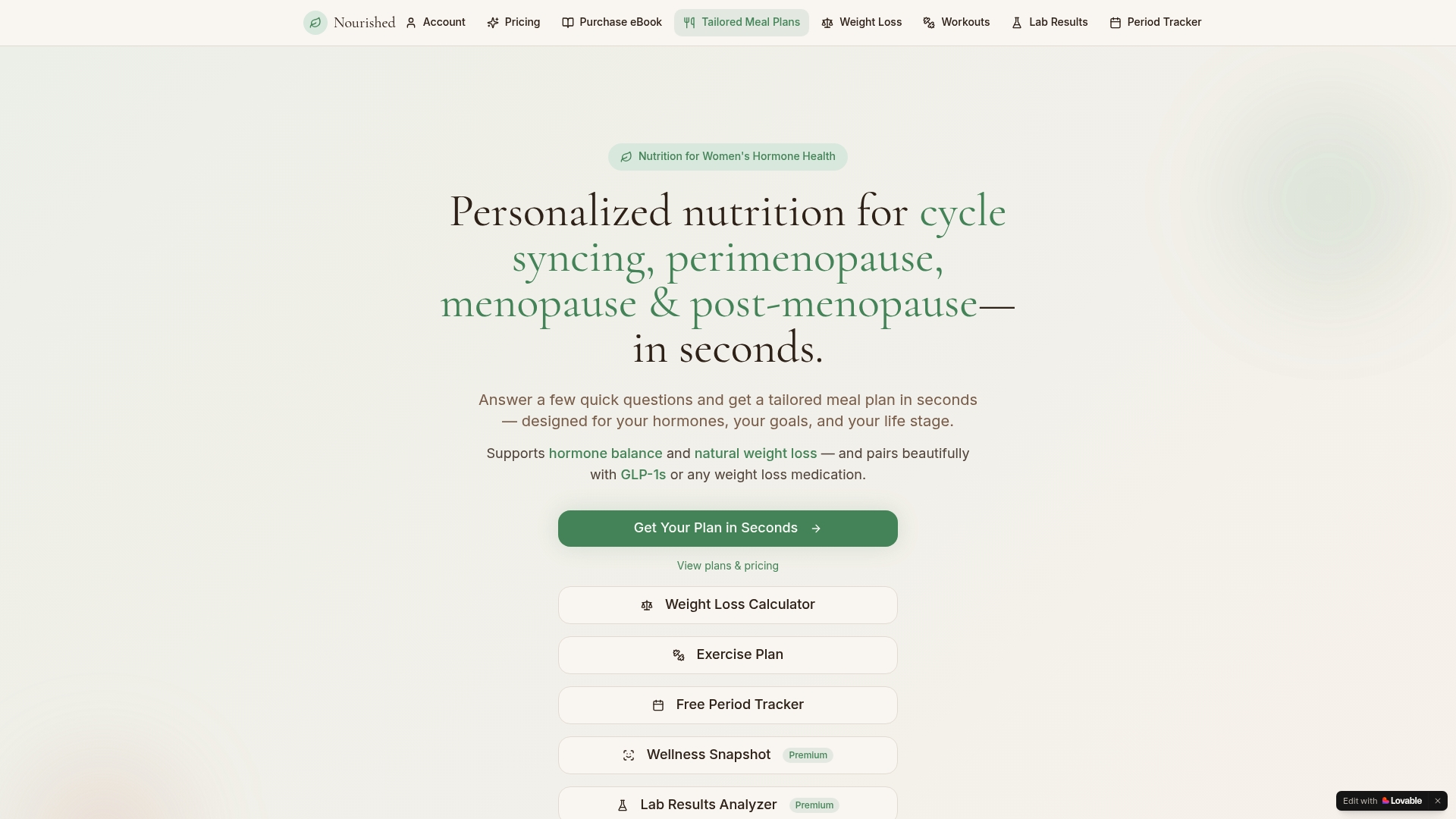
The platform tracks your cycle phase alongside your meals, so recommendations adapt automatically instead of asking you to guess where you are hormonally on any given day. There’s no calorie counting and no restrictive rulebook, just meal plans generated around your specific phase and preferences. If you’re dealing with severe PMS, PMDD symptoms, or any concern that feels beyond typical cravings, talk to a healthcare provider first. For everyday cycle-linked cravings, see how Nourished works and start a plan built around your own hormonal pattern.
Sources
- Mid-Luteal Progesterone Is Inversely Associated with Premenstrual Food Cravings - PMC
- Association of Inflammation Biomarkers with Food Cravings and Appetite Changes Across the Menstrual Cycle - PMC
- Cravings | The Nutrition Source | Harvard T.H. Chan School of Public Health
This article is general information, not a substitute for advice from a qualified doctor. Consult a qualified healthcare professional about your own circumstances before acting on anything here.