
How Protein Timing Supports Muscle Growth in Women
Nourished · August 15, 2026
How Protein Timing Supports Muscle Growth in Women
Protein timing may support muscle growth and preservation in women to some extent, but total daily protein intake and its distribution across meals are the primary factors influencing muscle adaptation. Timing strategies like the peri-workout window are additional considerations.
Two large reviews anchor this conclusion. A multi-level meta-analysis found that apparent hypertrophy benefits from narrow peri-workout timing disappeared once total daily protein was controlled. A female-focused multilevel meta-analysis of nine RCTs and 408 women found small but significant gains in fat-free mass and strength when supplementation was timed near training or meals, particularly in trials lasting more than 12 weeks.
Three actions you can take today:
- Calculate your target: a moderate to moderately high amount of protein per kilogram of body weight per day suitable for most active women.
- Divide that total across multiple meals evenly throughout the day, aiming for balanced protein intake per meal.
- Add a protein-containing snack near your workout if there is a long gap between meals.
Pro Tip: On training days, add 20–30 g of casein or Greek yogurt before bed. Overnight muscle protein synthesis is a real, underused window, especially if your last meal was more than four hours before sleep.
Key Takeaways
Total daily protein intake is the primary driver of muscle growth in women, with timing and distribution as meaningful but secondary factors that compound over weeks and months.
| Point | Details |
|---|---|
| Hit your daily total first | Target a daily protein intake within a range generally recommended for active women, with higher intakes advised during periods of heavy training or calorie restriction. |
| Distribute across 3–5 meals | Aim for moderate protein amounts per meal spaced every few hours to stimulate muscle protein synthesis multiple times daily. |
| Peri-workout window is broad | A window of approximately two hours before or after training is generally sufficient; strict immediate timing is not strongly supported by current evidence. |
| Adjust upward after perimenopause | Anabolic resistance requires 30–40 g per meal and 1.6–2.0 g/kg/day total; longer interventions (12+ weeks) show the clearest gains. |
| Nourished personalizes the plan | Nourished adapts protein targets and meal timing to your cycle phase and life stage using AI, removing the manual calculation. |
Table of Contents
- What do the meta-analyses actually say about protein timing and muscle?
- How does protein actually trigger muscle growth in women?
- What are the right protein amounts and timing for active women?
- How should protein timing change during perimenopause and older age?
- Is 100 g of protein a day too much, and how long until you see results?
- Sample day plans for training days and rest days
- Where is the evidence weak, and how do you personalize your approach?
- An editorial perspective on protein timing and women’s health
- Nourished makes protein timing personal for every life stage
- Sources
What do the meta-analyses actually say about protein timing and muscle?
The headline finding from Schoenfeld et al.'s 2013 meta-analysis is that timing effects are largely a proxy for total protein intake. When researchers controlled for how much protein participants ate each day, the advantage of consuming it within a narrow peri-workout window shrank to statistical noise. Total daily protein was the dominant predictor of hypertrophy effect size across the pooled trials.
That does not mean timing is irrelevant. It means timing is a second-order variable. Get the total right first.
The female-specific picture is more nuanced. The Frontiers multilevel meta-analysis analyzed nine RCTs covering 408 women aged 18–73 and found that multi-ingredient protein supplementation combined with exercise produced a fat-free mass gain of +0.45 kg (95% CI: 0.19 to 0.71 kg), a hypertrophy effect size of Hedges’ g = 0.35, and a strength effect size of Hedges’ g = 0.50. Subgroup analyses showed larger effects when supplementation was timed near training or meals and when interventions ran longer than 12 weeks.
Statistic callout: In the female-focused meta-analysis, strength effect sizes (Hedges’ g = 0.50) were larger than hypertrophy effect sizes (g = 0.35), suggesting that women may see strength adaptations before visible muscle size changes.
A few honest caveats about this body of research:
- Most RCTs used mixed-sex samples; female-specific subgroup analyses are often underpowered.
- Studies rarely match total protein intake between timing groups, which inflates apparent timing effects.
- Intervention durations under 12 weeks frequently miss meaningful hypertrophy signals.
- Training protocols vary widely, making direct comparisons difficult.
What the evidence supports:
- Total daily protein intake is the primary driver of muscle adaptation.
- Distributing protein across meals produces better outcomes than skewed or infrequent intake.
- Timing near training can add a modest benefit, particularly in longer interventions and for older women.
- A strict 30–60 minute “anabolic window” is not supported; a broader two-hour window is sufficient.
What the evidence does not support:
- Skipping meals and compensating with a large post-workout shake.
- Precise minute-by-minute timing as a substitute for adequate total intake.
- Identical recommendations for women at all life stages.
How does protein actually trigger muscle growth in women?
Muscle grows when muscle protein synthesis (MPS) exceeds muscle protein breakdown (MPB) over time. Dietary protein, specifically its essential amino acids, drives MPS by activating mTORC1 signaling. Leucine is the key trigger: it acts as a sensor that tells the muscle cell to start building. Without enough leucine per meal, the MPS response is blunted even if total daily protein looks adequate on paper.
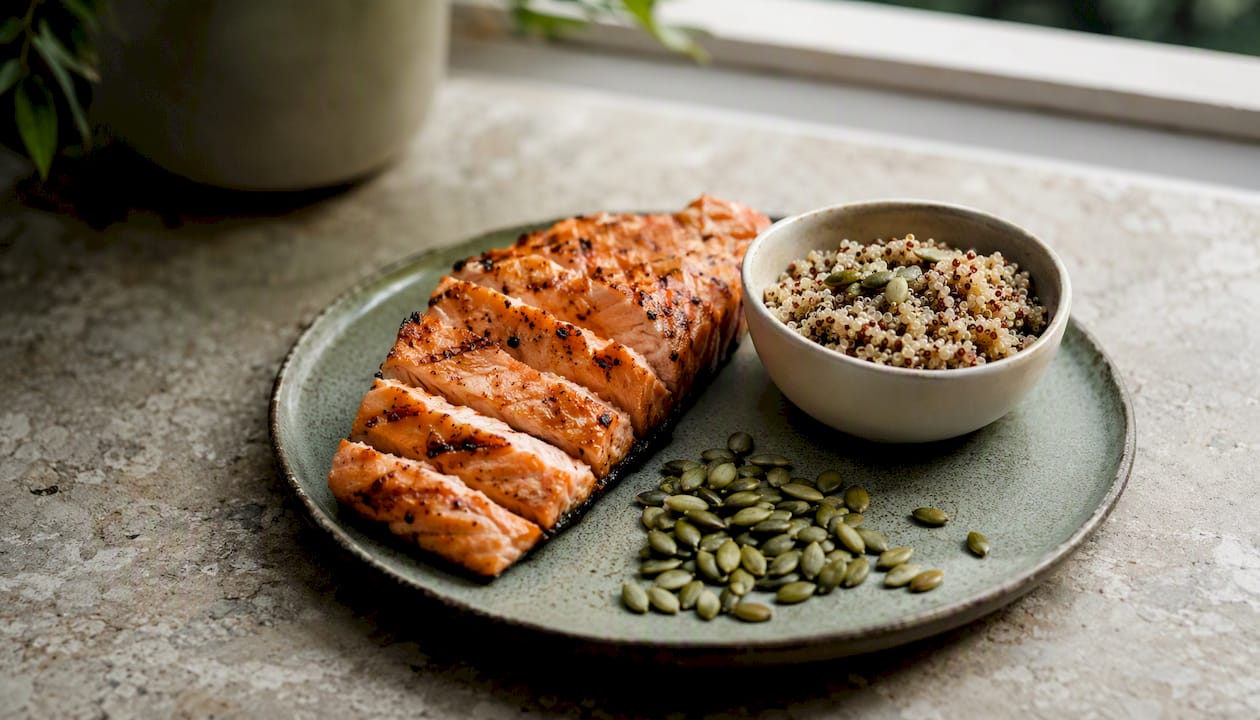
MPS rises sharply after a protein-containing meal, peaks within about 90–120 minutes, and returns toward baseline within three to five hours. That time course is the biological rationale for spreading protein across the day. Acute feeding studies have shown that distributing protein every three hours produces greater integrated MPS over 12 hours than concentrating the same total into fewer, larger doses.
Women’s physiology adds layers to this picture. Estrogen appears to have a mild anabolic effect on muscle, which may partly explain why premenopausal women can maintain lean mass on slightly lower protein intakes than men of the same body weight. However, estrogen also fluctuates across the menstrual cycle. During the luteal phase, research on female athlete physiology shows modest increases in protein oxidation and appetite, though controlled studies on whether MPS itself changes meaningfully across cycle phases remain inconsistent. The practical implication is that some women genuinely feel hungrier and recover more slowly in the luteal phase, and a small protein increase during that window is a reasonable, low-risk response.
Lower baseline testosterone compared to men means women have less hormonal drive for rapid hypertrophy. This is not a disadvantage; it simply means the leucine threshold and per-meal dosing matter at least as much for women as for men, possibly more.
Mechanism takeaways for practical use:
- Each meal needs enough leucine to trigger MPS: roughly 2–3 g of leucine, found in about 20–30 g of high-quality protein.
- Spacing meals every three to four hours creates repeated MPS pulses rather than one large spike.
- Resistance training amplifies the MPS response to protein, making the combination far more effective than either alone.
- Cycle-phase variation in appetite and protein oxidation is real for some women; personalization matters more than a one-size-fits-all schedule.
Pro Tip: Pair your post-workout protein with a leucine-rich source specifically. Whey, eggs, and Greek yogurt all clear the leucine threshold in a single serving. Plant proteins like pea or rice often need a larger dose or a blend to hit the same threshold, so aim for 30–35 g if you rely on plant sources.
What are the right protein amounts and timing for active women?
GSSI guidance sets the daily target for most active women at 1.4–1.6 g of protein per kilogram of body weight per day. During heavy training blocks or periods of calorie restriction, that range can rise to approximately 2.0–2.2 g/kg/day. These are not arbitrary numbers; they reflect the protein turnover demands of muscle remodeling under training stress.
Per-meal, the goal is roughly 0.31 g/kg, which translates to a practical range of 20–40 g depending on body size. Smaller women can stimulate MPS near the lower end; larger or older women benefit from the higher end.
Per-meal protein targets by body weight:
| Body weight | Per-meal target (0.31 g/kg) | Practical range |
|---|---|---|
| 55 kg | ~17 g | 20–25 g |
| 70 kg | 20–40 g | 25–30 g |
| 85 kg | 20–40 g | 30–40 g |
Aim for three to five protein-containing eating occasions spread roughly every three to four hours. That structure creates the repeated MPS pulses the mechanisms section describes.
For the peri-workout window, current evidence supports a window of approximately two hours before or after training, not the narrow 30–60 minute “golden hour” that dominated fitness culture for years. If you ate a protein-rich meal two hours before your workout, you do not need to rush a shake the moment you finish. What matters more is that you do not go four-plus hours without protein on either side of training.
Food-first examples that hit per-meal targets:
- 3 whole eggs + 1 cup Greek yogurt: approximately 30 g protein
- 4 oz grilled chicken breast: approximately 35 g protein
- 1 cup cooked lentils + 2 oz feta: approximately 24 g protein
- 1 cup cottage cheese: approximately 25 g protein
Whey protein digests quickly and produces a sharp MPS spike, making it a practical post-workout choice. Casein digests slowly and sustains amino acid availability for four to seven hours, which is why it works well before sleep. Whole-food proteins fall somewhere in between and carry additional micronutrients that matter for overall recovery. For a deeper look at how protein fits into a muscle-building nutrition plan, the training context matters alongside the timing strategy.
Pro Tip: Around workouts, adding 30–40 g of carbohydrates alongside your protein serving reduces muscle protein breakdown and replenishes glycogen faster. A banana with Greek yogurt or rice cakes with cottage cheese both work. You do not need a specialized product.

How should protein timing change during perimenopause and older age?
Anabolic resistance is the reduced sensitivity of muscle tissue to a given dose of protein or exercise stimulus. It develops gradually with age and accelerates around perimenopause as estrogen declines. The practical result is that the same 20 g protein serving that reliably triggers MPS in a 30-year-old may produce a blunted response in a 55-year-old.
This does not mean older women cannot build or preserve muscle. It means the inputs need to be larger and more consistent. The Frontiers meta-analysis included women up to age 73 and still found significant gains in fat-free mass and strength, particularly in longer interventions. Evidence from energy-restricted populations also shows that higher protein intakes, combined with resistance training, better preserve lean mass than lower protein approaches.
Practical adjustments for perimenopausal and older women:
- Raise total daily protein toward the higher end of the range: 1.6–2.0 g/kg/day.
- Increase per-meal protein to 30–40 g to overcome the blunted leucine response.
- Prioritize leucine-rich sources: whey, eggs, dairy, and meat at most meals.
- Space protein meals no more than four hours apart to maximize the number of MPS stimulation opportunities.
- Combine protein timing with consistent resistance training at least two to three times per week.
For women navigating this transition, protein’s role in perimenopause extends beyond muscle: it supports bone density, metabolic rate, and satiety during a period when all three tend to decline.
Pro Tip: Resistance training frequency matters as much as protein dose for overcoming anabolic resistance. Two sessions per week is a floor, not a target. Three to four sessions, even shorter ones of 30–40 minutes, create more MPS opportunities for protein to act on. Pair each session with a 30–40 g protein meal within two hours.
Is 100 g of protein a day too much, and how long until you see results?
For most women, 100 g per day is not too much. Whether it is enough depends on body weight and goals. A 70 kg woman targeting 1.6 g/kg/day needs 112 g daily. A 55 kg woman at the same ratio needs 88 g. So 100 g sits in a reasonable range for many active women, though it may be slightly low for heavier women in heavy training phases.
High-protein diets are generally safe for healthy adults. The kidney-disease caveat is real but narrow: women with pre-existing chronic kidney disease should work with a nephrologist or registered dietitian before increasing protein, because higher intake can accelerate filtration demands on already-compromised kidneys. For women with healthy kidneys, the evidence does not support restricting protein out of concern for kidney health.
On timelines: neural adaptations drive strength gains first, often within two to four weeks of consistent resistance training. Visible hypertrophy takes longer. Most well-designed trials need more than 12 weeks to detect meaningful changes in fat-free mass, which aligns with the female-focused meta-analysis finding that longer interventions produced larger effects.
Statistic callout: Trials of longer duration tend to show clearer body-composition changes, supporting that muscle adaptation occurs over months rather than just weeks.
Signs to monitor and when to seek professional input:
- No strength progress after 8–12 weeks of consistent training and adequate protein: consider increasing total intake or adjusting distribution.
- Unexplained weight loss alongside fatigue: consult a physician before adjusting protein alone.
- Digestive discomfort with high protein: a registered dietitian can help identify tolerance thresholds and food sources.
- Pre-existing kidney disease or a single functioning kidney: do not increase protein without medical supervision.
- Pregnancy or breastfeeding: protein needs shift significantly; work with a healthcare provider.
For a longer-term view of how protein and training interact across a body recomposition timeline, the 12-week minimum is a useful planning anchor.
Sample day plans for training days and rest days
These plans are illustrative, not prescriptive. Adjust portions to your body weight using the 0.31 g/kg per-meal target from the practical recommendations section.
Active premenopausal woman (70 kg, targeting ~112 g/day)
Training day:
Rest day:
Perimenopausal woman (70 kg, targeting ~140 g/day)
The structure is similar, but per-meal portions shift upward to 30–40 g to address anabolic resistance. Leucine-rich sources (whey, eggs, dairy) appear at most meals. A pre-sleep casein serving is standard rather than optional.
- Breakfast: 4 eggs + 1 cup Greek yogurt = ~35 g
- Lunch: 5 oz chicken + 1 cup lentils = ~50 g
- Afternoon: 1 cup cottage cheese + 1 oz almonds = ~28 g
- Dinner: 5 oz salmon + edamame = ~40 g
- Pre-sleep: 1 cup Greek yogurt = ~17 g
- Total: ~170 g
For cycle-phase-specific meal ideas, nutrition mapped to menstrual cycle phases can help you adjust protein and energy intake across the month.
Pro Tip: Traveling or short on time? Single-serve Greek yogurt cups (15–17 g protein), hard-boiled eggs (6 g each), and individual cottage cheese containers are all shelf-stable or refrigerator-stable for 24 hours in a cooler bag. Two eggs plus a yogurt cup gets you to 27–30 g without cooking.
Where is the evidence weak, and how do you personalize your approach?
The honest answer is that most protein timing research has significant limitations. Small sample sizes are common; many studies enroll fewer than 50 participants. Mixed-sex designs dominate, and female-specific subgroup analyses are often too underpowered to draw firm conclusions. Total protein intake is frequently unmatched between timing groups, which means apparent timing effects may simply reflect higher overall intake in the timed group. Training protocols vary so widely across studies that pooling them introduces real noise.
What this means practically: the per-meal and daily targets in this guide are evidence-informed, but your individual response will vary. A simple self-experiment works well here.
Personalization steps:
- Track total daily protein and per-meal distribution for four weeks using a food log or app.
- Note strength performance, recovery quality, and energy across that period.
- If progress stalls after eight weeks of consistent training and adequate protein, increase total intake by 0.2 g/kg/day and reassess after four more weeks.
- If you train in the evening and notice poor recovery, add a pre-sleep protein serving and track the difference over two to three weeks.
For tracking tools that support muscle preservation specifically, nutrition trackers for muscle preservation in women covers the options worth considering.
When to consult a dietitian or physician:
- Chronic kidney disease or a history of kidney stones.
- Unexplained fatigue, muscle loss, or weight changes despite adequate intake.
- Eating disorder history, where tracking can be counterproductive without professional support.
- Pregnancy, breastfeeding, or active cancer treatment.
Pro Tip: To test whether peri-workout protein specifically helps you, run a four-week block with a deliberate 25–30 g protein serving within 90 minutes of every training session. Then run four weeks without it, keeping total daily protein identical. Track your strength numbers and subjective recovery. That n-of-1 comparison is more useful than any population-level average.
An editorial perspective on protein timing and women’s health
The research on protein timing is genuinely good news for women who have been told they need to obsess over a 30-minute post-workout window. You do not. The evidence is clear that total daily protein and consistent distribution matter far more than hitting a precise minute on the clock.
What the research is less good at is accounting for the full complexity of women’s physiology across a lifetime. Most RCTs were designed around young, healthy, often male participants. The female-specific meta-analyses we now have are a meaningful step forward, but nine RCTs covering 408 women is still a thin evidence base for confident prescriptions across all life stages.
The piece that gets underweighted in most protein timing conversations is the interaction between hormonal context and protein needs. A 28-year-old in her follicular phase, a 45-year-old in perimenopause, and a 60-year-old post-menopause are not the same physiological situation. They should not be eating the same protein distribution on the same schedule. The anabolic resistance that develops with age and estrogen decline is real, measurable, and addressable, but only if the recommendation accounts for it.
My honest take: the “just hit your macros” framing is correct as a starting point and dangerously incomplete as an endpoint. Total protein is the foundation. Timing, distribution, leucine content, and hormonal context are the structure built on top of it. For women, especially those in or approaching perimenopause, getting the structure right is where the meaningful gains live.
Nourished makes protein timing personal for every life stage
Most nutrition apps hand you a generic macro target and leave you to figure out the rest. Nourished takes a different approach: it adapts your protein targets and meal timing to your cycle phase, life stage, and training schedule, so the recommendations you get actually match your biology on any given day.
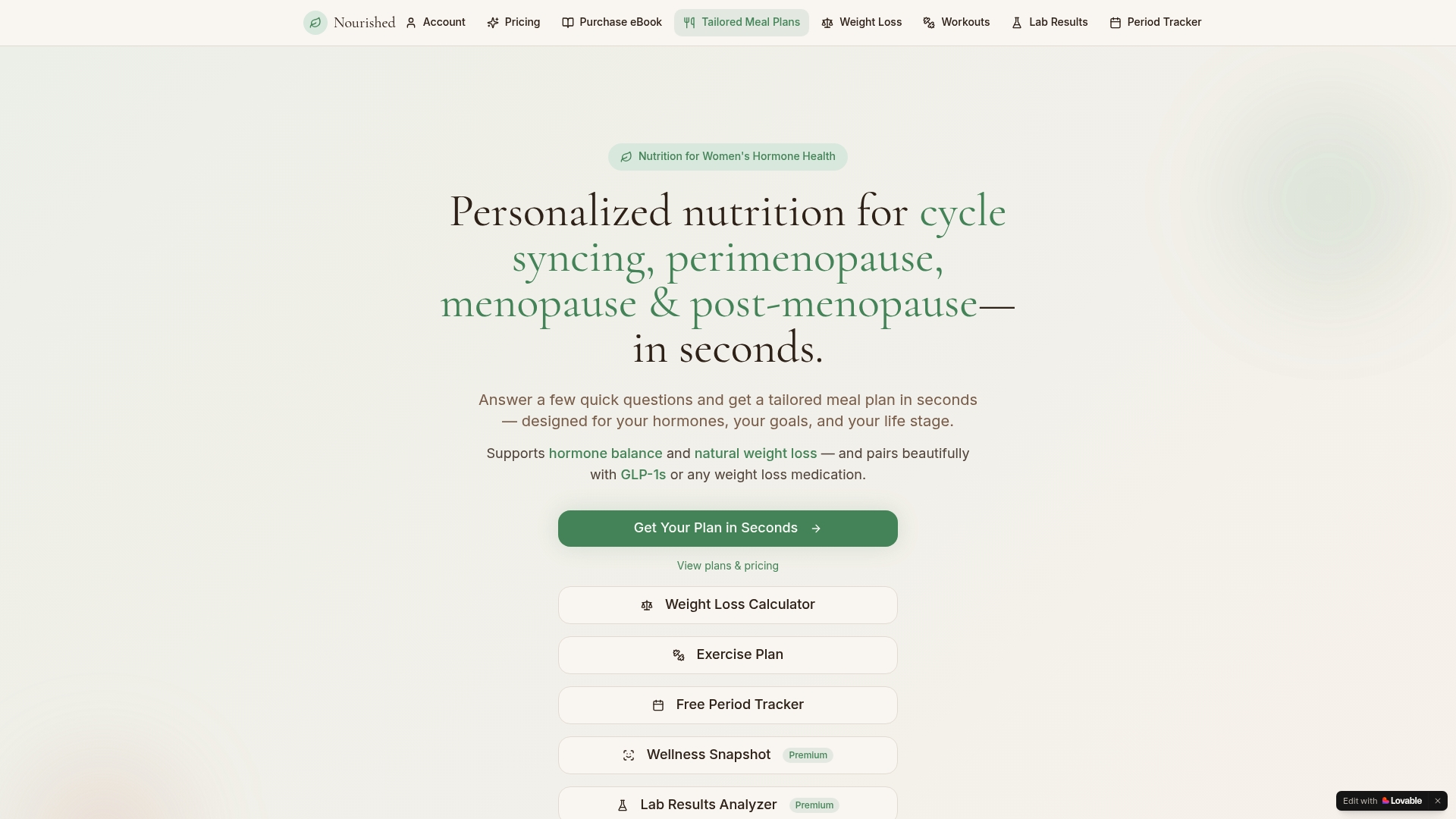
The platform’s AI meal planner adjusts protein totals across menstrual phases, raises targets during perimenopause, and builds meal plans that hit per-meal leucine thresholds without requiring you to calculate anything manually. The free period and cycle tracker connects your hormonal data to your nutrition plan in real time. If you want to see how it works before committing, the step-by-step tutorial walks you through the personalization features in under ten minutes.
Getting started takes three steps:
- Log your cycle phase or life stage in the tracker.
- Let the AI generate a meal plan that hits your protein targets by meal and by day.
- Adjust based on training days, recovery, and how you feel, with the platform updating recommendations as your data builds.
Muscle preservation and growth are long-game goals. Nourished gives you the structure to stay consistent across the weeks and months that actually produce results.
Sources
The sources below are the principal papers and reviews this article drew on. Each one is worth reading if you want to go deeper on a specific aspect of protein timing and muscle in women.
- The effect of protein timing on muscle strength and hypertrophy: a meta-analysis
- Muscle Protein Metabolism And Protein Requirements For Female Athletes: Aligning Science With Sex-Specific Needs - Gatorade Sports Science Institute
- Effects of multi-ingredient protein supplementation combined with exercise intervention on body composition and muscle fitness in healthy women: a systematic review with multilevel meta-analysis
- Is There a Postworkout Anabolic Window of Opportunity for Nutrient Consumption? Clearing up Controversies
This article is general information, not a substitute for advice from a qualified doctor. Consult a qualified healthcare professional about your own circumstances before acting on anything here.