
How Thyroid Affects Medication Weight Loss Results
Nourished · July 16, 2026
How Thyroid Affects Medication Weight Loss Results
Thyroid function is defined as the primary regulator of your basal metabolic rate, and it directly determines how well weight loss medications work in your body. When your thyroid is underactive, your metabolism slows, and even the most effective weight loss drugs face a significant biological obstacle. Understanding how thyroid affects medication weight loss is the first step toward getting real results. Women are disproportionately affected by thyroid dysfunction, making this connection especially relevant for anyone using GLP-1 medications like semaglutide while managing a thyroid condition.
How does thyroid function control metabolism and weight?
The thyroid gland produces two key hormones: thyroxine (T4) and triiodothyronine (T3). These hormones control how fast your cells convert fuel into energy, a process called thermogenesis. T3 is the active form, and it sets the pace for nearly every metabolic function in your body.
When thyroid output drops, the result is hypothyroidism. Your body burns fewer calories at rest, stores more fat, and struggles to regulate blood sugar and insulin. This is not a minor inconvenience. Undertreated hypothyroid patients may burn 200–500 fewer calories daily compared to people with normal thyroid function. That gap is large enough to cancel out the calorie deficit that weight loss medications are designed to create.

Hyperthyroidism works in the opposite direction. Excess thyroid hormone accelerates metabolism, raises body temperature, and can cause unintended weight loss. Neither extreme supports healthy, sustainable weight management.
Key effects of thyroid hormone on metabolism:
- T3 directly increases resting energy expenditure and fat oxidation
- Low T3 impairs lipolysis, the process of breaking down stored fat
- Thyroid dysfunction disrupts insulin sensitivity, compounding weight gain
- TSH levels between 3.0 and 4.0 mIU/L can associate with sluggish metabolism even when labs read “normal”
Pro Tip: Ask your doctor for both a TSH and a free T4 (FT4) test. TSH alone can miss subclinical hypothyroidism, especially in women with obesity-related TSH elevations that mimic thyroid disease.
Thyroid function and weight loss are tightly linked because metabolism is the engine that all weight loss strategies depend on. If that engine is running slow, no medication fully compensates.
Is thyroid medication a weight loss treatment?
Levothyroxine, the most commonly prescribed thyroid medication, treats hypothyroidism by restoring normal hormone levels. It is not a weight loss drug. Thyroid hormone replacement restores euthyroidism, meaning normal thyroid status, and any weight changes are secondary effects of metabolic normalization, not direct fat loss.

This distinction matters because many women start levothyroxine expecting the scale to drop significantly. Clinical evidence does not support that expectation. Weight loss from thyroid treatment tends to be modest and often reflects water loss and reduced bloating rather than actual fat reduction.
What thyroid medication does accomplish is critical: it restores the metabolic environment that makes other interventions possible. Think of it as clearing a blocked road. The medication, the nutrition, and the exercise can now move forward.
What levothyroxine does and does not do:
- Restores normal TSH and T4 levels, correcting the hormonal deficit
- Reduces symptoms like fatigue, cold intolerance, and brain fog that undermine lifestyle efforts
- Does not directly stimulate fat burning or suppress appetite
- Overtreatment carries real risks including heart arrhythmia, bone density loss, and anxiety
Pro Tip: Never take levothyroxine at a higher dose than prescribed to speed up weight loss. Overtreatment suppresses TSH below normal and creates hyperthyroid symptoms that are dangerous over time.
Thyroid medication sets the metabolic foundation. Weight loss medications and lifestyle changes build on that foundation. Neither works optimally without the other in place.
How does thyroid dysfunction affect GLP-1 weight loss medications?
GLP-1 receptor agonists like semaglutide work by reducing appetite, slowing gastric emptying, and improving insulin sensitivity. These are powerful mechanisms. But they operate within the metabolic environment your thyroid creates. When that environment is compromised, the medication’s effectiveness drops.
Patients with undertreated hypothyroidism on GLP-1 therapy experience slower or less substantial weight loss, particularly in the first months of treatment. The reason is straightforward: a sluggish metabolism cannot burn the calories that appetite suppression frees up. The body simply adjusts downward rather than losing fat.
Thyroid hormone deficiency also impairs lipolysis and insulin sensitivity, which are two of the core pathways that GLP-1 medications activate. When those pathways are already compromised by low thyroid hormone, the drug’s impact is blunted from the start.
Here is what the clinical picture looks like in practice:
- Undiagnosed hypothyroidism: A woman starts semaglutide and loses little weight in the first 12 weeks. Her thyroid is tested and TSH comes back at 4.2 mIU/L. Subclinical hypothyroidism is identified and treated. Weight loss accelerates.
- Undertreated hypothyroidism: A woman on levothyroxine starts a GLP-1 medication. Her dose was set two years ago and has not been reviewed. Semaglutide slows gastric emptying, reducing levothyroxine absorption. TSH rises. Weight loss stalls.
- Optimized thyroid function: A woman with TSH in the lower half of normal range, around 0.5–2.0 mIU/L, starts GLP-1 therapy. Her metabolism is running efficiently. She sees consistent, measurable weight loss within the first two months.
The good news is that GLP-1 medications and levothyroxine are generally safe to take together. No direct drug-to-drug interaction exists. The challenge is pharmacokinetic, meaning how the drugs are absorbed and processed, not a chemical conflict.
How should you monitor thyroid levels during weight loss medication use?
Monitoring is the most underused tool in combined thyroid and weight loss treatment. Weight loss itself changes thyroid hormone requirements. As body composition shifts, the dose of levothyroxine that worked at a higher weight may become too high or too low.
Semaglutide adds another layer of complexity. It delays gastric emptying by 25–35%, which reduces the absorption of oral levothyroxine. This effect is clinically significant. A woman whose thyroid was well-controlled before starting semaglutide may find her TSH creeping upward within weeks of beginning the medication.
Clinical guidelines recommend TSH and FT4 monitoring every 6–8 weeks during the initial titration phase when both medications are used together. That frequency allows dose adjustments before symptoms develop.
Practical steps to protect thyroid medication absorption:
- Take levothyroxine on an empty stomach, at least 30–60 minutes before eating or taking other medications
- Do not take levothyroxine at the same time as calcium, iron, or antacids, which block absorption
- If you inject semaglutide weekly, take levothyroxine at a consistent time each day regardless of injection day
- Report new symptoms like fatigue, weight plateau, or cold sensitivity to your prescribing doctor promptly
Pro Tip: Ask your doctor to test both TSH and free T4 at each monitoring visit. Obesity-related TSH elevations can mislead clinicians if only TSH is measured, since combined TSH and FT4 testing gives a more complete picture of true thyroid status.
Coordinated care between your endocrinologist and the provider managing your weight loss medication is not optional. It is the difference between a treatment plan that works and one that stalls. Women who advocate for comprehensive thyroid screening at the start of weight loss medication treatment consistently see better outcomes.
Understanding hormonal weight changes in the broader context of thyroid and metabolic health helps you ask the right questions at every appointment.
Key Takeaways
Thyroid dysfunction directly limits how well weight loss medications work by slowing metabolism and impairing the biological pathways that GLP-1 drugs depend on.
| Point | Details |
|---|---|
| Thyroid controls metabolic rate | Low thyroid hormone can reduce daily calorie burn by 200–500 calories, blunting medication effects. |
| Levothyroxine is not a weight loss drug | It restores normal metabolism, creating the foundation for weight loss medications to work effectively. |
| GLP-1 drugs reduce levothyroxine absorption | Semaglutide delays gastric emptying by 25–35%, requiring dose review and consistent medication timing. |
| Monitor TSH and FT4 every 6–8 weeks | Frequent testing during medication titration catches dose mismatches before symptoms develop. |
| Optimized TSH improves outcomes | A TSH in the 0.5–2.0 mIU/L range correlates with better weight loss responses to GLP-1 therapy. |
What I’ve learned from watching thyroid get overlooked in weight loss treatment
I have seen this pattern more times than I can count. A woman starts a GLP-1 medication with genuine commitment. She changes her eating habits, stays consistent, and still loses far less weight than expected. The medication gets blamed. The dose gets increased. Nothing changes. Then, months later, a thyroid test reveals subclinical hypothyroidism that was sitting there the whole time.
The frustrating part is that this is entirely preventable. Thyroid screening before starting weight loss medication should be standard practice, not an afterthought. A TSH in the high-normal range does not always trigger treatment, but it absolutely warrants a conversation about whether the metabolic environment is ready for a GLP-1 drug to do its job.
What I find most important to communicate is this: thyroid optimization is not a shortcut to weight loss. It is a prerequisite for fair conditions. When your thyroid is undertreated, you are asking a weight loss medication to win a race with a flat tire. Fixing the tire does not guarantee you win. But it gives you a real chance.
Behavioral and lifestyle support still matter enormously. Nutrition quality, sleep, stress management, and movement all shape how your body responds to both thyroid treatment and weight loss medication. No pill, whether it is levothyroxine or semaglutide, replaces those fundamentals. What thyroid optimization does is remove a hidden obstacle so that everything else you are doing can actually work.
Advocate for yourself. Request the full thyroid panel. Ask your doctor to review your levothyroxine dose after starting a GLP-1 medication. The women who get the best results are the ones who treat thyroid health as part of the weight loss plan, not a separate issue.
— Brittany
Nourished supports the nutrition side of thyroid and weight management
Medication and thyroid treatment address the hormonal and pharmacological side of weight management. Nutrition addresses the daily metabolic environment those treatments depend on.
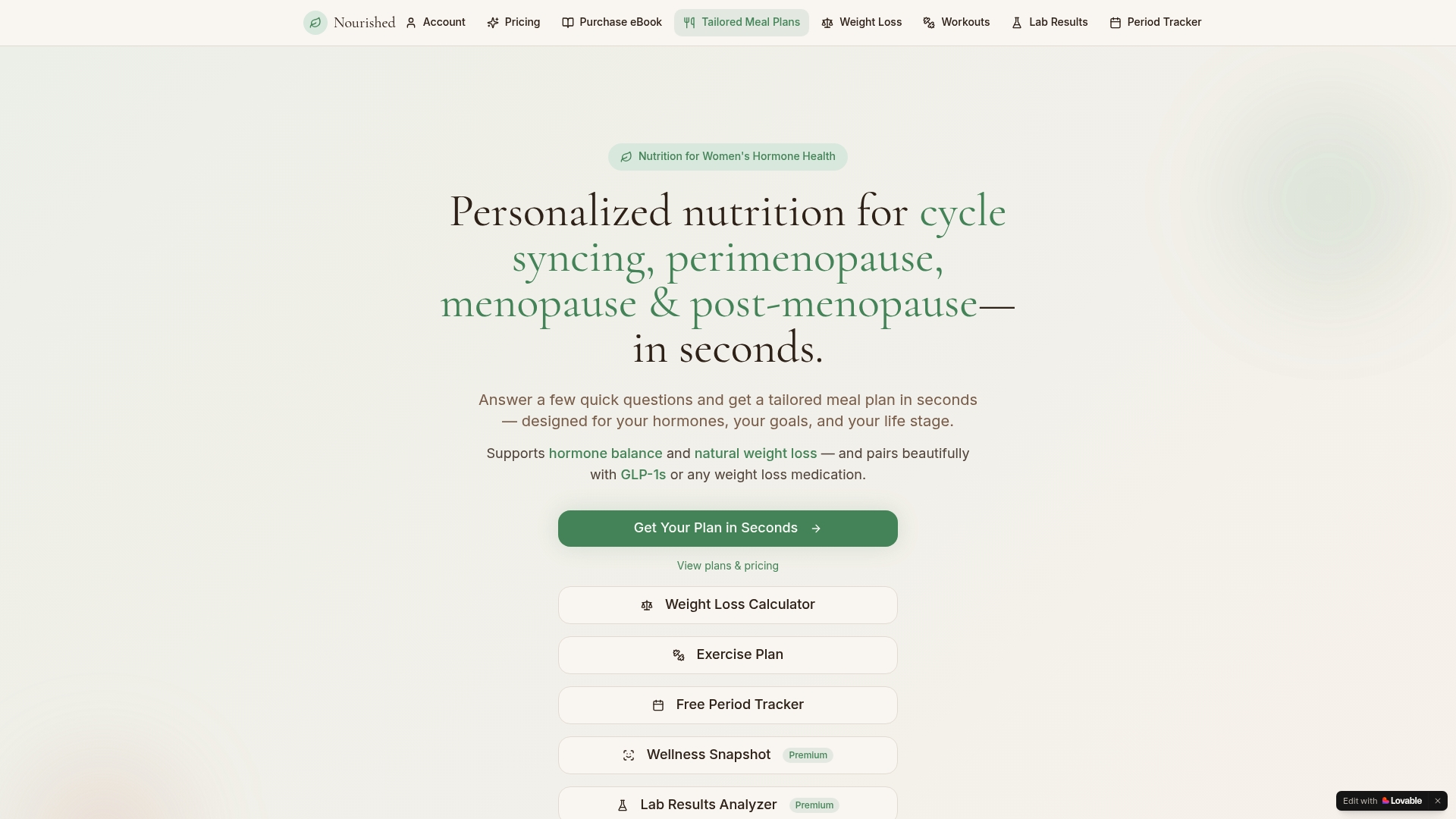
Nourished builds personalized meal plans specifically for women’s hormonal needs, including thyroid-related metabolic challenges. The plans adapt to your cycle phase, life stage, and hormonal profile without calorie counting or restrictive rules. Women in perimenopause and menopause, where thyroid dysfunction is especially common, get nutrition guidance calibrated to their shifting hormonal reality. If you are managing a thyroid condition alongside weight loss medication, the right nutrition plan can support absorption, energy, and metabolic function in ways that medication alone cannot.
FAQ
Does thyroid disease prevent weight loss on medication?
Untreated or undertreated hypothyroidism significantly slows weight loss on GLP-1 medications by reducing metabolic rate and impairing fat breakdown. Optimizing thyroid levels before or during treatment improves outcomes.
Can semaglutide affect my thyroid medication dose?
Yes. Semaglutide delays gastric emptying by 25–35%, which reduces levothyroxine absorption and can cause TSH to rise. Thyroid levels should be tested every 6–8 weeks when both medications are used together.
What TSH level is best for weight loss with medication?
A TSH in the 0.5–2.0 mIU/L range is associated with better weight loss responses to GLP-1 therapy. TSH values above 3.0 mIU/L can slow metabolism even when considered within the normal lab range.
Is it safe to take levothyroxine and GLP-1 drugs together?
Co-prescription of levothyroxine and semaglutide is considered safe with no direct drug-to-drug interaction. The key issue is absorption timing, which requires consistent levothyroxine dosing and regular TSH monitoring.
Will treating hypothyroidism cause significant weight loss on its own?
Weight loss from thyroid treatment alone is typically modest and reflects metabolic normalization rather than direct fat loss. Levothyroxine restores the conditions for weight loss to happen, but it does not cause meaningful fat reduction by itself.