
Menstrual Cycle Phases Nutrition Explained: What to Eat
Nourished · August 1, 2026
Menstrual Cycle Phases Nutrition Explained: What to Eat
Eat to match your hormones: prioritize iron and anti-inflammatory foods during your period; lean protein and estrogen-supporting foods in the follicular and ovulatory windows; and complex carbs plus magnesium during the luteal phase. That is the core of menstrual cycle phases nutrition explained, and it is backed by clinical guidance from the Cleveland Clinic and narrative reviews indexed on NIH/PMC. Nourished builds personalized meal plans around exactly this framework, adapting targets to your specific cycle length, symptoms, and food preferences.
Phase-by-phase priorities at a glance:
- Menstrual (early days): Replace iron lost to bleeding; pair iron-rich foods with vitamin C to boost absorption; add omega-3s to ease cramps and reduce inflammation.
- Follicular (mid-cycle): Rising estrogen supports higher energy; focus on lean protein, complex carbohydrates, cruciferous vegetables, and fermented foods.
- Ovulation (mid-cycle peak): Peak energy window; maintain protein, add zinc and antioxidant-rich foods to support ovulatory function.
- Luteal (late cycle): Progesterone rises and appetite often increases; prioritize complex carbs, fiber, and magnesium-rich foods to stabilize blood sugar and ease PMS.
Key clinical insight: Cycle syncing is not a strict diet. The Cleveland Clinic frames it as a way to “listen to your body” — balanced meals combining protein, carbohydrates, and fats reduce symptom burden more reliably than rigid phase rules.
If you experience heavy bleeding, persistent dizziness, or severe PMS that disrupts daily life, see a clinician before adjusting diet alone. Women on hormonal contraception or with irregular cycles may not follow the standard 28-day timeline, so the day ranges below are starting points, not fixed rules.
Table of Contents
- What are the four menstrual cycle phases?
- How should you eat during each phase of your cycle?
- What does the research say about appetite and cravings across your cycle?
- How do you put phase-based nutrition into practice?
- Why personalized, cycle-aware plans work better than generic advice
- Key Takeaways
- Where to start without making it complicated
- Nourished makes cycle-aware eating practical from day one
- Useful sources and further reading
What are the four menstrual cycle phases?
Most cycle-syncing guides use a 28-day model, but real cycles range from 21 to 35 days. The phases are defined by hormonal shifts, not calendar dates, so your follicular phase might last 5 days or 10. Use the day ranges below as a map, not a timetable.
Phase timeline:
- Menstrual: Estrogen and progesterone are at their lowest. Energy dips, and the uterine lining sheds. Iron losses are highest here.
- Follicular: Estrogen climbs steadily as follicles develop. Most people notice a clear lift in mood, focus, and physical stamina.
- Ovulation: Estrogen peaks and luteinizing hormone (LH) surges, triggering egg release. Energy and confidence typically peak alongside it.
- Luteal: Progesterone rises and then falls sharply before menstruation restarts. Appetite increases, cravings intensify, and PMS symptoms often appear in the final week.
How to track your own phases:
- Mark day 1 (first day of full bleeding) on a calendar or period-tracking app each month.
- Log energy, mood, hunger, and cravings daily — even a 1–5 scale works.
- Use LH test strips to confirm ovulation timing if your cycle is irregular.
- Track basal body temperature (BBT) each morning before getting up; a sustained rise of 0.2–0.5°F signals that ovulation has passed.
- Nourished’s free period and cycle tracker lets you log symptoms alongside phase data in one place.
Pro Tip: Track for 2–3 full cycles before shifting your meals by phase. Relying on a 28-day assumption from day one often means eating for the wrong phase entirely.
How should you eat during each phase of your cycle?
Menstrual phase (days 1–7): replenish and reduce inflammation
Goal: Replace iron lost to bleeding, ease cramps, and support low energy without forcing heavy meals.
Priority nutrients: Iron, vitamin C (to enhance iron absorption), omega-3 fatty acids, and magnesium.
Foods to include: Lean red meat, lentils, spinach, tofu, pumpkin seeds, dark leafy greens, salmon, sardines, walnuts, and citrus fruit or bell peppers alongside iron-rich foods. Iron-rich foods paired with vitamin C meaningfully improve non-heme iron absorption from plant sources.
Foods to limit: Excess caffeine (can worsen cramps and disrupt sleep), alcohol, and high-sodium processed foods that increase bloating.
Sample meals:
- Lentil soup with spinach and a squeeze of lemon; a small orange on the side.
- Salmon with roasted sweet potato and steamed broccoli.
Quick swaps: Coffee → ginger or chamomile tea; chips → pumpkin seeds; white rice → lentils or quinoa.
Follicular phase (days 8–13): build and energize
Goal: Capitalize on rising estrogen and energy to support muscle repair, gut health, and sustained focus.

Priority nutrients: Lean protein, complex carbohydrates, B vitamins (especially B6), zinc, and probiotics from fermented foods.
Foods to include: Eggs, chicken, Greek yogurt, kimchi, sauerkraut, kefir, broccoli, cauliflower, Brussels sprouts, oats, quinoa, and avocado. Cruciferous vegetables and fermented foods support estrogen metabolism and gut microbiome diversity during this phase.
Foods to limit: Ultra-processed snacks and refined sugars that spike and crash blood sugar when energy is otherwise naturally high.
Sample meals:
- Scrambled eggs with sautéed kale, avocado, and whole-grain toast.
- Quinoa bowl with grilled chicken, roasted broccoli, and a tahini dressing.
Quick swaps: Flavored yogurt → plain Greek yogurt with berries; white pasta → quinoa; packaged granola → overnight oats with seeds.
Ovulation phase (days 14–15): sustain peak performance
Goal: Maintain the energy peak, support ovulatory function, and keep inflammation low.
Priority nutrients: Zinc, antioxidants (vitamin C, vitamin E), lean protein, and healthy fats.
Foods to include: Oysters or pumpkin seeds for zinc, berries, tomatoes, almonds, flaxseed, and fatty fish. Vitamin D, which plays a role in ovulatory function, is found in salmon, fortified dairy, and egg yolks.
Foods to limit: Heavily processed meats and fried foods that add unnecessary inflammatory load at an already high-energy moment.
Sample meals:
- Smoked salmon and avocado on whole-grain crackers with cherry tomatoes.
- Stir-fry with shrimp, snap peas, bell peppers, and brown rice.
Quick swaps: Processed deli meat → grilled salmon or canned sardines; vegetable oil → olive oil; candy → a handful of almonds and berries.
Luteal phase (days 16–28): stabilize and soothe
Goal: Manage rising appetite and cravings, stabilize blood sugar, ease PMS, and reduce bloating.

Priority nutrients: Complex carbohydrates, fiber, magnesium, calcium, vitamin B6, and omega-3s. Complex carbs, fiber, and magnesium are the core trio for blood-sugar stability and mood regulation in this phase.
Foods to include: Sweet potatoes, oats, brown rice, black beans, dark leafy greens, pumpkin seeds, dark chocolate (70%+), bananas, and fatty fish. Calcium-rich foods (dairy, fortified plant milks, canned salmon with bones) and vitamin D support mood and may reduce PMS severity.
Foods to limit: Excess sodium (worsens bloating), alcohol, and high-caffeine drinks that amplify anxiety and disrupt sleep in the days before your period.
Sample meals:
- Oatmeal with banana, pumpkin seeds, and a square of dark chocolate stirred in.
- Black bean and sweet potato burrito bowl with brown rice and avocado.
Quick swaps: Potato chips → roasted pumpkin seeds; milk chocolate → 70%+ dark chocolate; white bread → whole-grain sourdough.
Calorie note: Appetite genuinely increases in the luteal phase due to physiological changes. Eating a bit more here is appropriate. Forcing restriction tends to intensify cravings rather than reduce them.
Batch-cook tip: On a higher-energy day in the early luteal phase, prep a large pot of lentil soup, a grain salad, and pre-portioned snack bags of nuts and seeds. When energy crashes in the final days before your period, you will not be reaching for ultra-processed convenience foods.
Phase nutrition at a glance
| Phase | Days | Priority Nutrients | Sample Foods |
|---|---|---|---|
| Menstrual | 1–7 | Iron, vitamin C, omega-3s, magnesium | Lentils, spinach, salmon, citrus, pumpkin seeds |
| Follicular | 8–13 | Protein, B vitamins, zinc, probiotics | Eggs, Greek yogurt, kimchi, broccoli, quinoa |
| Ovulation | 14–15 | Zinc, antioxidants, vitamin D, healthy fats | Oysters, berries, salmon, almonds, flaxseed |
| Luteal | 16–28 | Complex carbs, fiber, magnesium, calcium, B6 | Sweet potato, oats, dark chocolate, black beans |

What does the research say about appetite and cravings across your cycle?
The central finding from narrative reviews and observational studies is consistent: energy intake is higher in the luteal phase than in the follicular phase. Cravings for carbohydrate-rich and sweet foods tend to peak in the days before menstruation, which aligns with the progesterone-driven rise in resting metabolic rate.
What the evidence supports:
- Luteal-phase appetite increases are real and physiologically driven, not a willpower failure.
- Omega-3 fatty acids show consistent support for reducing menstrual cramp severity across multiple studies.
- Magnesium has reasonable evidence for reducing PMS-related mood symptoms and fluid retention.
- Vitamin B6 appears relevant for mood regulation in the luteal phase, though effect sizes vary across trials.
- Calcium and vitamin D together show promising data for reducing overall PMS symptom burden.
Where evidence is mixed or limited:
- Most dietary studies on menstrual health are observational or small-sample, making it hard to isolate single nutrients.
- Self-reported food intake data (common in this research area) tends to underestimate actual consumption.
- Cycle-syncing as a formal protocol has limited randomized controlled trial data; most support comes from the underlying hormonal physiology and nutrient-specific studies.
Evidence framing: The IJPS review on nutritional requirements across menstrual phases notes that evidence strength varies considerably by nutrient and outcome — iron and omega-3s have the strongest support, while some micronutrient findings remain preliminary.
The practical takeaway: blood-sugar stability across all phases, achieved through regular protein, fiber, and low-glycemic carbs, reduces extreme cravings and mood swings more reliably than any single phase-specific supplement. That is the one lever with consistent support regardless of where you are in your cycle.
How do you put phase-based nutrition into practice?
Weekly meal-planning rhythm
- Menstrual week: Batch-cook iron-rich soups and stews on a better-energy day before your period starts. Keep citrus fruit and bell peppers on hand to pair with every iron-rich meal.
- Follicular week: Use higher energy to prep grain bowls, fermented food additions (kimchi, kefir), and protein-forward lunches for the week.
- Ovulation days: Keep meals simple and antioxidant-rich. This is a good window for trying new recipes or social meals since energy and appetite are both high.
- Luteal week: Pre-portion snacks (nuts, seeds, dark chocolate squares) so cravings have a nutrient-dense outlet. Shift dinner toward complex carbs and magnesium-rich foods. Understanding how hormonal weight shifts during this phase can help you interpret the scale without panic.
Phase-friendly grocery staples
| Category | Staples |
|---|---|
| Iron and vitamin C | Lentils, spinach, lean beef, tofu, bell peppers, citrus |
| Protein and fermented foods | Eggs, Greek yogurt, kefir, kimchi, chicken, salmon |
| Complex carbs and fiber | Oats, quinoa, brown rice, sweet potatoes, black beans |
| Magnesium and healthy fats | Pumpkin seeds, almonds, dark chocolate, avocado, walnuts |
| Cruciferous vegetables | Broccoli, cauliflower, Brussels sprouts, kale |
Supplements: a practical framework
- Iron: Only supplement if a clinician has confirmed low ferritin or iron-deficiency anemia through blood testing. Food-first iron with vitamin C is the safer starting point and avoids the GI side effects (constipation, nausea) that iron supplements commonly cause.
- Vitamin D and calcium: Many American women fall short on both. A standard vitamin D3 supplement (1,000–2,000 IU) is low-risk and may reduce PMS severity; confirm your level with a 25-OH vitamin D blood test if possible.
- Magnesium glycinate: 200–400 mg in the luteal phase is commonly recommended for cramps and sleep; generally well-tolerated.
- Ginger: Useful for cramp relief, but keep intake under 4 grams daily to avoid heartburn.
- B vitamins: A B-complex or targeted B6 supplement may help with luteal-phase mood symptoms; discuss with your clinician if PMS is severe.
Pro Tip: Before starting any iron supplement, request a ferritin test, a full blood count, and a serum iron panel. Supplementing without confirmed deficiency can cause harm and masks the underlying cause of fatigue.
When to see a clinician
- Bleeding that feels extremely heavy.
- Persistent fatigue, dizziness, or shortness of breath that does not improve with dietary changes.
- PMS or PMDD symptoms severe enough to affect work, relationships, or daily function.
- Suspected PCOS or endocrine disorder affecting cycle regularity. A clinical knowledge hub on PCOS and menstrual symptom management can help you understand what to discuss with your provider.
Adjusting calories sensibly
Avoid setting a single daily calorie target and holding it rigidly across all four phases. Resting metabolic rate shifts across the cycle, and forcing the same intake in the luteal phase as the follicular phase often backfires. A practical approach: eat to comfortable fullness in the follicular phase, then allow 100–300 additional calories of nutrient-dense food in the luteal phase rather than restricting and triggering a binge cycle.
Why personalized, cycle-aware plans work better than generic advice
Generic nutrition advice ignores the fact that your iron needs, calorie requirements, and symptom profile are specific to you. Someone with heavy periods needs more aggressive iron repletion than someone with light ones. A person with PCOS may need a different carbohydrate distribution than the standard luteal-phase guidance suggests.
What personalization captures that generic guides miss:
- Your actual cycle length and phase timing (not a 28-day assumption).
- Symptom severity, including cramp intensity, bloating, mood changes, and energy patterns.
- Food preferences, dietary restrictions, and cooking capacity on low-energy days.
- Lab values, particularly ferritin, vitamin D, and thyroid markers, when available.
Nourished builds meal plans around these variables using AI-driven tailoring. The platform adjusts calorie targets by phase, prioritizes iron for heavy bleeders, and shifts fiber recommendations if constipation is a recurring luteal complaint. You can explore how it works through the Nourished tutorial, and the research and references page lists the clinical sources behind the recommendations.
Cycle tracking is the foundation. Without at least 2–3 cycles of logged data, any phase-based plan is an educated guess. The more symptom data you collect, the more precisely you can shift your meals to match what your body actually needs.
Key Takeaways
Matching food choices to your hormonal phase reduces cravings, supports energy, and eases common symptoms more reliably than a single static diet applied across the whole month.
| Point | Details |
|---|---|
| Track before you tweak | Log symptoms and cycle length for 2–3 cycles to identify your actual phase timing. |
| Iron is the menstrual-phase priority | Pair iron-rich foods with vitamin C every day during your period to maximize absorption. |
| Luteal appetite is physiological | Allow 100–300 extra calories of nutrient-dense food in the luteal phase rather than restricting. |
| Magnesium and complex carbs ease PMS | Pumpkin seeds, oats, sweet potatoes, and dark chocolate are practical luteal-phase staples. |
| Nourished personalizes the plan | Nourished adapts calorie targets, iron priorities, and fiber guidance to your cycle, symptoms, and labs. |
Where to start without making it complicated
The biggest mistake I see is trying to overhaul all four phases at once. Pick one. If your period wipes you out, start there: spend one cycle focused only on the menstrual phase, making sure every meal during your period includes an iron source and a vitamin C pairing. Batch-cook a lentil soup before your period starts. Keep a bag of pumpkin seeds on your desk. That is it for month one.
Once that feels automatic, add the luteal phase. Pre-portion your snacks for the week before your period. Swap the afternoon chips for a small square of dark chocolate and a handful of almonds. Notice whether your cravings feel more manageable.
The goal is iteration, not perfection. Two or three small, consistent changes per cycle build real data about what works for your body. That data is more useful than any generic 28-day meal plan.
Nourished makes cycle-aware eating practical from day one
Most women know they should eat differently across their cycle. The gap is in the execution: figuring out which phase you are in, what to cook, and how to adjust when your cycle does not match the textbook.
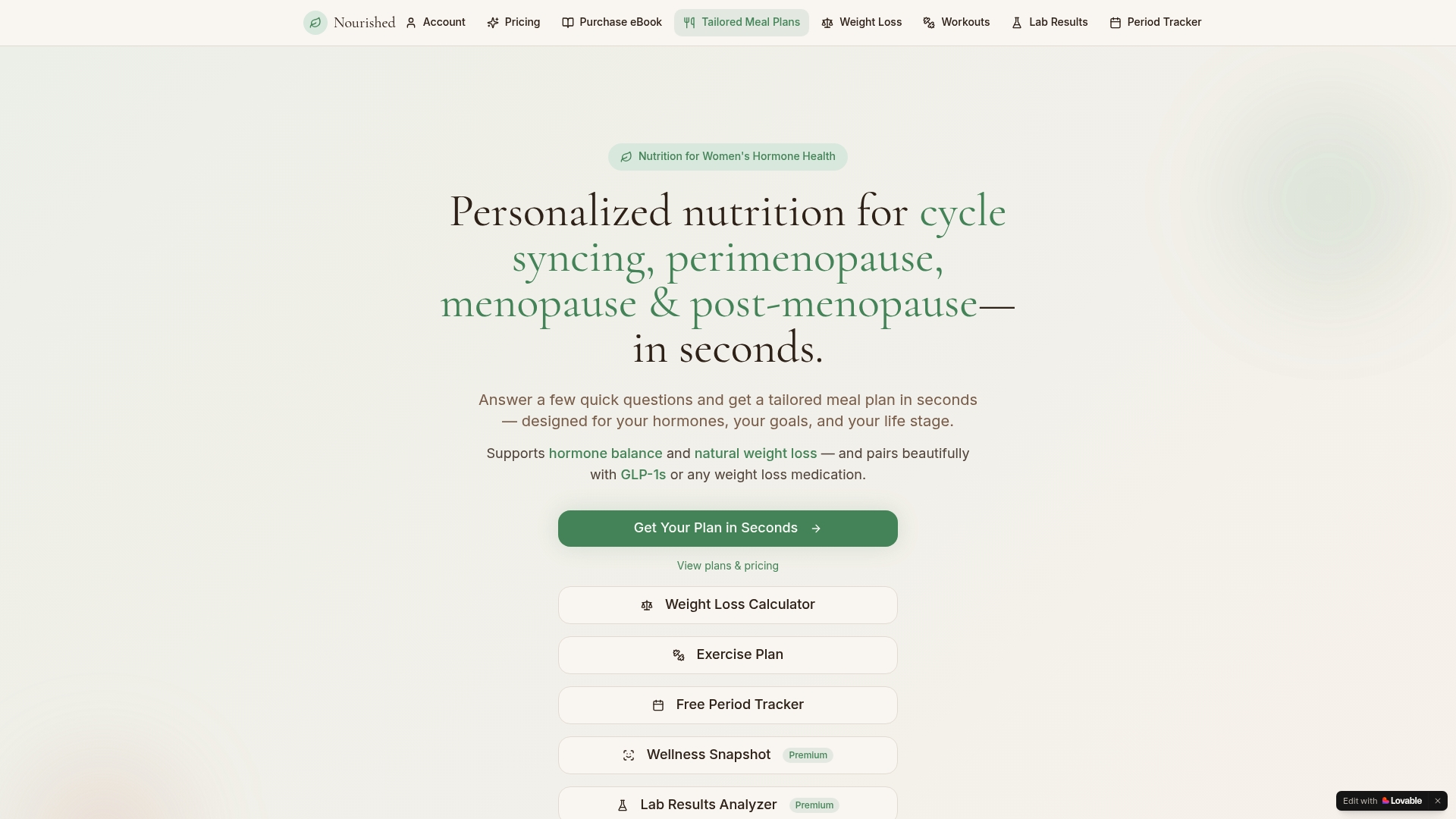
Nourished closes that gap with AI-generated meal plans that shift automatically by phase, a built-in cycle tracker for logging symptoms and timing, and hormone-adaptive workout suggestions that match your energy across the month. There is no calorie counting and no rigid rules. You answer a short intake questionnaire, and Nourished generates a personalized plan within minutes.
Ready to stop guessing which phase you are in? Start with Nourished and get a meal plan built around your cycle, your symptoms, and your food preferences. This article is general nutrition information, not medical advice. Consult a clinician before starting supplements or if you have significant symptoms.
Useful sources and further reading
Reliable sources used in this guide, for readers who want to verify recommendations or dig deeper:
- Dietary energy intake across the menstrual cycle — PMC/NIH: Narrative review of energy intake and appetite patterns across cycle phases.
- Nutrition and Exercise Throughout Your Menstrual Cycle — Cleveland Clinic: Clinical guidance on cycle syncing, phase-specific nutrition, and behavioral framing.
- A Review on Nutritional Requirements During Menstrual Cycle Phases — IJPS: Micronutrient review covering iron, magnesium, B vitamins, calcium, vitamin D, and omega-3s.
- What to eat during your period — Healthline: Practical food guidance for the menstrual phase, supplement safety notes, and foods to limit.
- How to eat for your cycle and feel energized all month — Healthline: Meal-prep strategies and batch-cooking guidance for low-energy cycle days.
- Cycle Syncing Through Your Menstrual Phases — Trinity Health Michigan: Practitioner guidance on symptom tracking and personalizing phase timing.
- Research and References — Nourished: Clinical sources and studies behind Nourished’s phase-based nutrition recommendations.
- PubMed — Nutrition Reviews: Peer-reviewed nutrition research database for readers seeking primary study access.
All sources reflect US clinical standards and peer-reviewed research. Verify current guidelines with your healthcare provider for your individual situation.