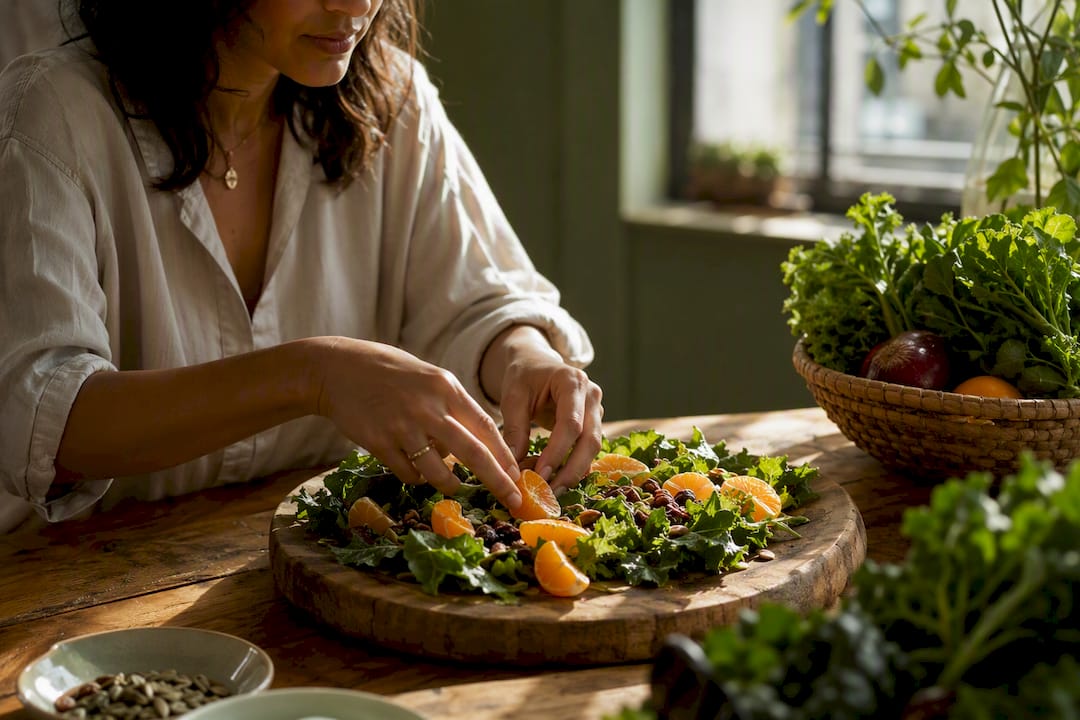
What to Eat During Your Menstrual Phase for Energy and Fewer Cramps
Nourished · August 28, 2026
What to Eat During Your Menstrual Phase for Energy and Fewer Cramps
During your menstrual phase, prioritize iron, omega-3s, magnesium, vitamin C, and steady complex carbs. Think a lentil stew with spinach and a squeeze of citrus, or salmon over sweet potato and greens. These combinations replace what bleeding depletes and calm the inflammation behind cramps. The recipes and sample day below turn that into something you can actually cook this week.
TL;DR:
- Consuming two to three servings of omega-3 rich foods like salmon or walnuts during your period can better reduce cramps compared to a typical diet.
- Pairing plant-based iron sources such as spinach or lentils with vitamin C-rich foods like citrus improves iron absorption and helps combat fatigue.
- Batch-cooking nutrient-dense meals like lentil stew and pre-washing greens simplify their inclusion during heavy bleeding days when energy is low.
- Limiting intake of high-sodium, processed foods, caffeine, and alcohol helps decrease bloating, inflammation, and sleep disturbances associated with menstrual symptoms.
- Personalized, flexible meal templates that include protein, complex carbs, and healthy fats support mood stability and energy without strict dieting during menstruation.
Table of Contents
- Menstrual Phase Meals: The Nutrients That Matter Most
- Easy Recipes and Meal Templates for Period Days
- Foods and Habits That Make Period Symptoms Worse
- A Sample Day and Low-Effort Planning for Period Week
- What the Evidence Actually Shows
- A Practical Note on Personalization
- How Nourished Turns This Into a Plan You Don’t Have to Think About
- Sources
Menstrual Phase Meals: The Nutrients That Matter Most
Blood loss during your period drains iron, and low iron is a big reason so many women feel foggy and exhausted by day two or three. Heme iron from lean red meat, poultry, and fish absorbs efficiently, while non-heme iron from lentils, spinach, and beans needs a little help. That help comes in the form of vitamin C: pairing plant iron with a vitamin C source at the same meal significantly improves absorption, which is why a spinach salad with orange slices or a lentil bowl topped with red bell pepper works better than either food alone.
Omega-3 fatty acids from salmon, walnuts, and chia or flax seeds help blunt the prostaglandins that drive cramping, as explained in Nutrition’s role in fertility success: a complete guide. Clinical recommendations for cramp relief actually lean on omega-3 intake higher than what a typical diet provides, which is a good argument for eating fatty fish two or three times during your period week rather than once.
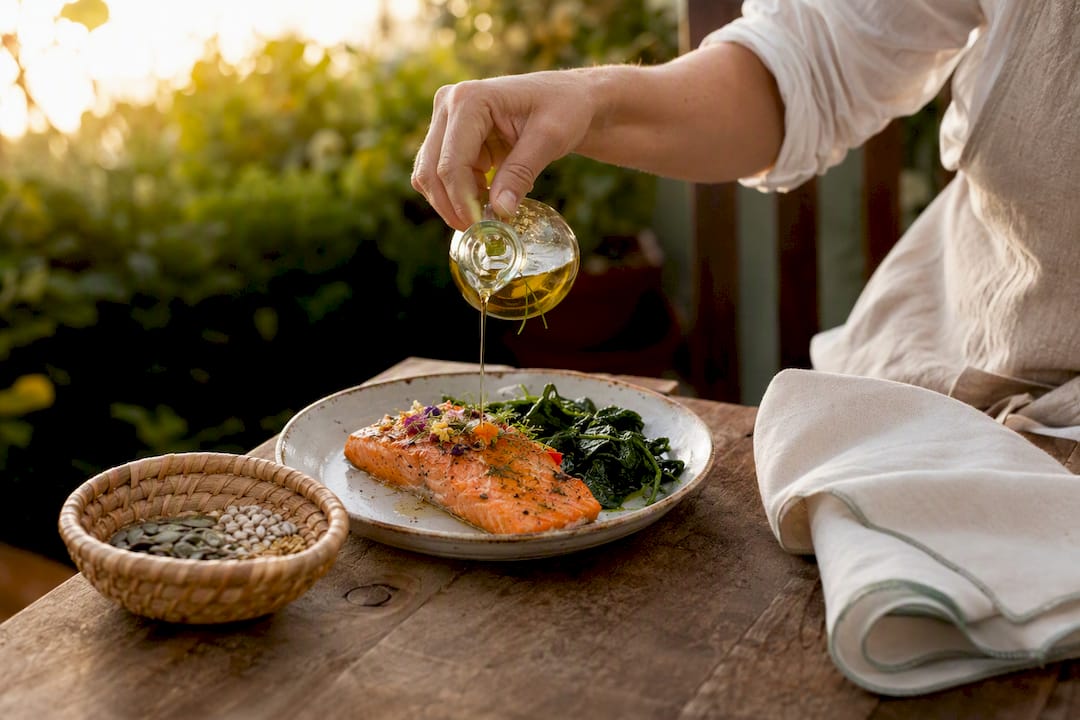
Magnesium and B vitamins support the muscle relaxation and mood stability that go missing right when you need them most. Pumpkin seeds, almonds, dark leafy greens, and whole grains cover both.
Pro Tip: Ginger shows up in clinical research as genuinely effective at reducing the intensity and duration of menstrual pain, so grate fresh ginger into stews, teas, or stir-fries during your period rather than saving it for when you’re already sick.
Here’s the shortlist to build meals around:
- Iron: lean red meat, poultry, lentils, spinach, beans
- Omega-3s: salmon, sardines, walnuts, chia seeds, flaxseed
- Magnesium: pumpkin seeds, almonds, dark leafy greens, whole grains
- Vitamin C (for iron absorption): citrus, bell peppers, strawberries, broccoli
- Hydration and sodium: water, herbal tea, and lower-sodium meals to ease bloating
Registered dietitians frame this as a balanced pattern rather than a single miracle food: enough protein, complex carbs, and healthy fat at each meal to keep blood sugar and mood steady across the days you’re bleeding.
Easy Recipes and Meal Templates for Period Days
You don’t need a new recipe for every meal. You need a handful of templates flexible enough to repeat with whatever is in the fridge.
- Iron and citrus breakfast bowl. Steel-cut oats, a spoonful of almond butter, sliced strawberries, and a sprinkle of pumpkin seeds. The vitamin C in the berries helps you absorb the iron in the almond butter and oats. Swap oats for quinoa if you want more protein.
- Spinach and orange salad with grilled chicken or chickpeas. Baby spinach, orange segments, sliced almonds, and a light olive oil dressing. Chickpeas make this fully plant-based without losing the iron-plus-vitamin-C pairing.
- Salmon, sweet potato, and roasted greens. Salmon fillet, cubed sweet potato roasted with olive oil, and sautéed kale or broccoli. This one leans hardest into omega-3s. Canned salmon works fine on a low-energy night.
- Lentil and ginger stew. Red lentils, diced tomatoes, fresh ginger, cumin, and a handful of spinach stirred in at the end. Batch this one; it freezes well and reheats in minutes.
- Turkey and black bean chili. Ground turkey, black beans, diced tomatoes, bell peppers, and a spoon of chili powder. Bell peppers add vitamin C right into an iron-rich dish. Use lentils instead of turkey for a vegetarian version.
- Almond and dark chocolate energy bites. Dates, almonds, cocoa powder, chia seeds, blended and rolled into balls. These satisfy a sugar craving with magnesium and fiber instead of refined sugar.
- Pumpkin seed and dried fruit trail mix. Pumpkin seeds, walnuts, dried apricots, and a few dark chocolate chips. Dried apricots bring iron; pumpkin seeds bring magnesium.
For snacks between meals, keep it simple: roasted chickpeas, apple slices with almond butter, or Greek yogurt with berries all deliver protein or fiber without spiking blood sugar and crashing an hour later.
Before your period starts, run through a short checklist: canned lentils and beans, a bag of spinach, frozen salmon fillets, citrus fruit, pumpkin seeds, and dark chocolate. Pre-wash your greens the day you buy them, and freeze the lentil stew in single portions so a nutrient-dense meal is ready even on the day you don’t want to cook at all.
Foods and Habits That Make Period Symptoms Worse
Some foods work against you during your period, not because they’re forbidden, but because of what they do to bloating, inflammation, and sleep. High-sodium foods pull water into your tissues and worsen bloating; ultra-processed snacks and refined carbs are linked to more severe PMS symptoms in women who eat them regularly. Excess caffeine can tighten blood vessels and worsen headaches or anxiety, while alcohol disrupts sleep right when your body needs the recovery most.
None of this means total deprivation. Swap the usual chips for roasted chickpeas with sea salt. Trade a candy bar for a square of dark chocolate, which brings magnesium along with the sweetness. If a creamy dessert is calling your name, Greek yogurt with berries covers the craving with protein and antioxidants instead of just sugar. Nutrient-dense swaps like these satisfy cravings without adding to inflammation the way processed snacks tend to.
- Limit: excess salt, ultra-processed snacks, high-sugar treats, heavy caffeine, alcohol
- Swap in instead: roasted chickpeas, dark chocolate, Greek yogurt with berries, herbal tea
A Sample Day and Low-Effort Planning for Period Week
A realistic day looks less like a strict meal plan and more like a rhythm: protein and carbs together, roughly every three to four hours, so your energy doesn’t crash between meals.
- Breakfast: oatmeal with almond butter, strawberries, and pumpkin seeds
- Mid-morning snack: an orange and a small handful of walnuts
- Lunch: lentil and ginger stew with a side of spinach salad
- Afternoon snack: roasted chickpeas or an energy bite
- Dinner: salmon, roasted sweet potato, and sautéed kale
Three habits make this realistic even on your lowest-energy day. Batch-cook the lentil stew at the start of your cycle and freeze it in portions. Pre-wash and store your greens the day you shop so a salad takes ninety seconds to assemble. Keep a stash of portable snacks like trail mix or energy bites in your bag so you’re never stuck grabbing whatever’s in the vending machine. Cleveland Clinic points to exactly these small, low-effort shifts as the highest-impact moves for period-week energy, and staying hydrated while easing up on sodium rounds out the day’s guidance on managing bloating.
What the Evidence Actually Shows
The science here is encouraging but not absolute. A pilot randomized controlled trial that replaced two meals a day with nutrient-optimized meals for three cycles found measurably lower menstrual distress scores compared with habitual eating in women with premenstrual disorders. That’s a real signal, but it’s a pilot study, and it doesn’t mean diet alone resolves every symptom.
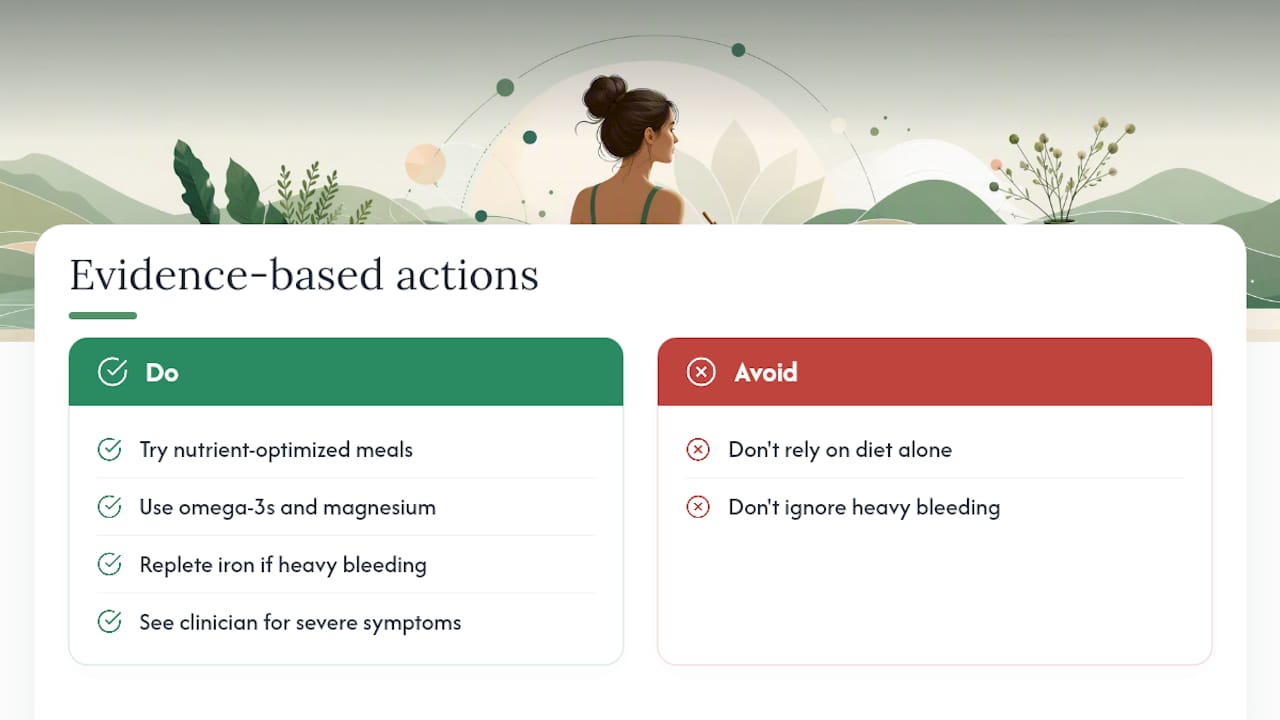
Omega-3s and magnesium have a reasonable evidence base for easing cramps, and iron repletion is a well-established fix for the fatigue that comes with heavy blood loss. Diet is a lever, not a cure. Heavy bleeding, debilitating pain, or symptoms that disrupt your life deserve a conversation with a clinician, not just a better grocery list. Nourished builds its phase-specific meal guidance on this same body of research, pairing it with individualized adjustments rather than one-size-fits-all advice.
A Practical Note on Personalization
[Author credentials or expertise related to women’s hormone health]
If heavy flow days leave you drained, plan one iron-forward meal for each of those days, something like the lentil and ginger stew, and build the rest of the day around it. Every body responds differently, so treat these templates as a flexible starting point rather than a rulebook. If your bleeding is unusually heavy or your symptoms feel severe, talk to a clinician before assuming diet alone will fix it.
— Brittany
How Nourished Turns This Into a Plan You Don’t Have to Think About
Nourished is the alternative to generic period nutrition advice: instead of a static list of foods, it builds a plan that shifts automatically as your cycle moves from menstrual to follicular to luteal, so the iron-forward swaps and easy grocery lists show up exactly when heavy-flow days call for them.
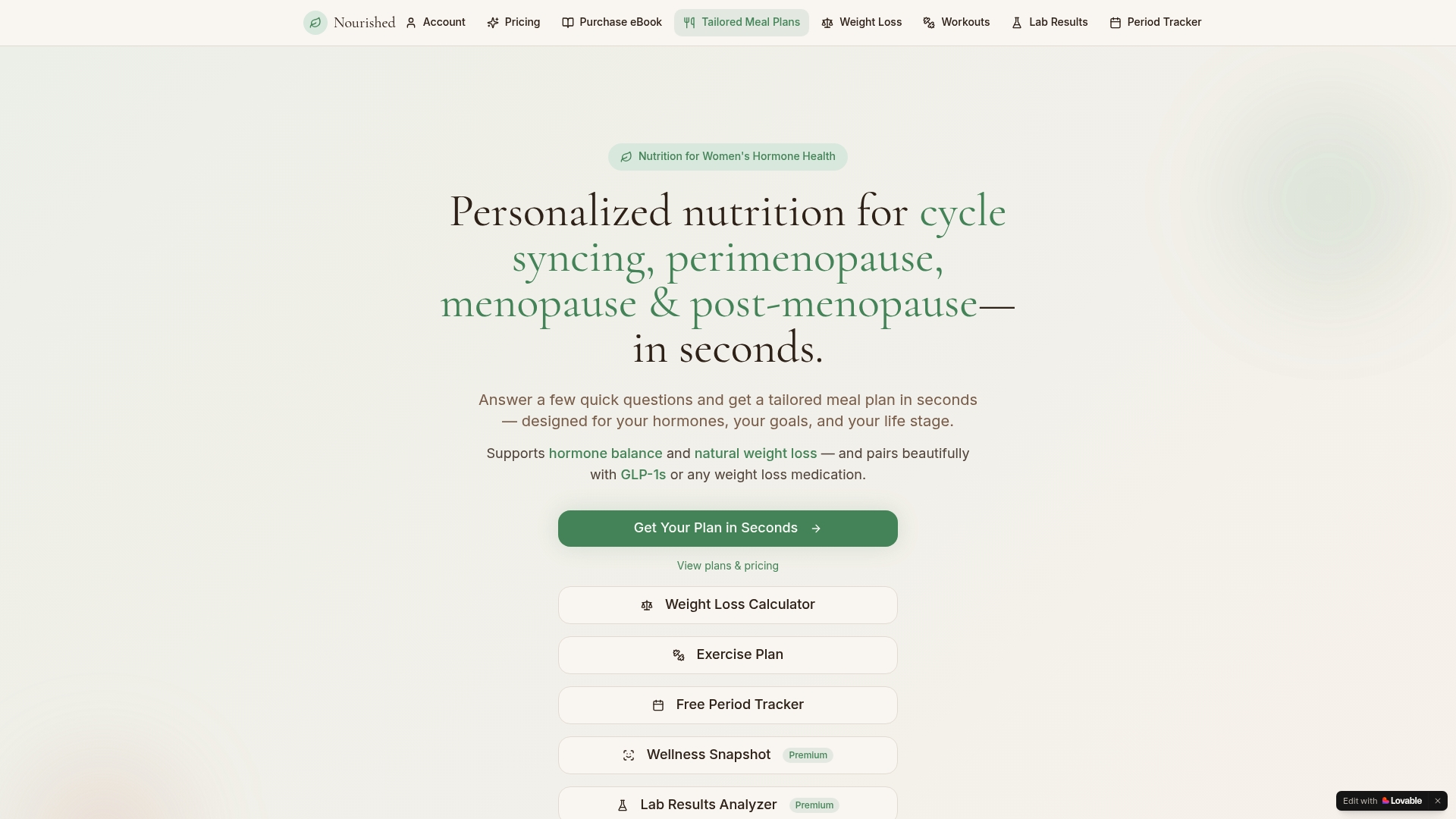
The platform’s AI factors in your specific cycle phase, symptoms, and preferences to generate meals with no calorie counting, and it pairs those meals with hormone-adaptive workouts so your food and your movement actually match your energy that day. If you’re tired of guessing which recipe fits which day of your period, see how the plans are built or start your personalized meal plan and let the heavy-flow days take care of themselves.
This article is general information, not a substitute for advice from a qualified doctor. Consult a qualified healthcare professional about your own circumstances before acting on anything here.
Sources
- What To Eat During Your Period: Foods That Help Reduce Cramps and Foods To Avoid | Health Matters | NYP
- Eating for Your Cycle: Nutrition Tips for Each Menstrual Phase | Everyday Health
- Cycle syncing your diet | Cleveland Clinic
- Novel dietary FemTech based on dietary reference intakes for premenstrual and menstrual disorders: a pilot RCT (DOI link)