3 Month Supplement Plan for Women with PCOS: Exact Doses and Labs
Nourished · September 12, 2026
3 Month Supplement Plan for Women with PCOS: Exact Doses and Labs
The strongest evidence in PCOS supplementation points to six players: inositol, vitamin D (if you’re deficient), omega-3s, berberine, N-acetylcysteine, and magnesium. This guide covers the studied doses, the mechanisms behind them, the safety cautions that matter, and a realistic three-month starter plan, all with the understanding that supplements support your lifestyle and medical care rather than replace them. Talk to your provider before starting berberine or combining any supplement with glucose-lowering medication.
TL;DR:
- Inositol at 4 grams with d-chiro-inositol in a 40:1 ratio is the most supported supplement for improving insulin sensitivity and ovulation in PCOS, with effects noticeable after four to six weeks.
- Vitamin D should be tested before supplementation, aiming for 30 to 50 ng/mL, with doses from 1,000 to 4,000 IU daily, and re-evaluated after eight to twelve weeks.
- Omega-3s at 1,000 to 2,000 mg daily help reduce inflammation and triglycerides, especially in women with low fish intake, with product quality verification being crucial.
- Berberine can mimic metformin’s benefits but requires medical supervision due to possible interactions and gastrointestinal side effects, particularly if combined with glucose-lowering medications.
- Lifestyle improvements through nutrition and exercise carry greater long-term impact than supplements alone, with most changes in ovulation and cycle regularity requiring at least three months to become evident.
Table of Contents
- PCOS Supplements Guide: The Shortlist and Studied Doses
- Why Inositol Is Usually the First Supplement to Try
- Vitamin D for PCOS: Testing Before Dosing
- Omega-3 Fatty Acids: What EPA and DHA Actually Do for PCOS
- Berberine: The Metformin-Like Option That Needs Supervision
- Other Supplements Worth Knowing: NAC, Magnesium, Chromium, and More
- How to Start: Labs, Staging, and a Realistic 3-Month Plan
- How Personalized Nutrition Makes Supplement Trials Easier to Judge
- What the Research Actually Supports, and Where It Falls Short
- Try Nourished While You Run Your Supplement Trial
- Sources
- FAQ
PCOS Supplements Guide: The Shortlist and Studied Doses
Before diving into mechanisms and research, here’s what the clinical trials actually tested. These are the doses that showed up in the studies behind the evidence, not marketing copy on a supplement bottle.
- Inositol (myo + d-chiro, 40:1 ratio): around 4 grams myo-inositol plus a small amount of d-chiro-inositol daily, the ratio most PCOS trials used.
- Vitamin D: Test your 25-OH vitamin D level first. Trial ranges commonly run 1,000 to 4,000 IU daily, with higher short-term doses used to correct significant deficiency.
- Omega-3 (EPA + DHA): around 1,000 to 2,000 mg combined daily, drawn from reviews on lipid and inflammatory outcomes.
- Berberine: about 500 mg two to three times daily with meals, always under medical supervision given its interaction profile.
- N-acetylcysteine (NAC): 600 to 1,800 mg per day, typically split into two or three doses.
- Magnesium: 200 to 400 mg elemental, usually as glycinate or citrate for better tolerance.
- Chromium: 200 to 400 mcg daily for modest glucose support.
- Spearmint tea: about two cups daily, studied specifically for androgen-related symptoms like excess facial or body hair.
Notice what’s missing from this list: nothing here claims to cure PCOS or replace metformin. Each dose comes from a study designed to test one narrow outcome, whether that’s ovulation frequency, fasting insulin, or triglycerides. That distinction matters when you’re deciding what to try first.
Why Inositol Is Usually the First Supplement to Try
If you only add one supplement this year, the research points hardest toward inositol. A comprehensive review of dietary supplements for PCOS found consistent improvements in insulin sensitivity, ovulation rates, cycle regularity, and even oocyte quality among women taking myo-inositol combined with d-chiro-inositol.
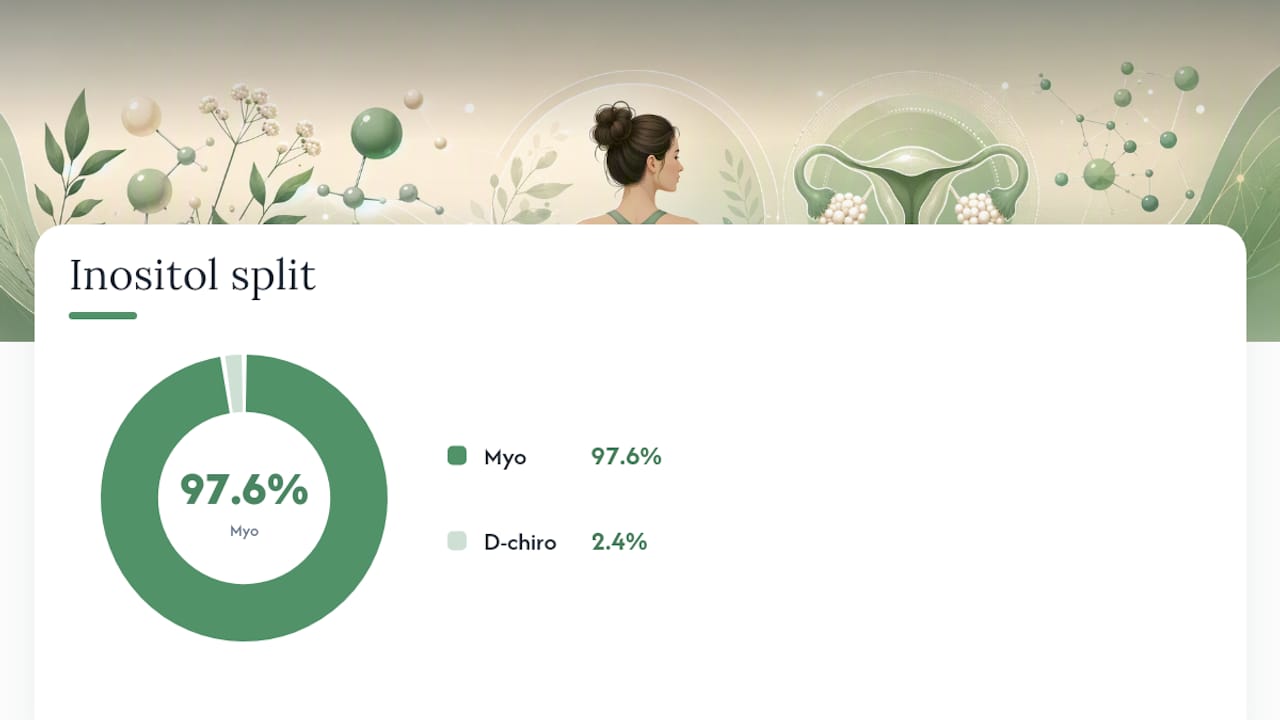
The 40:1 ratio isn’t arbitrary. Your ovaries naturally maintain roughly that ratio of myo-inositol to d-chiro-inositol, but PCOS disrupts it, often converting too much myo-inositol into d-chiro-inositol in ovarian tissue. This local imbalance is thought to interfere with normal follicle development. Supplementing at the same 40:1 ratio your body uses, typically 4 grams myo-inositol paired with 100 mg d-chiro-inositol daily, aims to restore that balance rather than flood the system with one form alone.
Here’s where most people trip up: product selection. Walk into a supplement store and you’ll find inositol blends with proprietary formulas that don’t disclose exact amounts, or products using only myo-inositol without the d-chiro component, so it’s important to consult resources like The Functional Sip for supplement quality and ingredient transparency. Look for:
- Single-ingredient myo-inositol powder you can dose precisely, or
- A fixed-ratio combination product that states the 40:1 split on the label
- Third-party testing verification (NSF, USP, or ConsumerLab) confirming what’s actually in the capsule
Pro Tip: Inositol powder dissolves easily in water or a morning smoothie, and splitting the dose (half in the morning, half at night) tends to reduce the mild GI upset some women report in the first two weeks.
Give it time before judging results. Insulin sensitivity markers can shift within four to six weeks, but ovulatory and cycle changes typically take longer to show up. Track your cycle length, watch for signs of ovulation, and if you have access to fasting glucose testing, recheck it around the three-month mark.
Vitamin D for PCOS: Testing Before Dosing
Skip the guesswork on vitamin D. Get tested first. A significant share of women with PCOS run low on vitamin D, and that deficiency appears to compound existing problems with insulin resistance and reproductive hormone signaling, according to clinical reviews on vitamin D and reproductive health.
The testing and dosing framework looks like this:
- Order a 25-OH vitamin D blood test before starting supplementation, not after. This is the standard marker labs use to assess your actual vitamin D status.
- Target range: Many clinical reviews aim for 30 to 50 ng/mL as a reasonable therapeutic target, though your provider may set a different goal based on your specific labs.
- Dosing: Trial ranges run 1,000 to 4,000 IU daily, with the higher end generally reserved for correcting a documented deficiency rather than routine maintenance.
- Retest timeline: Most protocols recheck levels around eight to twelve weeks after starting a corrective dose, then adjust.
Vitamin D is fat-soluble, so take it with a meal that contains some fat, not on an empty stomach with black coffee. Some practitioners also pair vitamin D with magnesium and vitamin K2, since magnesium is a cofactor in vitamin D metabolism and K2 helps direct calcium appropriately. The NIH Office of Dietary Supplements fact sheet is a solid resource for understanding safe upper intake limits before you self-dose beyond what your provider recommends.
Omega-3 Fatty Acids: What EPA and DHA Actually Do for PCOS
Omega-3s aren’t a headline supplement the way inositol is, but the metabolic case for them is real. Reviews on n-3 polyunsaturated fatty acids and PCOS consistently show improvements in triglycerides and markers of inflammation, with some modest benefit to insulin resistance as well.
The mechanism is fairly well understood at this point. EPA and DHA get incorporated into cell membranes and compete with omega-6 fatty acids in the inflammatory pathway, which tends to run hotter in women with PCOS due to chronic low-grade inflammation tied to excess insulin and androgens. Additional research on n-3 PUFA consumption and PCOS complications reinforces the cardiometabolic angle, which matters given that PCOS carries elevated long-term cardiovascular risk.
Dosing and product notes:
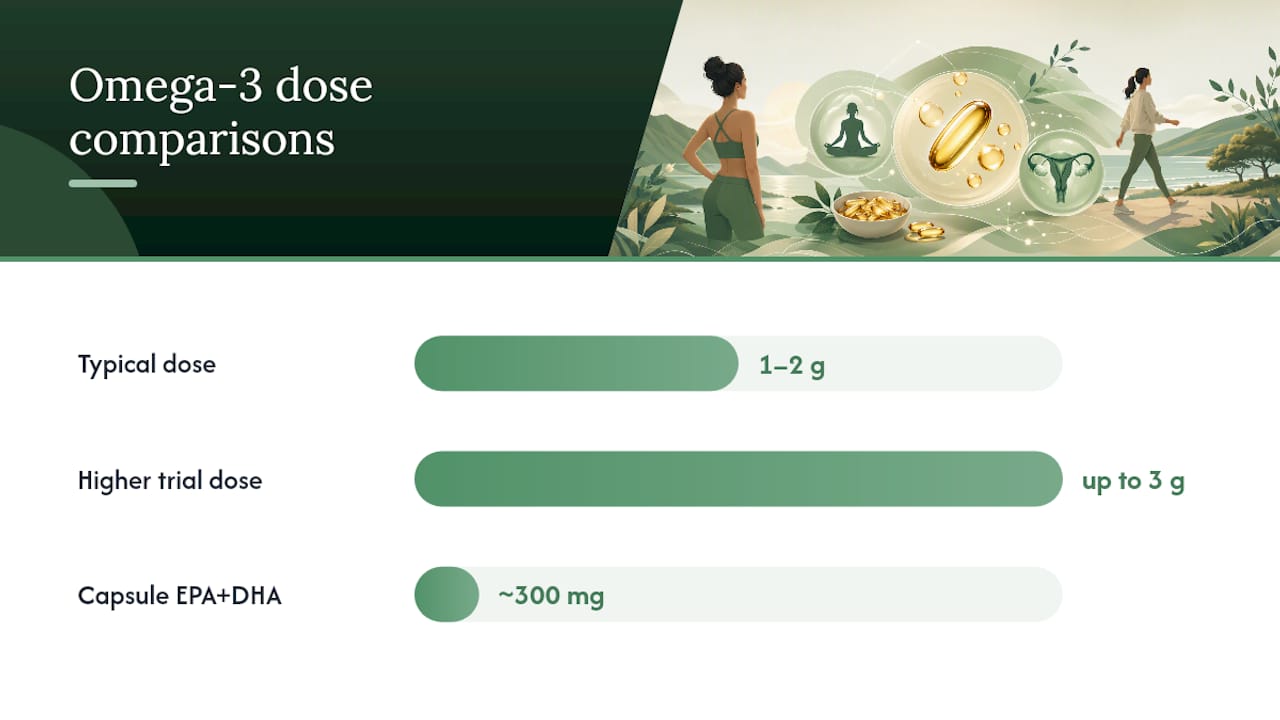
- Typical therapeutic dose: 1,000 to 2,000 mg combined EPA and DHA daily, with some trials using up to 3,000 mg for more pronounced lipid effects.
- Check the label math. A “1,000 mg fish oil” capsule might only contain 300 mg of actual EPA/DHA, the rest is other fatty acids and filler. Read the supplement facts panel, not the front label.
- Prefer third-party tested products that verify both potency and contaminant levels (heavy metals, oxidation markers), since fish oil quality varies enormously across brands.
- Form matters less than dose, but triglyceride form is generally better absorbed than the cheaper ethyl ester form used in some bargain products.
If you already eat fatty fish (salmon, sardines, mackerel) two or more times weekly, you may need a lower supplemental dose. If you rarely eat fish, the supplement carries more weight in your overall intake.
Berberine: The Metformin-Like Option That Needs Supervision
Berberine is the supplement with the most metformin-like effect profile, and that’s exactly why it needs the most caution. Research on berberine’s metabolic effects shows it improves insulin sensitivity and lipid markers through mechanisms that overlap significantly with how metformin works, including effects on glucose uptake and gut microbiota composition.
Common study dosing runs 500 mg, taken two to three times daily with meals. That’s not a dose to eyeball. Because berberine’s mechanism mirrors a prescription medication, combining it with metformin or other glucose-lowering drugs can produce additive effects, meaning your blood sugar could drop lower than either supplement or medication would cause alone.
The other practical issue is tolerance. GI side effects, cramping, diarrhea, and bloating are common when starting berberine, especially at the higher end of the dosing range. Starting at a lower dose and titrating up over a week or two tends to reduce this.
Pro Tip: If you’re already on metformin, don’t add berberine without your provider’s input. This is the one supplement on this list where “just try it and see” carries real risk rather than mild inconvenience.
Berberine is not recommended during pregnancy, and anyone with existing liver concerns should discuss it with a provider before starting.
Other Supplements Worth Knowing: NAC, Magnesium, Chromium, and More
Beyond the headline four, several supplements show up consistently in PCOS research with more modest or situational evidence. A network meta-analysis of 79 randomized controlled trials involving 5,501 participants found that chromium, inositol, and omega-3 in particular showed measurable benefit for lipid and metabolic markers, giving some of these second-tier options real backing rather than just supplement-aisle popularity.
Here’s how the rest of the field breaks down:
- N-acetylcysteine (NAC): 600 to 1,800 mg daily. Functions as an antioxidant and has shown benefit for ovulation rates in some trials, sometimes compared favorably to metformin for that specific outcome.
- Magnesium: 200 to 400 mg elemental, glycinate or citrate forms tend to sit better on the stomach than oxide. Supports sleep quality and plays a cofactor role in insulin signaling.
- Chromium: 200 to 400 mcg daily for modest glucose-handling support, backed by the network meta-analysis above.
- Zinc: Studied for its role in androgen metabolism and immune function, though evidence is thinner than for the supplements above.
- CoQ10: Explored for mitochondrial and oocyte quality support, mostly in fertility-focused research.
- Spearmint tea: about two cups daily, specifically studied for reducing androgen-driven symptoms like hirsutism.
- L-carnitine: Investigated for metabolic and weight-related outcomes, with weaker evidence than the primary supplements.
The common thread across all of these: skip the “PCOS support blend” that lists ten ingredients in a proprietary formula. Those products routinely underdose the one or two ingredients that actually matter, burying them under a long list of filler herbs at fractional amounts you can’t even verify.
How to Start: Labs, Staging, and a Realistic 3-Month Plan
Before you buy anything, get baseline labs done. This isn’t optional if you want to know whether a supplement is actually working, versus just hoping it is.
Order these labs first:
- 25-OH vitamin D to determine if you need correction dosing or just maintenance.
- Fasting glucose and insulin, plus HbA1c to establish your metabolic baseline.
- Lipid panel (total cholesterol, triglycerides, HDL, LDL) as a marker for omega-3 and berberine response.
- Testosterone and SHBG, if your provider hasn’t already checked these, since androgen levels help contextualize symptoms like hirsutism or acne.
A workable staging approach avoids trying everything at once, which makes it impossible to know what’s actually helping:
- Weeks 1 to 12: Start inositol at the standard 4g/100mg ratio, and begin correcting vitamin D if your labs showed deficiency.
- Reassess around the 3-month mark, the typical minimum window practitioners use before judging whether cycle regularity or ovulation has shifted.
- If tolerated well, add omega-3 and magnesium as your next layer, since both have low interaction risk and support overlapping goals.
- Reserve berberine for provider-supervised use, particularly if you’re already managing insulin resistance with medication.
Watch for interaction red flags: excessive fatigue, unusual dizziness, or GI symptoms that don’t resolve after the first week or two warrant a call to your provider, not a shrug. If you’re on any glucose-lowering medication, report new supplement use at your next appointment rather than waiting for your annual visit.
How Personalized Nutrition Makes Supplement Trials Easier to Judge
Supplements work better when you can actually see whether they’re working, and that’s where most self-directed trials fall apart. Without a baseline in your diet and cycle patterns, it’s hard to tell if better energy or a shorter cycle came from the inositol or from something else entirely.
Nourished builds meal plans around your specific cycle phase rather than a generic PCOS diet template, which matters because insulin sensitivity and hunger cues shift across the follicular and luteal phases. Pairing that with the free period and cycle tracker gives you a consistent way to log cycle length and symptoms while you run your three-month supplement trial, so you’re comparing real data instead of vague impressions. The research and references library also backs the nutrition guidance with the same kind of sourcing used throughout this guide.
What the Research Actually Supports, and Where It Falls Short
The conventional advice on PCOS supplements tends to treat every option on the shelf as roughly equivalent, as though chromium and inositol deserve the same confidence. They don’t. Inositol has the deepest and most consistent trial base behind it. Berberine works but carries real interaction risk that gets glossed over in casual wellness content. Everything else, NAC, magnesium, chromium, sits in a reasonable but noticeably thinner evidence tier.
Where most guides fail readers is timelines. Women start a supplement, don’t see a shift in six weeks, and quit. Ovulatory and cycle changes take longer than insulin markers to show up, often the better part of three months, and nobody sets that expectation clearly enough upfront.
If you’re prioritizing, start with inositol and correct any vitamin D deficiency first. Layer in omega-3 next. Save berberine for when you have a provider actively involved, not as a solo experiment. And don’t let supplement talk crowd out the plainer truth: nutrition and exercise still do more of the heavy lifting than any capsule on this list. Supplements sharpen the edges. They don’t build the foundation.
— Brittany
Try Nourished While You Run Your Supplement Trial
Some nutrition platforms provide meal plans that adjust to your cycle phase, which matters when insulin sensitivity and appetite shift week to week and can otherwise mask whether inositol or vitamin D is doing anything at all.

The platform builds your plan through an AI-driven process explained on the how Nourished works page, with no calorie counting and no restrictive rules to follow on top of everything else you’re already tracking. This isn’t a replacement for your doctor or your lab work. Think of it as the nutrition layer that makes your supplement trial easier to evaluate, not another variable to manage. Start with the free period and cycle tracker to log your baseline, then explore a personalized meal plan built around where you are in your cycle right now.
This article is general information, not a substitute for advice from a qualified doctor. Consult a qualified healthcare professional about your own circumstances before acting on anything here.
Sources
- Dietary supplements for polycystic ovary syndrome
- Vitamin D and reproductive health (clinical review)
- n-3 polyunsaturated fatty acids and PCOS review
- Berberine and metabolic effects review
- The effectiveness of nutritional supplements in improving polycystic ovary syndrome in women: a systematic review and network meta-analysis
FAQ
What is a recommended supplement schedule for PCOS?
Most practitioners suggest starting with inositol (4 g myo-inositol plus 100 mg d-chiro-inositol daily) and correcting any vitamin D deficiency first, then reassessing after about three months before adding omega-3, magnesium, or provider-supervised berberine.
Is berberine or inositol better for PCOS?
Inositol has broader trial support for ovulation, cycle regularity, and insulin sensitivity with a strong safety profile, while berberine shows comparable metabolic effects but carries higher interaction risk and needs medical supervision, especially alongside glucose-lowering medication.
How do Japanese and Korean approaches to PCOS differ from Western supplement protocols?
Clinical management in Japan and Korea often blends conventional treatment (metformin, oral contraceptives, lifestyle counseling) with traditional herbal formulas prescribed by licensed practitioners, but the inositol, vitamin D, and omega-3 evidence base discussed in this guide comes from international trials, not region-specific protocols.
Does PCOS actually need supplements, or is diet enough?
Nutrition and exercise remain the primary therapy for PCOS, but supplements like inositol and vitamin D (when deficient) can meaningfully support insulin sensitivity and cycle regularity as an adjunct, not a replacement, to lifestyle changes and medical care.
How long does it take to see results from PCOS supplements?
Insulin-related markers can shift within four to six weeks, but ovulatory and menstrual cycle changes typically need a full three-month trial before you can reasonably judge whether a supplement is working.