
Perimenopause Meal Plan Guide for Hormone Balance
Nourished · June 27, 2026
Perimenopause Meal Plan Guide for Hormone Balance
A perimenopause meal plan is a structured nutrition approach designed to support hormone balance, preserve muscle mass, and reduce symptoms like hot flashes, mood swings, and bloating during the perimenopausal transition. This stage, which can begin in the late 30s and extend into the early 50s, involves declining estrogen and progesterone levels that directly affect how your body responds to food. The Academy of Nutrition and Dietetics confirms that a healthful eating pattern prioritizing lean protein, whole grains, unsaturated fats, and key vitamins and minerals is the foundation of effective perimenopause nutrition. Getting this foundation right matters more than chasing any single “hormone-balancing” food.
What are the core nutrients for a perimenopause meal plan?
Protein and fiber are the two most critical nutrients for women managing perimenopause. Protein preserves lean muscle mass as estrogen declines, while fiber supports gut health, blood sugar stability, and satiety. The Academy of Nutrition and Dietetics recommends protein sources including fish, poultry, lean meats, eggs, beans, and tofu as daily staples.
Calcium and vitamin D protect bone density, which drops significantly during the perimenopausal years. The Royal Osteoporosis Society advises a daily calcium target of around 700 mg, with dairy products and fortified soy milk as reliable dietary sources. Vitamin D aids calcium absorption, making the two nutrients inseparable for bone health.

Healthy unsaturated fats round out the core nutrient picture. Olive oil, nuts, seeds, and fatty fish like salmon deliver omega-3 fatty acids that reduce inflammation, support mood, and protect cardiovascular health. Estrogen plays a protective role in heart health, so as levels fall, anti-inflammatory fats become more important.
Key nutrients to prioritize every day:
- Lean protein: Fish, chicken, eggs, legumes, tofu (aim for a source at every meal)
- Dietary fiber: Whole grains, vegetables, fruits, beans, lentils
- Calcium: Dairy, fortified plant milks, leafy greens like kale and bok choy
- Vitamin D: Fatty fish, egg yolks, fortified foods, and sunlight exposure
- Omega-3 fatty acids: Salmon, sardines, walnuts, flaxseed, chia seeds
- Magnesium: Pumpkin seeds, dark chocolate, spinach, almonds (supports sleep and mood)
- Hydration: At least 8 cups of water daily to reduce bloating and support metabolism
Pro Tip: Build every meal around a “meal-level anchor”: a protein source, a fiber-rich carbohydrate, and an unsaturated fat. This trio stabilizes blood sugar and keeps energy steady across the day.
How to structure daily meals for hormone balance during perimenopause
The balanced plate model is the most practical framework for perimenopause nutrition. Fill half your plate with vegetables and fruit, one quarter with lean protein, and one quarter with whole grains. Heart and Stroke guidelines link this plate model to fewer severe menopause symptoms and better cardiometabolic protection.
Fiber targets are specific and age-dependent. Women aged 31–50 should reach 25 grams of fiber daily, while women over 51 need slightly less at 22 grams. Distributing fiber evenly across meals and snacks prevents digestive discomfort and keeps blood sugar stable throughout the day.

Meal timing also matters. Eating every 3–4 hours prevents the blood sugar crashes that worsen mood swings, fatigue, and cravings. A mid-morning snack of Greek yogurt with berries and a mid-afternoon snack of hummus with vegetables are practical ways to maintain steady energy between meals.
| Meal | Plate composition | Fiber target | Protein target |
|---|---|---|---|
| Breakfast | Half fruit/veg, quarter whole grain, quarter protein | 6–8 g | 20–25 g |
| Lunch | Half vegetables, quarter whole grain, quarter protein | 8–10 g | 25–30 g |
| Dinner | Half vegetables, quarter whole grain, quarter protein | 8–10 g | 25–30 g |
| Snacks (x2) | Protein + fiber-rich food | 3–5 g each | 10–15 g each |
Pro Tip: Prep fiber-rich grains like quinoa, farro, or brown rice in bulk at the start of the week. Having them ready removes the biggest barrier to building balanced plates on busy days.
Which foods help manage hot flashes and mood swings?
Hot flashes affect up to 75% of women during perimenopause, making dietary management one of the most practical tools available. The Mediterranean diet reduces hot flash frequency by approximately 20%, according to Cleveland Clinic research. This eating pattern works through multiple nutrient pathways, not a single ingredient, which is why it outperforms narrower dietary approaches.
Soy-based foods deserve specific attention. Tofu, edamame, tempeh, and soy milk contain phytoestrogens called isoflavones. These plant compounds weakly mimic estrogen in the body and may reduce hot flash frequency by over 25%. The effect is most consistent when soy foods are eaten regularly rather than occasionally.
Anti-inflammatory foods address the mood and joint symptoms that often accompany hormonal shifts. Fatty fish, walnuts, berries, leafy greens, and turmeric all reduce systemic inflammation. Women who add two to three servings of fatty fish per week often report improvements in both joint comfort and mood stability within a few weeks.
Foods and patterns that support symptom relief:
- Mediterranean diet staples: Olive oil, fish, legumes, whole grains, vegetables, and fruit
- Soy foods: Tofu, edamame, tempeh, and unsweetened soy milk eaten daily
- Anti-inflammatory foods: Blueberries, spinach, salmon, walnuts, and turmeric
- Blood sugar stabilizers: Oats, lentils, sweet potatoes, and beans to prevent energy crashes
- Foods to limit: Spicy foods, caffeine, alcohol, and highly processed snacks, which are common hot flash triggers for many women
Tracking your personal triggers is more effective than following a generic elimination list. Keeping a food and symptom log for two to three weeks reveals which specific foods precede your hot flashes, so you can make targeted adjustments rather than cutting out entire food groups unnecessarily.
How can supplements complement your perimenopause nutrition plan?
Supplements are tools for filling specific gaps, not replacements for whole food nutrition. Stanford Lifestyle Medicine advises that supplements should only be added after foundational nutrition is in place. Women who rely on supplements before addressing their diet consistently see weaker results.
The most practical supplements for perimenopause address the nutrients hardest to get from food alone. Vitamin D is the most common deficiency in this age group, particularly in northern climates or for women with limited sun exposure. Calcium supplements are useful only when dietary intake consistently falls below the recommended target. Tracking calcium from all food sources first prevents the risks of excess supplementation, including kidney stones and cardiovascular concerns.
Practical supplement guidance:
- Vitamin D3: 1,000–2,000 IU daily if dietary and sun sources are insufficient
- Calcium: Supplement only the gap between your dietary intake and the 700 mg daily target
- Omega-3 (fish oil): 1–2 g EPA/DHA daily if fatty fish intake is less than two servings per week
- Magnesium glycinate: Supports sleep quality and reduces muscle tension; take in the evening
- Protein powder: Useful on high-activity days or when whole food protein sources are limited
Timing improves absorption. Take calcium supplements in doses of 500 mg or less, since the body absorbs smaller amounts more efficiently. Take vitamin D with a fat-containing meal, as it is a fat-soluble vitamin. Magnesium taken at night supports both absorption and sleep quality.
What mistakes to avoid when meal planning for perimenopause?
Inconsistent protein intake is the most common and most damaging mistake. Skipping protein at breakfast, then trying to compensate at dinner, does not preserve muscle mass as effectively as spreading protein across all three meals. Women who eat 20–30 grams of protein per meal maintain muscle better than those who eat the same total amount in one or two sittings.
Ignoring hydration is another frequent oversight. Dehydration worsens bloating, fatigue, and brain fog, all of which are already common during perimenopause. Aim for at least 8 cups of water daily, and increase intake on days with physical activity or high heat.
Troubleshooting steps for common meal planning challenges:
- Bloating from increased fiber: Add fiber gradually, no more than 5 grams per week, and drink extra water alongside each increase.
- Persistent hot flashes despite dietary changes: Start a food and symptom log to identify personal triggers before making further eliminations.
- Low energy mid-afternoon: Add a protein and fiber snack at 3 p.m. rather than reaching for caffeine or sugar.
- Weight gain despite eating well: Check portion sizes of whole grains and healthy fats, which are calorie-dense even when nutritious.
- Mood swings and irritability: Prioritize omega-3 foods and reduce alcohol, which disrupts sleep and amplifies hormonal mood shifts.
- Stalled progress: Combine dietary changes with regular physical activity, since exercise and nutrition work together to manage perimenopause symptoms more effectively than either approach alone.
Pro Tip: Review your food log every Sunday. Look for three patterns: days when protein was low, days when fiber was skipped, and days when symptoms were worst. The overlap tells you exactly where to focus next.
Key Takeaways
A perimenopause meal plan built around protein at every meal, 25 grams of daily fiber, and Mediterranean-style fats is the most evidence-backed approach to managing hormonal symptoms and preserving long-term health.
| Point | Details |
|---|---|
| Protein at every meal | Aim for 20–30 g of lean protein per meal to preserve muscle as estrogen declines. |
| Daily fiber target | Women aged 31–50 need 25 g of fiber daily; distribute it evenly across meals and snacks. |
| Mediterranean diet for symptoms | This eating pattern reduces hot flash frequency by approximately 20% through multiple nutrient pathways. |
| Supplements fill gaps only | Add vitamin D, calcium, or omega-3s only after assessing what whole foods already provide. |
| Track symptoms alongside food | A food and symptom log identifies personal hot flash triggers more accurately than generic elimination diets. |
What I’ve learned from years of perimenopause nutrition work
The biggest shift I see in women who successfully manage perimenopause through food is moving away from the idea that one superfood or supplement will fix everything. The women who feel the most consistent improvement are the ones who build boring, reliable daily structures: protein at breakfast, vegetables at every meal, water before coffee. It sounds underwhelming, but it works.
What surprises most women is how quickly symptoms respond to consistent protein intake. Within two to three weeks of hitting 20–25 grams at breakfast, many report steadier energy, fewer afternoon cravings, and noticeably better mood. That single change often motivates everything else.
The science on perimenopause nutrition is still evolving, and I find that genuinely exciting. Phytoestrogens, the gut microbiome’s role in estrogen metabolism, and the connection between sleep quality and food choices are all areas where research is moving fast. Staying curious rather than rigid about your approach is the most sustainable mindset.
Perfectionism is the enemy of consistency here. A week where you hit your protein target six out of seven days is far more valuable than one perfect day followed by five days of frustration. Build the structure, track what matters, and adjust without judgment.
— Brittany
Nourished: personalized nutrition for perimenopause
Knowing what to eat is one thing. Having a plan built specifically for your hormones, your symptoms, and your schedule is another.
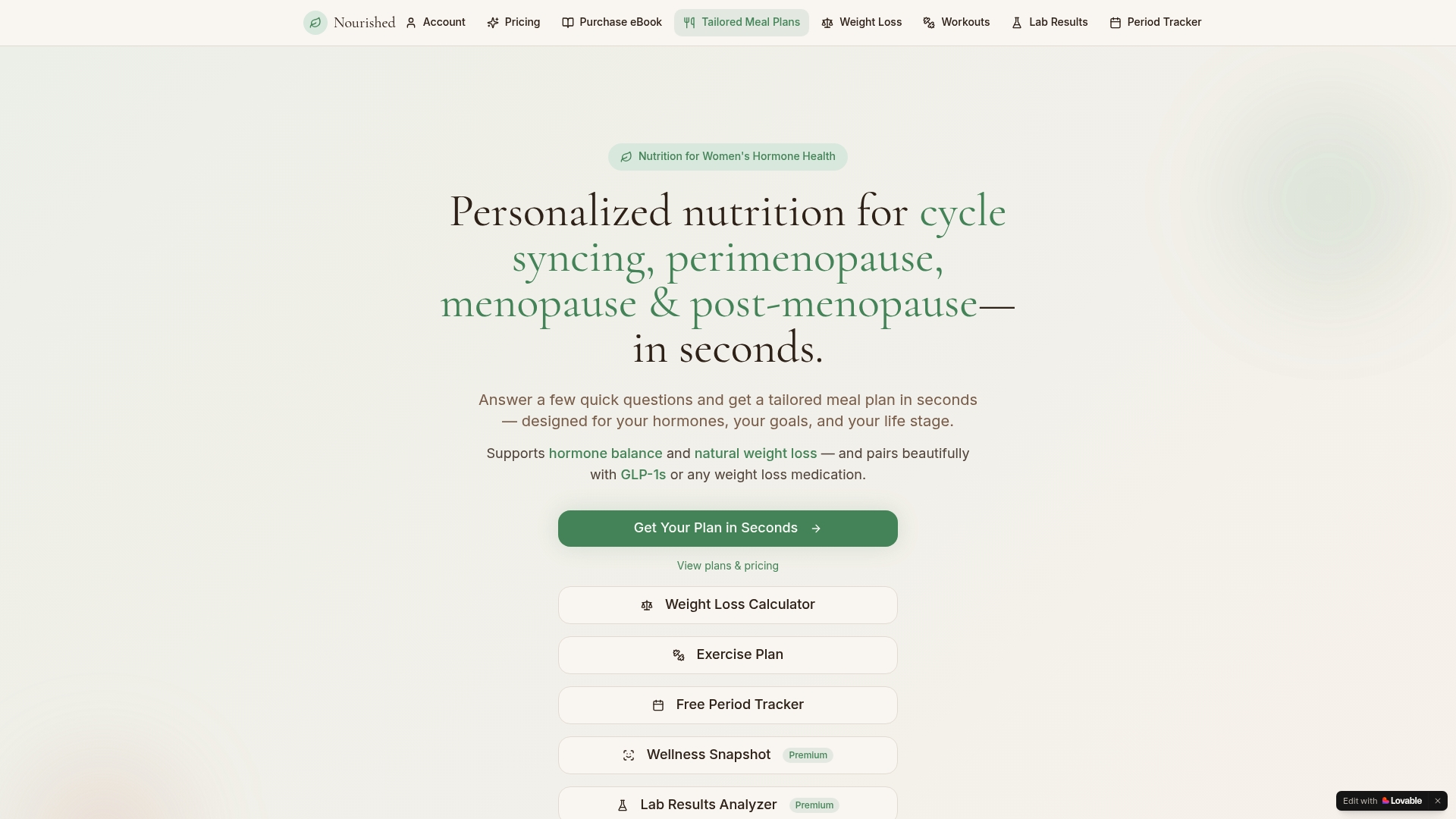
Nourished creates personalized meal plans for women at every stage of the hormonal transition, from perimenopause through post-menopause. The platform uses AI to match nutrition to your specific needs, without calorie counting or restrictive rules. You get immediate meal plan generation, cycle-aware food timing, and access to the science-backed references that support every recommendation. Women who want practical, hormone-focused guidance without the guesswork of building a plan from scratch will find exactly what they need at Nourished.
FAQ
What is a perimenopause meal plan?
A perimenopause meal plan is a structured nutrition approach that prioritizes protein, fiber, healthy fats, calcium, and vitamin D to support hormone balance and manage symptoms like hot flashes, mood swings, and bloating during the perimenopausal transition.
How does diet help balance hormones during perimenopause?
Diet supports hormone balance by stabilizing blood sugar, reducing inflammation, and providing the nutrients the body needs as estrogen and progesterone levels shift. The Mediterranean diet and consistent protein intake are the two most evidence-backed dietary strategies for this stage.
Which foods reduce hot flashes naturally?
Soy-based foods containing isoflavones may reduce hot flash frequency by over 25%, while the Mediterranean diet reduces hot flashes by approximately 20%. Limiting caffeine, alcohol, and spicy foods also helps many women reduce symptom frequency.
How much fiber does a woman in perimenopause need daily?
Women aged 31–50 need 25 grams of dietary fiber per day, dropping slightly to 22 grams after age 51. Spreading fiber intake evenly across meals and snacks prevents bloating and supports steady blood sugar.
Should women in perimenopause take supplements?
Supplements are useful for filling specific nutrient gaps, particularly vitamin D, calcium, and omega-3 fatty acids, but only after whole food nutrition is in place. Stanford Lifestyle Medicine advises against using supplements as a substitute for a balanced diet.