
Perimenopause Weight Gain Diet: What Actually Works
Nourished · June 18, 2026
Perimenopause Weight Gain Diet: What Actually Works
Managing perimenopause weight gain through diet is not about eating less. It is about eating strategically to counter the hormonal shifts that change how your body stores fat, builds muscle, and regulates blood sugar. Perimenopause weight gain is driven by estrogen decline, accelerating muscle loss, and rising cortisol, not by a failure of willpower. Research from Metabolic Health for Women, Diva Dietitian, and BellyProof protocols confirms that targeted nutrition, specifically high protein and fiber intake paired with balanced meals, is the most effective tool for managing weight and metabolic health during this transition.
What causes perimenopause weight gain and how diet helps
Perimenopause weight gain is a biological process with four primary drivers: estrogen decline, muscle loss, insulin resistance, and elevated cortisol. Understanding each one changes how you approach food.
Estrogen decline reduces insulin sensitivity, which means your cells become less efficient at using glucose for energy. Your body responds by storing more of that glucose as fat, and it preferentially deposits that fat in the abdomen. This is why many women notice a shift in body shape even when their weight on the scale barely moves.
Muscle loss, known clinically as sarcopenia, accelerates in your 40s at a rate of 0.5–1% per year. Muscle is your body’s primary site for burning glucose. Less muscle means a slower resting metabolic rate, which means your body burns fewer calories at rest every single day.

Elevated cortisol is the third major contributor. Sleep disruption, which is common in perimenopause, keeps cortisol chronically elevated. Chronic stress and poor sleep promote visceral fat accumulation directly, independent of what you eat.
Key perimenopause weight gain contributors at a glance:
-
Declining estrogen shifts fat storage to the abdomen
-
Sarcopenia lowers resting metabolic rate year over year
-
Insulin resistance makes carbohydrate management more critical
-
Elevated cortisol from sleep disruption drives visceral fat
-
Reduced physical activity compounds all of the above
Diet addresses all four of these mechanisms. Protein preserves muscle mass. Fiber stabilizes blood sugar and supports estrogen metabolism. Balanced meals reduce insulin spikes. None of this is about eating less. It is about eating smarter.
Pro Tip: If you are gaining weight without eating more, do not cut calories first. Check your protein intake. Most women in perimenopause eat far less protein than their body needs to maintain muscle.
How to structure a diet for perimenopause weight management
A perimenopause-friendly diet has three non-negotiable pillars: adequate protein, sufficient fiber, and controlled carbohydrate pairing. Get these right and the rest of the work becomes significantly easier.

Protein: the most important macronutrient
Protein intake of 1.2–1.6 g/kg of body weight daily is the evidence-based target for women in perimenopause. That means a 150-pound woman needs roughly 82–109 grams of protein per day. Spread that across three meals, aiming for at least 30–40 grams per meal. The reason for this specific dose matters: estrogen decline creates anabolic resistance, meaning your muscles become less responsive to protein. You need a higher dose per meal, specifically protein rich in leucine such as eggs, chicken, Greek yogurt, and salmon, to trigger muscle protein synthesis effectively.
Single large protein doses at dinner are far less effective than evenly spread intake throughout the day. This is one of the most common and costly mistakes women make.
Fiber: your hormonal support system
Fiber supports gut bacteria that metabolize excess estrogen and stabilizes blood sugar throughout the day. The target is 25–35 grams daily from vegetables, legumes, whole grains, and fruit. That is roughly two cups of cooked lentils, or a combination of leafy greens, berries, oats, and beans across your meals.
Carbohydrate pairing and calorie strategy
Pairing carbohydrates with protein and healthy fats at every meal slows glucose absorption and reduces insulin spikes. A bowl of oatmeal alone is a blood sugar problem. Oatmeal with protein powder and walnuts is a balanced meal.
A structured approach to building your plate:
-
Start with a protein source of 30–40 grams (chicken breast, eggs, cottage cheese, salmon)
-
Add two cups of non-starchy vegetables for fiber and micronutrients
-
Include a small portion of whole grain or starchy carbohydrate
-
Add a serving of healthy fat such as olive oil, avocado, or nuts
-
Limit ultra-processed foods and added sugars, which worsen insulin resistance
For calorie strategy, a modest deficit of 250–500 calories per day supports fat loss without triggering metabolic adaptation. Deficits over 750 calories accelerate muscle loss and raise cortisol, which is the opposite of what you need.
Pro Tip: Track protein and fiber first, not calories. When you consistently hit your protein and fiber targets, calorie intake tends to regulate itself naturally.
Does meal timing matter for blood sugar and hormones?
Meal timing is not a minor detail in perimenopause. It directly affects insulin sensitivity, cortisol regulation, and energy stability throughout the day.
Regular meal intervals prevent the blood sugar drops that trigger cortisol spikes. When blood sugar crashes, your body releases cortisol to raise it back up. In perimenopause, when cortisol is already running high, these repeated spikes add up to more visceral fat over time.
Practical meal timing habits that make a measurable difference:
-
Eat within 1–2 hours of waking to stabilize morning cortisol
-
Space meals 3–5 hours apart to maintain steady blood sugar
-
Distribute protein evenly across breakfast, lunch, and dinner rather than loading it at dinner
-
Avoid high-glycemic snacks like crackers, fruit juice, or candy between meals
-
Replace sugary beverages with water, unsweetened tea, or sparkling water
One of the highest-leverage habits for perimenopausal metabolic health is walking for 10 minutes after meals. Post-meal walking blunts glucose spikes and improves muscle insulin sensitivity. You do not need a gym or a workout plan to start. A short walk after lunch and dinner creates a measurable metabolic benefit.
Balanced meals combining protein, fiber, and healthy fats also sustain energy for 3–5 hours, which reduces the urge to snack on high-glycemic foods and keeps cortisol from spiking between meals.
Common diet mistakes that make perimenopause weight gain worse
Most women trying to lose weight in perimenopause make the same set of mistakes. These errors feel logical but actively work against your hormonal and metabolic health.
-
Aggressive calorie restriction. Severe calorie cutting triggers metabolic adaptation, reduces muscle mass, worsens sleep, and increases cortisol. You lose weight initially, then plateau, then regain it with less muscle than before.
-
Low-protein diets. Eating less protein to cut calories is the fastest way to accelerate sarcopenia. Without adequate protein, your body breaks down muscle for energy.
-
Relying on spot reduction. Crunches and ab exercises do not reduce visceral fat. Visceral fat responds to systemic metabolic changes, not targeted exercise.
-
Ignoring sleep and stress. Diet alone cannot override chronically elevated cortisol. Poor sleep and unmanaged stress will undermine even a well-structured eating plan.
-
Following fad diets. Extreme elimination diets, very low-carb protocols, and meal replacement programs rarely account for the muscle preservation and hormonal support that perimenopause specifically requires.
“The ‘menopause belly’ is hormonally driven fat redistribution, not a lack of willpower. It requires targeted nutritional and exercise strategies, not punishment.” — University of Miami Health News
The correction for all of these mistakes is the same: prioritize protein, add fiber, pair your carbohydrates, and add resistance training. That combination addresses the actual drivers of perimenopause weight gain.
How to build and sustain a perimenopause-friendly eating plan
Sustainable results in perimenopause take time. Set realistic expectations: measurable body composition changes typically take 4–12 months. That timeline is not a failure. It reflects the pace at which hormonal and metabolic systems respond to consistent dietary changes.
A practical implementation framework:
-
Audit your current protein intake. Use a food tracking app for one week to see where you actually stand. Most women find they are eating 40–60 grams per day when they need 80–110 grams.
-
Build a weekly meal template. Plan three meals per day with a protein anchor at each one. Batch cook proteins like chicken, hard-boiled eggs, or lentils at the start of the week.
-
Add resistance training 2–4 times weekly. Compound exercises like squats, deadlifts, and rows preserve muscle mass and elevate resting metabolic rate. Diet and exercise work together here. Neither alone is sufficient.
-
Prioritize sleep. Seven to nine hours of sleep per night directly reduces cortisol and supports the hormonal environment needed for fat loss. Address sleep disruption as a metabolic issue, not just a comfort issue.
-
Review and adjust every 4–6 weeks. Track how your energy, sleep, and body composition respond. If you are not seeing progress, check protein intake first, then sleep quality, then stress levels. Consider discussing fasting insulin levels or hormone therapy options with your doctor.
Hormone-healthy nutrition tools that adapt to your specific hormonal phase make this process significantly more manageable than building a plan from scratch.
Key takeaways
Managing perimenopause weight gain requires protein, fiber, balanced meals, and resistance training working together to counter hormonal and metabolic changes, not calorie restriction alone.
| Point | Details |
|---|---|
| Protein is the priority | Eat 1.2–1.6 g/kg body weight daily, spread across meals with 30–40g per sitting. |
| Fiber supports hormones | Aim for 25–35 grams daily to stabilize blood sugar and support estrogen metabolism. |
| Meal timing matters | Eat at regular intervals and walk 10 minutes after meals to blunt glucose spikes. |
| Avoid aggressive restriction | Deficits over 750 calories accelerate muscle loss and raise cortisol, worsening outcomes. |
| Resistance training is non-negotiable | Train 2–4 times weekly with compound movements to preserve muscle and metabolic rate. |
How Nourished supports your perimenopause nutrition
Knowing what to eat is one thing. Having a plan built around your specific hormonal phase is another.
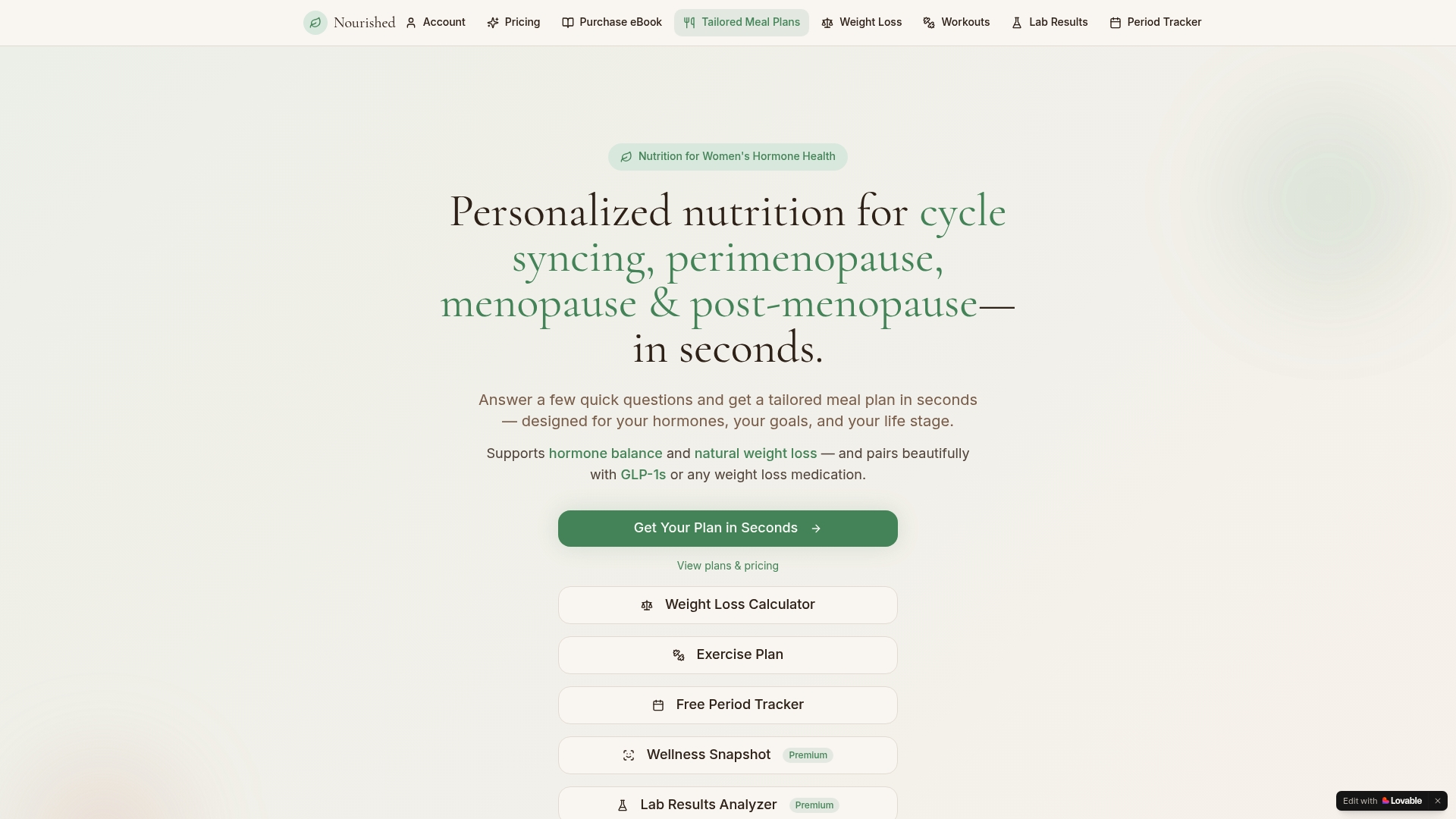
Nourished builds personalized meal plans designed specifically for women in perimenopause, with protein and fiber targets built in, no calorie counting required. The platform uses AI to adapt your plan based on your hormonal needs and preferences, so you are not following a generic template. You can also use the free cycle tracker to monitor hormonal shifts and align your nutrition with what your body needs at each stage. If you are ready to stop guessing and start eating in a way that actually supports your metabolism, explore Nourished and get your personalized plan today.
FAQ
What is the best diet to manage perimenopause weight gain?
A diet high in protein (1.2–1.6 g/kg body weight daily), fiber (25–35 grams daily), and balanced meals pairing carbohydrates with protein and healthy fats is the most effective approach. This combination preserves muscle, stabilizes blood sugar, and supports hormonal balance.
Why does perimenopause cause belly fat even without eating more?
Declining estrogen reduces insulin sensitivity and shifts fat storage to the abdomen. Elevated cortisol from sleep disruption and muscle loss from sarcopenia further accelerate visceral fat accumulation, independent of calorie intake.
How does cortisol affect perimenopause weight gain?
Chronically elevated cortisol, driven by poor sleep and stress, directly promotes visceral fat storage. Managing sleep quality and stress levels is a necessary part of any perimenopause weight management plan, not optional.
Should I count calories during perimenopause?
A modest deficit of 250–500 calories per day can support fat loss, but strict calorie counting is less effective than tracking protein and fiber intake. Deficits over 750 calories accelerate muscle loss and worsen metabolic health.
Does resistance training help with perimenopause weight management?
Resistance training 2–4 times weekly is one of the most effective tools for perimenopause weight management. It preserves muscle mass, elevates resting metabolic rate, and improves insulin sensitivity, all of which directly counter the metabolic effects of estrogen decline.