
Phytoestrogen Foods Perimenopause Guide: Dietary Choices That Work
Nourished · July 25, 2026
Phytoestrogen Foods Perimenopause Guide: Dietary Choices That Work
Phytoestrogens are plant compounds with structures close enough to estrogen that they bind to estrogen receptors in the body, producing mild estrogenic effects. For women in perimenopause, that mild activity matters. As your own estrogen levels fluctuate and eventually decline, these food-derived compounds can help soften the transition. The three main classes are isoflavones (found in soy, lentils, and legumes), lignans (concentrated in flaxseed, cereal grains, and vegetables), and coumestans (present in red clover, sunflower seeds, and bean sprouts). They act as selective estrogen receptor modulators, meaning they can either stimulate or block estrogen receptors depending on the tissue and the hormonal environment. That selectivity is what makes them genuinely useful rather than just theoretically interesting.
Key perimenopausal symptoms where phytoestrogens show real dietary impact:
- Hot flashes and night sweats: Soy isoflavones and flaxseed lignans are the most studied, with measurable reductions in frequency and intensity
- Vaginal dryness: Soy isoflavones showed improvement in vaginal symptoms in a systematic review of 17 trials
- Bone density: A systematic review of 23 randomized controlled trials concluded phytoestrogens likely benefit bone health in menopausal women
- Mood and cognitive function: Soy isoflavone supplementation at 60–120 mg per day showed a positive effect on cognitive function and visual memory
- Metabolic health: Higher phytoestrogen intake is associated with lower prevalence of metabolic syndrome
One honest caveat: phytoestrogens are not a substitute for hormone therapy when symptoms are severe. Their estrogenic activity is weaker than human estrogen, and results vary considerably from person to person. Think of them as a meaningful dietary layer within a broader approach to perimenopausal health, not a standalone fix.
Table of Contents
- Which foods give you the most phytoestrogens for perimenopause?
- How to build phytoestrogen foods into your daily meals
- What does the science actually say about phytoestrogens and perimenopause?
- Benefits and limitations worth knowing before you start
- Nourished builds your phytoestrogen plan around your hormonal phase
- Key Takeaways
Which foods give you the most phytoestrogens for perimenopause?
The phytoestrogen content of foods varies widely, and the type of phytoestrogen matters as much as the amount. Soy products dominate the isoflavone category, while flaxseed leads for lignans. Legumes, seeds, and certain vegetables round out a practical phytoestrogen food sources list for daily eating.

Women in Asian cultures consuming 50–200 mg of isoflavones daily report far lower rates of hot flashes than American women, whose typical diets contain only 3–5 mg daily. A moderate daily intake of isoflavones from food sources may be helpful for perimenopausal women.
| Food | Phytoestrogen type | Approximate serving | Notes |
|---|---|---|---|
| Soybeans / edamame | Isoflavones | ½ cup cooked | Among the highest isoflavone sources; less processed = more active compounds |
| Tofu | Isoflavones | 3 oz | Firm tofu retains more isoflavones than silken |
| Tempeh | Isoflavones | 3 oz | Fermented; higher bioavailability and adds vitamin K2 |
| Miso | Isoflavones | 1 tbsp | Fermented; use in soups, dressings, marinades |
| Ground flaxseed | Lignans | 2 tbsp | Must be ground, not whole, for absorption |
| Sesame seeds | Lignans | 2 tbsp | Also found in tahini; versatile in cooking |
| Chickpeas | Isoflavones / lignans | ½ cup cooked | Practical everyday legume with fiber benefits |
| Peanuts | Isoflavones | 1 oz | Modest content; pairs well with other sources |
| Lentils | Isoflavones | ½ cup cooked | Easy to batch cook; good protein source |
| Broccoli / cabbage | Lignans / coumestans | 1 cup | Also supports estrogen clearance |
| Dried prunes / peaches | Lignans | ¼ cup | Convenient snack; also supports bone health |
| Sunflower seeds | Coumestans | 2 tbsp | Coumestan source; good in salads and trail mix |
| Oats / rye / barley | Lignans | ½ cup cooked | Whole grains contribute meaningfully to daily lignan intake |
A few preparation points worth knowing:
- Ground flaxseed beats whole: Whole flaxseeds pass through the digestive tract largely intact. Grinding them unlocks the lignans for absorption. Flaxseed oil contains no lignans at all.
- Fermented soy wins on bioavailability: Tempeh and miso deliver isoflavones in a form the gut absorbs more readily than unfermented tofu or soy milk, and they add beneficial compounds like vitamin K2 that support bone and cardiovascular health.
- Less processing, more isoflavones: Edamame and whole soybeans retain more active isoflavone content than heavily processed soy products like soy protein isolate.
How to build phytoestrogen foods into your daily meals
The practical challenge is not finding these foods. It is eating them consistently enough to matter. A daily intake of 50–100 mg of isoflavones requires deliberate planning, not just occasional tofu.
Start gradually. Soy and legumes can cause bloating and gas when introduced quickly, especially if your current diet is low in fiber. Add one new source per week and let your gut microbiome adjust. That microbiome matters more than most people realize: it is what converts certain isoflavones into their active metabolites, and a healthier gut means better phytoestrogen metabolism overall.
Practical meal ideas that make the daily target achievable:
- Breakfast: Stir 2 tablespoons of ground flaxseed into oatmeal or a smoothie. Add a handful of edamame to a grain bowl.
- Lunch: Use chickpeas or lentils as the protein base in salads or wraps. A miso-tahini dressing covers both isoflavones and lignans in one go.
- Dinner: Tempeh stir-fry with broccoli and sesame seeds. Tofu scramble with cabbage and rye toast.
- Snacks: A small handful of peanuts or sunflower seeds. Dried prunes with a few almonds.
Pairing phytoestrogen foods with fiber-rich vegetables and fermented foods like yogurt or kimchi supports the gut bacteria that metabolize phytoestrogens into their most active forms. If you are in early perimenopause, when estrogen levels can still run high, lean more on cruciferous vegetables like broccoli and cabbage, which help clear excess estrogen. As perimenopause progresses and estrogen declines, shift toward higher isoflavone foods like tempeh and edamame to compensate. This phase-specific approach reflects how dietary needs shift across the perimenopausal transition.
Pro Tip: Adaptogenic botanicals like Shatavari and Sage can complement phytoestrogen foods for symptom management. Clinical studies suggest 8 weeks of Shatavari may improve sleep and mood, while Sage helps modulate neurotransmitters involved in night sweats and anxiety. Pairing these with a phytoestrogen-rich diet gives you a multi-layered approach. Stress reduction practices like mindfulness also support hormonal balance; a step-by-step mindfulness guide can help you build that habit alongside dietary changes.

Protein intake during perimenopause deserves equal attention alongside phytoestrogens. Muscle mass declines with estrogen, and adequate protein supports both metabolism and hormone production. The role of protein in perimenopause is worth reading alongside any phytoestrogen dietary plan.
What does the science actually say about phytoestrogens and perimenopause?
The evidence is real, but it comes with important nuance. Soy isoflavones consistently reduce hot flash frequency by about 20–25% compared to placebo across multiple meta-analyses. That is a meaningful reduction for many women, though it falls well short of what hormone therapy delivers. Flaxseed lignans modulate estrogen metabolism systemically and provide anti-inflammatory support, and in a study of 30 women, eating 2 tablespoons of ground flaxseed twice daily cut the total number of hot flashes in half after six weeks, with intensity also decreasing.

The North American Menopause Society (NAMS) reviewed the evidence and concluded that soy-based isoflavones are modestly effective for menopausal symptom relief and safe, including for breast cancer survivors. That safety reassurance matters because women with estrogen-sensitive conditions were historically advised to avoid soy. Current population data suggests dietary soy is actually protective against breast and uterine cancers, though women with a history of these cancers should still discuss soy intake with their oncologist.
One of the most clinically significant variables is equol production. Equol is a potent metabolite that the gut produces from the soy isoflavone daidzein. Women who produce equol gain considerably more symptom relief from soy foods than those who do not. Roughly 30–50% of Western women produce equol, compared to a higher proportion in Asian populations, which partly explains why soy’s effects are more pronounced in Asian dietary studies. Equol production depends on gut microbiome composition, which is one more reason that gut health is not a side topic in perimenopause nutrition. It is central to how well phytoestrogens actually work for you.
Phytoestrogen supplementation results are notably inconsistent. A Cochrane review found placebo effects ranging from 1% to 59% in phytoestrogen trials, underscoring why whole-food sources are preferred. Whole foods deliver fiber and nutritional synergy that isolated supplements cannot replicate, and they carry a lower risk of side effects.
Benefits and limitations worth knowing before you start
Phytoestrogens offer a real set of benefits for perimenopausal women, but they work best when you go in with accurate expectations.
What they genuinely offer:
- Mild hormone modulation through selective estrogen receptor activity, which can soften the hormonal swings of perimenopause
- Reduced hot flash frequency and intensity, particularly from soy isoflavones and ground flaxseed
- Bone health support, backed by a systematic review of 23 randomized controlled trials
- Metabolic benefits: a study of 5,426 participants linked higher phytoestrogen-rich food intake to lower prevalence of metabolic syndrome
- Improved vaginal health and, at higher doses, cognitive function
Where they fall short or require care:
- Individual response varies widely, largely because of equol production differences tied to gut microbiome composition
- Effects are smaller than hormone therapy, and women with severe symptoms may need additional support
- Soy can interfere with thyroid medication absorption. If you take levothyroxine, space soy consumption at least four hours away from your dose.
- Early perimenopause, when estrogen can still be elevated, calls for a different dietary emphasis than late perimenopause. Eating large amounts of phytoestrogens during an estrogen-dominant phase may not be appropriate for everyone.
- Supplements are less reliable than whole foods. The wide placebo variability in supplement trials reinforces that food-first is the better approach.
Phytoestrogens work best as one layer of a broader strategy. Combining them with adequate protein, gut-supporting fiber, stress management, and regular exercise gives you a genuinely multi-domain approach to perimenopausal health. Hormonal weight changes during this transition are also worth understanding alongside dietary shifts; the connection between hormones and weight adds useful context for how food choices interact with body composition during perimenopause.
Nourished builds your phytoestrogen plan around your hormonal phase
Knowing which foods to eat is one thing. Knowing how much, when, and in what combination for your specific hormonal phase is where most women get stuck. Nourished offers personalized meal plans built specifically for perimenopausal women, with nutrition adapted to your cycle stage, symptom profile, and individual preferences.
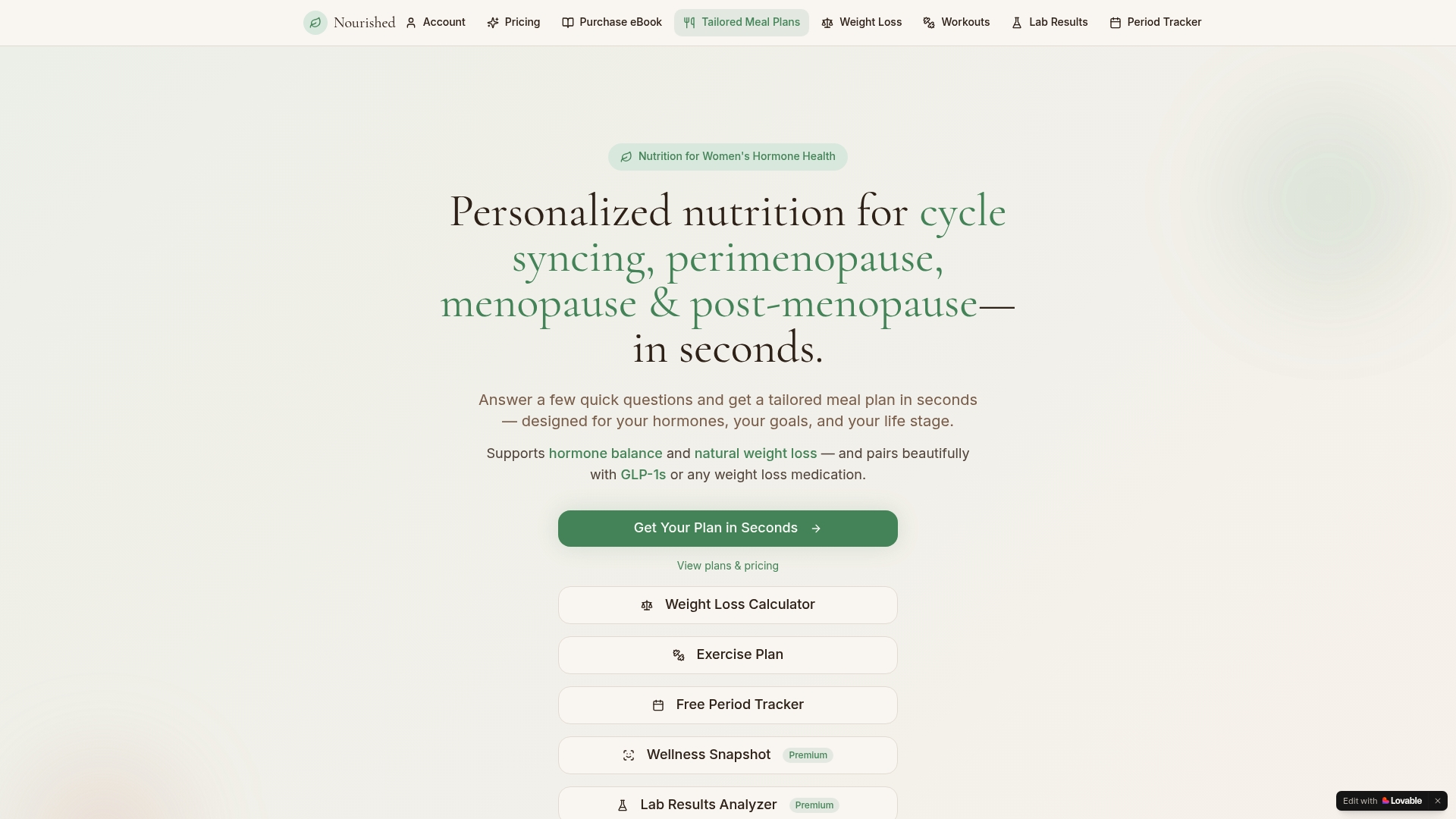
Unlike generic healthy eating plans, Nourished uses AI to generate meal plans that account for your hormonal needs without calorie counting or restrictive dieting. If you are in early perimenopause, your plan emphasizes estrogen-clearing foods alongside phytoestrogens. If you are further along, it shifts toward higher isoflavone and lignan sources to compensate for declining estrogen. You also get tailored workout recommendations and access to the science behind every dietary choice, including the research references that inform each recommendation.
Getting started takes minutes. Visit Nourished to generate your personalized perimenopause nutrition plan today.
Key Takeaways
Phytoestrogen-rich foods provide measurable, food-based hormonal support during perimenopause, with soy isoflavones and ground flaxseed showing the strongest clinical evidence for reducing hot flashes and supporting bone health.
| Point | Details |
|---|---|
| Target isoflavone intake | Aim for 50–100 mg of isoflavones daily from whole food sources like tempeh, edamame, and tofu. |
| Ground flaxseed for hot flashes | Two tablespoons of ground flaxseed twice daily cut hot flash count in half after six weeks in a clinical study. |
| Equol production variability | Roughly 30–50% of Western women produce equol, the metabolite that drives soy’s strongest symptom-relief effects. |
| Phase-specific eating | Early perimenopause favors cruciferous vegetables; late perimenopause benefits more from higher isoflavone foods. |
| Nourished for personalized plans | Nourished adapts meal plans to your hormonal phase, removing the guesswork from phytoestrogen-focused perimenopause nutrition. |