
Post-Menopause Metabolic Rate Explained for Women
Nourished · July 15, 2026
Post-Menopause Metabolic Rate Explained for Women
Post-menopause metabolic rate is defined as the number of calories your body burns at rest and during activity after your final menstrual period, and it drops measurably due to estrogen loss. That decline is not a personal failure or a broken metabolism. It is a direct physiological response to hormonal change. Resting metabolic rate decreases by about 10% after menopause, which translates to 150–200 fewer calories burned each day without any change in lifestyle. Understanding why this happens is the first step toward managing it effectively.
How does menopause affect resting metabolic rate and energy expenditure?
Estrogen plays a central role in maintaining muscle mass, regulating fat storage, and supporting the body’s baseline energy use. When estrogen levels drop after menopause, muscle tissue breaks down faster. Less muscle means a lower resting metabolic rate (RMR), which is the clinical term for calories burned at rest.
The numbers are significant. A 10% RMR decrease equals roughly 50,000 fewer calories burned per year. That is the caloric equivalent of about 13 pounds of fat annually, even when eating and moving exactly as before. This is why postmenopausal women often gain weight without changing their habits.

The impact extends beyond rest. Postmenopausal women burn 19% less energy during exercise and show a 33% reduction in fat oxidation compared to younger women. Fat oxidation is the body’s ability to use stored fat as fuel. A 33% drop means exercise is less effective at burning fat, even when the effort feels the same.
Key mechanisms driving these changes include:
- Sarcopenia acceleration. Muscle loss speeds up after menopause due to estrogen withdrawal, directly lowering RMR.
- Reduced mitochondrial efficiency. Estrogen supports mitochondrial function. Its absence reduces the energy output of individual muscle cells.
- Altered hunger hormones. Leptin and ghrelin regulation shifts after menopause, making appetite harder to read accurately.
- Lower non-exercise activity. Fatigue and joint discomfort common in postmenopause reduce spontaneous movement, cutting total daily energy expenditure further.
Standard calorie calculators make this worse. Research shows these tools overestimate resting energy expenditure in midlife women by about 215 calories daily. Relying on them leads to eating more than your body actually needs.
What changes occur in body composition and fat distribution after menopause?
Fat does not just increase after menopause. It moves. Estrogen decline causes fat to shift from subcutaneous deposits at the hips and thighs to visceral fat stored deep in the abdomen. This redistribution matters more than the number on the scale.
Visceral fat is metabolically active in a harmful way. It secretes inflammatory proteins called cytokines, which increase inflammation and impair insulin sensitivity independent of total body weight. A woman can be at a “normal” weight and still carry dangerous levels of visceral fat after menopause.

The hormonal mechanism is direct. Estrogen deficiency worsens insulin sensitivity, elevates blood glucose and insulin levels, and pushes the body to store more fat in visceral depots. This creates a cycle where fat gain worsens insulin resistance, which drives more fat storage.
The health consequences of this shift include:
- Higher cardiovascular risk. Visceral fat raises LDL cholesterol and triglycerides while lowering HDL, a pattern directly linked to heart disease.
- Increased metabolic syndrome likelihood. The combination of abdominal fat, elevated blood sugar, and poor lipid profiles meets the criteria for metabolic syndrome.
- Chronic low-grade inflammation. Visceral fat continuously releases cytokines that stress the cardiovascular and immune systems.
- Greater diabetes risk. Impaired insulin sensitivity from visceral fat is a primary driver of type 2 diabetes development.
The takeaway is clear. Managing postmenopausal metabolic health means targeting visceral fat specifically, not just total body weight. Understanding hormonal weight changes helps explain why the scale alone is a poor measure of metabolic health.
How can nutrition and protein intake support metabolism post-menopause?
Protein is the most powerful nutritional lever for postmenopausal metabolic health. The standard recommendation of 0.8 g of protein per kilogram of body weight is insufficient after menopause. Research supports increasing intake to 1.2–1.6 g/kg daily, and up to 2.0 g/kg for women who train with weights. For a 150-pound woman, that means 82–108 grams of protein per day, rising to 136 grams for active women.
The reason for this increase is anabolic resistance. After menopause, muscle tissue becomes less responsive to the protein signal that triggers repair and growth. The body needs more protein to achieve the same muscle-building effect it had at a younger age.
How you distribute protein across the day matters as much as the total amount. The “leucine trigger” concept explains this well. Leucine per meal is the key signal for muscle protein synthesis. Eating 2–3 grams of leucine per meal, spread across 30–40 grams of total protein, activates muscle repair more effectively than eating the same total protein in one or two large meals. Chicken breast, eggs, Greek yogurt, and legumes all provide meaningful leucine.
Pro Tip: Spread protein across three meals rather than saving it for dinner. Unequal distribution reduces muscle-building efficiency even when daily totals are adequate.
Four additional nutritional priorities for postmenopausal metabolic health:
- Prioritize anti-inflammatory foods. Fatty fish, berries, leafy greens, and olive oil reduce the cytokine output of visceral fat and support insulin sensitivity.
- Maintain vitamin D levels. Vitamin D supports muscle function and insulin signaling. Deficiency is common after menopause and worsens metabolic outcomes.
- Limit alcohol. Alcohol disrupts sleep quality, raises cortisol, and impairs liver metabolism of estrogen metabolites. Even moderate intake affects body composition.
- Avoid ultra-processed foods. These spike blood glucose rapidly, worsening the insulin sensitivity already compromised by estrogen loss.
Nutrition after menopause is not about eating less. It is about eating differently. Calorie restriction alone triggers cortisol elevation and accelerates muscle loss, making metabolic decline worse. The goal is to support muscle, reduce inflammation, and stabilize blood sugar. For practical guidance on protein in perimenopause, the same principles apply and scale directly into postmenopause.
What role does exercise play in managing metabolic health after menopause?
Resistance training is the single most effective exercise strategy for postmenopausal metabolic health. Lifting weights 2–3 times per week preserves and builds muscle mass, which directly raises RMR. Every pound of muscle added burns additional calories at rest, countering the metabolic decline driven by sarcopenia.
Aerobic exercise remains valuable but requires realistic expectations. Because fat oxidation drops by 33% after menopause, cardio sessions burn fewer calories from fat than they did before. Aerobic work still supports cardiovascular health, mood, and insulin sensitivity. It just cannot carry the full metabolic load alone.
Key exercise principles for postmenopausal women:
- Time protein intake around workouts. Consuming 30–40 grams of protein within two hours of resistance training maximizes muscle protein synthesis when the muscle is most receptive.
- Avoid excessive cardio without adequate protein. Long cardio sessions in a caloric deficit spike cortisol and accelerate muscle breakdown, worsening the metabolic picture.
- Include compound movements. Squats, deadlifts, rows, and presses recruit large muscle groups and produce a stronger metabolic stimulus than isolation exercises.
- Progress gradually. Starting with two resistance sessions per week and adding a third over 4–6 weeks reduces injury risk and builds consistency.
Pro Tip: If standard calorie calculators guide your intake, they likely overestimate your needs by around 215 calories daily. Consider RMR testing with a device like BodyGem® for a personalized baseline instead of relying on generic equations.
Restrictive dieting combined with excessive cardio is the most common mistake postmenopausal women make. Restrictive dieting spikes cortisol and accelerates muscle wasting, creating a cycle that lowers RMR further. The better approach pairs adequate protein with progressive resistance training and moderate aerobic activity.
How do metabolic changes post-menopause affect long-term health risks?
The metabolic shifts of postmenopause extend well beyond weight. More than half of menopause-related metabolic changes are lipid-related, connecting metabolic decline directly to cardiovascular disease risk. LDL cholesterol rises, HDL falls, and triglycerides increase as estrogen withdraws its protective effect on lipid metabolism.
Visceral fat amplifies these risks. It secretes cytokines that worsen metabolic health and increase disease risk beyond what body weight alone predicts. Inflammation from visceral fat impairs insulin signaling, raising the risk of type 2 diabetes even in women who are not clinically overweight.
Hormone therapy addresses several of these mechanisms directly. Hormone therapy improves insulin sensitivity, reduces visceral fat accumulation, supports muscle protein synthesis, and lowers inflammation. Combined with resistance training and adequate protein, it produces measurably better metabolic outcomes. Women considering hormone therapy should discuss individual cardiovascular and breast health history with their physician.
| Health risk | Metabolic driver | Primary intervention |
|---|---|---|
| Cardiovascular disease | Lipid changes, visceral fat | Resistance training, anti-inflammatory diet |
| Type 2 diabetes | Insulin resistance, visceral fat | Protein distribution, reduced ultra-processed foods |
| Metabolic syndrome | Abdominal fat, blood glucose elevation | Resistance training, hormone therapy discussion |
| Osteoporosis | Muscle loss, reduced mechanical loading | Weight-bearing exercise, adequate protein and vitamin D |
The interconnection is the key point. Metabolic health after menopause is not a single issue. It is a system where muscle mass, fat distribution, insulin sensitivity, and lipid metabolism all influence each other. Addressing one without the others produces limited results.
Key Takeaways
Post-menopause metabolic rate declines primarily because estrogen loss accelerates muscle loss and shifts fat to visceral depots, requiring targeted nutrition and resistance training to counteract effectively.
| Point | Details |
|---|---|
| RMR drops measurably | Resting metabolic rate falls about 10%, burning 150–200 fewer calories daily without lifestyle changes. |
| Visceral fat is the real risk | Fat shifts from hips to abdomen after menopause, raising inflammation, insulin resistance, and cardiovascular risk. |
| Protein needs increase | Aim for 1.2–1.6 g/kg daily, spread across meals with 2–3 g leucine per meal to support muscle synthesis. |
| Resistance training is non-negotiable | Lifting weights 2–3 times weekly is the most effective way to preserve muscle and raise RMR post-menopause. |
| Standard calculators mislead | Generic calorie tools overestimate needs by about 215 calories daily; personalized RMR testing gives a more accurate baseline. |
What I’ve learned from working with postmenopausal women on metabolism
The most damaging belief I encounter is that a slower metabolism after menopause means something is broken. It does not. The metabolic changes are real, measurable, and physiologically predictable. But they are not a sentence to permanent weight gain.
What frustrates me is how often women respond to these changes with harder restriction and more cardio. That combination is exactly wrong. Cutting calories aggressively while doing long cardio sessions raises cortisol, breaks down muscle, and lowers RMR further. The body interprets severe restriction as a threat and protects fat stores while burning muscle. The result is a smaller, weaker body that burns even fewer calories than before.
The shift that actually works is counterintuitive. Eat more protein, not less food overall. Lift weights, not just walk on the treadmill. Get RMR tested with a device like BodyGem® rather than trusting a calculator that overestimates your needs by 215 calories a day. These are not dramatic changes. They are precise ones.
Hormone therapy is also worth an honest conversation with your doctor. The evidence that it supports insulin sensitivity, reduces visceral fat, and preserves muscle is real. It is not right for everyone, but dismissing it without a personalized assessment is a missed opportunity for many women.
The postmenopausal years can be metabolically stable. They require a different strategy than your 30s or 40s, but not a harder one. Knowledge of what is actually happening in your body is the foundation. Everything else builds from there.
— Brittany
Nourished and postmenopausal metabolic health
Postmenopausal metabolic changes are real, but they are manageable with the right nutritional framework. Nourished builds personalized meal plans specifically for women navigating hormone-related metabolic shifts, with protein targets calibrated to your body weight and activity level, not generic population averages.
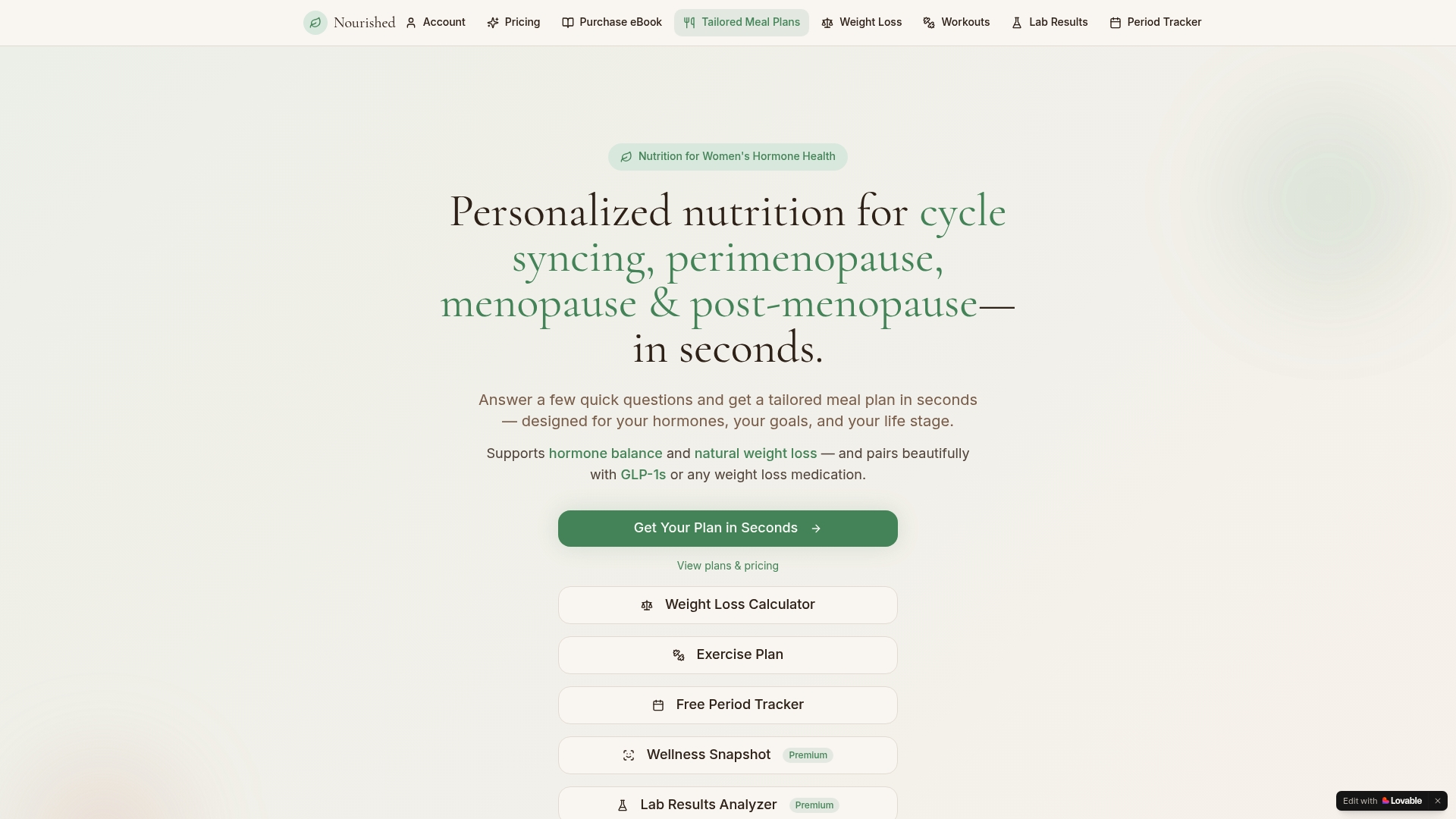
Every plan from Nourished prioritizes anti-inflammatory foods, adequate leucine distribution across meals, and meal timing that supports muscle protein synthesis. There is no calorie counting and no restrictive dieting. The platform uses AI to adapt your plan to your hormonal stage, so your nutrition works with your biology rather than against it. If you want to see exactly how it works, the step-by-step tutorial walks through the full personalization process.
FAQ
What is resting metabolic rate and why does it drop after menopause?
Resting metabolic rate (RMR) is the number of calories your body burns at rest to maintain basic functions. After menopause, estrogen loss accelerates muscle loss, and less muscle means fewer calories burned, reducing RMR by about 10%.
Why do postmenopausal women gain weight without eating more?
A 10% drop in RMR equals roughly 150–200 fewer calories burned daily. Over a year, that deficit accumulates to the caloric equivalent of about 13 pounds of fat, even with no change in diet or activity.
How much protein do postmenopausal women actually need?
Research supports 1.2–1.6 g of protein per kilogram of body weight daily, rising to 2.0 g/kg for women who do resistance training. This is significantly higher than the standard 0.8 g/kg recommendation.
Does exercise still work for weight management after menopause?
Yes, but the approach matters. Postmenopausal women burn 19% less energy during exercise and oxidize 33% less fat. Resistance training 2–3 times weekly is more effective than cardio alone for raising metabolic rate and managing body composition.
Is visceral fat more dangerous than general weight gain after menopause?
Visceral fat is metabolically active and secretes inflammatory cytokines that impair insulin sensitivity and raise cardiovascular risk, independent of total body weight. Managing abdominal fat is a more meaningful health target than scale weight alone.