Reduce PCOS Bloating With Food: What Actually Works
Nourished · August 8, 2026
Reduce PCOS Bloating With Food: What Actually Works
Pairing protein with fiber at every meal is the single most reliable food-first step to reduce PCOS bloating. It stabilizes blood sugar, which curbs the insulin spikes that drive water retention and slow gut transit — two of the biggest physical reasons you feel distended after eating. You can start today.
Quick wins to try in the next 24–72 hours:
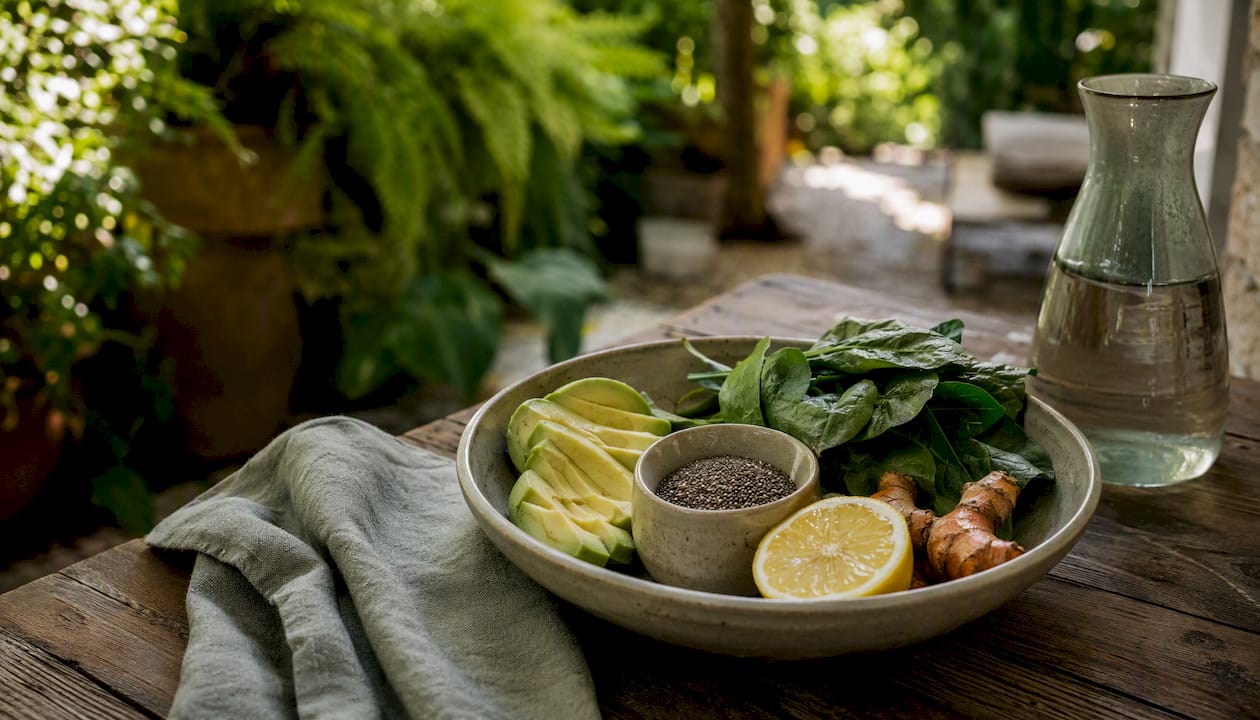
- Swap your morning toast for two scrambled eggs with a handful of spinach and half an avocado
- Replace afternoon crackers with a small portion of Greek yogurt topped with berries (no added sugar)
- After your next meal, take a 10–15 minute walk instead of sitting down immediately
- Cut carbonated drinks for 48 hours and replace them with still water or herbal tea
- Skip the protein bar with 20+ grams of added sugar; try a high-protein snack with minimal ingredients instead
These are not permanent rules. They are a fast feedback loop. Many women notice a measurable difference in abdominal comfort within a few days of consistent changes.
Table of Contents
- Why does PCOS cause bloating in the first place?
- What foods actually help reduce PCOS bloating?
- Which foods and drinks make PCOS bloating worse?
- How should you eat to make these food changes actually work?
- When should bloating prompt a call to your doctor?
- Key Takeaways
- What most PCOS bloating advice gets wrong
- Useful sources
Why does PCOS cause bloating in the first place?
PCOS bloating is not just “feeling full.” It has specific physiological drivers, and understanding them makes the dietary fixes make sense.
Insulin resistance is the most common culprit. When cells resist insulin’s signal, the pancreas pumps out more of it. Elevated insulin tells the kidneys to hold onto sodium, which pulls water into tissues — including the abdomen. Mass General Brigham’s clinical guidance points directly to blood sugar stabilization as the central dietary lever for managing PCOS symptoms, including this water-retention effect.
Androgens also play a role. Higher-than-typical testosterone levels in PCOS can slow gut motility, meaning food moves through the digestive tract more slowly. Slower transit means more fermentation, more gas, and more time for the gut to feel stretched.
Then there is the gut microbiome. Research consistently shows that women with PCOS tend to have less microbial diversity than women without it. That imbalance can increase intestinal permeability and gas production, which compounds the bloating from insulin and androgen effects. There is also a well-documented overlap between PCOS and IBS: Medical News Today notes that women with PCOS are more likely to experience gut sensitivity, and some may have undiagnosed SIBO driving symptoms.
Medications matter too. Metformin, a commonly prescribed drug for insulin-resistant PCOS, often causes gastrointestinal side effects including bloating, gas, and loose stools, especially in the first weeks of use. If your bloating started or worsened after beginning a new medication, that connection is worth raising with your prescriber.
Timeline to expect: Many women notice reduced bloating within 48–72 hours of cutting refined carbs and carbonated drinks. More consistent, lasting relief from gut motility and microbiome changes typically takes 2–4 weeks of sustained dietary changes.
PCOSAA’s patient resources confirm that bloating is one of the most commonly reported symptoms among women with PCOS, and that dietary triggers vary significantly from person to person.
What foods actually help reduce PCOS bloating?
The most helpful food categories are protein, soluble fiber, fermented foods, and healthy fats. Together, they stabilize blood sugar, feed beneficial gut bacteria, and support gut motility without triggering excess gas.
Protein sources
- Managing PCOS With Diet | Mass General Brigham
- PCOS Nutrition Services | Women’s Health at Stony Brook Medicine
- PCOS and bloating: Causes and treatment | Medical News Today
- PCOS diet | Johns Hopkins Medicine
- pubmed.ncbi.nlm.nih.gov — 38494583
- ncbi.nlm.nih.gov — PMC10384396
- Abdominal bloating — MedlinePlus
- PCOS and bloating | PCOSAA
- Eating well: Polycystic ovarian syndrome (PCOS) | Brown Health
Soluble fiber sources
- Oats (rolled or steel-cut), psyllium husk
- Carrots, parsnips, sweet potatoes
- Apples (peeled), bananas (slightly underripe), oranges
- Flaxseed (ground)
Fermented foods and probiotics
Strains like Lactobacillus and Bifidobacterium are the most studied for reducing gas production and improving gut barrier function. Practical sources include plain kefir, unsweetened yogurt with live cultures, kimchi, sauerkraut (unpasteurized), and miso. Water kefir is a good dairy-free option.
Healthy fats
- Olive oil (extra-virgin), avocado, avocado oil
- Fatty fish: salmon, sardines, mackerel (two to three servings per week)
- Walnuts, chia seeds, hemp seeds
Stony Brook Medicine’s PCOS nutrition services and a systematic review on diet patterns and PCOS both support Mediterranean-style eating as the most evidence-backed framework for reducing insulin resistance and inflammation, which are the metabolic roots of PCOS bloating.
Three concrete food swaps:
- White rice → quinoa or cauliflower rice (lower glycemic, higher fiber)
- Flavored yogurt → plain Greek yogurt with a teaspoon of honey and berries
- Packaged granola bar → a small handful of walnuts with a hard-boiled egg
Pro Tip: If you suspect IBS or gut sensitivity, introduce fermented foods and high-fiber additions one at a time, in small amounts, over two weeks. Adding too much fiber too fast is one of the most common reasons women feel worse before they feel better.
Which foods and drinks make PCOS bloating worse?
The categories below most consistently worsen bloating in PCOS, either by spiking insulin, feeding gas-producing bacteria, or increasing water retention. The goal is reduction, not elimination.
Refined carbohydrates and added sugars are the highest-priority items to cut back. White bread, pastries, sweetened cereals, and sugary drinks cause rapid insulin spikes, which trigger water retention within hours. Johns Hopkins Medicine’s PCOS diet guidance specifically names sugary beverages, refined carbs, and fried foods as the top dietary contributors to insulin dysregulation in PCOS.
High-FODMAP foods are worth knowing about if your bloating is severe or unpredictable. FODMAPs are fermentable carbohydrates that draw water into the intestine and feed gas-producing bacteria. Common high-FODMAP foods include garlic, onions, wheat, apples (in large amounts), and certain legumes. A structured low-FODMAP elimination diet followed by careful reintroduction can help identify your personal triggers. This is not a permanent diet; it is a diagnostic tool.
Carbonated beverages introduce gas directly into the digestive tract. Even sparkling water can worsen bloating for some women with PCOS, particularly those with slower gut motility.
Excess sodium from processed foods, canned soups, deli meats, and restaurant meals amplifies water retention. Reading labels matters here: a single serving of canned soup can contain more than 800 mg of sodium.
Fried and high-fat processed foods slow gastric emptying, which extends the window for fermentation and gas production.
Quick substitutes:
- Soda → still water with a squeeze of lemon or lime, or unsweetened herbal iced tea
- White bread → whole-grain sourdough or a legume-based wrap
- Packaged chips → rice cakes with almond butter or a small portion of mixed nuts
- Flavored coffee drinks → black coffee or an unsweetened oat milk latte
Pro Tip: Hidden sugars in “healthy” foods are a real trap. Flavored oat milks, protein bars, and low-fat yogurts often contain 12–20 grams of added sugar per serving. Check the ingredients list, not just the front-of-package claim.
How should you eat to make these food changes actually work?
The right foods matter less than you think if the eating pattern undermines them. Structure and timing are where most women leave results on the table.
Start every meal with protein and fiber. This is the single most practical habit for blood sugar stability. Mass General Brigham’s dietary guidance emphasizes pairing these two macronutrients specifically to blunt post-meal glucose spikes and their downstream effects on water retention and gut transit.
Practical meal and habit checklist:
- Eat regularly throughout the day to avoid blood sugar crashes that trigger cortisol and worsen bloating
- Keep meals moderate in size; large meals slow gastric emptying and increase fermentation time
- Take a 10–15 minute walk after lunch or dinner — research published in PMC shows light post-meal activity meaningfully reduces abdominal bloating
- Drink water between meals rather than with meals to avoid diluting digestive enzymes
- Increase fiber gradually to give gut bacteria time to adjust
- Eat slowly and chew thoroughly; swallowed air is a surprisingly significant contributor to bloating
- Brown Health’s PCOS nutrition guidance cautions that intermittent fasting can destabilize blood sugar in insulin-resistant women — steady, spaced meals tend to work better for most
For snacking, low-glycemic options that combine protein and complex carbohydrates keep glucose steady between meals without triggering the insulin response that worsens bloating.
Track your triggers for 2–4 weeks. A simple food and symptom diary, noting what you ate, portion size, and bloating severity 1–2 hours later, is one of the most effective tools for identifying personal triggers. Apps work, but a notes app or paper journal is equally useful. Many women can identify consistent trigger foods within a couple of weeks of honest logging.
When should bloating prompt a call to your doctor?
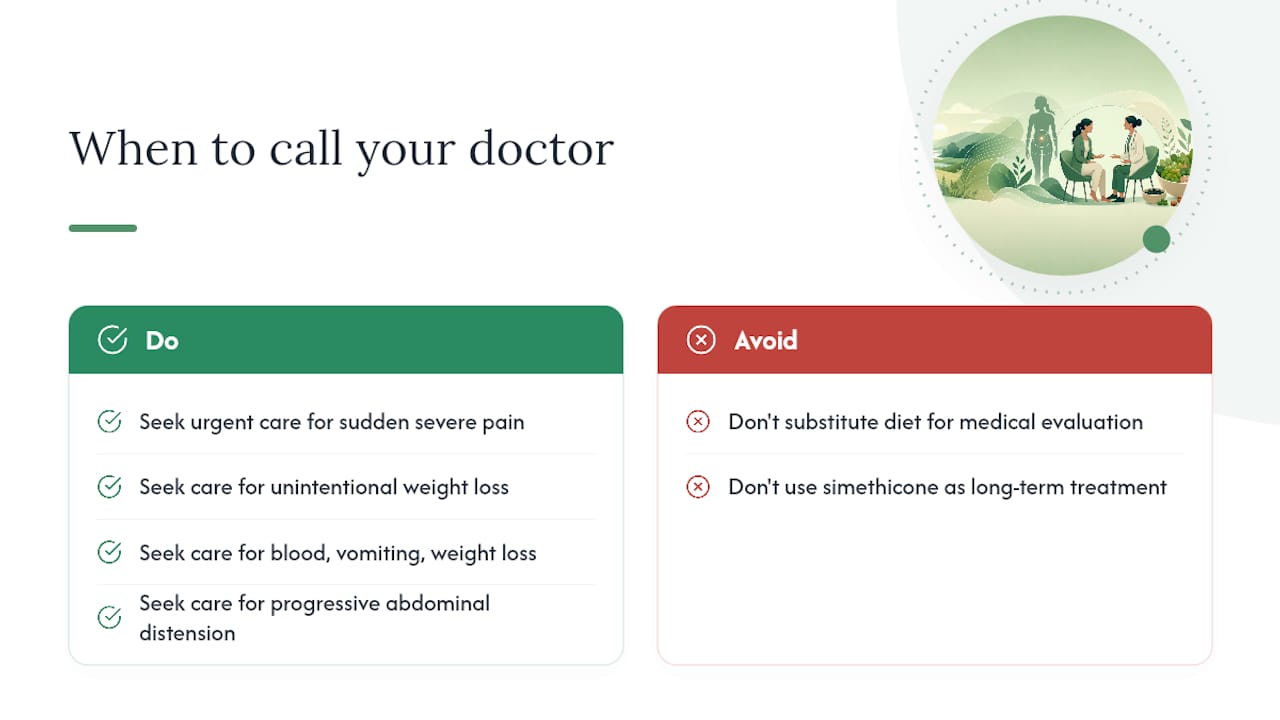
Food-based strategies are appropriate for the typical PCOS-related bloating described above. They are not appropriate as a substitute for medical evaluation when certain signs are present.
Seek prompt medical attention if you experience: sudden, severe abdominal pain; unintentional weight loss; persistent vomiting; blood in your stool; or progressive abdominal distension that does not improve with dietary changes. These symptoms can indicate conditions unrelated to PCOS that require urgent evaluation.
MedlinePlus lists these as red-flag symptoms that warrant clinical assessment rather than dietary self-management.
For persistent bloating that does not respond to four to six weeks of dietary changes, a clinician may evaluate for SIBO (small intestinal bacterial overgrowth), IBS, or medication-related causes. If you are on Metformin, your prescriber can adjust the dose, switch to extended-release formulations, or discuss timing strategies that reduce GI side effects. Imaging or breath testing may be ordered if SIBO is suspected.
Over-the-counter simethicone (Gas-X) can provide short-term relief from gas-related bloating, but it does not address the underlying insulin or gut motility issues driving PCOS-related symptoms. Use it for acute discomfort, not as a long-term strategy.
This article is general information, not medical advice. Confirm current treatment options and any dietary changes for your specific situation with a qualified healthcare provider.
Key Takeaways
Stabilizing blood sugar through protein and fiber pairing at every meal is the most direct food-based strategy to reduce PCOS-related bloating, with meaningful relief possible within 48–72 hours of consistent changes.
| Point | Details |
|---|---|
| Protein + fiber at every meal | Blunts insulin spikes that drive water retention and slow gut transit. |
| Cut refined carbs and added sugars first | These are the fastest dietary triggers of insulin-driven bloating in PCOS. |
| Add fermented foods gradually | Introduce one source at a time to shift gut bacteria without worsening gas. |
| Walk after meals | Even 10–15 minutes of light movement after eating measurably reduces bloating. |
| Nourished for personalized plans | Nourished adapts meal plans to your cycle phase and PCOS symptom pattern for sustained relief. |
What most PCOS bloating advice gets wrong
The standard advice to “eat more fiber and cut sugar” is not wrong. It is just incomplete in a way that frustrates women who follow it and still feel bloated.
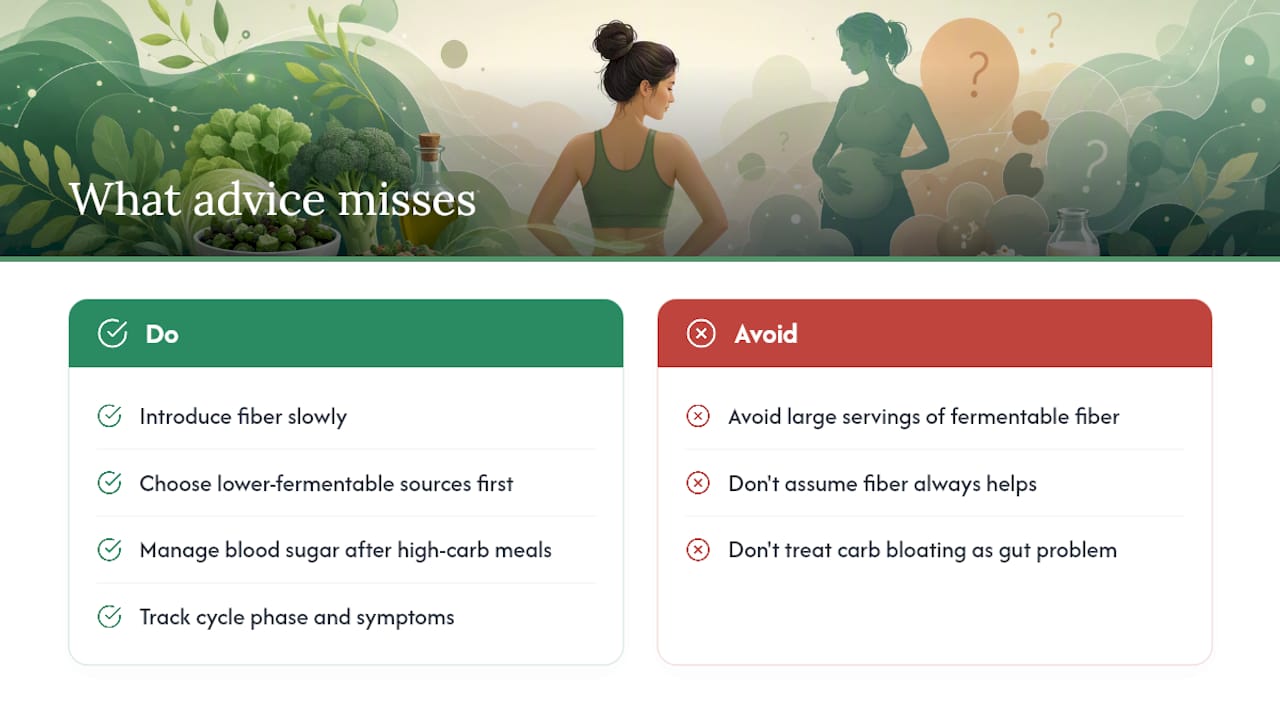
Here is what gets missed: fiber is not universally helpful for PCOS bloating. For women with underlying gut sensitivity or SIBO, adding a large serving of raw vegetables, beans, or psyllium husk can make bloating significantly worse before it gets better. The mechanism is not a mystery. Fermentable fibers feed gut bacteria, and if those bacteria are overgrown or imbalanced, more fiber means more gas, not less. The fix is not to avoid fiber. It is to introduce it slowly, choose lower-fermentable sources first (cooked vegetables over raw, oats over beans), and pay attention to what your body actually responds to.
The second thing most advice misses is the insulin-water retention connection. Women often focus on digestive causes of bloating and overlook that a single high-carbohydrate meal can cause the body to retain enough water to add visible abdominal distension by the next morning. That is not a gut problem. It is a hormonal one, and it responds to blood sugar management, not digestive enzymes or probiotics.
Personalization is not a luxury for PCOS. It is the mechanism. The free cycle tracker from Nourished is a practical starting point for connecting your symptoms to your cycle phase, which is often the missing variable in why bloating spikes at certain times of the month.
Useful sources
A curated list of authoritative resources for women with PCOS who want to go deeper on the evidence behind these dietary strategies.
- Managing PCOS With Diet | Mass General Brigham — Clinical guidance on blood sugar stabilization and protein-fiber pairing for PCOS symptom management.
- PCOS Nutrition Services | Women’s Health at Stony Brook Medicine — Overview of how registered dietitians personalize Mediterranean-style plans for PCOS.
- PCOS and Bloating: Causes and Treatment | Medical News Today — Practical breakdown of PCOS-specific bloating causes and low-FODMAP protocol guidance.
- PCOS Diet | Johns Hopkins Medicine — Expert Q&A on foods to limit and the case for Mediterranean and DASH patterns.
- Diet Patterns and PCOS | PubMed 38494583 — Systematic review supporting whole-diet approaches for insulin resistance and PCOS symptoms.
- Post-Meal Activity and Bloating | PMC10384396 — Research on light movement after meals and its effect on abdominal bloating.
- Abdominal Bloating | MedlinePlus — Patient-facing red-flag symptom guide from the National Library of Medicine.
- PCOS and Bloating | PCOSAA — Patient resource on symptom prevalence and the role of food diaries in identifying triggers.
- Eating Well: PCOS | Brown Health — Clinical nutrition Q&A on meal frequency, intermittent fasting caution, and steady meal patterns for PCOS.
- Research & References | Nourished — The evidence base behind Nourished’s hormone-focused meal planning approach.