
Signs of Estrogen Dominance in Perimenopause
Nourished · August 20, 2026
Signs of Estrogen Dominance in Perimenopause
If your periods have turned heavier or unpredictable, your breasts feel tender before every cycle, and your mood swings harder than it used to, relative estrogen dominance is a reasonable explanation. This means more estrogen effect than progesterone can balance, not necessarily high estrogen on a lab report. It commonly shows up as heavy or irregular bleeding, breast tenderness, bloating, and mood swings that cluster in the second half of your cycle.
Seek care quickly if you’re soaking through a pad or tampon hourly, have sudden severe pelvic pain, or think you might be pregnant. And keep one thing straight: “estrogen dominance” describes a pattern of unopposed estrogen. It isn’t a formal diagnosis code your doctor will write on a chart.
Key Takeaways
Relative estrogen dominance in perimenopause stems from a progesterone shortfall more often than an estrogen excess, and lifestyle changes targeting clearance and ratio balance are the most accessible first step.
| Point | Details |
|---|---|
| Ratio matters more than numbers | Symptoms often persist even with “normal” lab results because progesterone, not estrogen, drops first. |
| Track symptom timing | Second-half-of-cycle symptoms usually point to low progesterone; ovulation-linked symptoms suggest clearance issues. |
| Fiber and alcohol are levers | Higher fiber intake and lower alcohol consumption both support healthier estrogen metabolism. |
| Testing has limits | Single hormone readings fluctuate too much in perimenopause to be conclusive alone; timed or repeat testing helps. |
| Nourished supports the nutrition layer | Personalized, cycle-aware meal plans can implement fiber, alcohol-moderation, and protein strategies alongside your clinician’s care. |
Table of Contents
- Signs of Estrogen Dominance in Perimenopause: The Full Checklist
- What Estrogen Dominance Actually Means, and Where the Term Falls Short
- Why Estrogen Becomes Dominant During Perimenopause
- How Doctors Test for Estrogen Dominance
- Lifestyle Changes That Ease Estrogen Dominance Symptoms
- Medical Options Worth Discussing With Your Clinician
- The Gut-Liver Connection Most Women Never Hear About
- What to Track Before Your Next Appointment
- What I Want Every Woman to Understand About This Transition
- Support Your Hormones With Food, Not Guesswork
- Frequently Asked Questions
- Sources
Signs of Estrogen Dominance in Perimenopause: The Full Checklist
Estrogen dominance symptoms rarely show up alone. They cluster, and where they cluster in your cycle often tells you something useful.
Menstrual and uterine changes tend to be the loudest signal. Watch for periods that soak through protection faster than before, cycles that shorten to 21 to 24 days, clotting, or spotting between periods. Fibroids and endometrial thickening are linked to unopposed estrogen exposure over time, according to clinical literature on estrogen and HRT.
Breast changes show up as tenderness, swelling, or lumpiness that peaks the week before your period and eases once bleeding starts.
Fluid and weight shifts include bloating that makes your rings and waistbands tight, plus new fat storage around the hips and midsection, even without diet changes.

Mood and cognition symptoms often surprise women the most: irritability, anxiety that spikes premenstrually, and brain fog that clears once your period arrives. Estrogen’s influence on neurotransmitters explains why these symptoms track so closely with cycle timing, per Amen Clinics.
Sleep and energy problems, including trouble staying asleep and afternoon crashes, frequently accompany the above.
Headaches that cluster around ovulation or just before your period, and low libido or vaginal dryness, round out the pattern.
Red flags that need same-day attention: bleeding heavy enough to cause dizziness, one-sided leg swelling or sudden vision changes (possible clot signs), and pelvic pain severe enough to stop you mid-task. Some of these symptoms overlap with thyroid dysfunction or low estrogen phases later in perimenopause, so timing and pattern matter more than any single symptom.
What Estrogen Dominance Actually Means, and Where the Term Falls Short
Estrogen dominance describes a ratio problem: more estrogen activity relative to progesterone, whether from higher estrogen, lower progesterone, or both. It’s not a stand-alone diagnosis; it’s a descriptive framework clinicians use to explain a symptom pattern, as outlined by the VA Whole Health Library.
The mechanism usually starts with progesterone. In perimenopause, progesterone often drops years before estrogen does, because ovulation becomes inconsistent. Estrogen itself doesn’t decline in a straight line. It swings, sometimes spiking higher than in your 30s before eventually tapering off, according to Harvard Health.
That’s why a single lab draw can look completely normal while you feel terrible. Estradiol might sit within reference range on the day you’re tested, even though progesterone was too low that cycle to balance it. The ratio, not the absolute number, is what matters. This is exactly why the term is clinically useful for framing symptoms but limited as a diagnostic tool on its own.
Why Estrogen Becomes Dominant During Perimenopause
Several mechanisms can push the estrogen to progesterone ratio out of balance, often at the same time.
- Anovulatory cycles: When you don’t ovulate, your body doesn’t produce the progesterone that a corpus luteum normally makes, leaving estrogen unopposed that month.
- Estrogen swings: Follicles can overshoot estrogen production during erratic cycles, creating temporary surges.
- Increased aromatase activity: Fat tissue converts androgens into estrogen, and higher adiposity or insulin resistance amplifies this, lowering sex-hormone-binding globulin and raising free estrogen, per research on metabolic influences.
- Impaired clearance: A sluggish liver or gut microbiome can recirculate estrogen instead of excreting it.
- Exogenous exposure: Hormonal medications, certain plastics, and environmental xenoestrogens add to your total estrogen load.
- Stress: Chronic cortisol production can divert the same precursor hormones your body would otherwise use to make progesterone.
Pro Tip: Track which week of your cycle symptoms hit hardest. Second-half symptoms usually point to low progesterone; symptoms tied to ovulation suggest true estrogen excess or clearance issues.
How Doctors Test for Estrogen Dominance
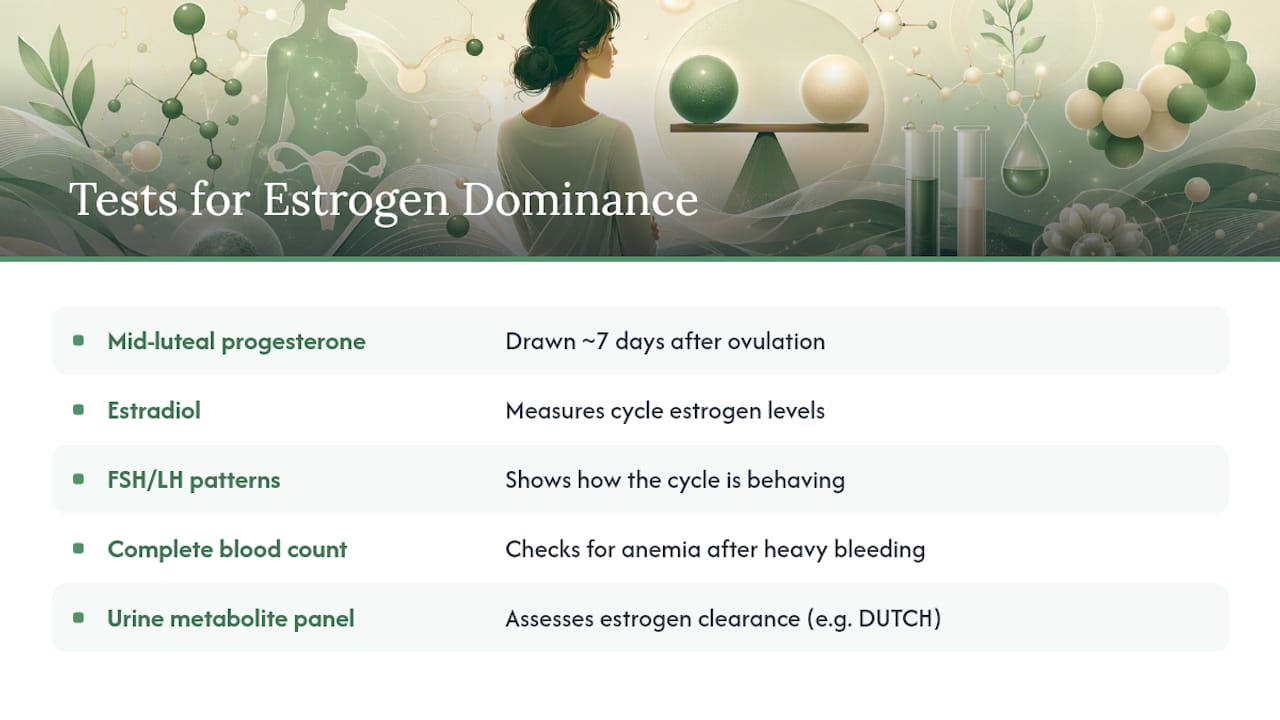
There’s no single blood test that confirms estrogen dominance, which frustrates a lot of patients looking for a clean answer. Clinicians typically order timed mid-luteal progesterone, drawn about seven days after ovulation, alongside estradiol and FSH/LH patterns to see how your cycle is behaving. A complete blood count checks for anemia if bleeding has been heavy. Some practitioners add urine metabolite panels (like DUTCH testing) when they need a fuller picture of how you’re clearing estrogen, per Health Highroad.
The catch: single hormone values fluctuate so much during perimenopause that one test rarely tells the whole story, a point Harvard Health emphasizes when describing the transition’s variability. Sometimes a short, supervised trial of progesterone is more informative than another round of labs. Seek same-day evaluation for prolonged heavy bleeding, symptoms of severe anemia, or any chance of pregnancy.
Lifestyle Changes That Ease Estrogen Dominance Symptoms
Diet is your most direct lever. Fiber binds excess estrogen in the gut for excretion, and diets higher in plant foods correlate with lower circulating estrogen, according to the VA Whole Health Library. Cruciferous vegetables like broccoli and Brussels sprouts support a healthier estrogen metabolism pathway. Alcohol works against you here: it blocks the liver’s ability to detoxify estrogen efficiently, so even modest reduction can help.
- Add one cruciferous vegetable serving daily and a fiber source at two meals.
- Swap plastic food storage for glass to reduce xenoestrogen exposure.
- Add two resistance-training sessions weekly to reduce visceral fat, since fat tissue drives aromatase activity.
- Support gut bacteria with fermented foods or a fiber-rich anti-inflammatory diet to limit estrogen reabsorption.
- Practice paced breathing or a consistent wind-down routine, since cortisol spikes can pull resources away from progesterone production.
Pro Tip: Change one variable at a time. If you overhaul diet, alcohol, exercise, and sleep simultaneously, you’ll never know which change actually moved the needle.
Omega-3s and turmeric show up often in clinical guidance for reducing inflammation tied to estrogen-driven symptoms, but treat them as food-first additions, not substitutes for medical care, and check with your clinician before starting anything new.
Medical Options Worth Discussing With Your Clinician
When lifestyle steps aren’t enough, several medical options directly address the progesterone shortfall. Cyclic or continuous progestogen restores balance and often improves bleeding, breast tenderness, and sleep within one to three cycles. Combined hormonal contraception stabilizes erratic cycles and controls heavy bleeding. The levonorgestrel IUD offers local endometrial protection and dramatically reduces heavy flow for many women. Systemic HRT becomes relevant once hot flashes or night sweats join the picture, per the NCBI chapter on estrogen and HRT.
None of these are one-size-fits-all. Your history of blood clots, breast cancer risk, and age all factor into what’s safe. Abnormal bleeding that doesn’t respond to first-line treatment warrants imaging or an endometrial biopsy, so don’t hesitate to ask for escalation if something feels off.
The Gut-Liver Connection Most Women Never Hear About
Your liver processes estrogen for elimination, but your gut has the final say. An enzyme called beta-glucuronidase, produced by certain gut bacteria, can “unpackage” estrogen your liver already marked for excretion, sending it back into circulation instead of out of your body.
This enterohepatic recirculation means gut health directly affects your estrogen load, independent of what your ovaries are doing. Practical countermeasures: increase fiber to bind estrogen before reabsorption, eat probiotic-rich foods to support a healthier microbiome, and limit alcohol, which stresses liver clearance. If symptoms persist despite these steps, a urine metabolite panel can clarify whether clearance is the issue. Talk to your clinician before adding concentrated probiotic supplements or liver-support botanicals.
What to Track Before Your Next Appointment
Bring data, not just a symptom description. Clinicians move faster with specifics.
- Log bleeding heaviness, duration, and cycle length for two to three months.
- Note when symptoms hit relative to ovulation and your period.
- Track weight, bloating, sleep quality, and mood daily or weekly.
- List medications, supplements, and any hormonal exposures.
Ask your clinician: which tests matter right now, whether a progesterone trial makes sense, and what nonhormonal options exist for your bleeding pattern.
What I Want Every Woman to Understand About This Transition
Perimenopause trajectories vary enormously. Two women with identical symptoms can have completely different underlying drivers, which is exactly why self-diagnosis from a symptom list only gets you partway there. What frustrates me most is how often women are told their labs are “normal” and sent home, when the ratio between hormones, not the raw numbers, is what’s actually driving how they feel. Track your patterns. Bring them to a clinician who will listen. You deserve an answer, not a shrug.
Support Your Hormones With Food, Not Guesswork
Nourished builds cycle-aware meal plans that adjust automatically as your hormones shift through perimenopause, so you’re not stuck reading ingredient labels trying to figure out what fights bloating this week versus what helped last week.
A typical plan might front-load fiber and cruciferous vegetables during your luteal phase, moderate alcohol suggestions around your most symptomatic days, and pair protein targets with resistance-training guidance to support the body-composition shifts covered above. None of this replaces your clinician’s evaluation of bleeding patterns or medical treatment options. It’s the daily nutrition layer that makes those medical decisions easier to support. If you want a personalized, hormone-aware meal plan built around exactly the mechanisms discussed here, from fiber targets to alcohol moderation strategies, you can generate one in minutes and see how the recommendations adjust as your cycle changes.
Frequently Asked Questions
What are the earliest signs of estrogen dominance in perimenopause? Heavier or shorter cycles, breast tenderness before your period, and premenstrual mood swings tend to appear first, often years before other perimenopause symptoms show up.
Can you have estrogen dominance with normal estrogen levels? Yes. Because the issue is often a relative progesterone shortage, your estradiol can test within normal range while you still experience the full symptom cluster.
Is estrogen dominance a real medical diagnosis? No. It’s a descriptive term clinicians use to explain a hormone imbalance pattern, not a formal diagnostic code, which is why treatment focuses on symptoms and ratios rather than a single lab value.
How long does perimenopause estrogen dominance typically last? It varies widely. Some women experience it for a year or two; others have symptoms fluctuate for most of their perimenopause transition, which can span several years.
When should I see a doctor about these symptoms? Seek care immediately for very heavy bleeding, signs of severe anemia, sudden severe pelvic pain, or any possibility of pregnancy. Schedule a routine visit for persistent mood, sleep, or breast symptoms that disrupt daily life.
This article is general information, not a substitute for advice from a qualified doctor. Consult a qualified healthcare professional about your own circumstances before acting on anything here.
Sources
- Estrogen Dominance - Whole Health Library
- Perimenopause: the rocky road to menopause
- Chapter on estrogen and HRT (NCBI Bookshelf)
- What Is Estrogen Dominance? (Amen Clinics)