
What Hormone Optimization Means and How It Works
Nourished · August 21, 2026
What Hormone Optimization Means and How It Works
Hormone optimization is a clinician-led process of testing your hormone levels, comparing them against what’s normal for your age, sex, and symptoms, and then using targeted lifestyle or medical treatment to bring function back into a healthy range. It’s not the same as “balancing” your hormones with a supplement, and it’s not automatic hormone replacement therapy. It’s a diagnosis-driven process built around your specific labs, symptoms, and goals.
Key Takeaways
Hormone optimization is a clinician-guided process of testing, interpreting results in context, and adjusting treatment, not a supplement-driven quick fix.
| Point | Details |
|---|---|
| Optimization differs from replacement | It targets your functional goals and symptoms, not just correcting a lab number. |
| Symptoms overlap with other conditions | Fatigue, mood changes, and weight shifts can mimic depression, thyroid disease, or sleep apnea. |
| Testing needs proper timing | Cycle day, time of day, and fasting status all affect whether a hormone test is meaningful. |
| Lifestyle changes come first | Sleep, nutrition, exercise, and stress management often improve symptoms before medication is needed. |
| Monitoring is ongoing | Follow-up labs and dose adjustments are part of safe hormone therapy, not optional extras. |
Table of Contents
- What does hormone optimization mean in practice?
- What are the benefits people expect from hormone optimization?
- What symptoms make people seek hormone evaluation?
- How do clinicians test and evaluate hormone levels?
- What treatment options exist for hormone optimization?
- What are the risks and safety concerns with hormone therapy?
- Who actually benefits from hormone optimization?
- What should you expect at your first hormone appointment?
- Frequently Asked Questions
- Sources
What does hormone optimization mean in practice?
Hormone optimization means a systematic process: a clinician takes your history, orders targeted labs, sets individualized goals based on your symptoms and health status, then monitors your response over time and adjusts. It’s not a single test or a single fix. According to a physician’s guide to hormone optimization, the process starts with a thorough history and targeted lab panels, not a quick blood draw and a prescription.
Here’s how the three related terms actually differ:
- Hormone replacement therapy (HRT): Replaces a hormone that’s clinically deficient, often at standard doses, typically for conditions like menopause or hypothyroidism.
- Hormone optimization: Targets physiologically ideal levels for your function and quality of life, treating you as a patient rather than chasing a number on a lab report, according to a physician guide on optimization.
- “Hormone balance” (marketing term): A phrase used loosely in wellness content, with no consistent clinical definition behind it.
Worth knowing upfront: “hormone imbalance” isn’t a single formal diagnosis. Hormones fluctuate by design, across your day, your cycle, and your life stage. Testing only makes sense when a specific symptom pattern points toward an actual endocrine issue.
What are the benefits people expect from hormone optimization?
People pursue this process for concrete, often quality of life reasons rather than abstract wellness goals. Commonly reported improvements include:
- More stable energy throughout the day
- Better mood and reduced irritability
- Improved libido
- Better sleep quality
- Improved metabolic function (easier weight management, better blood sugar control)
- Relief from hot flashes and other menopausal symptoms
Results vary a lot between individuals, and improvement is often partial rather than total. Sleep, mood, and menopausal symptom relief tend to have the strongest clinical backing; claims about energy or “anti-aging” effects lean more anecdotal and deserve a skeptical eye.
What symptoms make people seek hormone evaluation?
Symptom clusters, not single complaints, usually prompt someone to ask their doctor about hormones. They tend to fall into a few groups:
Physical: persistent fatigue, unexplained weight change, hair thinning, skin changes.
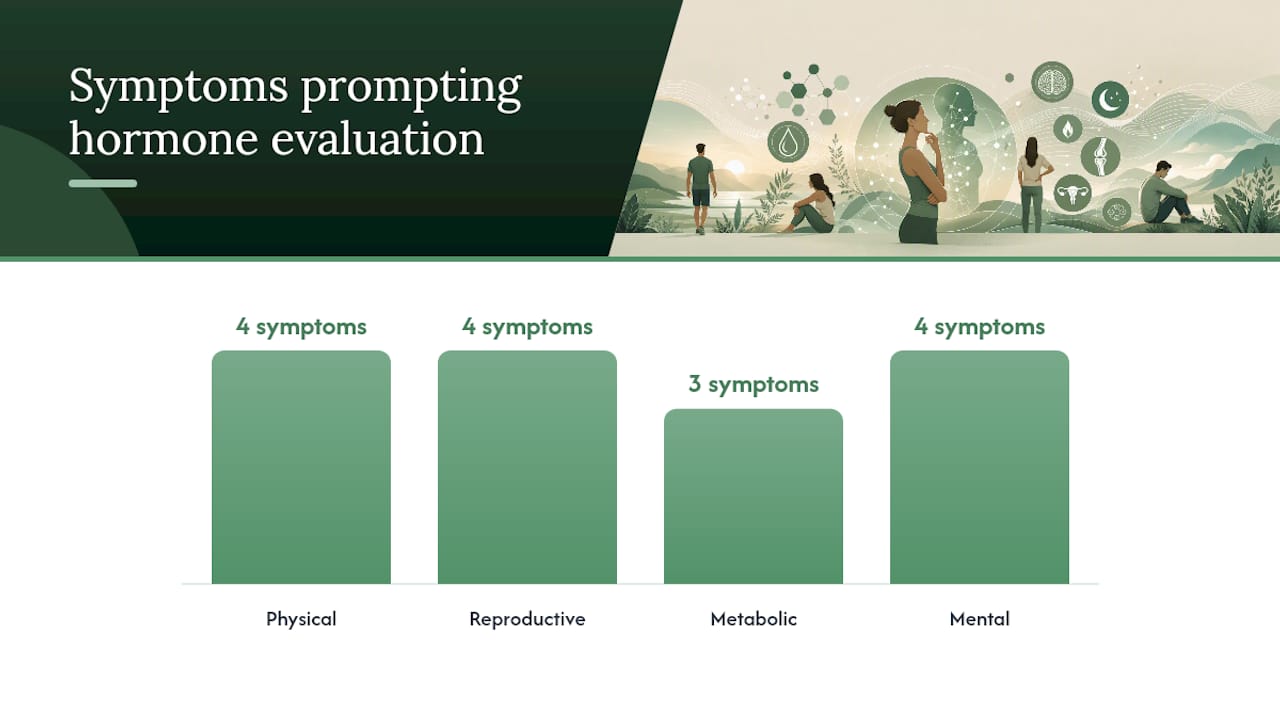
Reproductive: irregular periods, low libido, vaginal dryness, fertility struggles.
Metabolic: difficulty losing weight, new insulin resistance, changes in blood sugar readings.
Mental: mood swings, anxiety, brain fog, difficulty concentrating.
Pro Tip: Many of these symptoms overlap heavily with depression, sleep apnea, and thyroid disease. Don’t assume it’s hormonal just because it fits a pattern you read online. That overlap is exactly why clinical evaluation matters more than self-diagnosis.
Some symptoms deserve urgent attention rather than a routine appointment: rapid unexplained weight loss or gain, severe or sudden mood changes, and sudden hair loss all warrant prompt medical evaluation.
How do clinicians test and evaluate hormone levels?
Testing usually starts with blood panels, since blood remains the standard for most hormone measurements. Common tests include:
- Thyroid panel (TSH, free T4, free T3)
- Sex hormones (estradiol, progesterone, testosterone, SHBG)
- Pituitary signals (LH, FSH)
- Adrenal markers (cortisol, DHEA)
Timing changes everything here. Estradiol and progesterone need to be drawn on specific days of your menstrual cycle to mean anything. Cortisol follows a daily rhythm, so a single afternoon draw tells you little. Some clinics use saliva or urine testing for cortisol or sex hormones, but these methods carry more variability and less standardization than blood.
None of these numbers stand alone. Peer-reviewed clinical literature on endocrine regulation underscores that lab values need interpretation against your symptoms, medications, and history. A number outside the “normal” range isn’t automatically a problem, and a number inside it doesn’t rule one out.
What treatment options exist for hormone optimization?
Lifestyle changes almost always come first, and for good reason: they carry the lowest risk and often produce real improvement on their own. The Cleveland Clinic points to healthy weight management, balanced nutrition, regular exercise, stress management, and consistent sleep as measures that help keep hormone systems functioning well.
When lifestyle changes aren’t enough, medical therapies come into play:
- Conventional HRT for menopause-related estrogen and progesterone decline
- Testosterone therapy for men or women with clinically low levels and matching symptoms
- Thyroid hormone replacement (levothyroxine) for hypothyroidism
- Targeted fertility medications for ovulation or reproductive hormone issues
Delivery methods vary: oral pills, transdermal patches or gels, injections, and vaginal or topical preparations each carry different absorption profiles and side effect considerations. Compounded bioidentical hormone preparations are custom-mixed and not FDA-regulated the same way standard pharmaceutical hormones are, a distinction worth understanding before choosing between them, per background on bioidentical hormone therapy.
Monitoring isn’t optional. Expect follow-up labs, symptom tracking, and dose adjustments at defined intervals. As for supplements marketed for “hormone support,” evidence-based reviews consistently note limited proof behind most of them. Discuss any supplement with your clinician before starting it, and read up on peptide use in women’s health if that’s a route you’re considering, since evidence quality varies widely by compound.
What are the risks and safety concerns with hormone therapy?
Every hormone therapy carries tradeoffs, and none should start without a baseline health screening. Key risks include:
- Cardiovascular effects, including changes in blood pressure or clotting risk
- Thromboembolism (blood clot risk), especially with certain estrogen formulations
- Mood shifts, which can go in either direction depending on the person and hormone
- Polycythemia (thickened blood) with testosterone therapy
- Endometrial changes with unopposed estrogen (estrogen without progesterone) in women with a uterus
- Interactions with other medications
Baseline screening and ongoing follow-up monitoring aren’t bureaucratic hoops. They’re how a clinician catches a problem before it becomes serious. Compounded bioidentical preparations and over-the-counter supplements deserve extra scrutiny since they often lack the regulatory oversight and dosing consistency of standard prescriptions.
Who actually benefits from hormone optimization?
Not everyone with fatigue or mood swings needs hormone testing. The clearest candidates include:
- People with diagnosed hypothyroidism or other confirmed endocrine disorders
- Women who’ve had surgical menopause (ovaries removed before natural menopause)
- Men with clinically low testosterone plus matching symptoms, not just low energy
- Women with persistent, disruptive menopausal symptoms
- People with PCOS and irregular ovulation, particularly when fertility is a goal
Age and life stage shift the calculus. Perimenopause and post-menopause represent distinct windows with different goals, and age-related testosterone decline in men follows its own timeline, as physician guides on optimization point out. Start with primary care; they’ll refer you to an endocrinologist or reproductive specialist if your case warrants it.
What should you expect at your first hormone appointment?
A quality evaluation follows a predictable structure, and knowing it ahead of time helps you get more out of the visit:
- Bring a symptom diary noting timing, severity, and patterns over several weeks
- Expect a full medication and history review, plus a physical exam
- Ask which specific tests are being ordered and why
- Ask about the benefits and risks of any treatment being considered
- Ask how progress will be measured and how often you’ll be reevaluated
Watch for a red flag: any clinic promising quick fixes without baseline testing or a monitoring plan. Legitimate hormone optimization takes time to assess properly, and a provider skipping that step is skipping the part that keeps you safe.
How nutrition and cycle-aware planning support hormone health
Nutrition, sleep, and activity level all influence hormone-driven symptoms like energy dips, sleep disruption, and metabolic changes. Nourished builds personalized meal and workout plans that adapt to your cycle phase or menopausal stage, complementing clinical care rather than replacing it. If you’re on hormone therapy, coordinate any nutrition changes with your provider.

Why evidence-based caution matters more than quick fixes
I’d rather see someone spend three months on sleep, resistance training, and stress management before jumping to a prescription. That’s not a delay tactic. It’s often where the biggest, lowest-risk gains show up first. This piece leans on physician-level guides and peer-reviewed sources because hormone health attracts more marketing noise than almost any other wellness topic. Use the appointment checklist above and ask the questions listed. A good clinician welcomes them.
Frequently Asked Questions
What does hormone optimization mean compared to just “feeling off”? It means a clinician has identified a specific symptom cluster, run targeted tests, and confirmed a measurable hormone issue rather than treating vague fatigue or mood changes as automatically hormonal.
Is hormone optimization the same as hormone replacement therapy? No. Replacement therapy corrects a clinical deficiency, while optimization aims for the hormone levels that best support your individual function and goals, factoring in symptoms alongside labs.
How do I know if I need hormone testing? Persistent, disruptive symptoms like irregular periods, sudden mood changes, unexplained weight shifts, or ongoing fatigue that don’t resolve with better sleep and nutrition are reasonable triggers for an evaluation.
Can nutrition alone optimize my hormones? Nutrition and lifestyle changes support hormone function and often improve mild symptoms, but they can’t correct a diagnosed deficiency like hypothyroidism or surgical menopause on their own.
Are bioidentical hormones safer than standard HRT? Not automatically. Compounded bioidentical preparations aren’t regulated the same way as standard pharmaceutical hormones, so dosing consistency and safety monitoring deserve extra attention.
This article is general information, not a substitute for advice from a qualified doctor. Consult a qualified healthcare professional about your own circumstances before acting on anything here.
Sources
- Hormonal imbalance - Cleveland Clinic
- Pmc
- Hormone Optimization: A Physician’s Guide - Craft Concierge
- Hormone Optimization for Men & Women: 2026 Physician Guide - TopDoctorMagazine
- Medical News Today - Hormonal imbalance: Symptoms and treatment