
What Does Sustainable Weight Loss Mean for Women?
Nourished · July 4, 2026
What Does Sustainable Weight Loss Mean for Women?
Sustainable weight loss is defined as losing body fat at a steady, safe rate through lifestyle habits you can maintain long term, while preserving muscle and supporting overall health. The standard clinical rate is 1–2 pounds per week, as recommended by Harvard Health, because faster loss risks muscle breakdown and metabolic slowdown. For women navigating hormonal shifts across perimenopause, menopause, and post-menopause, the definition of sustainable weight loss goes beyond calories. It means protecting muscle mass, keeping energy stable, and building habits that hold up through every life stage. Nourished approaches this through personalized, hormone-aware nutrition rather than generic restriction.
What does sustainable weight loss mean in practical terms?
Sustainable weight loss means losing fat gradually while keeping muscle intact and meeting your nutritional needs. It is not a crash diet or a 30-day fix. The goal is a manageable calorie deficit that your body can adapt to without triggering the stress responses that cause rapid regain.
The right rate of loss
Harvard Health recommends not exceeding 1–2 pounds of weight loss per week. Losing faster than that forces your body to burn muscle for fuel, not just fat. Less muscle means a slower resting metabolic rate, which makes future weight maintenance harder.
The National Institute of Diabetes and Digestive and Kidney Diseases (NIDDK) frames the target differently but arrives at the same place. NIDDK recommends a modest loss of 5%–10% of starting body weight over about six months as both meaningful and sustainable. For a woman weighing 180 pounds, that is 9–18 pounds over six months. That pace is achievable without extreme restriction.
Why muscle preservation is non-negotiable
Resistance training prevents muscle loss caused by calorie restriction and helps maintain resting metabolic rate. This matters because muscle tissue burns more calories at rest than fat tissue does. Losing muscle during a diet creates a slower metabolism that works against you the moment you return to normal eating.
A sustainable approach combines:
- A moderate calorie deficit (typically 300–500 calories below maintenance)
- Adequate protein intake to protect muscle tissue
- Strength training at least twice per week
- Sufficient micronutrients from whole foods to support hormonal and metabolic function
Pro Tip: If you are losing weight faster than 2 pounds per week, add a small amount of protein-rich food to each meal and check whether your calorie deficit is too aggressive. Speed is not an advantage here.
How to achieve sustainable weight loss through nutrition, activity, and behavior

Achieving lasting fat loss requires three things working together: what you eat, how you move, and how you think about the process. Removing any one of those legs makes the whole structure unstable.
Build a nutritionally balanced eating pattern
A balanced eating plan for sustainable weight loss includes fiber-rich carbohydrates, lean protein, healthy fats, and sufficient micronutrients without cutting entire food groups. Eliminating carbs or fat entirely creates nutrient gaps and is rarely sustainable past a few weeks. The goal is a pattern you can follow on a Tuesday in November, not just during a motivated January.

Protein deserves special attention. It keeps you full longer, supports muscle repair after exercise, and has a higher thermic effect than carbohydrates or fat, meaning your body burns more calories digesting it.
Move in ways that support fat loss and muscle health
The American Academy of Family Physicians (AAFP) guidelines align with NIDDK in recommending combined nutrition, activity, and behavior change as the foundation of effective weight management. Physical activity recommendations for sustainable fat loss include:
- At least 150 minutes of moderate-intensity aerobic activity per week (brisk walking, cycling, swimming)
- Strength training twice per week targeting major muscle groups
- Daily movement outside of structured exercise, such as walking after meals or taking stairs
- Gradual progression to avoid injury and burnout
Use behavioral tools to stay consistent
Behavioral approaches such as SMART goals, self-monitoring, and judgment-free counseling increase adherence and long-term success. Self-monitoring means tracking what you eat and how you move, not to obsess over numbers, but to stay aware of patterns. SMART goals are specific, measurable, achievable, relevant, and time-bound. “I will walk for 30 minutes after dinner on weekdays” beats “I will exercise more.”
Pro Tip: Adopt a flexible mindset rather than an all-or-nothing approach. One off-plan meal does not erase a week of progress. The women who maintain weight loss long term are the ones who recover quickly from setbacks, not the ones who never have them.
Why sustainable weight loss matters more during hormonal changes
Hormonal shifts change how your body stores fat, uses energy, and responds to food. What worked in your 30s may not work the same way in perimenopause or after menopause. This is not a failure of willpower. It is biology.
Adjusting for hormonal shifts helps maintain muscle mass and metabolic health during aging and reproductive life stages. Estrogen decline during perimenopause and menopause shifts fat storage toward the abdomen and slows metabolism. Cortisol sensitivity increases, making stress-related eating harder to manage. Insulin resistance becomes more common, affecting how the body handles carbohydrates.
Sustainable methods matter more, not less, during these transitions. Rapid weight loss during hormonal change accelerates muscle loss, disrupts bone density, and can worsen mood instability. Steady, gradual fat loss protects against all three.
Key reasons to prioritize a sustainable approach during hormonal life stages:
- Muscle mass: Declining estrogen already reduces muscle protein synthesis. Crash dieting accelerates that loss.
- Bone density: Adequate calorie and nutrient intake supports bone health, which becomes critical after menopause.
- Mood and energy: Extreme restriction raises cortisol, which worsens anxiety and fatigue already common in perimenopause.
- Metabolic rate: Preserving muscle through strength training and adequate protein counteracts the natural metabolic slowdown of aging.
Nourished builds meal plans around these hormonal realities. Rather than a generic calorie target, it adapts nutrition to your cycle phase, life stage, and individual hormonal needs, making the process feel manageable rather than punishing.
How to maintain sustainable weight loss and handle common setbacks
Long-term weight maintenance is harder than the initial loss for most women. Plateaus, life disruptions, and gradual habit drift are normal. The difference between women who maintain their results and those who regain is not motivation. It is the systems they have in place.
Effective long-term weight management plans anticipate setbacks, incorporate flexible adaptations, and shift mindset from “goal achievement” to “ongoing process.” Treating weight loss as a finite project with an end date is the single most common reason for regain. The habits that got you there are the same habits that keep you there.
Practical strategies for long-term maintenance:
- Expect plateaus. Weight loss is not linear. A plateau lasting two to four weeks is normal and does not mean the approach has stopped working.
- Keep self-monitoring. Women who track their food and activity long after reaching their goal are significantly more likely to maintain their results.
- Build in flexibility. Allowing moderate indulgences prevents the burnout that leads to abandoning the plan entirely.
- Adjust, do not restart. When life disrupts your routine, scale back rather than quit. A shorter workout is better than no workout.
- Use support systems. Whether that is a nutrition app, a community, or a healthcare provider, external accountability improves consistency.
Framing weight loss as a lifestyle skill-building process with realistic, modest targets improves long-term success. The goal is not perfection. The goal is a pattern of behavior that you can sustain across good weeks and hard ones.
Key Takeaways
Sustainable weight loss is defined as gradual fat loss of 1–2 pounds per week through balanced nutrition, regular activity, and behavioral habits that protect muscle and support long-term maintenance.
| Point | Details |
|---|---|
| Safe rate of loss | Lose 1–2 pounds per week to protect muscle mass and metabolic rate. |
| Muscle preservation | Strength training twice per week prevents muscle loss during calorie restriction. |
| Hormonal adaptation | Women in perimenopause and menopause need nutrition adjusted to hormonal shifts, not generic calorie cuts. |
| Behavioral consistency | Self-monitoring and flexible goal-setting improve long-term adherence more than strict rules. |
| Maintenance mindset | Treat weight management as an ongoing lifestyle process, not a project with a finish line. |
What I have learned about weight loss and hormonal health
Most women I hear from have tried the same pattern: restrict hard, lose fast, feel exhausted, regain the weight, and blame themselves. The problem is never the woman. The problem is the method.
Quick fixes do not account for the fact that your body is not a static machine. It responds to hormones, stress, sleep, and life stage. A 500-calorie-a-day crash diet might produce results on the scale for three weeks. Then cortisol rises, muscle breaks down, hunger hormones spike, and the weight comes back with interest.
What actually works is far less dramatic. Eating enough protein to protect your muscle. Moving in ways that feel sustainable, not punishing. Giving your body time to adapt. During perimenopause especially, I have seen women make enormous progress simply by increasing protein intake and adding two strength sessions per week, without cutting calories aggressively at all.
The scale is also a poor measure of progress during hormonal transitions. Water retention, cycle phase, and muscle gain all affect the number. A woman can be losing fat and gaining muscle while the scale barely moves. That is a win, not a plateau.
My honest advice: stop measuring success by how fast the number drops. Measure it by how consistent your habits are, how your energy feels, and whether you can see yourself living this way in two years. That is what sustainable actually means.
— Brittany
Nourished and hormone-aware weight management
Women navigating hormonal changes deserve a nutrition approach built around their biology, not borrowed from a generic plan designed for someone else.
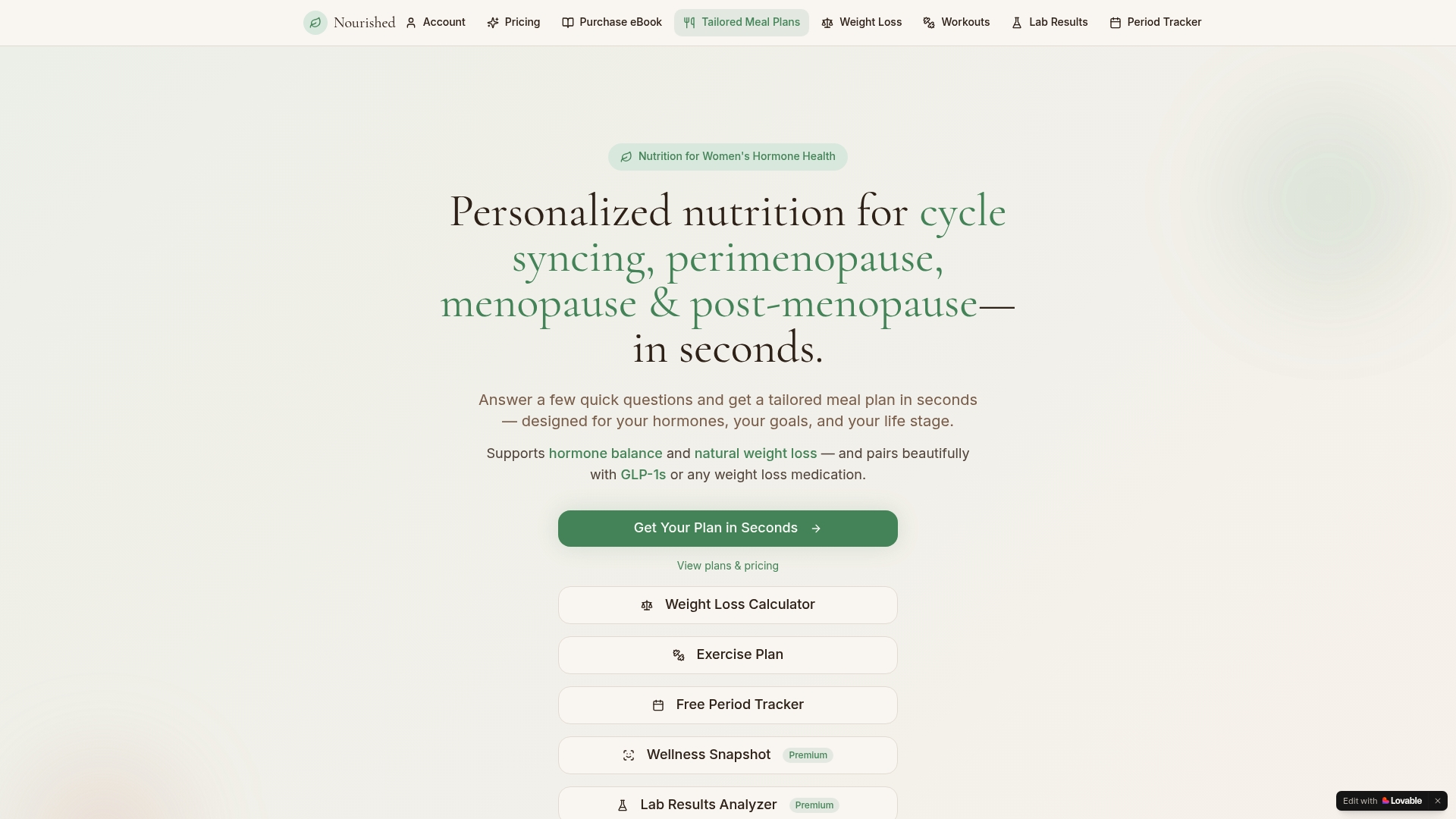
Nourished creates personalized meal plans that adapt to your cycle phase, life stage, and hormonal needs. Whether you are in perimenopause, post-menopause, or simply noticing that your body responds differently than it used to, Nourished removes the guesswork from eating well. There is no calorie counting and no food group elimination. Plans generate immediately and adjust as your needs change. Explore how Nourished works to see how hormone-aware nutrition fits into your daily life, or visit Nourished to get started with a plan built specifically for you.
FAQ
What is the definition of sustainable weight loss?
Sustainable weight loss is losing body fat at a gradual, safe rate of 1–2 pounds per week through balanced nutrition, physical activity, and behavioral habits that can be maintained long term without sacrificing muscle or overall health.
Is sustainable weight loss possible for women in menopause?
Yes. Sustainable weight loss is possible during menopause, though it requires adjusting nutrition and exercise to account for hormonal changes that affect metabolism, fat storage, and muscle mass.
How much weight loss is considered sustainable over six months?
NIDDK defines a meaningful and sustainable target as 5%–10% of starting body weight over approximately six months, achieved through combined dietary, activity, and behavioral changes.
What is a sustainable diet for long-term fat loss?
A sustainable diet includes lean protein, fiber-rich carbohydrates, healthy fats, and sufficient micronutrients without eliminating entire food groups. It is a pattern you can follow consistently, not a short-term restriction plan.
How does strength training support sustainable weight loss?
Strength training preserves muscle mass during calorie restriction, which maintains resting metabolic rate and makes long-term weight maintenance significantly easier, particularly for women experiencing age-related muscle loss.