
Why Alcohol Worsens Perimenopause Symptoms
Nourished · August 23, 2026
Why Alcohol Worsens Perimenopause Symptoms
Yes, alcohol commonly makes perimenopause symptoms worse, and the reasons are almost entirely physiological. It widens blood vessels, interferes with how your liver processes hormones, disrupts the brain chemicals that regulate mood, and fragments sleep at exactly the stage of life when your sleep is already fragile. The result is a predictable pattern: more hot flashes, worse night sweats, sharper mood swings, and mornings that feel harder than they should.
The main drivers behind this are worth knowing before you decide what to do about your own drinking habits:
- Vasodilation — alcohol widens blood vessels and raises skin temperature, which can trigger or intensify hot flashes.
- Hormone metabolism — your liver has to process both alcohol and hormones, and alcohol tends to win that competition.
- Neurotransmitter disruption — alcohol alters GABA and serotonin activity, amplifying anxiety and mood instability.
- Sleep architecture changes — alcohol suppresses REM sleep and causes more nighttime waking.
Public health guidance from the Office on Women’s Health lists alcohol among the most common hot-flash triggers and recommends staying within one drink per day. The practical steps later in this article walk through how to actually do that.
Key Takeaways
Alcohol worsens perimenopause symptoms because it dilates blood vessels, disrupts hormone metabolism, alters neurotransmitters, and fragments sleep, all at once.
| Point | Details |
|---|---|
| Vasodilation drives hot flashes | Alcohol widens blood vessels, directly intensifying vasomotor symptoms already caused by hormone fluctuation. |
| Liver competes for priority | Alcohol metabolism takes precedence over hormone clearance, amplifying estrogen and progesterone swings. |
| Sleep takes the biggest hit | Alcohol suppresses REM sleep and fragments the second half of the night, worsening fatigue and mood. |
| Tolerance shifts with age | Slower liver clearance and changing body composition mean the same drink hits harder in midlife. |
| Track before you cut | A simple drink and symptom log reveals your personal patterns faster than guessing. |
This article is general information, not a substitute for advice from a qualified doctor. Consult a qualified healthcare professional about your own circumstances before acting on anything here.
Table of Contents
- How Alcohol Physiologically Worsens Perimenopause Symptoms
- Which Perimenopause Symptoms Does Alcohol Make Worse?
- Why Your Alcohol Tolerance Changes During Perimenopause
- Long-Term Health Risks When Alcohol Meets Midlife Hormones
- How to Reduce Alcohol’s Impact on Your Symptoms
- How Nourished Supports Hormone Health Alongside Alcohol Changes
- A Personal Note on Cutting Back Without Guilt
- Sources
How Alcohol Physiologically Worsens Perimenopause Symptoms
Alcohol is a vasodilator. It relaxes the smooth muscle in your blood vessels, which widens them and sends a rush of blood toward the skin’s surface. That’s why your face flushes after a glass of wine. In perimenopause, your body’s thermoregulation system is already unstable because of dropping and fluctuating estrogen, and alcohol adds a second trigger on top of the first. Mayo Clinic describes this combination bluntly: alcohol and menopause can be a dangerous mix, because the vasodilation effect stacks directly onto vasomotor symptoms your hormones are already producing.
Your liver also has a hierarchy of priorities, and alcohol jumps the line. Processing ethanol takes precedence over other liver functions, including the breakdown and clearance of circulating hormones. University Hospitals notes that alcohol can impede hormone metabolism, which may amplify the estrogen and progesterone swings already driving your symptoms.
Then there’s the brain chemistry piece. Alcohol initially boosts GABA activity, the neurotransmitter responsible for calm, which is why a drink feels relaxing at first. But as it wears off, GABA activity crashes and serotonin gets disrupted too. Layer that rebound anxiety on top of the mood instability perimenopause already causes, and you get sharper, longer emotional swings than either factor would produce alone.
- Alcohol suppresses REM sleep, the restorative stage your brain needs most.
- It fragments sleep with more frequent awakenings, often in the early morning hours.
- Combined with night sweats, this can turn one drink into a night of interrupted, shallow sleep.
Pro Tip: If you notice you wake up around 3 or 4 a.m. after drinking, that’s not a coincidence. That’s typically when alcohol’s sedative effect wears off and its rebound effect on your nervous system kicks in.
Which Perimenopause Symptoms Does Alcohol Make Worse?
Not every symptom responds to alcohol the same way, and recognizing your own pattern makes it easier to connect cause and effect.
- Hot flashes and night sweats. These often show up within 30 to 60 minutes of drinking, or overnight if you drink close to bedtime. Mayo Clinic research ties this directly to the hormone fluctuations that already make vasomotor symptoms common in perimenopause.
- Sleep disruption. A drink might help you fall asleep faster, but it fragments the second half of the night, leaving you groggy and short-tempered the next day.
- Mood swings and anxiety. The GABA rebound described above tends to hit hardest the morning after, compounding whatever mood instability you’re already managing.
- Weight and appetite. Alcohol supplies calories with no nutritional value, stimulates appetite, and interacts poorly with the slower metabolism common in midlife.
Some women also notice wine specifically triggers flushing more than other drinks. Tannins, sulfites, and histamines in wine can provoke a response that mimics or worsens a hot flash, according to reporting on perimenopause and alcohol tolerance.
Pro Tip: If red wine seems to hit you harder than vodka soda, you’re not imagining it. Try switching drink types for a week and see if your symptom pattern shifts.

Why Your Alcohol Tolerance Changes During Perimenopause
If two glasses of wine used to feel fine and now leave you flushed and wired at 2 a.m., your body isn’t overreacting. It’s actually processing alcohol differently than it did a decade ago.
- Liver efficiency naturally declines with age, slowing how quickly alcohol clears your system.
- Body composition shifts toward a higher fat-to-muscle ratio in midlife, and since alcohol distributes through body water rather than fat, this raises your effective blood alcohol concentration for the same amount consumed.
- Peer-reviewed research on alcohol metabolism and aging confirms these physiological changes explain why women experience stronger, longer-lasting effects in midlife than they did in their 20s or 30s.
- Watch for signs your tolerance has shifted: needing less alcohol to feel effects, worse hangovers, or symptom flares the day after drinking that didn’t used to happen.
Long-Term Health Risks When Alcohol Meets Midlife Hormones
Symptom relief isn’t the only reason to reconsider your drinking habits. Alcohol use in midlife raises risk factors tied to several serious conditions, and Mayo Clinic flags this combination as one worth taking seriously.
- Cardiovascular risk. Alcohol can raise blood pressure and cholesterol, both already shifting unfavorably as estrogen declines.
- Bone health. Alcohol interferes with calcium absorption, compounding the bone density loss that accelerates during perimenopause.
- Cancer risk. Research links alcohol consumption to elevated risk for breast and colorectal cancers, risks that already increase with age.
None of this means one glass of wine is a health emergency. It means the margin for error shrinks in midlife, and the payoff for cutting back is bigger than it used to be.
How to Reduce Alcohol’s Impact on Your Symptoms
Small, specific changes tend to outperform an all-or-nothing approach. Here’s where to start:
- Keep a simple drink and symptom log. Note what you drank, how much, when, and how you felt the next day. Patterns usually show up within two weeks.
- Watch your timing. Avoid drinking within three hours of bedtime to reduce the sleep fragmentation and night sweat risk described earlier.
- Follow standard moderation guidance. The Office on Women’s Health recommends no more than one drink per day, and even that ceiling may be worth lowering if your symptoms are severe.
- Try substitutes on high-risk nights. Low- and no-alcohol options have improved considerably. The Functional Sip’s roundup of alcohol alternatives is a useful starting point if you want something that still feels like a treat.
- Talk to a clinician if symptoms are severe or persistent, especially if you’re managing anxiety, insomnia, or a complicated relationship with alcohol. Hormone therapy, sleep treatment, or other interventions may help more than willpower alone.
Pro Tip: Start your log with just three columns: drink, time, and next-morning symptom score from 1 to 10. Complexity kills tracking habits fast.
How Nourished Supports Hormone Health Alongside Alcohol Changes
Cutting back on alcohol works best paired with nutrition and routines that actively support hormone balance, not just the absence of a trigger. Nourished builds personalized meal and workout plans specifically for perimenopause, using AI to adjust recommendations to your hormonal patterns rather than a generic calorie target.
- Personalized meal plans built around hormone fluctuation, not restrictive dieting.
- Hormone-adaptive workout plans that adjust to where you are in your cycle or transition.
- A free period and cycle tracker to log symptoms alongside your drink log.
Consistent hydration, steady blood sugar, and a wind-down routine can reduce how sharply your body reacts to sleep loss or a missed meal, both of which compound alcohol’s effects on hot flashes and mood.
A Personal Note on Cutting Back Without Guilt
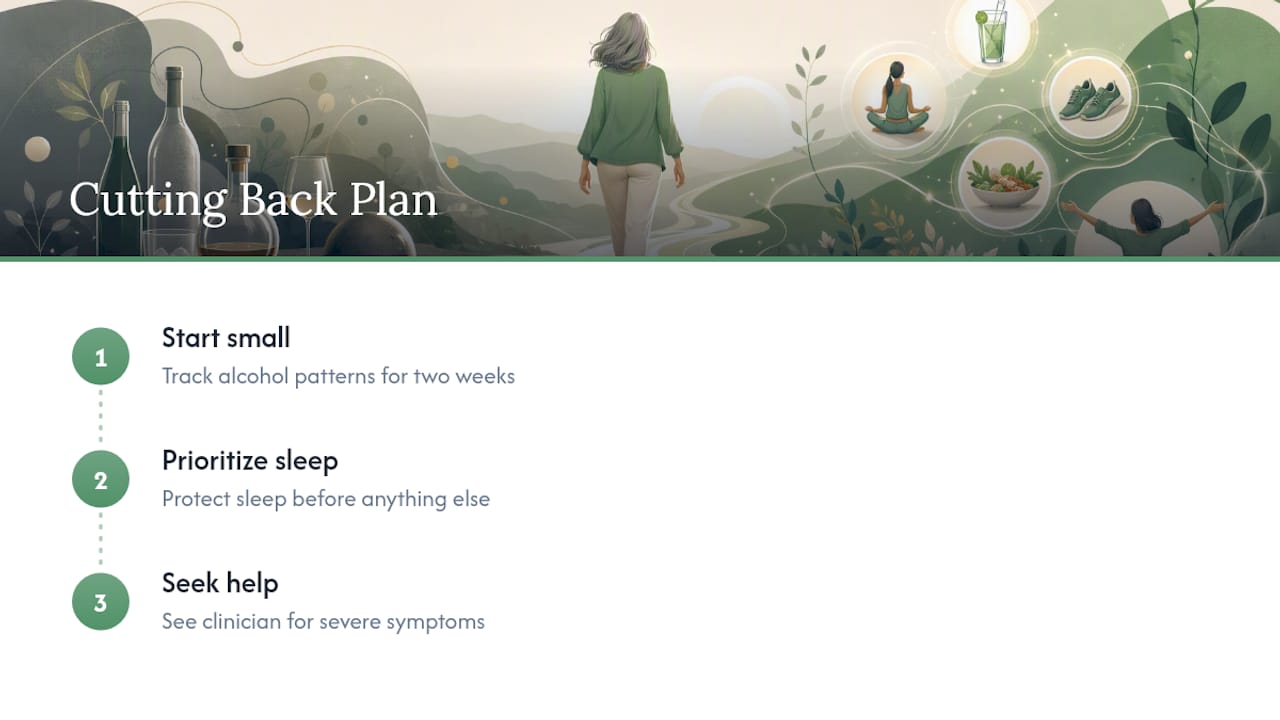
Reaching for wine to unwind after a hard day makes sense. It works, briefly. But treating alcohol as your primary coping tool during perimenopause tends to backfire by morning. Start small: track your patterns for two weeks, protect your sleep before anything else, and see a clinician if hot flashes, anxiety, or insomnia feel unmanageable. You deserve real relief, not just a temporary one.
Sources
- Mayo Clinic Minute: Why alcohol and menopause can be a dangerous mix
- Does Menopause Change the Way You Metabolize Alcohol? | University Hospitals
- Menopause symptoms and relief | Office on Women’s Health
- PubMed entry relevant to alcohol metabolism and aging