
Why Protein Matters in Perimenopause: Your Practical Guide
Nourished · June 20, 2026
Why Protein Matters in Perimenopause: Your Practical Guide
Protein is the single most important dietary nutrient for women in perimenopause. As estrogen declines, your body loses muscle faster, burns fewer calories at rest, and struggles to regulate blood sugar. Understanding why protein matters in perimenopause means understanding that your needs have genuinely changed. The standard recommendation of 0.8 grams per kilogram of body weight per day is no longer enough. This guide gives you the science, the numbers, and the meal strategies to act on it today.
How does estrogen decline affect muscle and metabolism in perimenopause?
Declining estrogen directly accelerates sarcopenia, the medical term for age-related muscle loss. Women lose approximately 0.6% of muscle mass annually after perimenopause begins. That may sound small, but it compounds quickly into real changes in strength, body shape, and energy.
Less muscle means a slower metabolism. Menopause reduces resting metabolic rate by roughly 100 calories per day. That shift explains why many women gain weight during perimenopause even without changing what they eat.

The hormonal changes also affect how your body uses the protein you do eat. A process called anabolic resistance sets in, meaning your muscles become less efficient at responding to protein. The same meal that built and maintained muscle in your 30s simply does not do the same job in your 40s.
Here is what that combination of changes looks like in practice:
- Muscle loss accelerates as estrogen drops, reducing strength and raising injury risk.
- Metabolic rate falls, making weight management harder without dietary adjustment.
- Insulin sensitivity decreases, shifting fat storage toward the midsection.
- Muscle protein synthesis slows, requiring more protein per meal to trigger rebuilding.
- Bone density drops alongside muscle, since protein makes up roughly 50% of bone volume and supports calcium absorption.
Each of these changes points to the same solution: more protein, distributed smarter.
What is the optimal protein intake for women in perimenopause?
Expert consensus recommends 1.2 to 1.6 grams of protein per kilogram of body weight per day for perimenopausal women. That is significantly higher than the standard RDA of 0.8 g/kg. For a 70 kg woman, the difference is stark: the standard RDA gives you 56 grams daily, while the perimenopausal range calls for 84–112 grams.
Hitting a daily total is only half the equation. How you spread that protein across the day matters just as much.
- Aim for 3–4 protein-rich meals per day. Spreading intake evenly keeps muscle protein synthesis active throughout the day.
- Target 25–30 grams of high-quality protein per meal. Research shows 25–30g per meal is the threshold needed to trigger muscle maintenance effectively.
- Adjust for activity level. Sedentary women should target the lower end (1.2 g/kg). Women doing regular cardio should aim for 1.4 g/kg. Women doing resistance training should target 1.6 g/kg or higher.
- Do not skip breakfast protein. Many women eat most of their protein at dinner. That pattern leaves muscle synthesis inactive for most of the day.
| Activity level | Protein target (g/kg/day) | Daily total for a 70 kg woman |
|---|---|---|
| Sedentary | 1.2 g/kg | 84 g |
| Moderately active | 1.4 g/kg | 98 g |
| Resistance training | 1.6 g/kg | 112 g |
Pro Tip: Divide your daily protein target by the number of meals you eat. That number is your per-meal goal. For most women, hitting 30 grams at breakfast is the hardest part, so plan that meal first.
How does protein affect hormonal balance, appetite, and mood?
Protein does far more than feed your muscles. It directly shapes the hormonal signals that control hunger, mood, and stress response during perimenopause.

Protein increases satiety hormone peptide YY and reduces ghrelin, the hunger hormone. That shift means you feel full longer and experience fewer cravings. For women navigating perimenopausal weight changes, this is a practical advantage that no calorie-counting approach can replicate.
Blood sugar stability is another direct benefit. Protein slows glucose entry into the bloodstream, which prevents the energy crashes that trigger afternoon cravings and mood dips. Many women in perimenopause describe feeling “wired and tired” at the same time. Unstable blood sugar is a major driver of that pattern.
Protein also supports your brain chemistry. Protein is a precursor for neurotransmitters like serotonin and dopamine. Adequate intake directly supports cognitive function and emotional stability during a time when hormonal fluctuations can cause brain fog and anxiety.
Protein buffers cortisol by stabilizing blood sugar, which may improve mood swings and sleep disturbances common in perimenopause.
The connection between dietary protein and hormonal balance is not theoretical. It is biochemical and measurable. Getting enough protein each day is one of the most direct ways to support your mood and mental clarity during perimenopause.
What are the best protein sources for women in perimenopause?
Not all protein is equal. Complete proteins contain all nine essential amino acids your body cannot make on its own. Animal sources are complete by default. Most plant sources are incomplete, meaning you need to combine them to get the full amino acid profile.
Animal protein sources:
- Eggs (6–7g per egg, complete protein)
- Greek yogurt (15–20g per cup, also provides calcium)
- Salmon and sardines (protein plus omega-3s for inflammation support)
- Chicken breast and turkey (lean, high-protein staples)
- Cottage cheese (25g per cup, easy to add to meals)
Plant-based and mixed sources:
- Edamame and tempeh (complete soy proteins, 17–20g per serving)
- Lentils and chickpeas (combine with grains for complete amino acid profile)
- Hemp seeds (complete protein, easy to add to smoothies or oatmeal)
- Tofu (10g per half cup, versatile for cooking)
| Protein source | Protein per serving | Complete protein? |
|---|---|---|
| Chicken breast (100g) | 31g | Yes |
| Greek yogurt (1 cup) | 17g | Yes |
| Salmon (100g) | 25g | Yes |
| Lentils (1 cup cooked) | 18g | No (combine with rice) |
| Tempeh (100g) | 20g | Yes |
| Cottage cheese (1 cup) | 25g | Yes |
Meal structure matters as much as food choice. Pair protein with fiber-rich vegetables at every meal to slow digestion and extend satiety. A chicken and vegetable stir-fry over quinoa, for example, delivers complete protein, fiber, and complex carbohydrates in one meal.
Pro Tip: If you struggle to hit 30 grams at breakfast, try Greek yogurt with hemp seeds and a boiled egg. That combination reaches 30 grams without cooking a full meal.
Combining protein with resistance training is non-negotiable for real results. Food provides the raw material. Strength training gives your muscles the signal to use it. You can learn more about balancing hormones naturally in midlife through nutrition and lifestyle changes together.
Common misconceptions about protein during perimenopause
The biggest misconception is that protein is only for athletes or bodybuilders. Protein is a metabolic necessity for perimenopausal women, not a fitness supplement. Your body’s decreased efficiency at processing nutrients makes adequate protein a daily health requirement.
Several other myths get in the way of good protein habits:
- “I eat enough protein already.” Most women significantly underestimate their intake. Tracking for even three days usually reveals a gap between perceived and actual consumption.
- “Spreading protein doesn’t matter, just hit the daily total.” It does matter. Eating 80 grams at dinner and 10 grams the rest of the day leaves muscle synthesis inactive for most of your waking hours.
- “Plant protein is just as effective without combining.” Incomplete plant proteins miss essential amino acids. Combining sources like rice and lentils, or adding hemp seeds to oatmeal, closes that gap.
- “Protein will make me bulk up.” Women in perimenopause do not have the testosterone levels required to build large muscle mass. Higher protein intake builds lean tissue and reduces fat, not bulk.
Anabolic resistance is the physiological reality that makes these misconceptions costly. Your body now needs at least 30 grams per meal to trigger muscle protein synthesis. Eating less than that threshold, even consistently, means your muscles receive no rebuilding signal at all.
Key Takeaways
Protein is the most critical dietary nutrient for perimenopausal women because it directly counteracts muscle loss, metabolic slowdown, and hormonal instability caused by declining estrogen.
| Point | Details |
|---|---|
| Higher protein needs | Aim for 1.2–1.6 g/kg/day, well above the standard 0.8 g/kg RDA. |
| Meal distribution matters | Target 25–30g of protein per meal across 3–4 meals to trigger muscle synthesis. |
| Hormonal and mood support | Protein stabilizes blood sugar, reduces cravings, and supports serotonin and dopamine production. |
| Best sources | Prioritize complete proteins like eggs, Greek yogurt, salmon, and tempeh. |
| Combine with strength training | Protein alone cannot prevent muscle loss. Resistance exercise activates the muscle-building response. |
Protein changed how I think about midlife nutrition
I spent years watching women in perimenopause follow low-calorie diets and wonder why they felt exhausted, gained weight anyway, and struggled with mood swings. The answer, almost every time, was not too many calories. It was too little protein.
The conventional wisdom around midlife weight gain focuses on cutting food. That approach backfires because it cuts protein along with everything else, accelerating the muscle loss that was already happening. Women end up lighter on the scale but with less muscle, a slower metabolism, and worse hormonal symptoms than before.
What I have seen work is the opposite approach. Eat enough protein at every meal, add two or three strength training sessions per week, and stop treating food as the enemy. The women who do this consistently report better energy, fewer cravings, more stable moods, and body composition changes that actually last.
The other thing worth saying directly: protein is not going to fix hot flashes or eliminate every perimenopausal symptom. Protein cannot eliminate hot flashes, but it is foundational for preventing the muscle and bone frailty that shapes your health risks for decades ahead. That is a longer game, and it is worth playing. You can explore the science behind these strategies if you want to go deeper on the research.
— Brittany
How Nourished helps you get your protein right
Getting protein right during perimenopause is not just about knowing the numbers. It is about having a plan that fits your body, your schedule, and your hormonal stage.
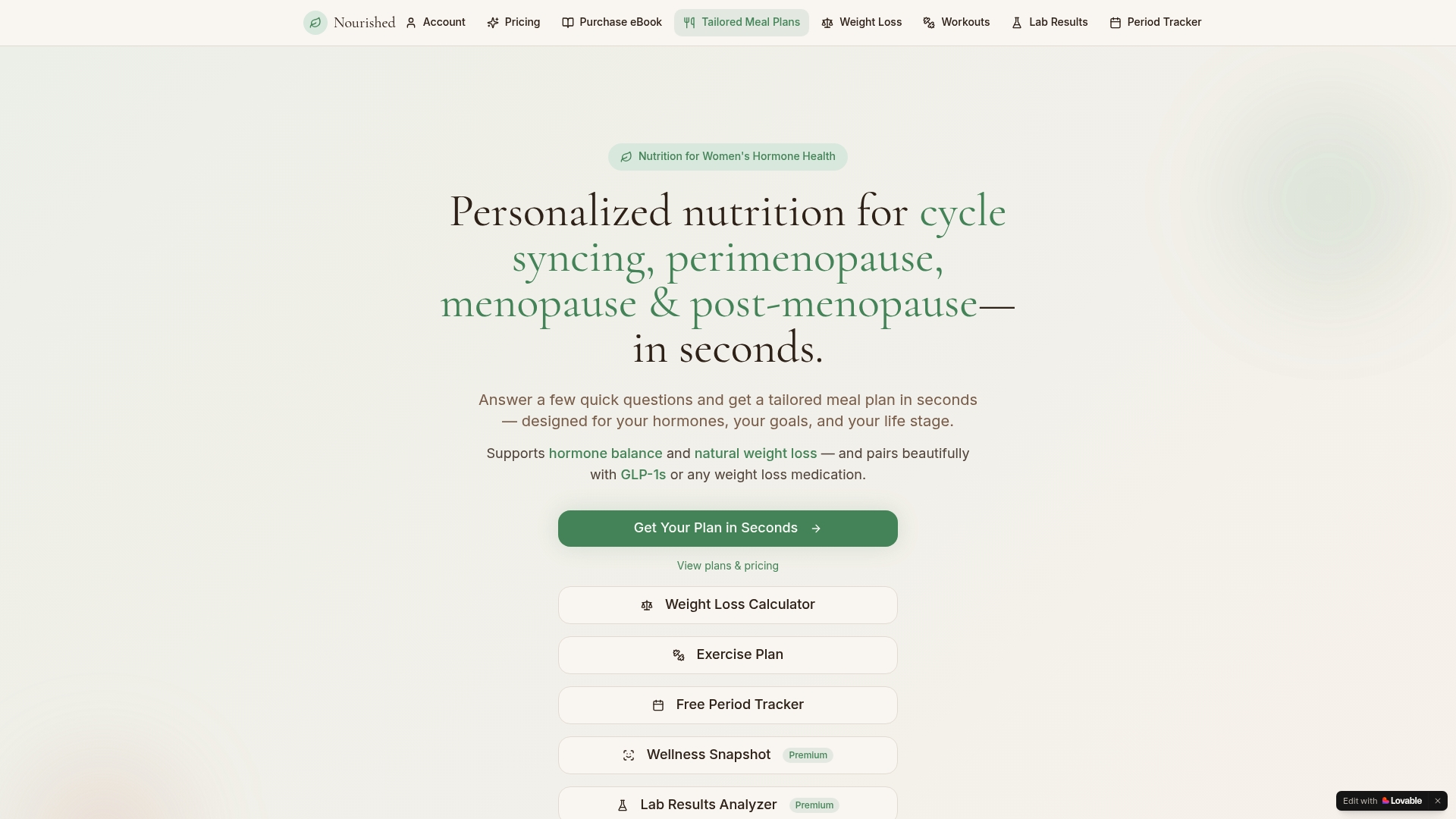
Nourished builds personalized meal plans designed specifically for women in perimenopause, with protein targets calibrated to your body weight and activity level. No calorie counting, no guesswork. The platform uses AI to generate meal plans that distribute protein across your day, support hormonal balance, and adapt as your needs change. You can also track your cycle to align nutrition with your hormonal shifts throughout the month. If you want to see exactly how it works, the step-by-step tutorial walks you through the full process in minutes.
FAQ
How much protein do I need daily in perimenopause?
Perimenopausal women need 1.2 to 1.6 grams of protein per kilogram of body weight per day. For a 70 kg woman, that means 84–112 grams daily, compared to the standard RDA of 56 grams.
Does protein help with perimenopausal weight gain?
Yes. Protein increases satiety hormones, reduces hunger signals, and preserves the muscle mass that keeps your metabolism active. It is one of the most effective dietary tools for managing body composition during perimenopause.
What is anabolic resistance and why does it matter?
Anabolic resistance means your muscles respond less efficiently to protein as estrogen declines. You need at least 30 grams of protein per meal to trigger muscle protein synthesis, compared to lower thresholds that worked in your 30s.
Can plant-based protein meet perimenopausal needs?
Yes, with planning. Combine incomplete plant proteins like lentils and rice, or choose complete plant sources like tempeh, edamame, and hemp seeds. Hitting 25–30 grams per meal is achievable on a plant-based diet with intentional food pairing.
Does protein affect mood and brain fog in perimenopause?
Protein is a direct precursor to serotonin and dopamine. Adequate daily intake supports neurotransmitter production, which helps reduce brain fog, anxiety, and mood instability linked to hormonal fluctuations during perimenopause.