
Why Sleep Affects Muscle Recovery in Women
Nourished · August 9, 2026
Why Sleep Affects Muscle Recovery in Women
Sleep is a primary driver of muscle repair in women because deep sleep triggers the hormonal cascade that turns on protein synthesis and dials down inflammation. Growth hormone, IGF-1, cortisol, and pro-inflammatory cytokines like IL-6 all shift in measurable ways depending on how much slow-wave sleep you get, based on current research findings. Miss enough of it and your body spends more time breaking muscle down than building it back up.
Three things to know right now:
- Target around seven to nine hours of sleep opportunity per night, individualized to your recovery load and training phase, not a fixed number you hit once and forget.
- Protect deep sleep by keeping high-intensity sessions earlier in the day, cooling your bedroom, and building a consistent pre-bed routine that signals your nervous system to downshift.
- Track a 3-day rolling average, not last night’s sleep. Single-night dips are normal; cumulative deficits are where real recovery problems begin.
Female-specific biology adds another layer. Menstrual cycle phase, perimenopause, and menopause all change how well you sleep and how your muscles respond to training. Those modifiers are covered in detail below.
Key Takeaways
Sleep is the primary hormonal environment for muscle repair in women, and cumulative sleep deficits, not single bad nights, are what reliably predict impaired recovery and injury risk.
| Point | Details |
|---|---|
| SWS drives GH and repair | Peak growth hormone secretion happens during slow-wave sleep, directly enabling muscle protein synthesis. |
| Cumulative debt matters most | A 3-day rolling sleep average predicts fatigue and injury in active women better than any single-night measure. |
| Cycle phase changes recovery needs | CK and IL-6 are higher in the mid-follicular phase, meaning hard sessions then require more sleep and recovery margin. |
| Extension and naps work best | Sleep extension and napping are the most consistently effective interventions for improving recovery and performance. |
| Nourished aligns nutrition with sleep | Nourished’s cycle-aware meal timing and free period tracker help women connect hormonal status to recovery planning. |
Table of Contents
- Why sleep affects muscle recovery in women: the hormonal and molecular picture
- What human trials and observational studies actually show
- How menstrual cycle phase and menopause change your sleep and recovery
- Practical sleep strategies to protect muscle recovery
- How quickly does poor sleep affect recovery, and how do you monitor it?
- What the current evidence cannot yet tell us
- Sleep is the recovery variable coaches keep overlooking
- Hormone-aware nutrition and recovery planning with Nourished
- Sources
Why sleep affects muscle recovery in women: the hormonal and molecular picture
The most important thing happening while you sleep, from a muscle-repair standpoint, is not rest. It is active hormonal signaling that your body can only run during slow-wave sleep (SWS), the deepest stage of non-REM sleep.
Growth hormone, IGF-1, and protein synthesis
Peak growth hormone secretion happens during SWS, and GH works in concert with insulin-like growth factor-1 to drive muscle protein synthesis and activate satellite cells, the stem-cell-like precursors that repair damaged muscle fibers. Shorten or fragment SWS and you cut that secretion window. The repair signal simply does not arrive on schedule.

Cortisol, insulin resistance, and catabolism
Cortisol follows a circadian rhythm, naturally lowest in the early hours of sleep and rising toward morning. Sleep disruption flattens or inverts that curve, which research suggests can keep cortisol elevated at times when it should be low. Chronically elevated cortisol promotes muscle protein breakdown, impairs insulin sensitivity, and blocks the anabolic signaling that GH and IGF-1 are trying to run. The result is a body tilted toward catabolism even when you are eating enough protein.
Cytokines, inflammation, and tissue repair
Sleep loss also raises circulating levels of pro-inflammatory cytokines, particularly interleukin-6 (IL-6) and tumor necrosis factor alpha (TNF-α), according to the scientific literature. Both favor protein breakdown and slow the resolution of exercise-induced tissue damage. Creatine kinase (CK), a marker of muscle damage and membrane disruption, tends to stay elevated longer when inflammation is not resolved, as observed in studies. Research on how inflammation affects recovery shows these cytokine shifts have downstream effects on metabolism and body composition, not just soreness.
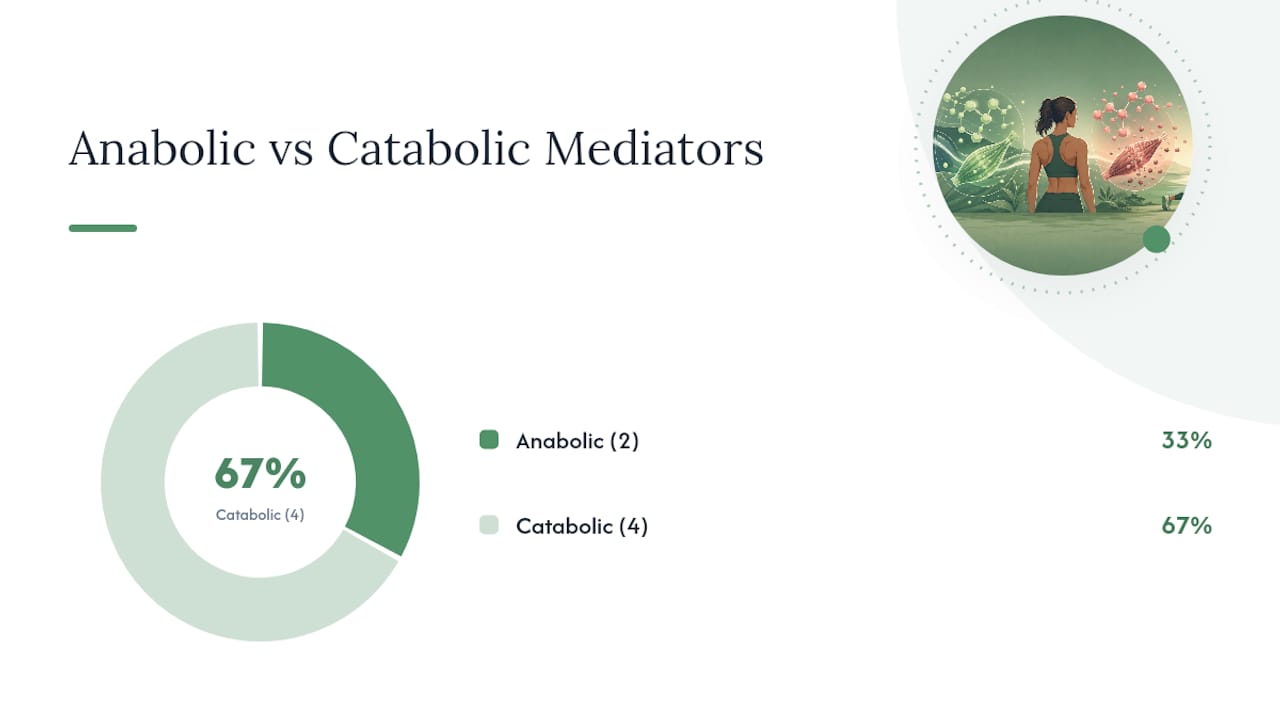
| Hormone / Mediator | Sleep link | Effect on muscle |
|---|---|---|
| Growth hormone (GH) | Peaks during SWS | Drives protein synthesis, activates satellite cells |
| IGF-1 | Rises with adequate GH secretion | Amplifies anabolic signaling, supports fiber repair |
| Cortisol | Elevated by sleep disruption | Promotes protein breakdown, impairs insulin sensitivity |
| IL-6 | Rises with sleep loss | Increases inflammation, slows tissue repair |
| TNF-α | Rises with sleep loss | Favors catabolism, prolongs recovery time |
| Creatine kinase (CK) | Stays elevated when inflammation persists | Marker of ongoing muscle damage and membrane stress |
Pro Tip: Schedule high-intensity resistance sessions earlier in the day when possible. Late evening training raises core temperature and cortisol, both of which delay SWS onset and compress the GH secretion window you need for overnight repair.
What human trials and observational studies actually show
The research on sleep and muscle outcomes spans acute deprivation trials, short-term restriction studies in trained women, sleep-extension interventions, and large observational cohorts. The patterns are consistent enough to act on, even if the evidence base has gaps.
Acute deprivation and hormonal shifts
-
Total sleep deprivation after eccentric exercise (crossover trial): A small crossover trial found that total sleep deprivation following eccentric exercise altered inflammatory and hormonal profiles, raising IL-6 and shifting the IGF-1 and cortisol balance, even though short-term muscle strength recovery was not significantly delayed. The hormonal disruption was real; the strength test was simply not sensitive enough to catch it in a short window.
-
Sleep restriction in resistance-trained women: Sustained sleep restriction in trained females lowered bar velocity during resistance sessions and raised perceived effort and training distress. These submaximal changes appeared before any drop in total volume load, suggesting that movement quality and effort perception are earlier warning signs of compromised recovery than raw numbers on a training log.
-
Sleep deprivation and performance broadly: A review of sleep deprivation effects on athletic performance found that sleep loss consistently impairs reaction time, accuracy, submaximal strength, and endurance, and that improving sleep can reverse several of these deficits. Women tend to show more pronounced endurance declines under sleep restriction, while men sometimes show sharper acute losses in maximal strength, though the evidence here is still developing.
-
Sleep extension and napping interventions: A systematic review found that sleep extension and napping were the most effective strategies for improving physical and cognitive performance in athletes, with other approaches such as sleep hygiene education and light manipulation showing mixed results. Reaction time, sprint performance, and perceived recovery all improved with extended sleep opportunity.
-
Observational cohort data (NHANES-based analysis): An observational analysis found a positive correlation between sleep duration and muscle quality index (MQI) in women but not in men, a sex-specific finding that points to a tighter coupling between sleep and muscle health in female physiology. MQI captures both muscle mass and functional strength, making it a more meaningful outcome than mass alone.
-
Narrative review on mechanisms and interventions: A narrative review confirmed that SWS supports metabolic and hormonal recovery processes and identified naps and sleep extension as the interventions with the most consistent evidence for improving fatigue and some performance outcomes, while noting that long-term hypertrophy data remain limited.
How menstrual cycle phase and menopause change your sleep and recovery
Female biology does not hold still across a month, let alone across decades. The same sleep deficit hits differently depending on where you are in your cycle or your hormonal life stage.
Cycle-phase effects on muscle damage and inflammation
Markers of muscle damage and inflammation, specifically CK and IL-6, are significantly higher during the mid-follicular phase compared with the mid-luteal phase. The mid-follicular window is a low-estrogen, low-progesterone environment, and that hormonal trough appears to amplify the inflammatory response to exercise-induced damage. Practically, this means a hard session in the early follicular phase may require more recovery time and more sleep than the same session in the luteal phase, when estrogen and progesterone are higher and the inflammatory response is somewhat blunted.
Combining cycle-phase awareness with sleep monitoring gives you a clearer picture of when your body is primed to absorb training stress and when it needs more recovery margin. Tracking both together, rather than treating them as separate variables, is where the real signal lives.
Perimenopause, menopause, and disrupted sleep architecture
Perimenopause and menopause introduce a different set of challenges. Vasomotor symptoms, hot flashes and night sweats, fragment sleep and reduce sleep efficiency at exactly the life stage when estrogen-driven muscle preservation is already declining. Lower progesterone also reduces the sedative signaling that normally deepens sleep. The combined effect is less SWS, less GH secretion, and a hormonal environment that tilts further toward catabolism.
Cognitive behavioral therapy for insomnia (CBT-I) is the first-line evidence-based approach for chronic insomnia in this population, and hormone replacement therapy (HRT) can reduce vasomotor disruptions that fragment sleep, but both require clinical consultation to weigh individual risks and benefits.
Women who report poor sleep during perimenopause are not just tired. They are operating with a compromised anabolic environment at the exact moment their muscle mass is most vulnerable to age-related decline. Treating sleep as a clinical priority in this life stage, not a lifestyle preference, is one of the most underused levers in women’s health.
Female athletes also report more sleep disturbances than male athletes overall, with contributing factors including shorter intrinsic circadian periods, higher baseline insomnia risk, and the hormonal fluctuations described above. This is not a minor footnote. It means the research conducted primarily in male athletes systematically underestimates how much sleep quality matters for women’s recovery.
Practical sleep strategies to protect muscle recovery
These recommendations are prioritized by evidence strength. Start at the top.
- Set a consistent sleep opportunity of 7–9 hours, aligned both with your training load and where you are in your menstrual cycle. Move toward the upper end of this range during high-volume blocks or in the mid-follicular phase, when recovery demands are elevated.
- Keep your sleep and wake times consistent within 30 minutes across the week, including weekends. Circadian consistency protects SWS architecture more reliably than any single sleep-hygiene trick.
- Build a 30–60 minute wind-down before bed: dim lights, drop room temperature to around 65–68°F, and avoid screens that emit blue light. These cues accelerate the drop in core body temperature that triggers SWS onset.
- Avoid high-intensity training within 3–4 hours of your target sleep time when possible. Late sessions delay sleep onset and compress the first SWS cycle.
- Use naps strategically: a 20-minute nap in the early afternoon (before 3 PM) reduces sleep pressure without disrupting nighttime sleep. If you are in a heavy training block or recovering from a sleep deficit, a 60–90 minute nap can include a full SWS cycle and meaningfully support recovery.
- Bank sleep before a heavy training block or competition. Sleep extension and napping are the most consistently effective interventions for improving performance and recovery. Extending sleep opportunity by 30–60 minutes per night for 1–2 weeks before a peak training phase builds a buffer against the cumulative debt that tends to accumulate mid-block.
- Time evening protein to support overnight synthesis. A casein-rich or mixed protein source consumed 30–60 minutes before bed can sustain muscle protein synthesis rates through the night, particularly relevant during the follicular phase when inflammatory load is higher. Nourished’s hormone-aware meal timing guidance covers this in detail for women at different life stages.
- If you suspect a sleep disorder (sleep apnea, chronic insomnia lasting more than three weeks), seek clinical evaluation before relying solely on behavioral strategies. Behavioral fixes cannot compensate for a structural sleep problem.
Personalized sleep-hygiene education tailored to hormonal status reliably improves sleep duration and efficiency in women and translates into better perceived recovery and physical performance outcomes in controlled studies, outperforming generic group education.
How quickly does poor sleep affect recovery, and how do you monitor it?
The timeline matters because it tells you when to act.
- Within hours: IL-6 and cortisol shift after a single night of poor sleep. Perceived soreness rises. Reaction time and movement accuracy drop. These are the first signals.
- Within 2–3 days: Training velocity slows, RPE climbs for the same loads, and mood and motivation decline. A 3-day rolling average of sleep deficiency predicts perceived fatigue, stress, and injury incidence in active women, making cumulative debt a more reliable monitoring metric than any single night.
- Over weeks to months: Muscle quality index and lean mass changes become measurable. These are the outcomes that show up in body composition assessments, not in how you feel on a Tuesday.
A simple monitoring checklist:
- Calculate your 3-day sleep average each morning (total hours across the last three nights divided by three).
- Note your training RPE and bar/movement velocity relative to your recent baseline.
- Rate morning mood and fatigue on a 1–10 scale before checking your phone.
- Log muscle soreness location and intensity.
- Run a grip-strength test or sport-specific benchmark weekly during heavy blocks.
When to back off: three consecutive days with a sleep average more than one hour below your personal baseline, combined with rising RPE and soreness that is not resolving, is a clear signal to reduce training intensity and prioritize sleep recovery before adding more load. Adjusting training periodization to account for sleep trends, rather than pushing through on a fixed schedule, protects both performance and injury risk.
What the current evidence cannot yet tell us
The science here is directionally clear but not complete. Knowing the gaps helps you calibrate how much certainty to place in specific recommendations.
- Most trials use small samples and male participants. The hormonal and cytokine findings from male-dominated studies are directionally useful but cannot be assumed to transfer directly to female physiology, particularly across cycle phases.
- Sleep protocols vary widely across studies. Total deprivation, partial restriction, and extension studies use different durations, timing, and populations, making direct comparisons difficult and meta-analytic conclusions imprecise.
- Long-term randomized trials on muscle hypertrophy and sleep are scarce. Most evidence covers acute hormonal and performance outcomes. Whether sustained sleep extension produces measurable hypertrophy gains over months in women is not yet established.
- Hormone-cycle-stratified intervention trials are nearly absent. No large randomized trial has yet tested sleep interventions specifically timed to menstrual cycle phases to optimize muscle recovery outcomes.
- Perimenopausal sleep-recovery trials are limited. The intersection of menopausal sleep disruption and resistance training recovery is one of the most clinically relevant gaps in the literature.
- If you suspect a sleep disorder such as obstructive sleep apnea or chronic insomnia, seek clinical evaluation. Behavioral sleep strategies cannot compensate for an underlying disorder, and untreated sleep apnea specifically blunts GH secretion regardless of time in bed.
Sleep is the recovery variable coaches keep overlooking
Sleep rarely gets the same structured attention as training load, protein intake, or periodization. That gap is a mistake, and it hits women harder than the standard sports science literature suggests.
The hormonal case is straightforward: GH secretion, cortisol regulation, and inflammatory resolution all depend on sleep architecture in ways that are not optional or compensable by other means. What makes this particularly relevant for women is that the same hormonal systems governing muscle repair, estrogen, progesterone, cortisol, are also the ones disrupted by menstrual cycle fluctuations, perimenopause, and chronic life stress. Sleep is not just a recovery tool. It is the environment in which those hormonal systems either function or fail.
The practical implication for coaches and clients is to track sleep trends the same way you track training load, and to adjust session intensity downward during documented sleep deficits rather than forcing consistent high loads. A week of reduced intensity during a sleep-deficit period costs far less than the injury or performance plateau that follows from ignoring the signal. For women navigating body recomposition goals, sleep is not a background variable. It is a primary input.
Hormone-aware nutrition and recovery planning with Nourished
Sleep and nutrition work on the same hormonal systems. Getting one right while ignoring the other leaves real recovery capacity on the table.

Nourished builds personalized meal and workout plans around your hormonal status, whether you are cycle syncing, managing perimenopause, or navigating post-menopause. The platform adapts meal timing and macronutrient targets to your cycle phase, which directly supports the overnight protein synthesis and inflammatory recovery this article covers. If you want to start with something free, the period and cycle tracker lets you log cycle phases alongside sleep and energy data so you can see the patterns yourself. For the evidence behind the recommendations, the Nourished research library collects the primary sources in one place. Try the free tracker today and start connecting your cycle data to your recovery.
Sources
- The Influences Of Sleep On Subjective Markers Of Recovery And Injury In Female College Soccer Athletes
- Exploring the physiological mechanisms of sleep’s influence on athletic performance and recovery: a narrative review
- Systematic review of sleep interventions aimed at improving sleep and subsequent performance in athletes
- Effect of total sleep deprivation after eccentric exercise-induced muscle damage
- PubMed
- Review summarizing sleep deprivation effects on athletic performance
This article is general information, not a substitute for advice from a qualified doctor. Consult a qualified healthcare professional about your own circumstances before acting on anything here.