Vitamin D and Women's Hormones: What to Test, What to Take, What It Won't Fix
Brittany Harris · November 3, 2026
Vitamin D and Women's Hormones: What to Test, What to Take, What It Won't Fix
Vitamin D comes up in almost every hormone conversation, and the advice online swings between "take 10,000 IU" and "it's overhyped." The trials in women with PMOS and PCOS are actually specific enough to give you a real answer.
Why it matters at all
Vitamin D is not really a vitamin — it is a hormone precursor, and receptors for it sit in ovarian tissue. Low blood levels are common in women with PCOS, and low vitamin D travels alongside insulin resistance, but "travels alongside" is not the same as "causes." That distinction is the whole article.
Test before you buy
The test is 25-hydroxyvitamin D, a simple blood test your provider can order. Everything after this depends on that number, because supplementation does very different things in a deficient person versus someone who is already replete.
What the PCOS trials show
Two findings, and they do not agree with the marketing:
- Dose-response: a dose-response meta-analysis in women with PCOS found blood levels climbed steadily up to about 3,000 IU a day, then plateaued between roughly 3,000 and 5,000 IU. Above 5,000 there was too little data to say anything.
- Insulin resistance: a 2024 systematic review of nine randomized trials found only three showed a meaningful improvement in insulin resistance markers. A 12-week trial of 12,000 IU a day pushed blood levels from about 20 to about 66 ng/mL and still did not change insulin sensitivity.
Read those together: vitamin D reliably fixes a vitamin D deficiency. It does not reliably fix insulin resistance, and it is not a hormone reset button. If you are deficient, correcting it is worthwhile on its own terms — bones, mood, immune function. If your level is already fine, more is not better.
Practical doses
- 1,000 to 2,000 IU a day is the standard maintenance range for adults.
- About 3,000 IU a day is where blood levels stopped climbing in the PCOS dose-response analysis.
- 4,000 IU a day is the widely used tolerable upper limit for adults without medical supervision.
- Anything higher belongs with a provider and a retest, not a guess.
Vitamin D3 (cholecalciferol) is the usual form. Taking it with a meal that contains fat improves absorption, and magnesium is involved in converting it to its active form — which is a good reason to keep eating your pumpkin seeds and spinach.
Food and sun
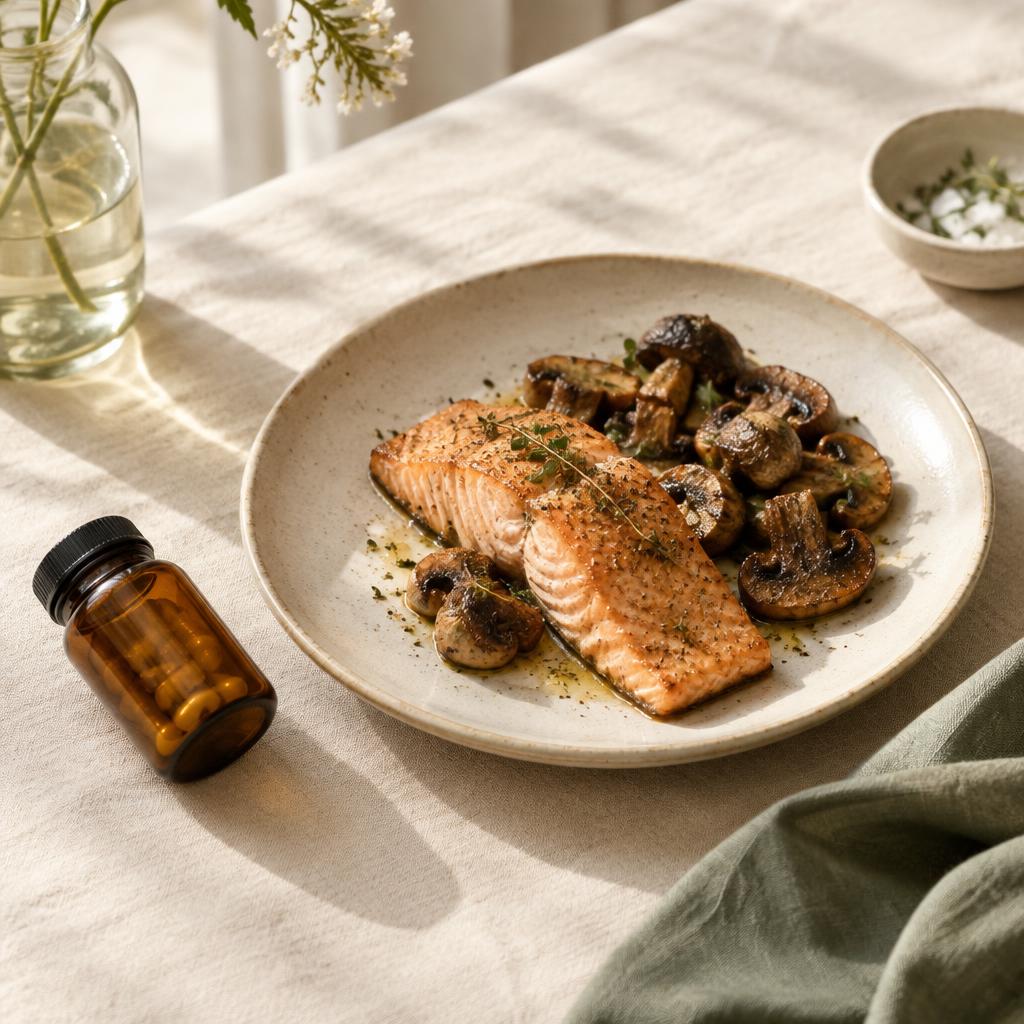
- Salmon: roughly 450 IU per 3 oz cooked.
- Fortified milk: about 120 IU per cup.
- Egg yolk: around 40 IU each.
- Sunlight: 10 to 15 minutes of midday sun on arms and legs a few times a week, depending on where you live and your skin tone.
Realistically, most women do not reach 2,000 IU a day from food alone, which is why a low-dose supplement is the sensible default.
Safety
Vitamin D is safe at normal doses and genuinely harmful at extreme ones. Too much pushes calcium up, which can mean nausea, weakness, kidney stones and, in severe cases, heart rhythm problems. If you have kidney disease, sarcoidosis or a history of kidney stones, do not self-prescribe high doses.
Where to start
Ask for the 25-hydroxyvitamin D test. If you are low, 2,000 to 3,000 IU a day with food, retested in about three months, is a defensible plan. If you are fine, keep doing what you are doing and spend the money on food.
Read next: Insulin Resistance Diet for Women and Avoid Mistimed Results: For Women, Test FSH/LH on Cycle Days 2-5.
My book PCOS Metabolic Reset covers which labs to ask for and what to do with them, and Nourished plans start at $5.
This article is for education only and is not medical advice. Check with your healthcare provider before starting any supplement, especially if you have kidney disease or a history of kidney stones.